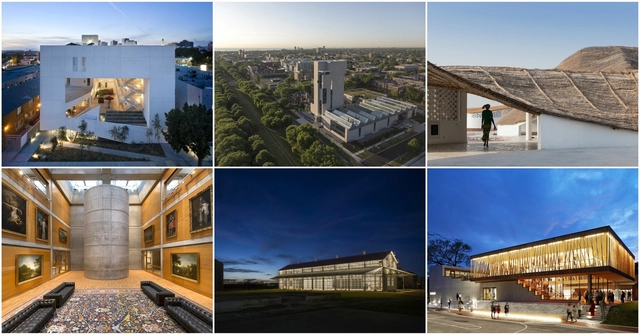
Iwan Baan

BROWSE ALL FROM THIS PHOTOGRAPHER HERE

10 Tips To Perfect Your Architectural Photography

Subscriber Access | 

Our modern day, image-obsessed culture has got us consuming a large quantity of architecture through photographs, as opposed to physical, spatial experiences. The advantages of architectural photography are great; it allows people to obtain a visual understanding of buildings they may never get the opportunity to visit in their lifetime, creating a valuable resource that allows us to expand our architectural vocabulary. However, one must stay critical towards the disadvantages of photography when it comes to architecture. Jeremy Till, author of “Architecture Depends,” summarizes this in his chapter “Out Of Time”: “The photograph allows us to forget what has come before (the pain of extended labor to achieve the delivery of the fully formed building) and what is to come after (the affront of time as dirt, users, change, and weather move in). It freezes time or, rather, freezes out time. Architectural photography ‘lifts the building out of time, out of breath,’ and in this provides solace for architects who can dream for a moment that architecture is a stable power existing over and above the tides of time.”

The following tips aim to not only improve the visual strength of your architectural photography, but also the stories that they can tell—going beyond the individual images in order to communicate buildings’ relationships with their contexts, space and time.

10 Tips To Perfect Your Architectural Photography  - More Images+ 6

ArchDaily's 2017 Building of the Year Awards are Now Open for Nominations

ArchDaily's 2017 Building of the Year Awards are Now Open for Nominations - Image 9 of 4

2016 was a defining year for ArchDaily. The change and uncertainty around the globe which emerged during the past year allowed us to double down on our mission to provide information, knowledge, and tools to architects, leveling the access to architectural knowledge and enabling a more diverse, equitable profession. As part of this, we now have a renewed focus on data-driven decisions and crowdsourcing architecture's understanding of its own work. The flagship of this crowdsourcing effort has always been our annual Building of the Year awards.

Now, for the 8th consecutive year, we are tasking our readers with the responsibility of recognizing and rewarding the projects that are making an impact in the profession, with ArchDaily's 2017 Building of the Year Awards. By voting, you are part of an unbiased, distributed network of jurors and peers that has elevated the most relevant projects over the past seven years. Over the next two weeks, your collective intelligence will filter over 3,000 projects down to just 16 stand-outs—the best in each category on ArchDaily.

This is your chance to reward the architecture you love by nominating your favorite for the 2017 Building of the Year Awards!

Full rules after the break.

Elizabeth Diller to Produce Opera for the High Line

Continuing in her firm’s tradition of blurring the lines between architecture, art and environment, Elizabeth Diller, founding partner of Diller Scofidio + Renfro, is producing an opera for the High Line. Dubbed the “Mile Long Opera,” the production will be set along New York’s new favorite attraction, which was designed by DS+R with James Corner and Piet Oudolf and opened to the public in 2009.

Studio Gang, SANAA Among Winners of 2017 AIA Institute Honor Awards

The American Institute of Architects (AIA) have named 18 architectural and interior projects as recipients of the 2017 Institute Honor Awards, the profession’s highest recognition for excellence in design.

According to the AIA, “the 2017 Architecture program celebrates the best contemporary architecture regardless of budget, size, style, or type. These stunning projects show the world the range of outstanding work architects create and highlight the many ways buildings and spaces can improve our lives.”

The awarded projects were selected from nearly 700 submissions. The winners will be honored at the 2017 AIA National Convention in Orlando.

Yvonne Farrell and Shelley McNamara Named Artistic Directors of 2018 Venice Architecture Biennale

In a meeting yesterday, The Board of La Biennale di Venezia appointed Yvonne Farrell and Shelley McNamara of Grafton Architects as curators of the 16th International Architecture Exhibition in 2018. This marks the second time that the Venice Architecture Biennale will be directed by women, after Kazuyo Sejima's role as director for the 2010 Biennale.

Yvonne Farrell and Shelley McNamara Named Artistic Directors of 2018 Venice Architecture Biennale - Image 1 of 4Yvonne Farrell and Shelley McNamara Named Artistic Directors of 2018 Venice Architecture Biennale - Image 2 of 4Yvonne Farrell and Shelley McNamara Named Artistic Directors of 2018 Venice Architecture Biennale - Image 3 of 4Yvonne Farrell and Shelley McNamara Named Artistic Directors of 2018 Venice Architecture Biennale - Image 4 of 4Yvonne Farrell and Shelley McNamara Named Artistic Directors of 2018 Venice Architecture Biennale - More Images+ 2

SOHO China Property Mogul Zhang Xin on the Chinese Economy and Her Changing Business Model

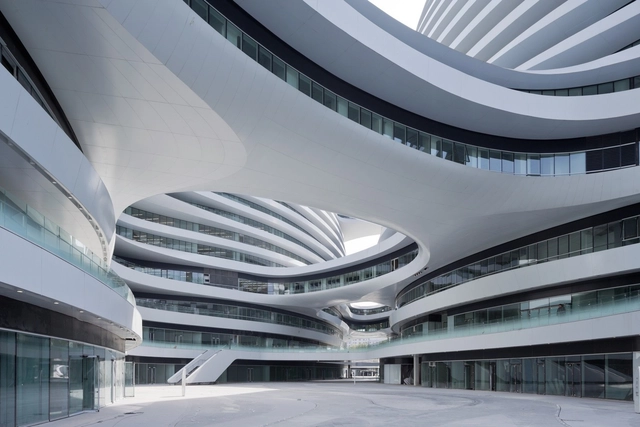
German magazine Der Spiegel has conducted an interview with Zhang Xin, billionaire real estate mogul and founder of SOHO China—the company behind such well-known buildings as Zaha Hadid Architects' Galaxy SOHO and Wangjing SOHO. In the interview, Xin discusses the Chinese economy, her changing business model, digitalization, the symbolic value of buildings, and more. Learn more about Xin’s take on success and change in China by reading the full interview here.

Amir Shakib Arslan Mosque / L.E.FT Architects

Amir Shakib Arslan Mosque / L.E.FT Architects - More Images+ 13

Moukhtara, Lebanon

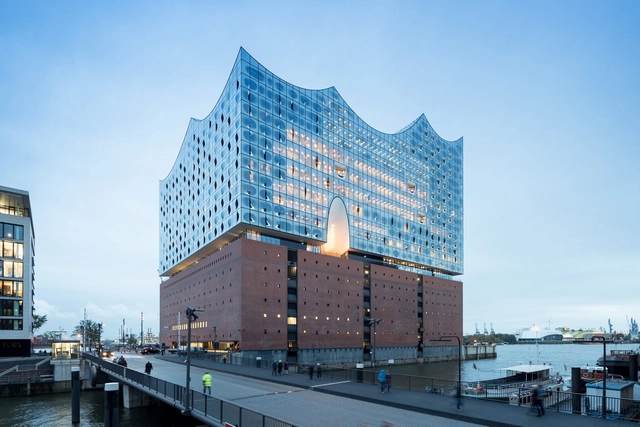
Elbphilharmonie Hamburg / Herzog & de Meuron

Elbphilharmonie Hamburg  / Herzog & de Meuron - More Images+ 25

Architecture's "Political Compass": A Taxonomy of Emerging Architecture in One Diagram

Subscriber Access | 
Architecture's "Political Compass": A Taxonomy of Emerging Architecture in One Diagram - Image 6 of 4
The full political compass diagram (Version 0.1) produced by Alejandro Zaera-Polo and Guillermo Fernandez Abascal. Image © Alejandro Zaera-Polo & Guillermo Fernandez Abascal

Observing the architectural landscape today it’s clear that the type of work which is currently ascendant, particularly among young practices, is very different to what came before the financial crisis of 2008. But what, exactly, does that architectural landscape look like? In an essay titled “Well into the 21st Century” in the latest issue of El Croquis, Alejandro Zaera-Polo outlined a 21st-century taxonomy of architecture, attempting to define and categorize the various new forms of practice that have grown in popularity in the years since—and as a political response to—the economic crisis.

The categories defined by Zaera-Polo encompass seven broad political positions: The “Activists,” who reject architecture’s dependence on market forces by operating largely outside the market, with a focus on community building projects, direct engagement with construction, and non-conventional funding strategies; then there are the “Populists,” whose work is calibrated to reconnect with the populace thanks to a media-friendly, diagrammatic approach to architectural form; next are the “New Historicists,” whose riposte to the “end of history” hailed by neoliberalism is an embrace of historically-informed design; the “Skeptics,” whose existential response to the collapse of the system is in part a return to postmodern critical discourse and in part an exploration of contingency and playfulness through an architecture of artificial materials and bright colors; the “Material Fundamentalists,” who returned to a tactile and virtuoso use of materials in response to the visual spectacle of pre-crash architecture; practitioners of “Austerity Chic,” a kind of architectural “normcore” (to borrow a term from fashion) which focuses primarily on the production process, and resulting performance, of architecture; and finally the “Techno-Critical,” a group of practices largely producing speculative architecture, whose work builds upon but also remains critical of the data-driven parametricism of their predecessors.

As a follow-up to that essay, Zaera-Polo and Guillermo Fernandez-Abascal set out to apply the newly-defined categories to the emerging practices of today with a nuanced “political compass” diagram. They invited practices to respond to their categorization in order to unveil the complex interdependencies and self-image of these political stances. For the first time, here ArchDaily publishes the results of that exercise.

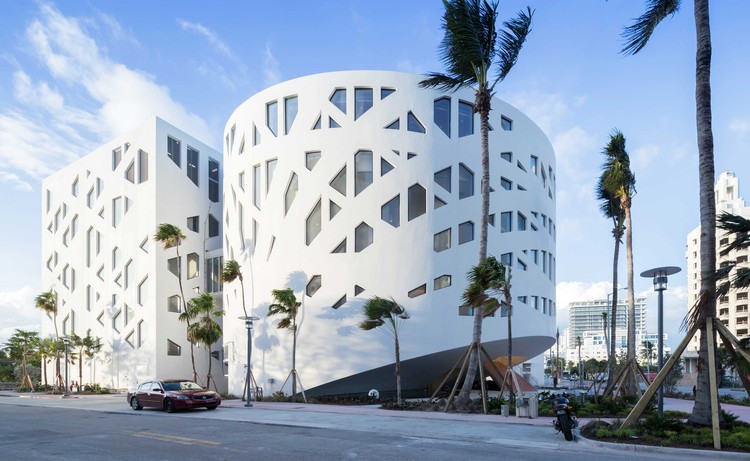
Faena Forum, Faena Bazaar and Park / OMA

Faena Forum, Faena Bazaar and Park / OMA - Cultural Center, Facade, Cityscape
Faena District. Image © Iwan Baan

Faena Forum, Faena Bazaar and Park / OMA - More Images+ 43

See How New York’s Pilot Scheme of Modular Microhouses Was Built

Subscriber Access | 

[In New York] there’s this math problem: 1.8 million small households and only one million suitable apartments. – Mimi Hoang, principal of nArchitects

Last year, nArchitects released a trailer that teased the development of their winning adAPT NYC entry, Carmel Place (formerly known as My Micro NY). The competition sought to address the need for small household apartments in New York City. Now in a newly released video, the full story of the city’s tallest modular tower comes together in smooth timelapse to a dainty piano soundtrack.

See How New York’s Pilot Scheme of Modular Microhouses Was Built - Image 1 of 4See How New York’s Pilot Scheme of Modular Microhouses Was Built - Image 2 of 4See How New York’s Pilot Scheme of Modular Microhouses Was Built - Image 3 of 4See How New York’s Pilot Scheme of Modular Microhouses Was Built - Image 4 of 4See How New York’s Pilot Scheme of Modular Microhouses Was Built - More Images+ 21

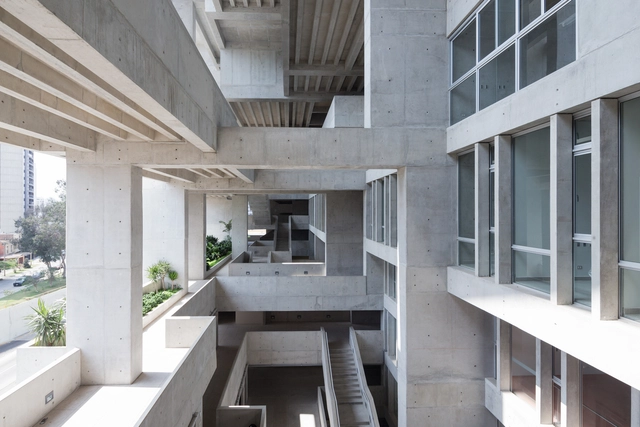
Grafton Architect's "Modern Day Machu Picchu" Wins Inaugural RIBA International Prize

Subscriber Access | 

The Royal Institute of British Architects (RIBA) have revealed the Universidad de Ingeniería y Tecnología (UTEC), located in Lima and designed by Dublin-based practice Grafton Architects, as the winner of the inaugural RIBA International Prize. A longlist of thirty projects, published in May of this year, was narrowed down to six in October before a grand jury—chaired by Richard Rogers—selected the scheme as "an exceptional example of civil architecture."

Grafton Architect's "Modern Day Machu Picchu" Wins Inaugural RIBA International Prize - Image 1 of 4Grafton Architect's "Modern Day Machu Picchu" Wins Inaugural RIBA International Prize - Image 2 of 4Grafton Architect's "Modern Day Machu Picchu" Wins Inaugural RIBA International Prize - Image 3 of 4Grafton Architect's "Modern Day Machu Picchu" Wins Inaugural RIBA International Prize - Image 4 of 4Grafton Architect's Modern Day Machu Picchu Wins Inaugural RIBA International Prize - More Images

6 Ways BIM Can Make Your Architecture Firm More Competitive

Subscriber Access | 

Starting an architecture firm may sprout from one’s love for and interest in the discipline, but running a competitive business requires more than just a tendency to enjoy the work. BIM could be the edge a firm needs in order to stand out from the crowd. There are many ways a firm can make use of BIM to become more profitable on their projects and successful in winning those projects in the first place; read on to find out more about six of them.

Herzog & de Meuron's Elbphilharmonie in Hamburg Photographed by Iwan Baan

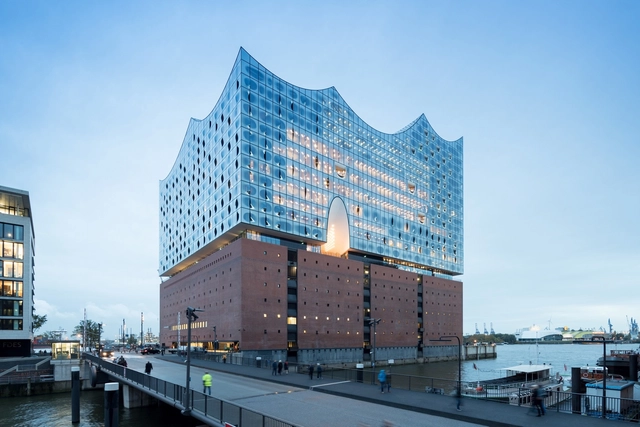
The Plaza of Herzog & de Meuron’s Elbphilharmonie has opened to the public. The concert hall’s observation deck, located 37 meters (121 feet) above ground level, is designed around a public square concept and is accessed via a 82 meter (269 foot) long, curving escalator, providing visitors to panoramic views of the city and harbor.

To mark the event, the Elbphilharmonie has released a new set of photographs by Iwan Baan, showing off the newly completed interior spaces. The full building is set to officially open to the public on January 11 and 12, 2017.

Herzog & de Meuron's Elbphilharmonie in Hamburg Photographed by Iwan Baan - More Images+ 16

Jeanne Gang: “Without an Intellectual Construct Life is Boring”

Jeanne Gang, the founder of Studio Gang Architects, has made a name for herself as a designer who can design both show-stopping skyscrapers and sensitive small-scale buildings. From her breakout 2009 Aqua Tower project, to the hypothetical “Polis Station” proposal presented at last year's Chicago Architecture Biennial, Gang has established herself as perhaps Chicago's leading architect.

Gang is also included as part of Vladimir Belogolovsky's ongoing City of Ideas exhibition tour, representing Chicago among 9 other significant architects, each from a different global city. With the exhibition currently in Gang's home city at the Chicago Design Museum until February 25th, here as part of his City of Ideas column on ArchDaily Belogolovsky presents a shortened version of the interview featured in the exhibition.

Jeanne Gang: “Without an Intellectual Construct Life is Boring” - More Images+ 50

Chicago Riverwalk Opens to the Public, Returning the City to the River

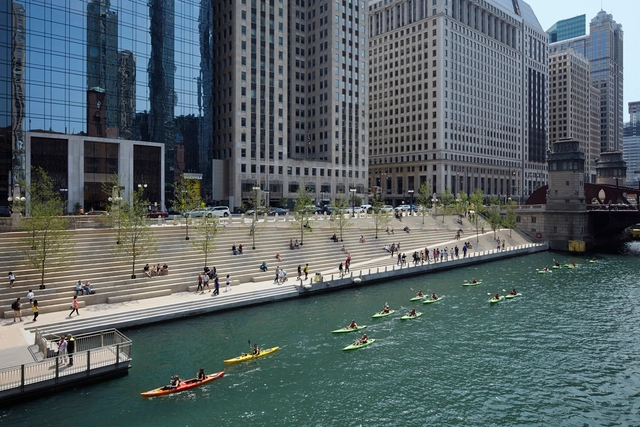
The third and final phase of the Chicago Riverwalk is officially open to the public. Designed by Sasaki and Ross Barney Architects, the 1.5 mile long promenade revitalizes an underutilized industrial area into an active public space featuring restaurants, cultural activities and amenities while reconnecting the Chicago River to the urban fabric of the city.

Chicago Riverwalk Opens to the Public, Returning the City to the River - More Images+ 32

6 Buildings Shortlisted for the Inaugural RIBA International Prize

The Royal Institute of British Architects (RIBA) has announced the shortlist of six finalist projects in the running for the inaugural RIBA International Prize. The first RIBA Award open to any qualified architect in the world, the International Prize seeks to name the world’s “most significant and inspirational” building. Criteria for consideration include the demonstration of “visionary, innovative thinking and excellence of execution, whilst making a distinct contribution to its users and to its physical context.”

The six finalists were named from a longlist of 30 buildings, from which a further selection of 21 projects have been recognized by the jury for the RIBA Award for International Excellence. The jury has also named the winner of the RIBA International Emerging Architect prize recognizing “the achievement of architects in the earlier stages of their career who are working on global projects.”

The Grand Jury is lead by Richard Rogers and includes Billie Tsien, Kunlé Adeyemi, Philip Gumuchdjian, and Marilyn Jordan Taylor.

"Our panel of jurors have been particularly impressed by the way in which each building reacts to, resolves and assimilates into the varying geographies and contexts - from dense urban cities to a small town in the Arctic Circle," said RIBA President Jane Duncan on the naming of the finalists. "Each project resolves the complex demands of its context with ingenuity, exceptional detail and finishing and a sensitivity to the needs of the users and communities which will inhabit these spaces."

SANAA's Grace Farms Wins the 2014/2015 Mies Crown Hall Americas Prize

SANAA’s Grace Farms has been announced as the winner of the 2014/2015 Mies Crown Hall Americas Prize (MCHAP), recognizing the most distinguished architectural works built on the North and South American continents.

The project was selected from a shortlist of seven finalists, joining Alvaro Siza’s Iberê Camargo Foundation and Herzog & de Meuron’s 1111 Lincoln Road as winners of the highly-regarded prize.

“Among a strong group of projects Grace Farms emerged as a clear winner for the clarity and consistency of its architectural solution,” said Stan Allen, MCHAP Jury President.

“The jury was struck by the radical way in which the line between architecture and landscape is blurred by the ‘River’ building. The firsthand experience of the building reveals a confident realization and the immediacy of its detailing. Finally, the Grace Farms project uniquely demonstrates architecture’s capacity to make a place for an innovative new institution.”

 Learn more about the project after the break.

SANAA's Grace Farms Wins the 2014/2015 Mies Crown Hall Americas Prize - More Images+ 6