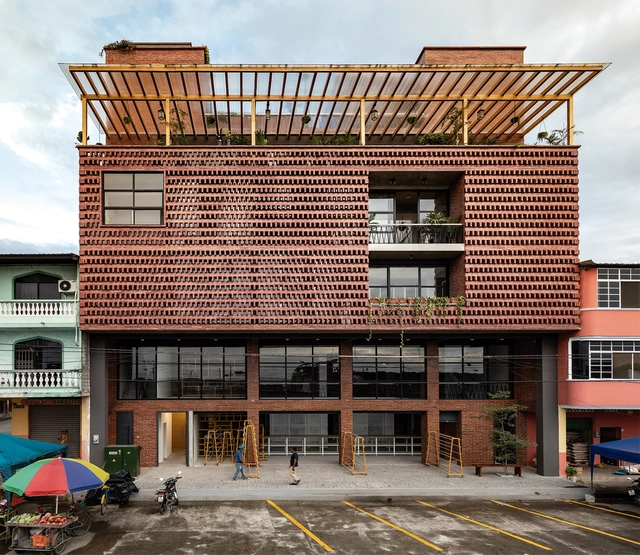
Concrete towers dominate the skylines of Asian and African cities - looming edifices embodying development. With access to the tools and materials of industrial modernity, the Global South steps onto the world stage showcasing its bounty. Yet, at the depths of rising ambitions, the construction material speaks to colonial legacies and extractive economics that result in power imbalances in the geopolitical sphere. A climate crisis on the horizon only intensifies the complicated relationship between building materials, sustainability demands, and sovereignty of many countries.
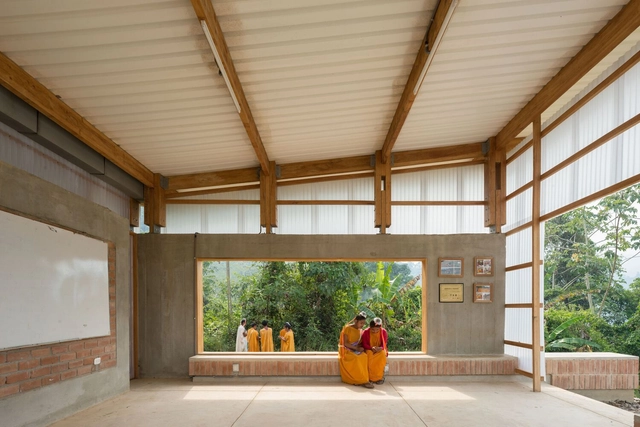
Educational infrastructure is key to any community. The better the quality of these spaces, the better the learning experience for those who use them. However, these facilities often serve a much broader purpose than just education. In Global South communities, in countries like Peru or Vietnam, where a significant portion of the population lives in rural areas far from urban centers, there are few educational spaces and a lack of places where the entire community—not just the students—can come together.
For architects, schools are often complex structures to design. They must provide a variety of spaces for education, and also consider sports and recreational activities. But beyond its size or surface, the greatest challenge is to design an area that fosters a positive pedagogical environment for children. Below, a selection of +70 school projects with their drawings to inspire your proposals for learning campuses.
On behalf of the entire ArchDaily team, we would like to thank you for your continued support and for making 2020 our best year so far! We are now reaching more architects around the world and inspiring them in the creation of better built environments. With more than 5500 different projects published during the year, our curators are excited to share this collection of the 100 most visited projects of 2020. This selection represents the best content created and shared by the ArchDaily community over the past 11 months.
Between 1950 and 2011, the world's urban population increased fivefold. In 2007, for the first time, the number of people living in cities surpassed the number of people living in the country. In 2019, the urban population had already reached 55% of the total population, and by 2050, it is estimated that just over two thirds of the population will live in urban areas. However, this growth is not constant in all parts of the world: according to the UN World Urbanization Prospects 2018 Report, the global urban population is expected to grow by 2.5 billion inhabitants between 2018 and 2050, with almost 90% of this increase concentrated in Asia and Africa. As populations in these areas increase, so will the demand for energy, food, and water, making resources more scarce. This scarcity will be compounded by the negative impact of urbanization on the climate and the environment.
Single family homes are undergoing a quiet transformation in recent years. Increasing land costs, the growth of urban settlements, and the lack of available space for construction have triggered an increase in the development of mixed-use housing. The result is that architects have begun to incorporate more community programs within private residential projects. We can now find homes that integrate commercial, cultural, educational, or industrial uses. This not only provides diversity and efficiency, but also allows surrounding neighborhoods to be revitalized through mixed programs that foster social engagement, interaction and connection.
These type of projects can be created both vertically - in a 2 or 3-story house - and horizontally, using two neighboring lots or around an open space. The following are 12 examples of modern mixed-use homes.
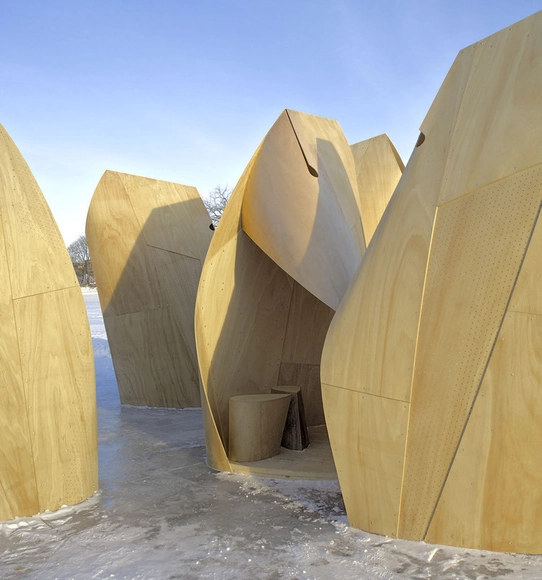
Sold in standard 4 foot wide sheets since 1928, plywood has been a staple of conventional construction for nearly a century. Dimensionally strong, easily cut, lightweight and capable of creating an effective barrier, plywood and other engineered panels like OSB, particle board, and MDF is ubiquitous, particularly for their use as sheathing material in balloon and timber frame construction systems. Boats, airplanes and even automobile frames have historically been built out of plywood, predating (or replacing) steel, aluminum, and fiberglass. As a simple material capable of being manipulated and shaped in a wide variety of ways, sheet ply was also favored in furniture and architectural designs by modernists including Charles and Ray Eames, Eero Saarinen, Alvar Aalto, and Marcel Breuer.
We are accustomed to seeing photographs in which architecture is recorded without any occupants, or perhaps captured only with models who give scale to the spaces shown. However, in recent years architectural photographers have increasingly decided to humanize the houses they document, presenting not only their architecture, but also those who inhabit these buildings. In this week's best photos, we present a selection of 15 houses captured by renowned photographers such as Luc Roymans, Adrien Williams and Fernando Schapochnik.
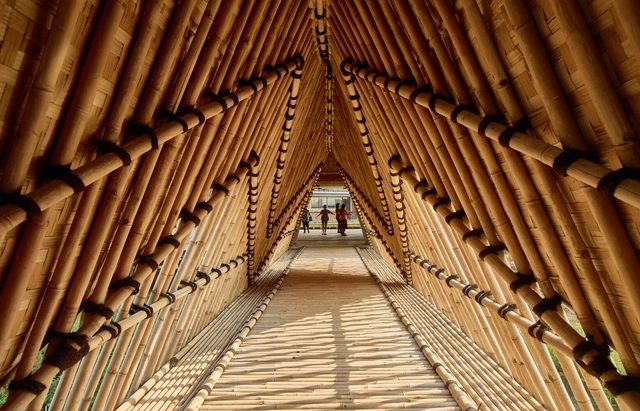
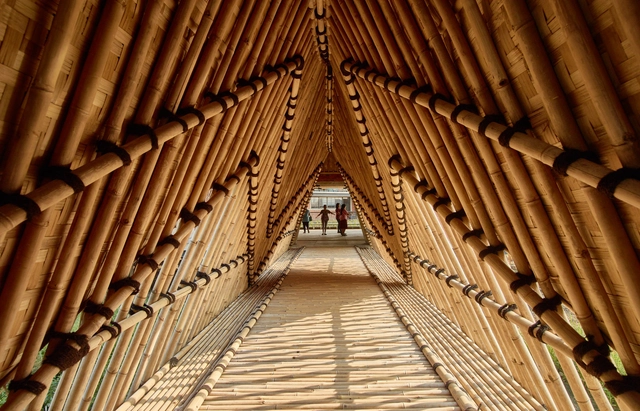
Putting aside finishes, coatings, and cladding to work with exposed structural elements is not an easy task. Faced with this challenge, architects have demonstrated an eagerness to surpass ourselves and to design increasingly creative structures. In portraying this type of project, there are often opportunities for photographers to create incredible and innovative compositions: from geometric patterns, to the use of symmetry and rhythm, to the possibility of focusing on the textures and details of the materials. Here, we present a selection of photographs of impressive structures by renowned photographers such as Iwan Baan, Julien Lanoo and Yao Li, among others.
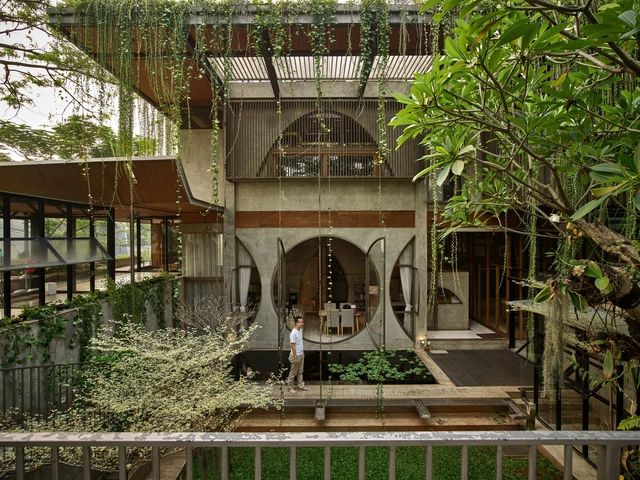
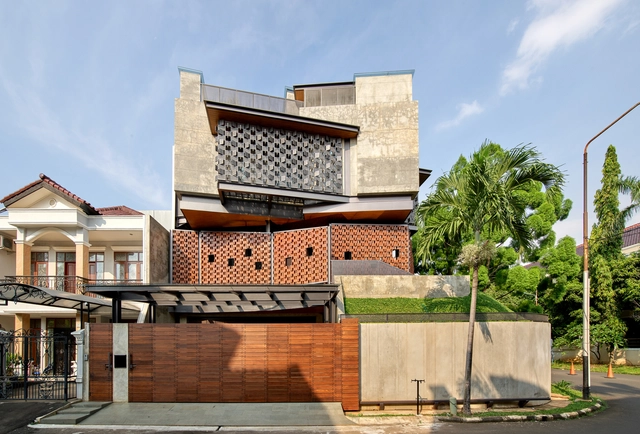
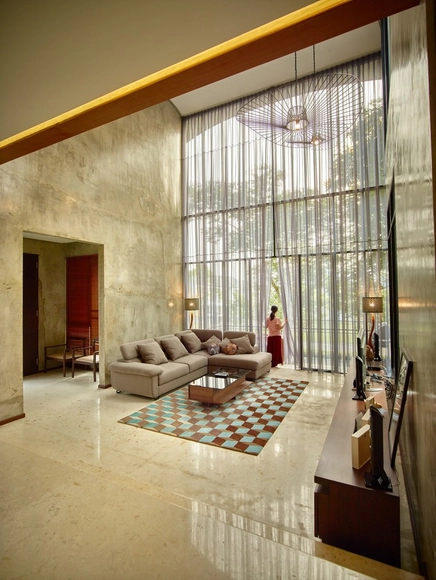
Realrich Architecture Workshop's Brava Casa 99 Percent Sumarah was inspired by an Indonesian form of meditation centered on the philosophy of life. Sumarah is defined as a "total surrender," allowing the partial ego to give way to the universal self.
















.jpg?1588990128&format=webp&width=640&height=580)
.jpg?1588990289&format=webp&width=230&height=230&crop=true)


.jpg?1588990333&format=webp&width=230&height=230&crop=true)
.jpg?1588990128)
.jpg?1586174982&format=webp&width=640&height=580)

.jpg?1586173990&format=webp&width=230&height=230&crop=true)
.jpg?1586173346&format=webp&width=230&height=230&crop=true)
.jpg?1586175097&format=webp&width=230&height=230&crop=true)
.jpg?1586174982)






.jpg?1485253178&format=webp&width=640&height=580)
.jpg?1485253125&format=webp&width=230&height=230&crop=true)

.jpg?1485253298&format=webp&width=230&height=230&crop=true)

.jpg?1485253178)
.jpg?1480050183&format=webp&width=640&height=580)


.jpg?1480050183)