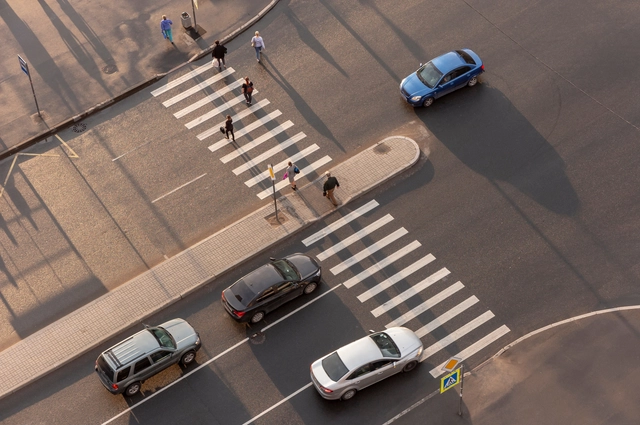
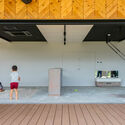
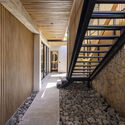
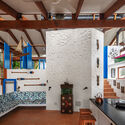
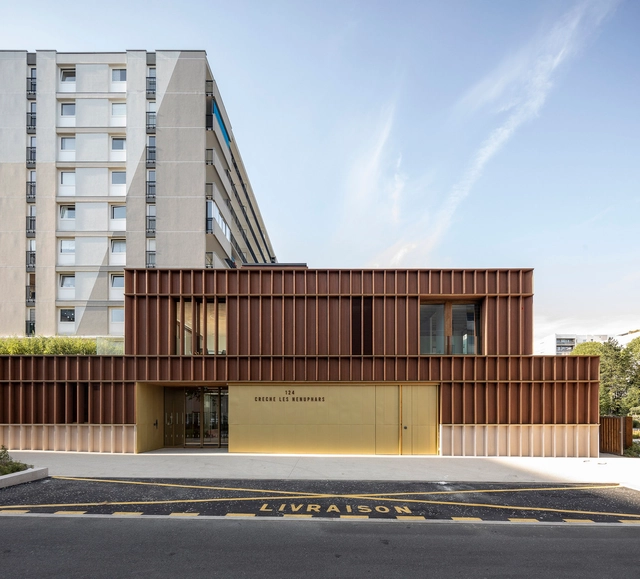
The fabric of our cities is shaped by millions of small decisions and adaptations, many of which have become integral to our experience. Nowadays taken for granted, some of these elements were revolutionary at the time of their implementation. One such element is the curb cut, the small ramp grading down the sidewalk to connect it to the adjoining street, allowing wheelchair users and people with motor disabilities to easily move onto and off the sidewalk. This seemingly small adaptation has proven to be unexpectedly useful for a wider range of people, including parents with strollers, cyclists, delivery workers, etc. Consequently, it lends its name to a wider phenomenon, the “curb cut effect”, where accommodations and improvements made for a minority end up benefiting a much larger population in expected and unexpected ways.
Since the advent of Modernism, architects have become schizophrenic in dealing with the reality of time. This is a problem, because time and gravity are two universal forces. Architects are exquisitely good at dealing with gravity—it is present in everything we design. We study it and engineer its unrelenting requirements. Gravity does a symbiotic dance with structure. No matter how a design feigns weightlessness, its mass cannot be denied. Architects must deal with gravity, whether it’s Frank Lloyd Wright’s sagging balconies at Fallingwater or today’s steroidally enhanced parametric buildings.
The American School of Quito Foundation (FCAQ) and the College of Architects of Pichincha (CAE-P) have announced the launch of an International Ideas Competition. The competition aims to solicit entries for the design and architectural direction of the school's new campus. The American School of Quito is renowned for its academic excellence and has shaped students with integrity, values, and principles for over 80 years. It provides a learning environment that fosters freedom, responsibility, and democracy while remaining committed to society's and the environment's well-being.
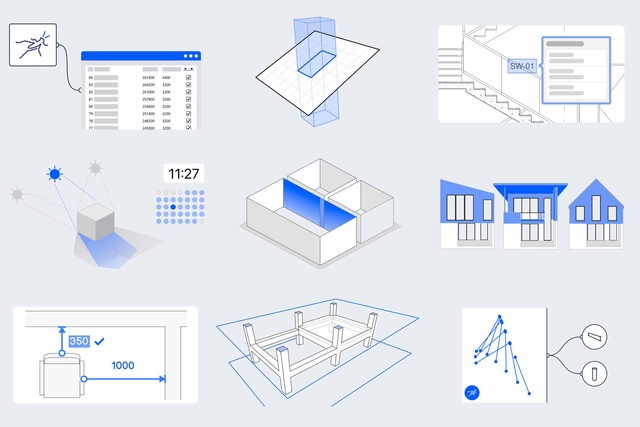
Architecture is a unique field that combines equally constant aesthetic and functional needs, while immersed in dynamic technological environments. At this juncture, design processes and buildings are becoming increasingly intricate, requiring architects to manage projects efficiently while fostering multidisciplinary and multi-level collaboration throughout workflows. Additionally, the new technologies and tools we employ in the process must evolve at the same pace —sometimes even faster— by embracing aspects such as sustainability and efficiency, all while keeping an eye on the future.
The tools available in the multidisciplinary architectural environment have evolved significantly quickly. Both students and experienced architects have now nearly completely transitioned from manual methods to computer-aided drafting software. Today, we find ourselves immersed in the era of architecture driven by technologies such as Building Information Modeling (BIM), artificial intelligence, and digital processes. At the same time, the fundamentals of BIM and its historical background trace back to the early days of computing, research, and new technologies, which sparked a rapid evolution within the AEC industry and among its professionals.
https://www.archdaily.com/1008860/bim-and-the-future-of-architecture-accelerating-design-processes-with-archicad-27Enrique Tovar
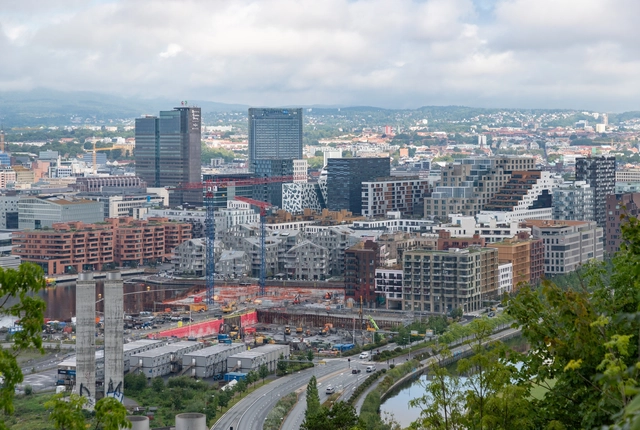
The Norwegian studio of Powerhouse, in collaboration with KIMA arkitektur, has won a design competition for the transformation and extension of one of the historical buildings located in the center of Landbrukskvartalet. Known as the Agricultural Quarter, a former farming and industrial site in central Oslo, the area is now scheduled to go through an urban revitalization process to be transformed into an active neighborhood based on the design philosophy of ‘new meets old’.