This guide explains how to structure multi-image prompts in the RunDifussion platform. Explore RunDifussion's product catalog.


This guide explains how to structure multi-image prompts in the RunDifussion platform. Explore RunDifussion's product catalog.


The first award winners of the 2023 World Architecture Festival have been announced, following Day One of live presentations at Marina Bay Sands in Singapore, in which hundreds of shortlisted projects were presented by practices from around the world. Amongst today’s category award winners of the world’s largest international live-judged architectural event are MAD Architects, Woods Bagot and Nextoffice, Studio of Architectural Research & Design, who won across three individual categories.
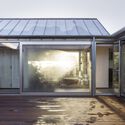
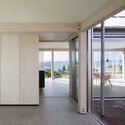
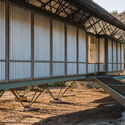
The built environment represents, for most of us, the background of everyday life, and yet, when we look at a building, we rarely understand what it is made of. In doing so, we also fail to understand its impact on us and on the larger systems of nature. Office Kim Lenschow aims to draw attention to this and to provoke critical thinking in relation to architecture and the materials that make it. By focusing on small-scale, mostly residential projects, the office seeks to reveal this hidden narrative of materials and cultivate more awareness and engagement with the structures surrounding us. For their involvement in the exploration of materials and sustainable development, Office Kim Lenschow has been selected as one of the ArchDaily 2023 New Practices. Every year since 2020, ArchDaily has curated and highlighted emerging offices that bring a new perspective to the field of architecture and design.


In charming Oberneukirchen, located in the Austrian countryside, architect Walter Kräutler and artist Sofie Thorsen have come together to transform the interior of the neo-Gothic village church in episode 10 of Opening up.

As part of the Schools by Circlewood consortium, OMA’s David Gianotten and Michael den Otter, together with Studio A Kwadraat, represented by Jimmy van der Aa, have won the competition to design the Wisperweide school in Weesp. This will become the first school to be built using Schools by Circlewood’s prefabricated wooden modular system, developed in collaboration with OMA. The system has earlier been chosen by the administration of Amsterdam to be employed across the city to provide flexible and sustainable elementary schools.

How is it possible to reduce the energy consumption of our homes? What design, material, and/or technological strategies can be developed to achieve interior comfort while also addressing the climate crisis? While achieving energy efficiency depends, among other factors, on the state of the homes, there are various strategies related to the implementation of renewable energies, air conditioning technologies, and more that can be applied, taking into account government policies, laws, regulations, and standards specific to each region.

“Self Similar,” a sprawling and immersive land artwork created by Jim Denevan has just debuted in Abu Dhabi, UAE as part of a more extensive city-wide exhibition. Curated by Reem Fadda, Director of Abu Dhabi Culture Programming and Cultural Foundation, along with Alia Zaal Lootah, this city-wide exhibition showcases 35 distinct site-specific artworks by both local and international artists. Scheduled to run until January 30, 2024, the exhibit is a diverse collection aiming to engage audiences.

Initially conceived as a way to use fragments from marble construction waste, terrazzo is a material widely used around the world, with its modern roots dating back centuries to Venice, Italy. Its aesthetic is unmistakable, characterized by mottled patterns and a wide range of colors poured onto the floor. It is not surprising that this material is widely appreciated by architects in various types of projects due to its unique appearance. A notable example of the use of terrazzo is the Guggenheim Museum in New York, designed by Frank Lloyd Wright. Upon discovering it during one of his trips, Wright recognized that thanks to its aesthetic appeal and versatility, it would endure as the museum's interior finish.
The evolution of construction materials has transformed terrazzo from the traditional mixture used by Wright, which included concrete as a binder, to a version that incorporates an epoxy matrix, enhancing its iconic aesthetic and integrating additional technical capabilities. Today, Terrazzo & Marble empowers contemporary designers to create distinctive patterns and vibrant color palettes that seamlessly align with the context of modern architecture. This is accomplished through four leading principles that guide architects in specifying epoxy terrazzo.