Adam Eastland/Alamy. Image Courtesy of Laurence King Publishing
A wayward force of the High Renaissance, Baroque was broken in by Michelangelo in Rome in the sixteenth century before being given full rein by Bernini and Borromini in the seventeenth. Characterized by curves, domes, broken pediments and a gloriously inventive play on classical detailing, at its theatrical zenith it was thrilling architectural opera – far from the chaste and graceful classicism that both preceded it and ousted it in the eighteenth century. Deeply romantic, it also had something of the subversive about it.
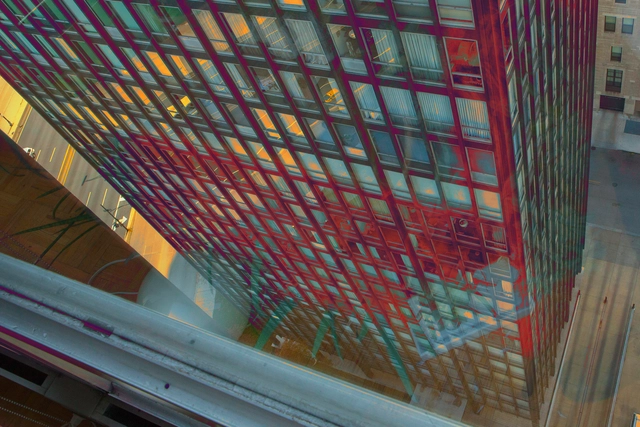
James Welling, 8183, 2016 from the series Chicago, 2016-2017, Courtesy the Artist and David Zwirner, New York and London. Image Courtesy of Chicago Architecture Biennial
The Chicago Architecture Biennial has announced the list of participants invited to contribute to the event’s second edition, which will be held from September 16 to January 7, 2018 in Chicago. More than 100 architecture firms and artists have been selected by 2017 artistic directors Sharon Johnston and Mark Lee, founders of Los Angeles–based Johnston Marklee, to design exhibitions that will be displayed at the Chicago Cultural Center and throughout the city.
“Our goal for the 2017 Chicago Architecture Biennial is to continue to build on the themes and ideas presented in the first edition,” explained Johnston and Lee. “We hope to examine, through the work of the chosen participants, the continuous engagement with questions of history and architecture as an evolutionary practice.”
Architects design and organize spaces; without space, there is no architecture. So it goes without saying, therefore, that spatial intelligence is of high importance to architects. Luckily for us, spatial intelligence is not something you’re inherently gifted at or just “born with,” it’s something that can be trained and improved through practice. More practice means more advancement, so why not make it enjoyable and easy—easy enough even to do in your everyday life? From drawing to speaking to engaging in play, here are 9 everyday activities to improve your spatial intelligence.
With the help of a vast array of software, Spanish architect David Romero has digitally recreated a series of iconic works by Frank Lloyd Wright, two of which have been demolished and a third that was never built. The three projects were based in the United States: the Larkin Administration Building (1903-1950), the Rose Pauson House (1939-1943) and the Trinity Chapel (1958).
"The 3D visualization tools that we have are rarely used to investigate the past architecture and the truth is that there is a huge field to explore,” said Romero in an interview with ArchDaily about his project Hooked on the Past. Romero worked with AutoCAD, 3ds Max, Vray, and Photoshop while restoring black and white photographs, sketches and drawings of these works.
Russian designer Sergey Lisovsky has created an online illustrative magazine inspired by Brutalist Architecture. Pattern Brutalist’s first issue was published in January 2017, illustrating four Brutalist buildings across Russia, Germany, and Serbia. The buildings, dating between 1968 and 1980, are represented by Lisovsky using a collection of GIFs, photographs, and illustrations.
Pattern Brutalist also hosts a T-shirt printing service, allowing users to publically express their appreciation for an often-criticized architectural style.
https://www.archdaily.com/806436/pattern-brutalist-an-illustrative-magazineNiall Patrick Walsh
In the upcoming years, Dubai may become home to one of the world’s newest radical architectures—the first ever, rotating skyscraper. Designed by Dynamic Architecture’s Davis Fisher, the 80-story, 1,273-foot tower proposal features independent floors that can rotate 360 degrees in both directions, in order to provide more comprehensive views.
A static central core will connect the rotating floors together, each of which will be prefabricated off-site and attached to the tower afterward.
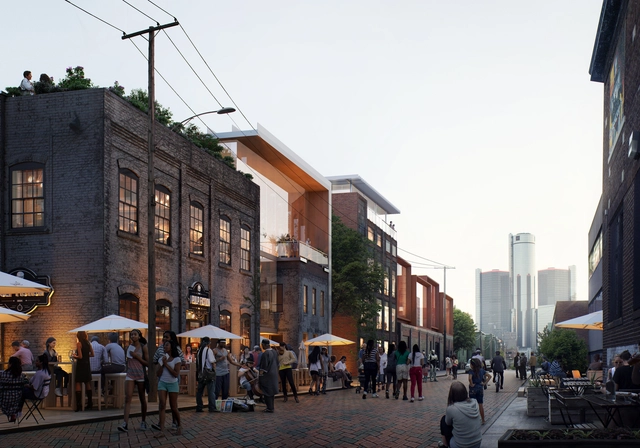
The Historic Stone Soap Building will be upgraded to a mixed-use development, increasing density and activity along the riverfront. Image Courtesy of City of Detroit
Chicago-based SOM’s plans for the redevelopment of the East Riverfront in Detroit, Michigan have been unveiled. The Detroit RiverFront Conservancy, Detroit Economic Growth Corporation, and City of Detroit Planning and Development Department will work together to deliver SOM’s plan to revitalize the former blighted industrial area. The framework plan involves improving community access to the riverfront, the design of a new riverfront parkland, and the conversion of a historic riverfront structure into a mixed-use development.
https://www.archdaily.com/806465/soms-inclusive-riverfront-set-to-revitalise-detroitNiall Patrick Walsh
After reading through ArchDaily’s article on the hours architecture students work outside of class, I was curious. I made it through a Bachelor of Science in Architecture degree and I’m currently enrolled in the Master of Architecture program at the University of Pennsylvania, so how does the time I spend on coursework stack up to the average of 22.2 hours per week? Granted, the data they presented only represented first-year students, but it could still be an interesting comparison. With that in mind I set out to log one week of my time, just like you would at a job. Here’s what I found.
https://www.archdaily.com/806550/85-studio-hours-a-week-in-the-life-of-a-master-of-architecture-studentKurt Nelson
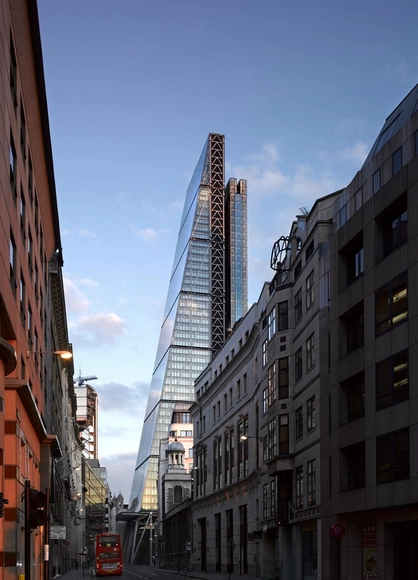
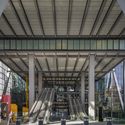
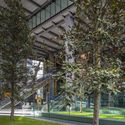
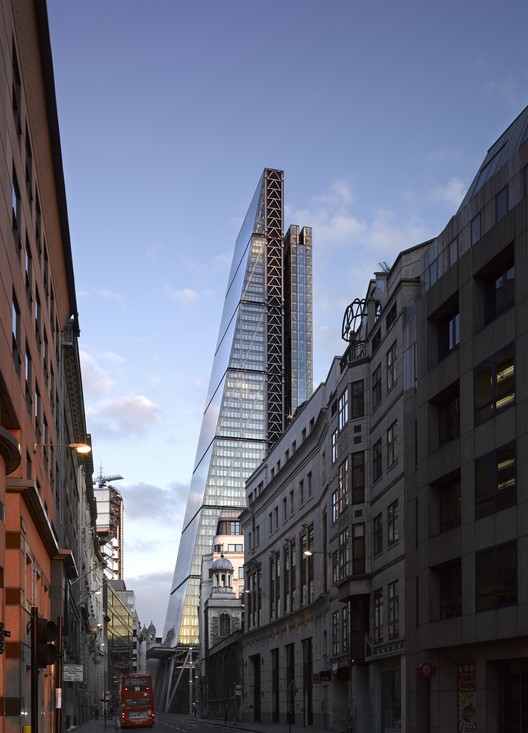
The Leadenhall Building, designed by Rogers Stirk Harbour + Partners, has been sold to a Chinese property magnate for a price of £1.15 billion, in what has become the second-biggest sale of a UK building in history, as well as one of China’s largest acquisitions of UK real estate. The transaction involved developer British Land and its partner Oxford Properties, who sold the tower to CC Land, a Hong Kong based company.
Tim Roberts, head of offices and residential at British Land, said: “British Land and Oxford Properties took a bold step at the early stages of the UK’s economic recovery to develop the Leadenhall Building to generate a high-quality, long-term income stream,” said Tim Roberts, head of offices and residential at British Land. “This sale shows continued investor appetite for best-in-class, well-located property in London.”















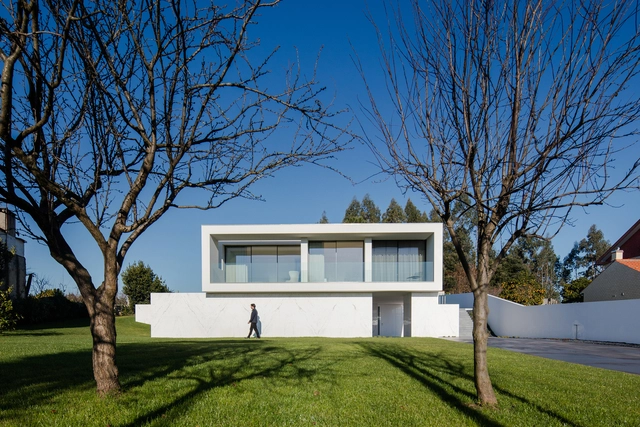
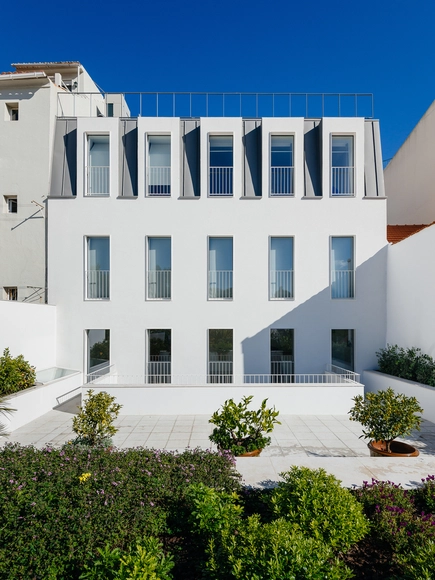
.jpg?1488496582 "© João Morgado")
.jpg?1488496542 "© João Morgado")
.jpg?1488496448 "© João Morgado")
.jpg?1488496343 "© João Morgado")



















.jpg?1488337672 "Courtesy of Shell Arquitectos")