This guide explains how to structure multi-image prompts in the RunDifussion platform. Explore RunDifussion's product catalog.


This guide explains how to structure multi-image prompts in the RunDifussion platform. Explore RunDifussion's product catalog.

The Danish Architecture Center has announced that Josephine Michau is selected as the curator of the official Danish exhibition in the Danish Pavilion at the 18th International Architecture Exhibition - La Biennale di Venezia. Under the working title “(Extra)ordinary Landscapes”, the pavilion will explore the theme of climate adaptation and coastal landscapes of the future, exploring the role of architecture with respect to the global climate and biodiversity agenda. The 18th International Architecture Exhibition will be held from May 20th until November 26th, 2023.

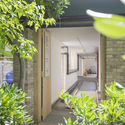
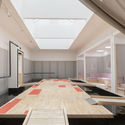


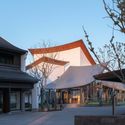
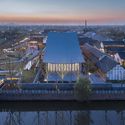
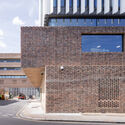
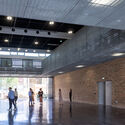
The Royal Institute of British Architects (RIBA) has announced Sands End Arts and Community Centre by Mæ Architects as the 2022 London Building of the Year. Sited beside the Clancarty Lodge in the northwestern corner of South Park, the community center is a development comprising several new pavilions arranged around the existing Clancarty Lodge, a landmark included in the project and refurbished as an exhibition space.

No matter what your kitchen type is, one thing is for sure: the need for cabinets. Designing a project that is functional and can incorporate all the equipment, food and ingredients can be a difficult task depending on the available area. Often, along with countertops and other coverings, cabinets are responsible for setting the tone of this environment, revealing the importance of a good design.

Public spaces play a significant role in organizing the life of every community but defining what differentiates them from other spaces within the city is not an easy task. Once these spaces start to settle into the collective memory of the local communities, they become key elements that concentrate the mental image of a city. While this process usually happens with urban spaces, monuments and isolated architectural elements can also become markers for the urban life of an area. So, what happens when dramatic events like fires, war, or even the pandemic alter that image?

“The planning practices of the past are inadequate for today’s challenges,” said David Rouse, ASLA, a landscape architect and planner, at the American Planning Association‘s National Planning Conference in San Diego. Rapid technological change, socio-economic inequities, natural resource depletion, and climate change are forcing planning and design professionals to adapt. “How can the practice of planning evolve to be more sustainable and equitable?”



Looking ahead to the future of our built environment, a one-size-fits-all approach simply won’t do. Issues like rising sea levels, temperatures, and water scarcity in urban communities need localized solutions that take into account questions of sustainability, culture, and public health. Having investigated vernacular infrastructure across indigenous communities for her book Lo-TEK. Design by Radical Indigenism, designer Julia Watson is an expert in local, nature-based technologies that are inherently adaptable and resilient. We talk to her about the future of our cities, building materials, and her latest project for Our Time on Earth – a five year, world-touring exhibition that just opened at London's Barbican Centre to investigate how radical, collaborative ideas for the way we live can get us to a much improved place by 2040.

Located somewhere between opacity and transparency, translucent surfaces allow rays of light to partially pass through them, creating a "blurred" aspect to what is seen on the other side. This is an effect widely used in art, as in the works of the Icelandic–Danish artist Olafur Eliason, for example, who works with optical illusions through light and colorful and transparent surfaces. But it is also admired by contemporary architects, such as the Japanese office SANAA, or European offices such as Barozzi / Veiga or Lacaton & Vassal, among many others.
In buildings, when using translucent surfaces with materials such as polycarbonate or glass, elements become visually lighter and highlight interiors or even the building's structure, without intruding on inhabitants' privacy. Chairs, lamps, pots: there are several everyday objects that use translucency for aesthetics and lightness. In the bathroom, however, this is not so common. Usually made of porcelain, the traditional pieces used in this space are opaque and at times are not so flexible to allow for a designer's vision.


._Image_by_Zupagrafika.jpg?1653259487 "Orła Białego prefab panel estate in Poznań (Brutal Poland). . Image © Zupagrafika")