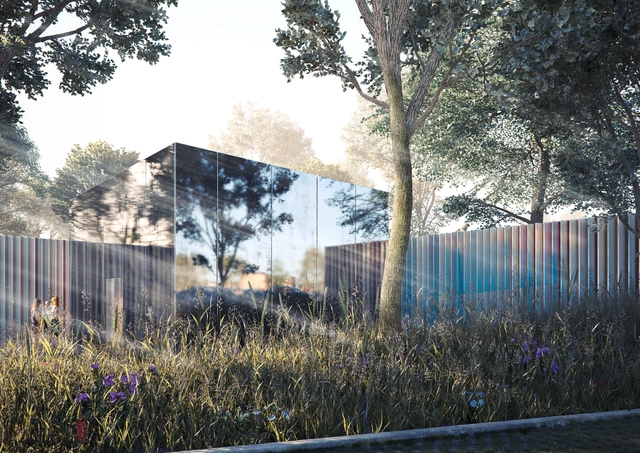
Australian architect Rick Chen has been announced as the joint winner of the ReTHINKing Architecture competition, "Viewpoint in Pulpit Rock." Chen's design, called "Fragile," was awarded first prize out of 195 proposals in the competition, which sought a creative take on Preikstolen, a popular natural viewpoint and rest area 600 meters above the Lysefjorden in southwest Norway.
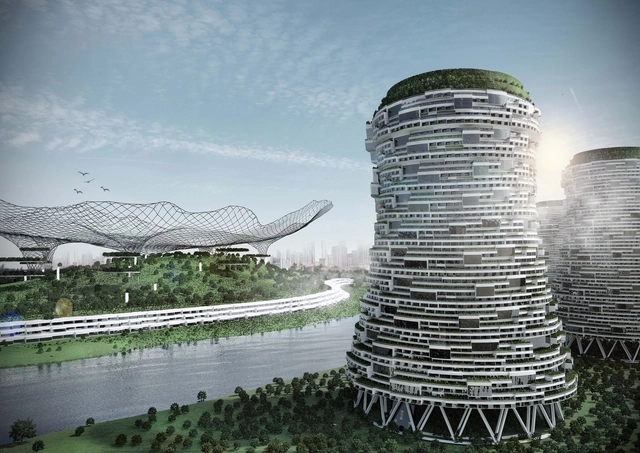
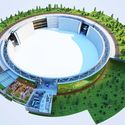
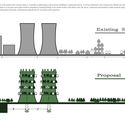
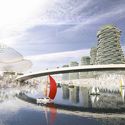
What if a power plant could also be a home, an office, or even a park? That is the question behind Cypher CO2ling Plant, a conceptual design developed by Kawan Golmohamadi, Shilan Golmohamadi, and Soad Moarefi. Power plants are a ubiquitous and inevitable byproduct of modern lifestyles, but they are typically located in remote areas, far from where the power is actually needed, due to their unsightly appearance and the emissions associated with combustion-fueled energy generation. Cypher CO2ling Plant proposes an alternative scenario that utilizes the infrastructure of the power plant’s cooling towers to support mixed-use development, while also mitigating the less desirable aspects of energy generation.
In the latest video from the youtube channel #donotsettle, architects Wahyu Pratomo and Kris Provoost explore OMA’s recently opened Timmerhuis in Rotterdam. The duo compare the conceptual design and renderings to the finished building, look at the impact the new building is having on the cityscape, and with some good fortune find their way through some locked doors.
#Donotsettle was started to reconcile the disparity between film as architectural representation and as an experiential medium. For more #donotsettle, check out their youtube page, where they walk through the Markthal, designed by Rotterdam-based practice MVRDV and the train station in Delft, designed by Delft-based practice Mecanoo, among many other sites.
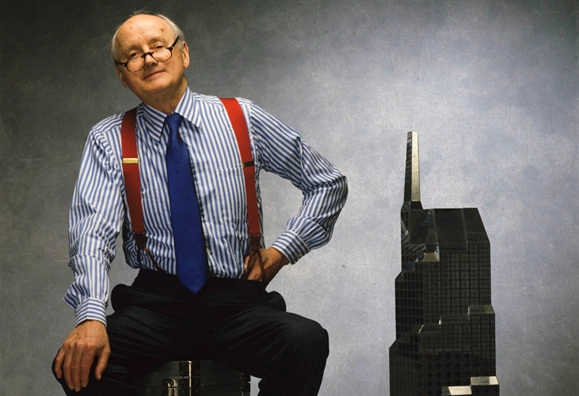
About twenty years after the last documentary on Kevin Roche was released, London-based film company Wavelength Pictures will produce an updated look at the life and work of the Pritzker Prize-winning architect, with a section of the film focusing on his projects in Columbus, Indiana, reports local paper The Republic. Wavelength Pictures plans to come to Columbus in 2016, filming buildings that Roche designed and conducting interviews.
Could an emergency shelter also provide its users with food? Could we make furniture you can eat? Could you merge furniture and farming into one device?
It’s questions like these that set biodesign studio Terreform ONE (Open Network Ecology) apart from other design collaboratives. Instead of looking at design as finding a solution to solve one problem, their structures and furniture pieces try to tackle many issues facing the planet all at once. Need a structure to house refugees as well as find them a reliable source for protein? Why not build them a home that also acts as a cricket farm?
ArchDaily is continuing our partnership with The Architectural Review, bringing you short introductions to the themes of the magazine’s monthly editions. In this introduction to the January 2016 issue, Editor Christine Murray recounts what we know about gentrification, and how cultural buildings can be planned to encourage - rather than destroy - a neighborhood's cultural vibrancy.
Cultural buildings are the new town halls: more socially inclusive than the pub or the church.
The best cultural projects act as public spaces, schools for continuing education, crucibles for talent, fostering innovation and social happenings, from yoga classes to children’s libraries. When free of entry charge, they are a place you can go to learn, rather than just buy – a triumph of experience over consumerism.
But what we’ve learned from the failure of the icon-building boom is that, for a cultural building to really contribute to a city, it must be part of a social ecosystem, not simply a place for tourists to visit. A cultural hub must be connected into a pre-existing cultural vibrancy, supported by decent infrastructure and a community that actually lives there.
Governor Andrew Cuomo has laid out plans to transform New York's congested Pennsylvania Station and neighboring James A. Farley Post Office into a world-class transportation hub. Penn Station, North America's busiest train station, was originally designed in 1910 to accommodate 200,000; currently it's serving more than 650,000 passengers each day. Though a number of firms have been enlisted in the past to re-imagine the station, the project's developer has yet to chose an official architect.
“Penn Station is the heart of New York’s economy and transportation network, but it has been outdated, overcrowded, and unworthy of the Empire State for far too long,” said Governor Cuomo. “We want to build Penn Station to be better than it ever was, and that is exactly what we are going to do. This proposal will fundamentally transform Penn Station for the 21st century, and we are excited to move forward with the project in the days to come.”
Egypt's minister of antiquities, Mamdouh al-Damaty, has announced plans to move forward with an underwater museum project in the Eastern Harbor area of Alexandria's Abu Qir Bay, according to a report by The Smithsonian Magazine. In the works since 1996, the project not only seeks to bring historic sunken artifacts and structures into public view, but also to preserve the site, which is at risk of damage from pollution, fishing boat anchors, and poaching by divers.
In 2008, French architect Jacques Rougerie learned of the project and reached out to the Egyptian Ministry to create conceptual renderings of what the space could become.
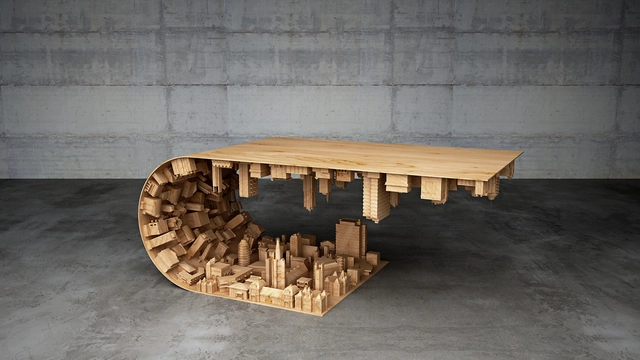
Cyprus designer Stelios Mousarris has designed a cantilevering wood and steel table inspired by the Christopher Nolan thriller Inception. The "Wave City Coffee Table," as it's known, was designed based on the movie's scene where the power to bend dreams according to the dream architect’s will is demonstrated, according to Bored Panda.
Mousarris, once a model maker for Fosters and Partners and an assistant designer at Duffy London, is making a name for himself by designing unique furniture for his self-titled design company Moussaris.
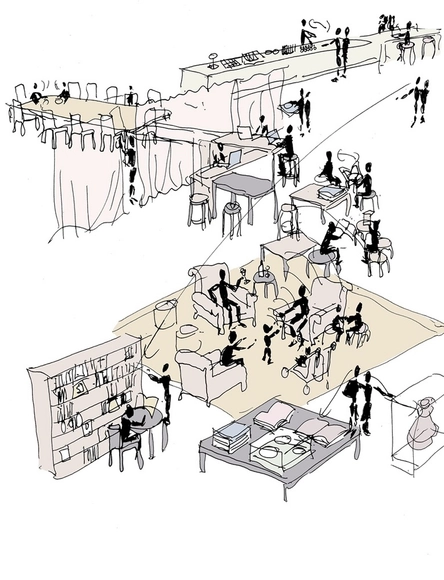
“We are delighted with the quality of the architects’ submissions," said V&A senior staff member David Bickle. "Carmody Groarke’s proposal created a stage not the performance, responding to our brief and the heritage of the Museum in a loose, relaxed, conversational way, creating a comfortable room for the Museum’s broad member constituencies and a framework for creative programming."
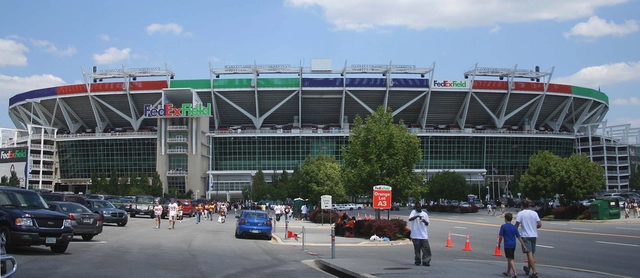
Reports indicate BIG will design the Washington Redskins new stadium. Details have yet to be released, however according to Sports Business Daily the practice's head of communications, Daria Pahhota confirmed BIG is working on an NFL stadium. The Redskins currently play at the 80,000-seat FedEx Field in Maryland; it is said that they are considering moving back to Washington DC or relocating to Virginia.
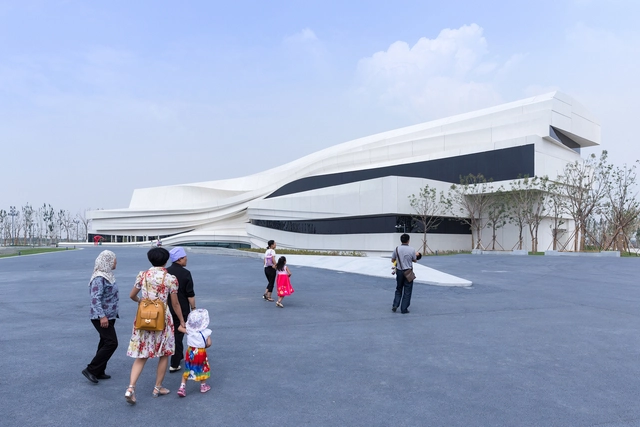
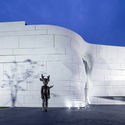
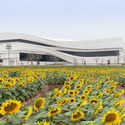
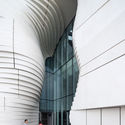
This contemporary art museum is not what it seems. It appears, at first, to be a fairly familiar manifestation of the contemporary architectural discourse, and indeed the striking fluidity of its lines and its impressive mastery of parametrically-enabled tectonics as well as GRC technology put it on a par with recent buildings by Zaha Hadid or MAD, but this first impression is somewhat deceptive: the building is, in fact, refreshingly unique and a radical point of departure from the dominant design ideology of our times, a significant rupture from the orthodoxy. And a very promising one.
A new construction worker has been lending high-efficiency help to job sites, laying bricks at almost three times the speed of a human worker. SAM (short for Semi-Automated Mason) is a robotic bricklayer that handles the repetitive tasks of basic brick laying, MIT Technology Review reports. While SAM handles picking up bricks, applying mortar and placing them at designated locations, its human partner handles worksite setup, laying bricks in specific areas (e.g. corners) and improving the aesthetic quality of the masonry.
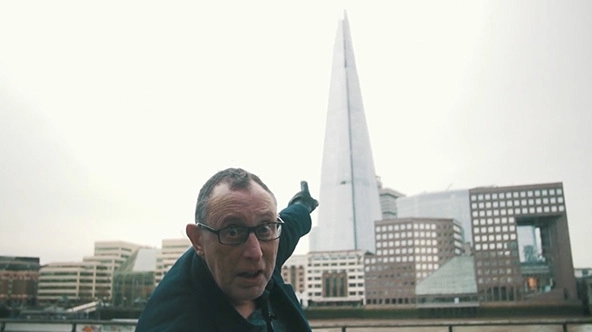
Ian Martin and London's 'Shard'. Image via Unbound
Ian Martin is an Emmy award-winning comedy writer who has been part of the architectural writing establishment since, it feels, time immemorial (which, in this case, is 1990). His satirical column in the British weekly Architects' Journal provides a spread that every reader looks forward to and now, after accumulating over a quarter of a century's writing, is crowdfunding to compile a compendium entitled Epic Space.
Developed by scientists led by Lin Wan at Northwestern University, this "Martian concrete" is just one of many scientific developments that will be required for the increasingly popular goal of sending humans to, and eventually colonizing, the Red Planet (apparently the un-colonized Moon is already old hat - just ask Matt Damon).
When comparing 44 major cities, Arcadis' 2016 International Construction Costs Index has found New York to be the world's most expensive city to build in. London came in as a close second, reporting cost of building prices (on average) 20 percent higher than Paris. In contrast, Taipei was labeled as the "cheapest" city for construction. According to the study, "strong currencies and significant resource constraints" were a result in higher prices. Read on for the complete lists of most expensive, and least expensive, cities for construction.
Traditionally, the start of a new year is a time for making plans and optimism for the future. As a result, it's a time when many architects might start dreaming of moving their career to an unfamiliar and exciting country. But as Brandon Hubbard explains in this article, originally published on The Architect's Guide as "Is Working Abroad Bad For Your Architecture Career?" there are many reasons that you shouldn't be so hasty to cross borders and seas in an attempt to advance your career.
Architecture, perhaps more than any other profession, is filled with people who want to live and work abroad.
Some architecture students get a taste for travel while in school. Study abroad programs in the US are quite common. Often when students finish their degree they are drawn to the idea of living abroad.
A doctor can easily find a person wandering nearby. An accountant can easily find an excel spreadsheet. Architects don't have the luxury of buildings coming to us (that would be cool though). We have to go to them. This has inspired generations of architects to pack their sketchbooks and travel.
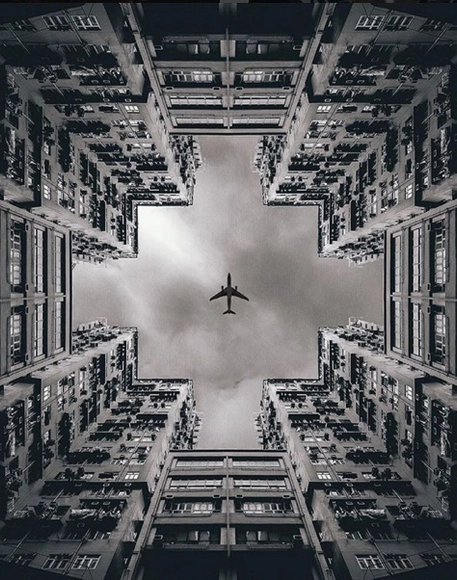
Symmetry has always been a source of obsession in architecture. In Ancient Greece, the Roman Empire, and later during the Renaissance, symmetry was used as a way to find true beauty, while in the early Modern movement its eradication was an essential part of breaking with history.
Without a doubt there is something beautiful in symmetry, and popular Instagram accounts like @symmetricalmonsters collect photos that best capture symmetry in the architecture of everyday life.
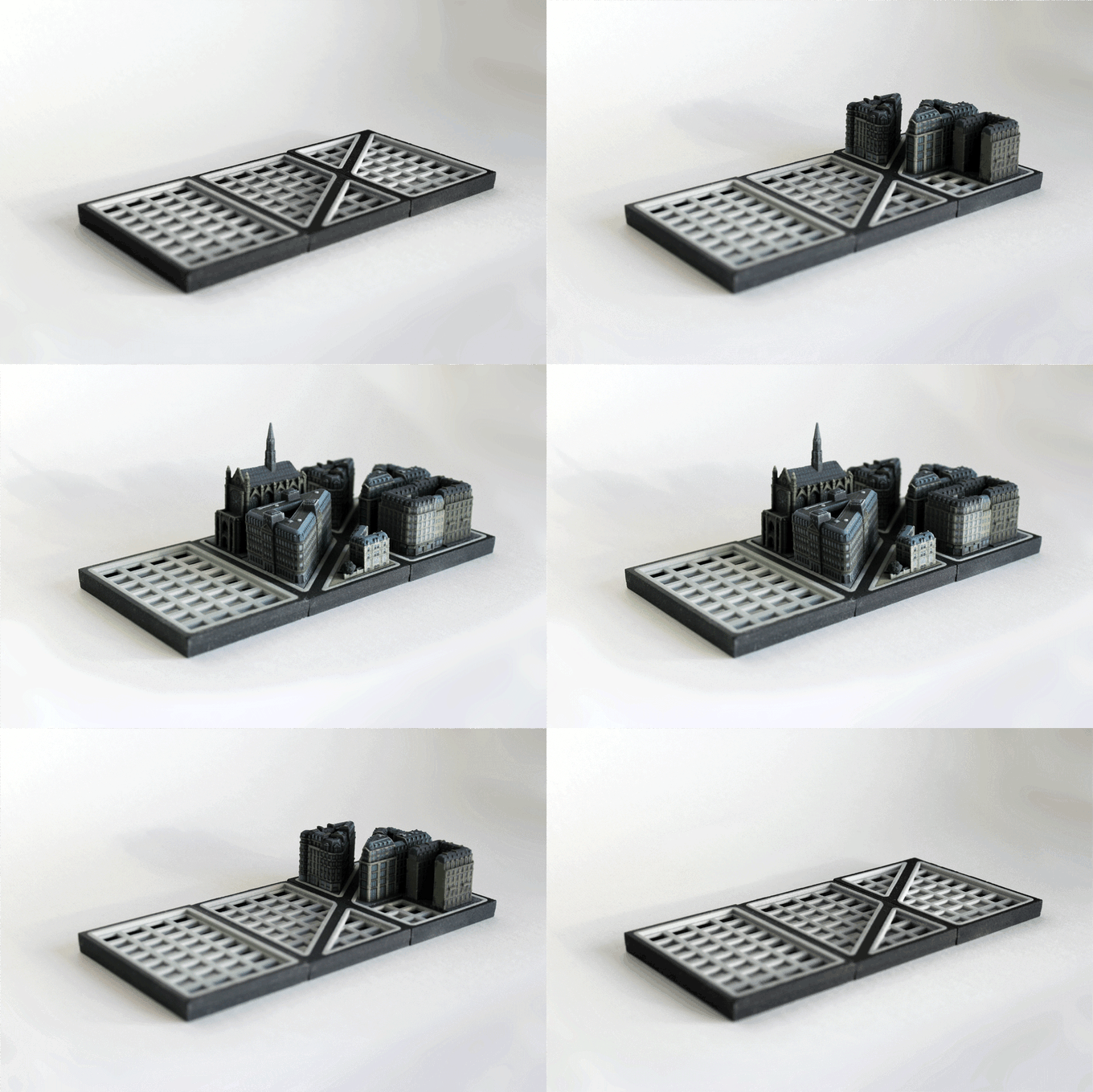
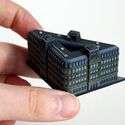
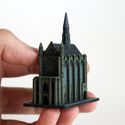
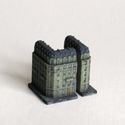
Netherlands-based Ittyblox has created yet another series of miniature 3D-printed buildings, this time featuring typical and iconic buildings and sites in Paris. Adding to their series of New York, London, and Chicago, among others, the new Parisian series follows suit as a 1:1000 scale model of customizable city blocks.
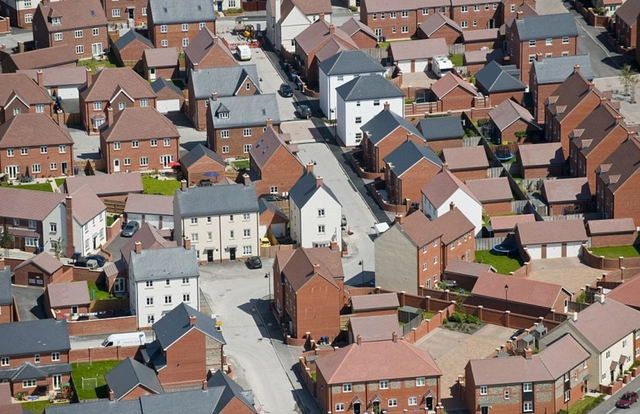
In his essay "Figures, Doors and Passages", the architectural historian Robin Evans described how "it is difficult to see in the conventional layout of a contemporary house anything but the crystallization of cold reason. Because of this," he asserted, "we are easily led into thinking that a commodity so transparently unexceptional must have been wrought directly from the stuff of basic human needs." His words, which highlight the passive approach of designers, developers and dwellers when it comes to the vast majority of British housing being built today, were first published in 1978 – two years before the Conservative government under Margaret Thatcher introduced the 1980 Housing Act.
UPDATE: AL_A has won planning permission for their Southampton Maggie's Center design. According to a report by the Architects' Journal, the 420 square-meter "disappearing" building will be the charity's 19th center. It is set to open in 2017.
Amanda Levete Architects (AL_A) has submitted plans for a new Maggie's Center in the English coastal city of Southampton. Sited at the Southampton General Hospital, the proposed center will provide free practical, emotional and social support for people with cancer and their family and friends. The new building aims to provide a warm and welcoming sanctuary within the built-up hospital environment.
"Bringing a bit of magic to the place, the building emerges from this wild naturalistic landscape with an almost ethereal clarity," described AL_A. "Subtle, understated and imbued with light, it is designed to lift the weight from the shoulders of all who visit and work there."
The challenges of designing social housing are complex. As Martha Thornerecently told the Guardian, "It’s not enough to make community space and say, ‘People are going to see each other’... Architects really have to understand the context from the client – the cultural context, to the bigger context, to the economics, to the future of the residents who’ll live there.” Speaking about Winnipeg's well intentioned Centre Village project designed by 5468796 Architecture, Thorne believes many of these challenges are new to architects.
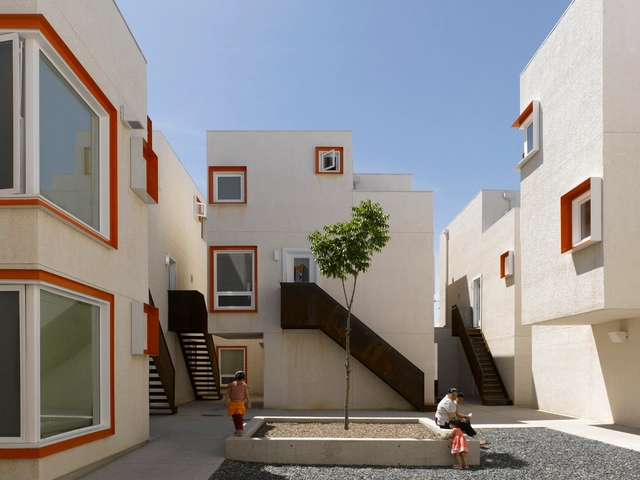
Just five years old, Center Village was designed as a community-oriented micro village for 25 families in one of Canada's poorest urban areas. Since its establishment, the complex has become a hot bed for crime; courtyards are being used by vagrants as shelter from police, while large families try to make a life within the cramp quarters of each home.