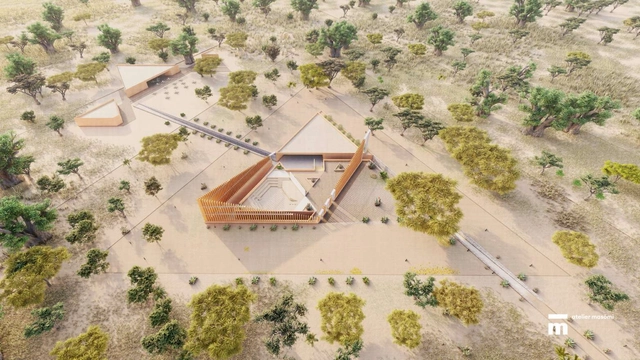
The Josef and Anni Albers Foundation/Le Korsa has announced that Niger-born architect Mariam Issoufou Kamara, founder of award-winning practice atelier masōmī, has been selected to design Bët-bi, a new museum and center for culture and community in southwestern Senegal. Located near a series of megaliths in the vicinity of the historic city of Kaolack, Bët-bi is set to be a state-of-the-art museum that sits at the forefront of West Africa’s flourishing arts scene and wider cultural renaissance.
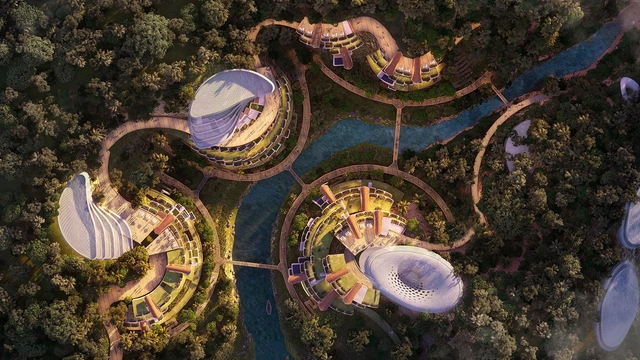
Stefano Boeri Architetti and SON Architects are announced as winners of the tender organized by the Ministry of Culture and the Albanian-American Development Foundation (AADF) for the conservation, presentation, enhancement, and planning for the Archaeological Excavations of the Roman Amphitheatre, the Byzantine Forum, and Roman Baths in the historic center of Durrës. In support of the long-term vision for the city of Durrës, the winners will also be responsible for designing a series of urban pathways with the aim of reconnecting the main historical attractions with the waterfront and the city’s port.
Far beyond basic training, reading is a leisure activity that is part of modern society. Whether outdoors, in squares and parks, at home or even at work, this habit, which improves reasoning ability and mental health, already had large spaces dedicated to books in palaces and mansions. We selected 15 projects that demonstrate the different ways of integrating reading at different scales and architectural programs.
On the 5th of May, the first edition of Model. Festival of Architecture of Barcelona was inaugurated. An event organised jointly by Barcelona City Council and the Architects' Association of Catalonia (COAC) that brings us closer to experimental architecture and helps us to rethink how we want to live together through new city models and new imaginaries.
Architectural visualizations have reached unthinkable levels, being a great source of inspiration and a fundamental part of the design process in architecture. This is why we are proud to announce the second edition of the ArchDaily Architecture Visualization Awards, where we will award the best of the year.
For us, visualizations have become a powerful tool that has helped us to think without limits about the design of our future cities, buildings, and structures. This is one of the reasons why we decided to launch this competition: to find the best talent from around the world and discover who is setting trends with their work and aesthetics, helping us to visualize the future of architecture. For this new edition, in the spirit of being at the forefront of architectural visualization, we have partnered with Enscape. To explore the latest in real-time rendering.
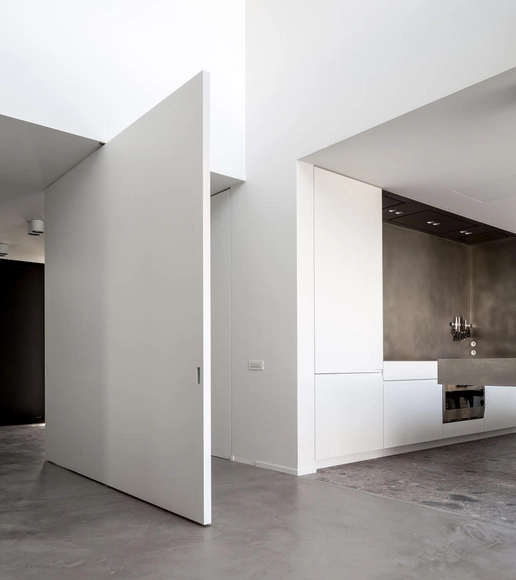
Big White Pivot Door / FritsJurgens. Image Courtesy of FritsJurgens
Interior doors serve multiple purposes in homes, such as providing security and privacy, separating spaces and buffering noise. But besides these obvious functions, they can also set the tone and enhance a room’s aesthetics with their beauty, becoming powerful design features by themselves. They certainly should not be taken lightly when designing any interior space. Considering this impact, architects must take every factor into account when choosing a door, including color, material, style and swinging motion. Dimensions are also important, but tend to be standard as they are limited by the size of the door frame. Usually, they don’t exceed 80 inches (or 203 cm) in height and range from 24 to 36 inches (70 to 90 cm) in width. Recently, however, this has taken a turn in modern design.
Simply put, uplighting is any lighting that shines upward. Most commercial lighting pendants are designed with uplighting and downlighting capability. For interior applications, uplighting reduces ceiling dark spots and shadows while affording the user additional, glare-free indirect lighting.
Uplighting serves the architectural lighting design of the space by highlighting details such as beams, pipes and other distinctive ceiling traits.
https://www.archdaily.com/981413/an-interview-with-lighting-designers-on-the-role-of-uplightingDavid Hakimi
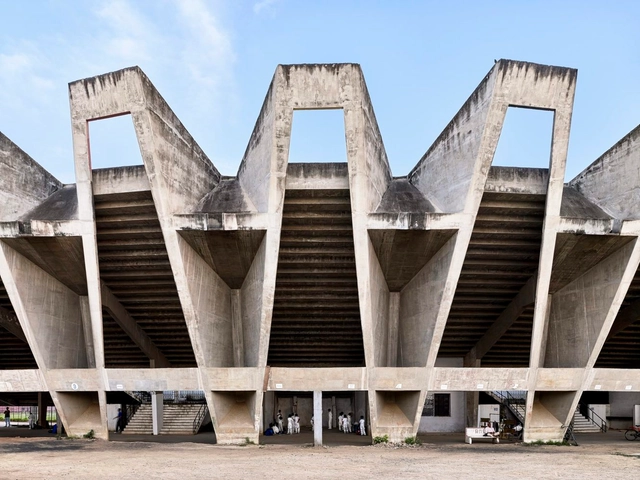
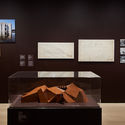
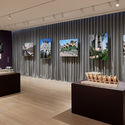
The Museum of Modern Art - MoMA has announced the opening of an exhibition that explores the ways modern architecture in South Asia shaped up "idealistic societal visions and emancipatory politics" of the post-independence period. Titled The Project of Independence: Architectures of Decolonization in South Asia, 1947–1985, the exhibition includes over 200 works, ranging from sketches and drawings to photographs and architecture models sourced from prominent lenders and institutions in Bangladesh, India, Pakistan, and Sri Lanka.
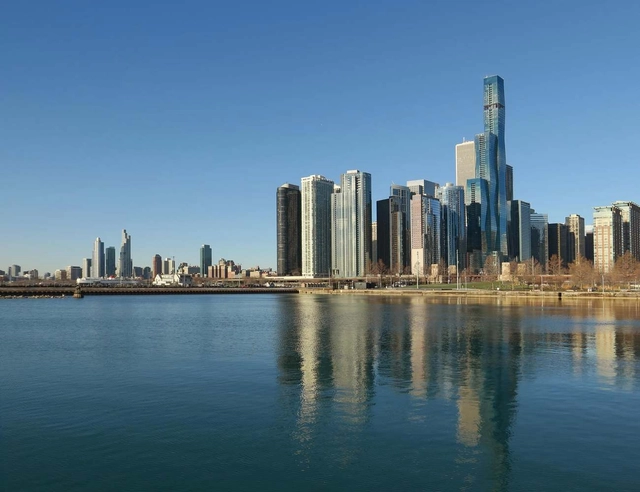
The tower aims to enhance rather than disrupt its surrounding urban fabric. Sitting between downtown Lakeshore East Park and the Chicago Riverwalk, the careful design of the lower levels allows for a porous connection between the two attractions. Innovative structural systems are implemented to achieve this by completely elevating the second volume from the ground.
Since the emergence of the design profession, boosted in the Industrial Revolution with the increasing production of objects and the desire of a middle class eager to consume; designers, interior decorators and architects are known as professionals who create spaces and products to beautify the world.
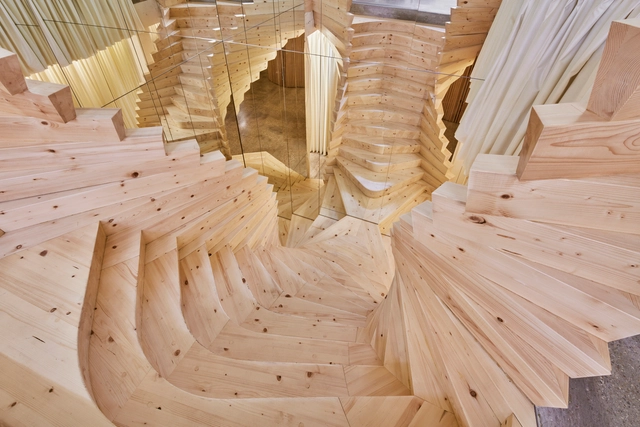
Stairs in architecture are oftentimes a design focal point- the heavyhandedness in creating something that moves us from one level to the next, up and down repeatedly, something so simple and familiar with a twist is what makes the experience of traversing a stair so unique. Our obsession with stairs and the level of illusion that they create in architecture perhaps stems from the way that they’re able to twist the optics and perceptions of space. We understand that they transport us in one direction or another, but can stairs ever be circular? Is it possible to go up and down for eternity?
Danish design brand MENU’s latest furniture launches: the new Co Bar and Counter chairs, and the Tearoom High Back sofa. Image Courtesy of MENU
Challenging social spaces to properly reflect our modern existence should be an important quest for all designers – the power of progressive interiors should not be underestimated, and can even contribute to a change in the course of history. Danish design brand MENU is driven by a human-centric approach rooted in social agency – with the end result of each product design being to forge a sense of community and belonging in the real world.
BEYOME, led by Project Consortium together with the architects of Enorme Studio, seeks to transform traditional dwellings by providing a greater degree of flexibility in their spaces, so that they can adapt to contemporary lifestyles, taking into account the different uses that their inhabitants give to them. But how can we make the same space capable of adapting to different uses? What strategies could be developed to double the surface area of our homes and make better use of them?
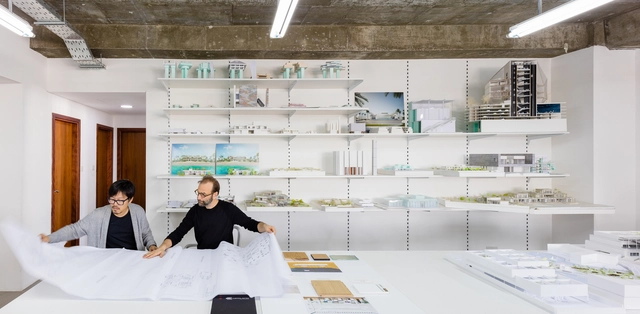
Years ago, architects made the move from hand-drawn plans to CAD. The time they saved and efficiencies they gained transformed the industry. Today, you’ll be hard-pressed to find an architect that solely works using the traditional pen-and-paper methods. That digital shift has continued to develop.
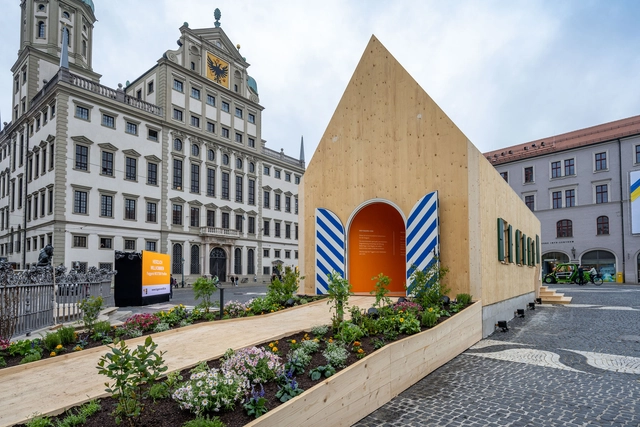
MVRDV and Fugger Foundation are celebrating the 500th anniversary of the Fuggerei social housing project, the world's oldest housing complex, with a ceremonial pavilion and three proposals for “Fuggerei of the Future”. The celebration features a 5-week programme of interdisciplinary discussions and events about social housing and current global challenges. In honor of the occasion, MVRDV designed the 'NEXT500' pavilion, which exhibits an MVRDV study on the “Fuggerei of the Future”, presenting a new Fuggerei code and three proposals for new Fuggerei complexes around the world.
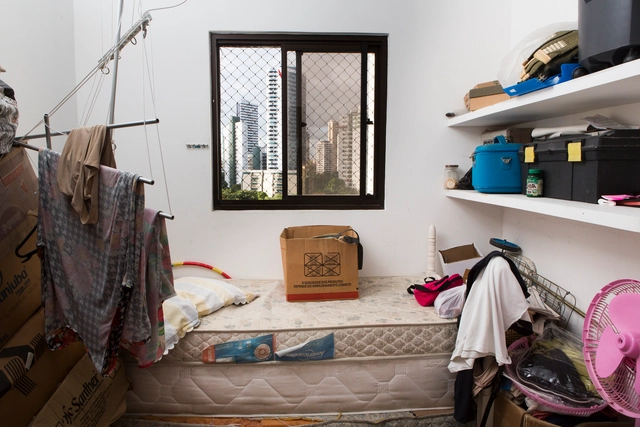
The maid's quarters are "with their days numbered", although they still find a place in the new luxury apartments. The information is from a report published in Folha de S. Paulo in March of this year, which says that in 2018 less than 1% of domestic workers, mostly black women, lived on the premises of their employers - a low number when compared to the 12% of 1995. With the decrease in the number of professionals residing in the employers' homes, the "maid's room" would gradually be no longer part of the architectural plans of Brazilian housing buildings.
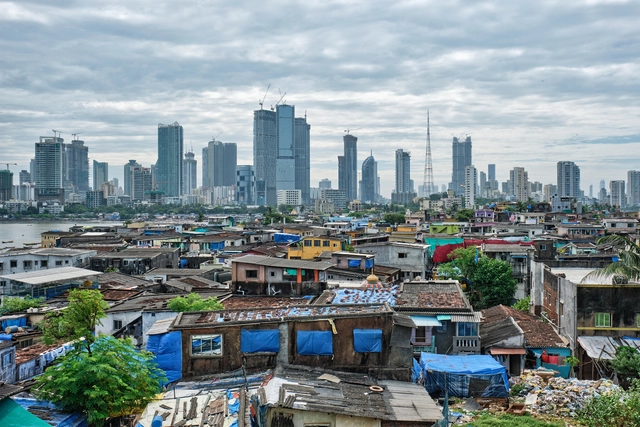
Almost seven kilometers from the green of Uhuru Park in central Nairobi, lies the informal settlement of Kibera. It is an area whose urban character consists of corrugated iron roofs, mud walls, and a complicated network of utility poles. Kibera, at this point in time, is a well-known place. Much has been written and researched on this “city within a city,” from its infrastructural issues to its navigation of the COVID-19 pandemic.
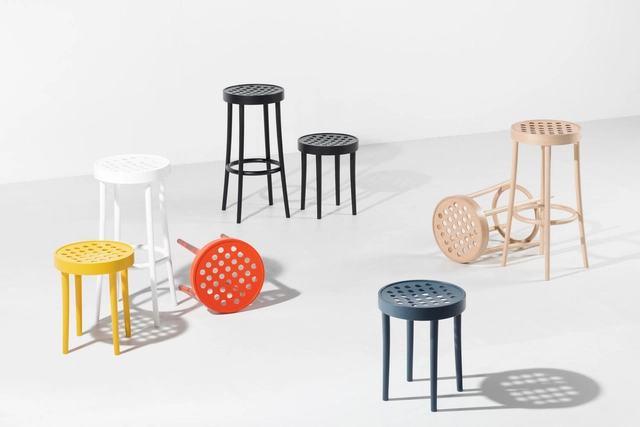
The new 822 collection of seating, a range of dining chairs, lounge chairs and stools by Claesson Koivisto Rune for TON has all the makings of a future design icon. Image Courtesy of TON
There’s nothing unusual about an architect extending their artistic vision beyond the bones of a building, and into the detail of its content – iconic pieces of 20th century furniture design are often attached to a specific building. Among those practising such gesamtkunstwerke, or the art of synthesising all aesthetic aspects of a site, were often the authors of architectural movements; the artist and crafter William Morris, the Bauhausian lead Walter Gropius or the Secessionists Joseph Maria Olbrich and Josef Hoffmann.
https://www.archdaily.com/981521/a-reimagined-icon-for-the-21st-century-the-ton-822-chairEmma Moore
Futuristic shopping center. Image via The Jetsons, 1962 / Hanna-Barbera Productions
The dawn of nuclear power, dramatic advances in rocketry, and the desire to be the first to put men into space and on the moon, kick-started an era known as the ‘Space Age’. Upon the closure of WW2, both the Soviets and the Allies found themselves in a state of antagonism, as they both began to struggle to make advancements in space exploration before the other, a race for space. The era would give way to rapid advancements in technology and huge accomplishments including the moon landing in 1969. The Space Age aesthetic completely changed the way designers visualized the new world and left a dramatic impression on architecture and interiors. A new vision of futurism and prosperity.
The Second Studio (formerly The Midnight Charette) is an explicit podcast about design, architecture, and the everyday. Hosted by Architects David Lee and Marina Bourderonnet, it features different creative professionals in unscripted conversations that allow for thoughtful takes and personal discussions.
A variety of subjects are covered with honesty and humor: some episodes are interviews, while others are tips for fellow designers, reviews of buildings and other projects, or casual explorations of everyday life and design. The Second Studio is also available on iTunes, Spotify, and YouTube.
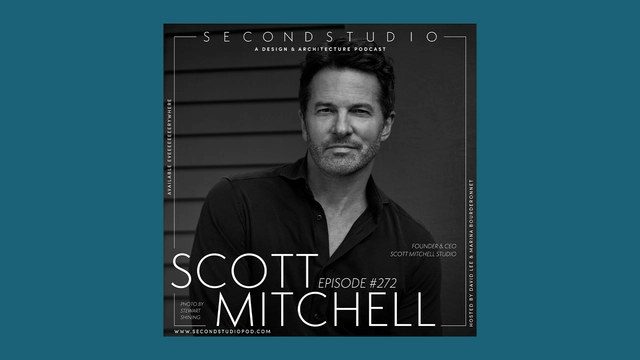
This week David and Marina are joined by Scott Mitchell, Founder and Chief Executive Officer of Scott Mitchell Studio, to discuss his designs; his early interests in architecture; his office; influential people in his life; the power of thoughtful architecture; and much more.
From Epic Games' Build: Architecture 2021. Image Courtesy of Zaha Hadid Architects
Epic Games operates one of the world’s largest games, Fortnite, and also develops Unreal Engine, the most advanced real-time 3D creation tool that powers Fortnite and is used in industries beyond games. Over the last few years, more professionals in architecture and related fields are using Unreal Engine to bring stunning, photorealistic worlds to life.
In an exclusive interview with ArchDaily, David Weir-McCall, Architecture Industry Marketing Manager at Epic Games, shares his insights on the use of digital technology, such as the likes of Unreal Engine, for collaboration and co-design within the field of architecture, engineering, and construction.
One of the elements of most affinity between architecture and cinema is the scenographic project. The set designer, like the architect, starts from a concept to create spaces with a purpose. The architect designs spaces for living and the set designer designs spaces for storytelling. Many architects work with scenography because of the affinity between the activities.
Central Park, New York, NY, 2015. Photo by Barrett Doherty. Image Courtesy of The Cultural Landscape Foundation
Celebrating the bicentennial of the birth of Frederick Law Olmsted, Sr., known as "the father of landscape architecture", the Cultural Landscape Foundation has created an ever-growing digital guide of Olmsted’s most notable works. The illustrated guide features more than 300 landscapes throughout North America, including Canada and 30 U.S. States, along with stories by practitioners who worked for, with, or were otherwise associated with Olmsted, Sr. and his successor firms.
Various cities have been experimenting with wavering fees for public transport in an effort to promote sustainable mobility, alleviate traffic congestion and decrease social inequality. This past February, Salt Lake City has paused fare collection for a month to reduce carbon emissions in the region. At the end of March, the Italian city of Genoa extended free access to some of its public transport networks, following a successful experiment which began at the end of 2021 and in an ambitious plan to become the first Italian city with free transportation. Meanwhile, the small duchy of Luxembourg became the world’s first country with free public transit in 2020.


.jpg?1652219856&format=webp&width=640&height=580)

.jpg?1652219870 "Courtesy of Stefano Boeri Architetti")


.jpg?1652219856)













 .
.






.jpg?1651830269 "Khayelitsha Township - Cape Town. Image © Olga Ernst under the Creative Commons Attribution-Share Alike 4.0 International license.")