At the turn of the 19th century, a British publishing house would release a book written by an English urban planner – a book with an optimistic title. The title of this book was To-morrow: A Peaceful Path to Real Reform, later reprinted as Garden Cities of To-morrow. The English urban planner in question was Ebenezer Howard – and this book would lay the foundations for what would later become known as the Garden City Movement. This movement would go on to produce green suburbs praised for their lofty aims, but it would also produce satellite communities that only catered to a privileged few.
Architecture has long been a profession in aesthetic apartheid. The profession’s favored aesthetic, Modernism, has relegated all other “styles” to marginalized insignificance in laud, teaching and publication. The last generation has seen those following an aesthetic deemed “traditional” create an entirely separate system of schools, awards and publication.
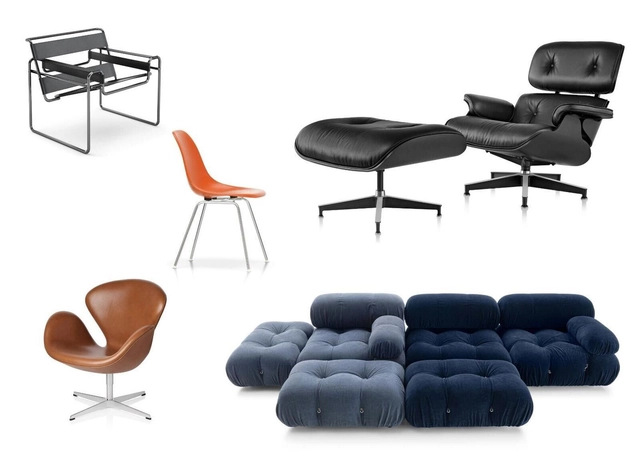
The Wassily Chair by Knoll Int. next to the VITRA/Herman Miller Eames Lounge Chair, B&B Italia's Camaleonda Sofa and the VITRA Plastic Side and Fritz Hansen's Egg Chair
In a way, classic furniture is like a mixture between a work of art and a gold bar: it is a safe investment and can often even increase in value with age. In our second selection of design icons from the 20th century, we present Ray and Charles Eames, Marcel Breuer, Arne Jacobsen and Mario Bellini and some furniture pieces from the past century that remain more modern today than ever, in terms of not only design but also comfort. Find out more on the Architonic Platform.
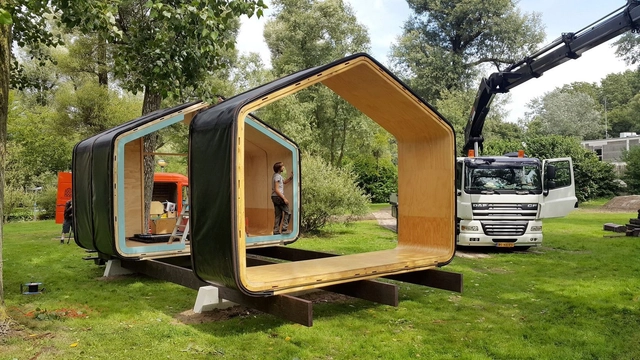
Wikkelhouse / Fiction Factory. Image Courtesy of Yvonne Witte
“Architecture does not change anything. It’s always on the side of the wealthy.” With these words, Oscar Niemeyer referred to architecture as being a privilege mostly destined to the upper class – a statement that has historically proven to be true, even as some would like to deny it. Today, only 2% of all houses around the world are designed by architects. This is largely due to the fact that, to the average consumer, architect-designed homes continue to be perceived as expensive and esoteric products available only to this select few; a luxury that many cannot fathom to afford, especially as housing prices rise. Ultimately, this makes good design inaccessible for certain segments, forcing them to settle for precarious living conditions in standardized spaces that fail to take their needs into account (that is, if they even have access to housing).
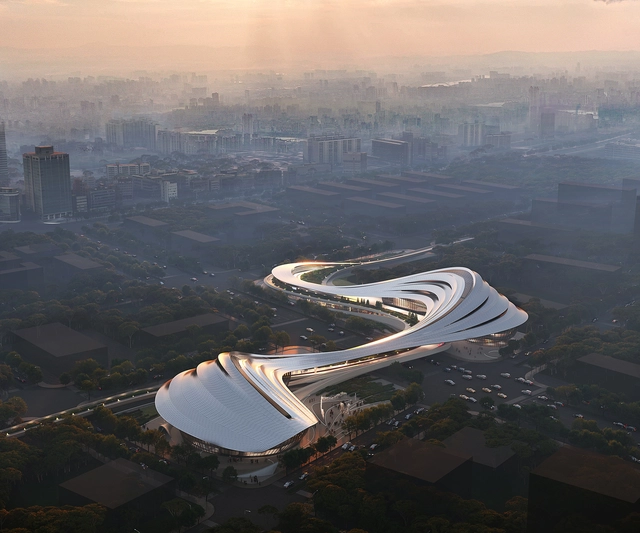
Zaha Hadid Architects (ZHA) has been named as the winner of an international competition to design the Jinghe New City Culture & Art Centre in the Shaanxi province, China. The project is part of the Jinghe New City, an area growing as a science and technology hub with new scientific research institutes that are driven by environmental awareness. The architecture blends with the surrounding landscape, echoing the valleys carved by the Jinghe River through the mountains and landscapes of Shaanxi province.
AIA'S 2024 Ppresident-elect Kimberly Dowdell. Image Courtesy of Kimberly N. Dowdell
The American Institute of Architects has elected Kimberly Dowdell as the 100th president of the organization, making her the first Black woman to hold the position in AIA’s 165-year history. Delegates at the AIA’s annual meeting voted Dowdell to serve first as vice president for 2023. Afterward, she will become president in 2024.
During her campaign for president, Dowdell has expressed her support for minorities, while also making clear that she wants to be an AIA president for all. Her platform is based on four key areas of interest: supporting architects in practice, creating a sense of belonging and ensuring access to the architectural profession and education, addressing climate concerns, and designing for the future, considering rapid technological advances. “I firmly believe that the AIA has the power and potential to better serve our profession” she declared in a video made prior to the election.
According to the Spanish Ministry of Transport, Mobility and Urban Agenda, the draft Law on the Quality of Architecture was finally approved on the 8th of June, after achieving the backing of a large majority, without any votes against, of the Senate Plenary, thus ending its parliamentary processing with a large consensus.
Living in an urban environment is demanding. Busy and competitive lifestyles leave people numbed from the effects of stress. Individuals in urban areas are more prone to mental health issues and demonstrate a noticeable lack of personal connection. Rosy city lights and skyscrapers are thorned with rising stress levels, posing an essential question to architects - how do spaces affect wellbeing?
KME Germany has announced the 2022 TECU® ARCHITECTURE AWARD winners for the sixth time. The competition intends to enable, accompany and promote modern and forward-looking approaches to architecture based on copper as a material, in collaboration with architects.
In addition to three architecture prizes, two project prizes for students were also awarded. Furthermore, three Special Mentions were awarded.
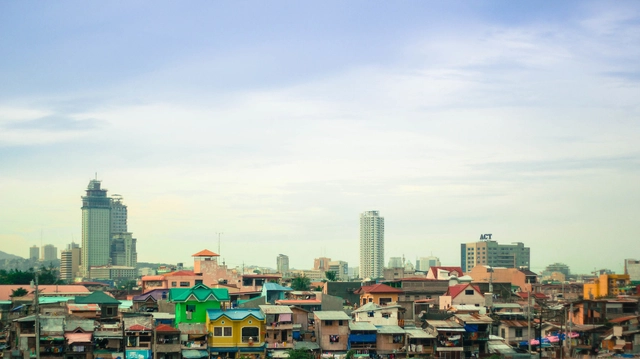
The history and culture of the Philippines are reflected in its architectural heritage, with numerous influences from other nations paving the way for the contemporary designs we see today, a mixité of cultural influences amongst Western-style buildings. Philippine architecture has grown along with the progress of the nation and its people, but memories of a glorious past are still embedded within the nation’s history.
Architecture is a privileged tool for brands that are characterized by a high-end positioning and that, beyond the quality of their own products, needs to feed an imaginary of prestige, style, and refinement. From the showrooms to the stores, fashion needs architects as much as stylists, photographers and modelers.
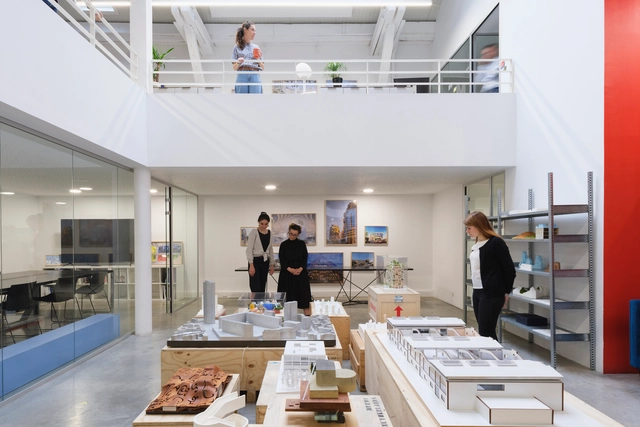
MVRDV and The Why Factory's have collaborated on an exhibition that explores the principles of "architecture and urbanism calls to action”. Titled "Agir", the exhibition is open to the public since June 9th, in the connected spaces of the ArchiLib Gallery and MVRDV’s Paris office. The exhibition takes its name from the French verb meaning “act”, and examines the activist works of MVRDV and The Why Factory, revealing its capacity to address a wide variety of environmental and social challenges.
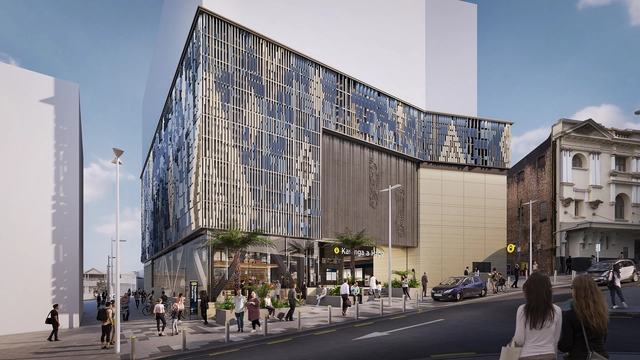
City Rail Link by Grimshaw Architects. Image Courtesy of Grimshaw
Grimshaw has revealed the final design for City Rail Link, or CRL in short, a large infrastructure project in Auckland, New Zealand. The project includes four new train stations and a 3.45km twin-tunnel underground rail up to 42 meters below the city center. It was developed in collaboration with WSP as part of the Link Alliance, a consortium of seven companies tasked with delivering the main stations and tunnels for the CRL project. The design of the stations is also developed in partnership with Mana Whenua, a local tribal authority that aims to integrate the narrative of the Māori creation story, Te Ao Marama, into the design. Each station's image and identity are a result of this collaboration, and it responds to the characteristics of each location as defined by Tāmaki Makaurau, the Māori name for the geographical region of the city of Auckland.
"in downtown New Delhi, huge curved structures sink in the ground, taking the form of a ramp. Amorphous voids mark the great twisted walls. The color red marks the structures and sets them apart from everything else."
This could describe a playground or even a skate park, but it is one of five astronomical observatories built in India between 1724 and 1738. These mazy volumes, which look more like a materialization of Escher's drawings, were conceived by the Indian prince Jai Singh as part of an ambitious project that sought to put architecture at the service of science. Their shapes make complex astronomical analysis possible, such as predicting eclipses, tracking the location of stars, and determining Earth's exact orbit around the Sun.
Design justice is grounded in personal experience and built through everyday actions. Wandile Mthiyane is an architectural designer that embodies this idea, an activist that grew up in Durban, South Africa during the Apartheid. From an early age he was drawn to building and design, a background directly tied to his childhood. He realized he wanted to build a better future by working to undo the architectural effects of institutionalized racial segregation. Today, Wandile has become recognized for creating social impact, including his work to transform his hometown of Durban.
When we consider something edible, we understand its capacity to be eaten, consumed, or ingested independently of its taste. If our contemporary relationship to the built environment reflected this process, what would cities and constructed environments become?
There are many myths and misunderstandings around sustainability in construction. First, the belief that what is sustainable must inherently be technological, complicated or out of reach. Or that the products will necessarily be more expensive, will be made of recycled materials or will not be so aesthetically pleasing. When it comes to material specification, there is often confusion. Is steel more sustainable than bamboo? Would it be better to use a material that is said to be sustainable, but which goes through numerous industrial processes, or one with a low level of processing? The answer is not so simple, and there are various comparison mechanisms to help guide us. But this is an important consideration to make, as one of the main ways the construction industry can help reduce its carbon footprint is to select materials with the lowest general contribution to emissions and environmental impact. Natural slate, which can be used for roofing and facades, is a great example of this.
Designer Paul Wellington, based in Milwaukee, United States, is the author of Black Built: History and Architecture in the Black Community, a book that documents more than 40 works of architecture around the country by Black architects that have had a direct impact on communities of color. He’s now working on a new book that will focus on Black women architects in a field dominated by white males. I spoke with Wellington about the new book, what he learned through his research on Black architects and their work, and the future of increasing the ranks of Black architects in the U.S.
https://www.archdaily.com/949665/hidden-figures-the-historic-contributions-of-black-architects-in-the-united-statesMichael J. Crosbie
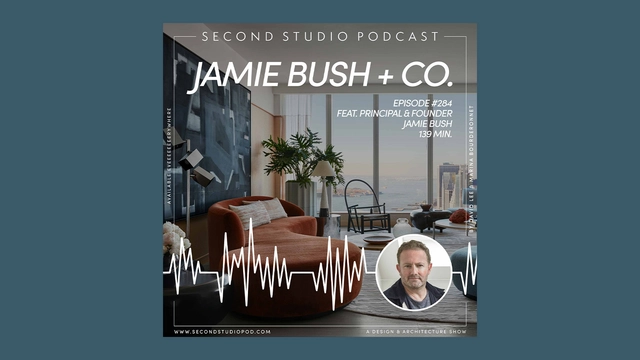
The Second Studio (formerly The Midnight Charette) is an explicit podcast about design, architecture, and the everyday. Hosted by Architects David Lee and Marina Bourderonnet, it features different creative professionals in unscripted conversations that allow for thoughtful takes and personal discussions.
A variety of subjects are covered with honesty and humor: some episodes are interviews, while others are tips for fellow designers, reviews of buildings and other projects, or casual explorations of everyday life and design. The Second Studio is also available on iTunes, Spotify, and YouTube.
This week David and Marina are joined by interior architect and designer Jaime Bush, Principal and Founder of Jamie Bush + CO. to discuss growing up with designers, photographers, and artists; studying Architecture abroad in Venice; transitioning into Interior Architecture; the disconnect between Architects and Interior Designers; how to differentiate between Interior Design and Architecture; fee structures; and more.
https://www.archdaily.com/983873/the-second-studio-podcast-interview-with-jamie-bushThe Second Studio Podcast
One of the most anticipated design events of the year finally took place in Milan at the beginning of June. This 2022 Salone del Mobile edition celebrated its glorious 60 years as the most relevant stage for design innovations. DAAily Platforms had the opportunity to be part of this iconic festival with many of our team members from Architonic, Archdaily and DesignBoom deployed in different parts of the city.
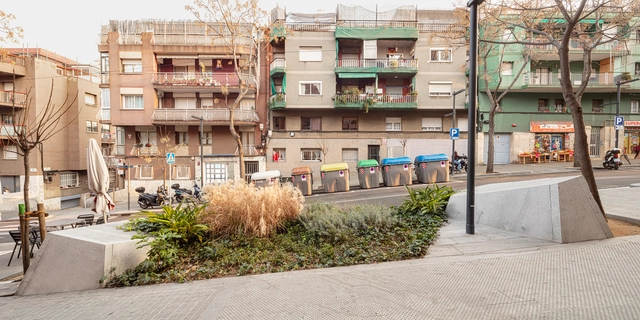
Social responsibility and the desire to improve society has long been influenced by the built environment. Looking at city centers, architecture has contributed to the improvement of the urban fabric, whether it being through planning and zoning strategies, integration of public spaces, or small interventions. In some cases however, these interventions are in fact used as tools to keep the homeless off the streets, disguised as art or conceptual designs. Several public urban policies have all implicitly prohibited the homeless and other marginalized social groups from city centers, claiming that their presence and “irregular” use of public space could compromise the reputation, security, and desirability of the city.
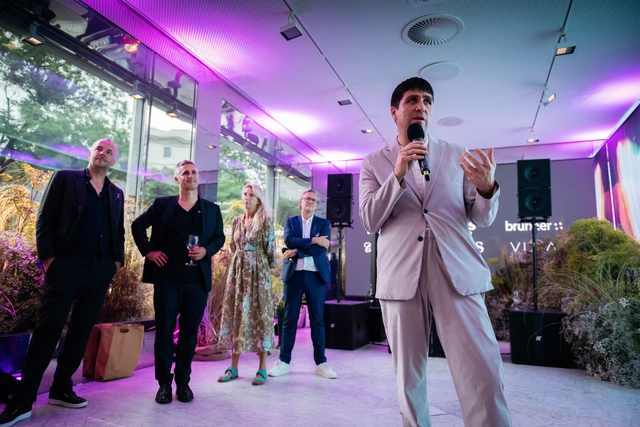
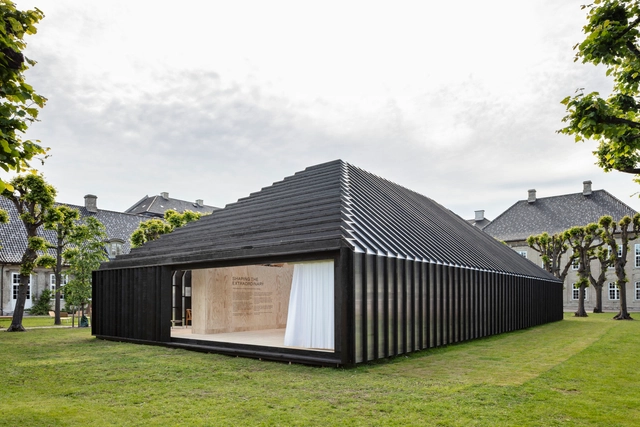
Henning Larsen has unveiled the "Fritz Hansen Pavilion", a sustainably-designed pavilion for the 3daysofdesign event in Copenhagen. Set in Designmuseum's Grønnegården, the Pavilion is developed with a Nordic approach, centered around daylight, using low-carbon materials, and circular design principles. The pavilion is designed to be disassembled, ensuring that its materials can be reused elsewhere. The pavilion will be open to the public during 3daysofdesign 15 – 17 June, and will then be used by Designmuseum Danmark until mid- Autumn.
Designed for an insurance company, The Centraal Beheer building by Herman Hertzberger in Apeldoorn, Netherlands, is widely recognized as one of the high points of the structuralist movement. MVRDV, in consultation with Herman Hertzberger’s office AHH, is transforming the celebrated building, making it the centerpiece of a new sustainable residential neighborhood while preserving its structure and core principles. The project is part of a larger area of development, a three-hectare site near the city’s train station. MVRDV’s design proposal introduces approximately 650-800 homes while keeping the focus on preservation, greening, and innovation.



















.jpg?1655725729 "© Juan Jerez")

.jpg?1655725498 "© Juan Jerez")




















Certitudo_HR.jpg?1655422317&format=webp&width=640&height=580)


.jpg?1655422503 "Herman Hertzberger - Centraal Beheer offices, Apeldoorn (1968-1972). Image via AHH, used under terms of \"fair use\"")
Certitudo_HR.jpg?1655422317)