Exterior Rendered View. Image Courtesy of mcdowellespinosa
The Chicago Architecture Foundation (CAF) has announced the three winners of its ChiDesign ideas competition to design the Chicago Centre for Architecture, Design and Education (CADE). The competition was in conjunction with the first ever Chicago Architecture Biennial, following the spirit of Robert McCormick’s international competition for the Chicago Tribune Tower in 1922 which opened discourse on the importance of design to the public. Similar to McCormick’s competition, but tackling a more modern, mixed-use typology, the Chicago CADE is envisioned as a facility to house the Chicago Architecture Foundation; the Council on Tall Buildings and Urban Habitat; a design and allied arts high school; and learning spaces for an extra-curricular youth program. Read about one of the winners, "Layered Intelligence" after the break, and see another winner, "Unveiled" here.







Julien_LANOO_20150322_21877.jpg?1446924600&format=webp&width=640&height=580)


.jpg?1446087581&format=webp&width=640&height=580)



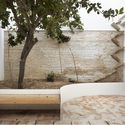








SamuelDelmas_Nozay_P1080507__redressée_retouchée.jpg?1446924584 "© a+ samueldelmas")
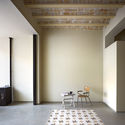
Julien_LANOO_20150715-0062.jpg?1446924535 "© Julien Lanoo")
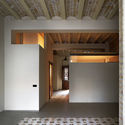
Julien_LANOO_20150715-0092.jpg?1446924490 "© Julien Lanoo")
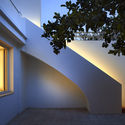
SamuelDelmas_Nozay_P1090039__retouchee.jpg?1446924621 "© a+ samueldelmas")
Julien_LANOO_20150322_21877.jpg?1446924600)










.jpg?1446087961 "© Cosmin Dragomir")
.jpg?1446087940 "© Cosmin Dragomir")
.jpg?1446087843 "© Cosmin Dragomir")
.jpg?1446087801 "© Cosmin Dragomir")
.jpg?1446087581)