
-
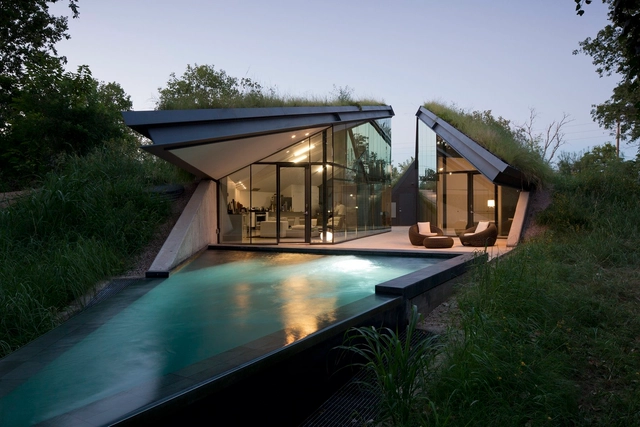
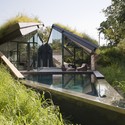
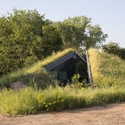
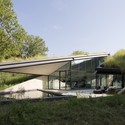
Architects: Bercy Chen Studio
- Year: 2012
-
Manufacturers: C.R. Laurence, Sika, AGUSTINA RODRIGUEZ, Agi Miagi, GUNTER RECHT, +6



.jpg?1414517964&format=webp&width=640&height=580)
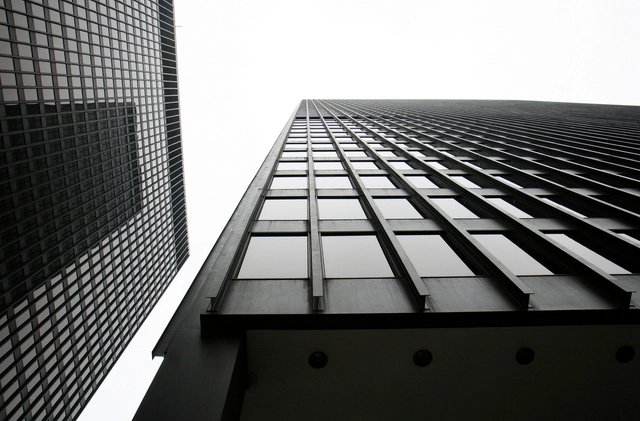
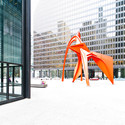
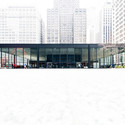
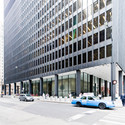
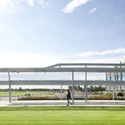
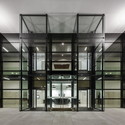
The Chicago Federal Center, designed by Ludwig Mies van der Rohe and completed in 1974, actually consists of three buildings which are arranged around and define the Chicago Federal Plaza. On the eastern side of South Dearborn Street sits the 30-story Everett M. Dirksen U.S. Courthouse. On the western side, the 42-story John C. Kluczynski Federal Building and the single story Post Office define the plaza.


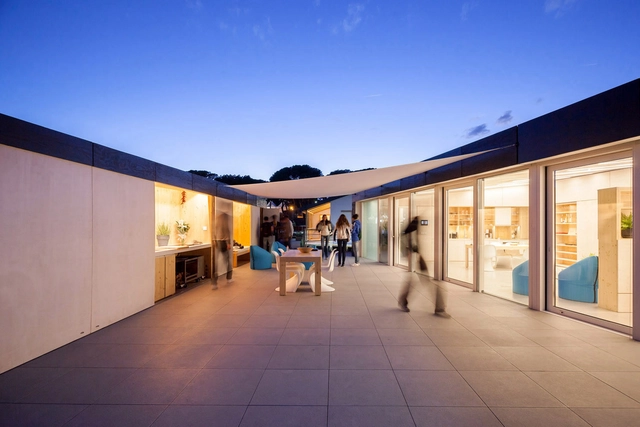
It may look unassuming, but this sleek black box is the culmination of a two-year long collaboration of more than 50 students from 7 different faculties of the Budapest University of Technology and Economics. Initially envisioned by two architecture students and built for the European Solar Decathlon 2012 in Madrid, the goal of Odooproject was to encourage a new sustainable life by designing a house where as much time as possible can be spent outdoors.
More information about Odooproject after the break...


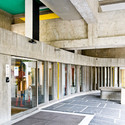
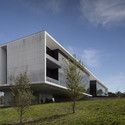
Created as a microcosm of Brazilian life and culture, Maison du Bresil is a significant example of Le Corbusier’s high-density residential design. Inaugurated in 1959, it is one of twenty-three international residences at the Cité Internationale Universitaire de Paris, located in the heart of Paris. As the “House of Brazil”, the building acts as both a residence hall for Brazilian academics, students, teachers, and artists, and as a hub for Brazilian culture, by providing exhibition spaces and archival resources. Notably, the building has provided residence to famous Brazilians, such as the renowned journalist Barroso Zózimo do Amaral.

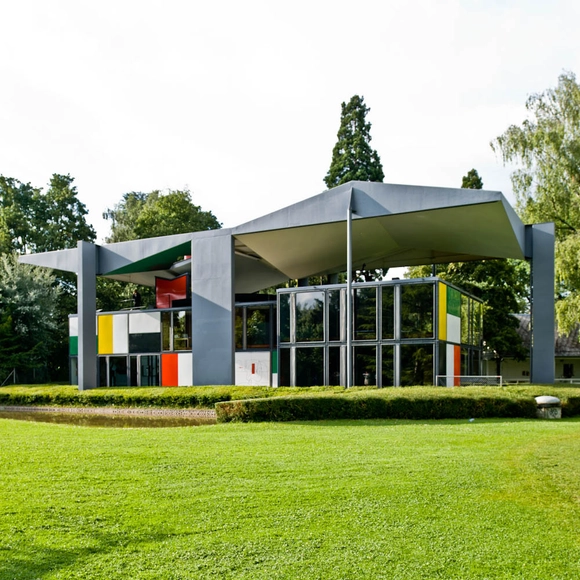
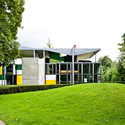
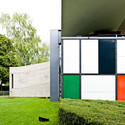
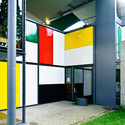
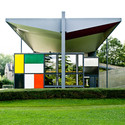
Iconic for its floating steel roof and brightly colored panels, the Pavillon Le Corbusier is the last building Le Corbusier designed before his death in 1965. Completed in 1967, the building stands as a testament to Corbusier’s renaissance genius as an architect, painter, and sculptor. It does so both intentionally, as it is an exhibition space for his life’s work, and naturally, as it is a building masterfully designed. Interestingly, the building diverges in some ways from the style responsible for his renown – concrete, stone, uniform repetition, etc. It celebrates the use of steel, with which he explored prefabrication and assembly, and a freedom through modularity, in which the plan is completely open but infinitely adaptable.
.jpg?1414517970 "© Ossip van Duivenbode")

.jpg?1414517983 "© Ossip van Duivenbode")
.jpg?1414517988 "© Ossip van Duivenbode")
.jpg?1414517964)