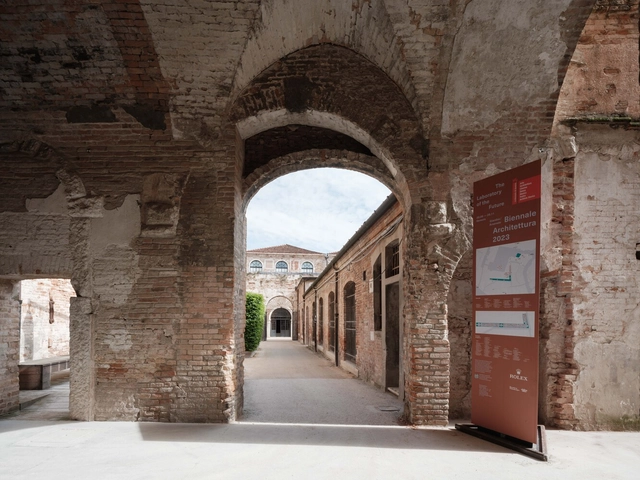
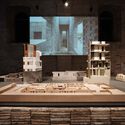
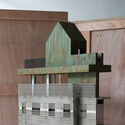
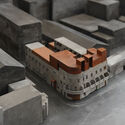
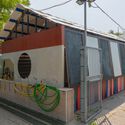
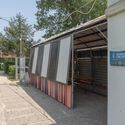
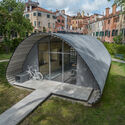
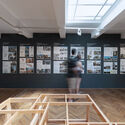
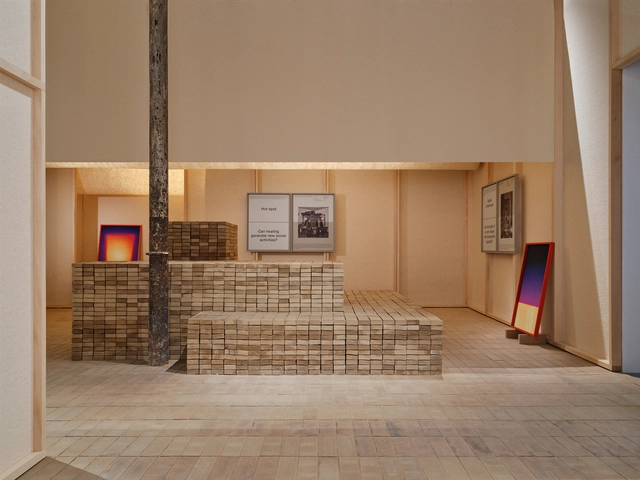
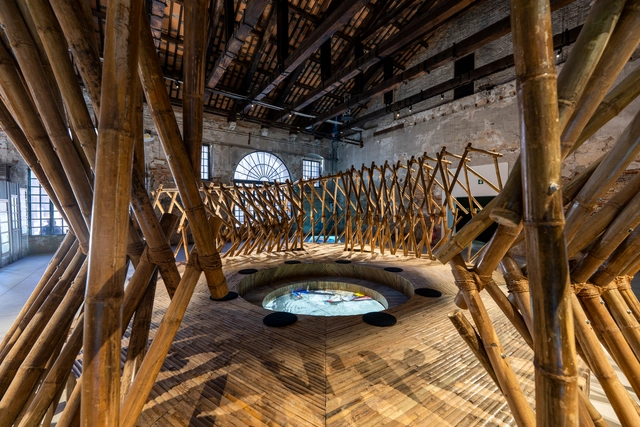
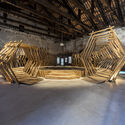
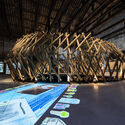
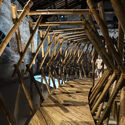
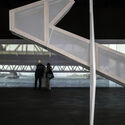
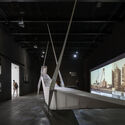
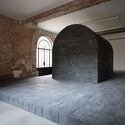
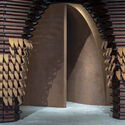
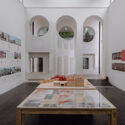
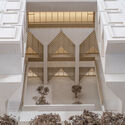
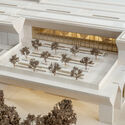
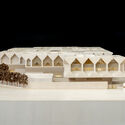
Neri&Hu presented “Liminality”, a multimedia exhibition selected by Lesley Lokko, at the International Architecture Exhibition in Venice. The exhibition took place in the Dangerous Liaisons section of La Biennale di Venezia at the Arsenale. In response to Lokko’s curatorial statement, Neri&Hu’s display explored the concept of liminality, the “zone” between design practice and theoretical exploration. The display consisted of three adaptive reuse projects that represent the practice’s research in “Reflective Nostalgia, Recasting Vernacular, and Ruinophilia/Future Artifact.”
Since pandemic-imposed restrictions have been lifted, Europe has experienced a surge in tourism, with millions of people visiting some of its most attractive destinations, such as Venice, Barcelona or Paris. The large number of visitors has proved to be a challenge for the cities, creating overcrowding and affecting the local population, urban development, and even the natural ecosystems surrounding the urban areas. In a bid to limit this influx, some of Europe’s most popular cities are taking various measures to address the overcrowding and the subsequent social and infrastructural issues. The measures include fines, entrance fees, and time-slot systems to impose some restrictions.
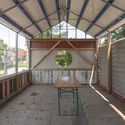
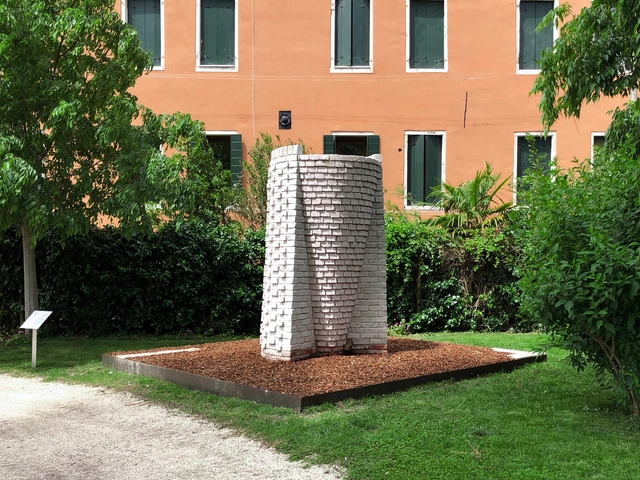
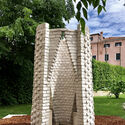
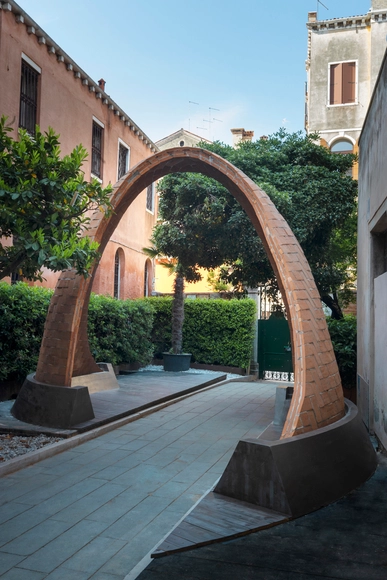
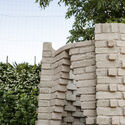
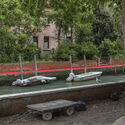
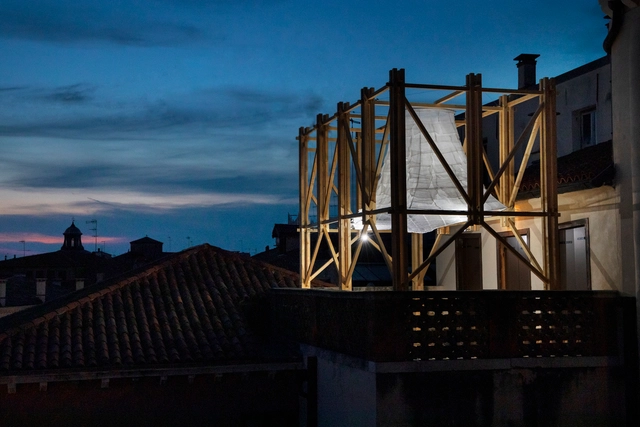
Urban Radicals presented a temporary pavilion “A Brick for Venice” as part of the European Cultural Center’s “Time Space Existence program during the same time as the 2023 Venice Architecture Biennale. The entirety of the brick pavilion was made with mud from the city’s canals. Furthermore, “A Brick for Venice” is the first proof of concept for the team’s novel waste-based construction product.
The European Cultural Centre (ECC), a non-profit organization dedicated to fostering cultural exchanges on an international scale, showcased its sixth edition of the Time Space Existence architecture exhibition alongside this year's Venice Architecture Biennale. The 2023 installment was centered on the theme of sustainability in its various forms, encompassing subjects related to migration,digital building technologies and material research, future urban developments, and housing, bringing together architects, designers, artists, academics, and photographers from 52 different countries.
Through diverse mediums and perspectives, participants have explored the philosophical concepts of Time, Space, and Existence. With a total of 217 projects on display, the exhibition is held at Palazzo Bembo, Palazzo Mora, and the Marinaressa Gardens in Venice, throughout the six-month duration of the 2023 Venice Architecture Biennale, running from May 20th to November 26th, 2023. Focusing also on emerging young architects, designers, and researchers, the 2023 edition of the exhibitionis a proactive endeavor to reimagine alternative lifestyles and reconceptualize architecture within the contemporary landscape.
At the 18th International Architecture Exhibition of La Biennale di Venezia, the Pavilion of Slovenia set out to explore the theme of ecology and the paradoxical ways in which architecture relates to it. Instead of understanding it strictly through energy-efficient adaptations like heat pumps or recovery ventilation, the exhibition titled +/- 1 °C: In Search of a Well-Tempered Architecture aims to address the theme holistically. The Pavilion curators Jure Grohar, Eva Gusel, Maša Mertelj, Anja Vidic, Matic Vrabič, together with fifty European architects and creatives, researched and analyzed vernacular buildings from Europe to gain insight into the living example of intuitive adaptations.
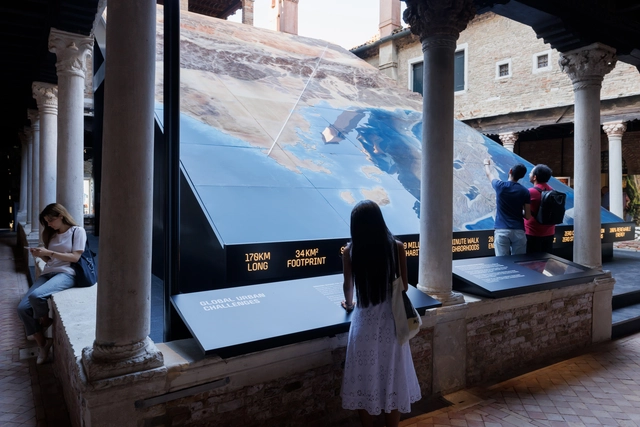
At the 18th International Architecture Exhibition of La Biennale di Venezia, NEOM has unveiled the “Zero Gravity Urbanism- Principles for a New Livability” exhibition to present the concept and standards guiding the design of the Line, their proposed 170-kilometer-long linear city in north-west Saudi Arabia. The event aims to introduce to the public an alternative vision for urban planning whose compact configuration strives to become a model for the development of more efficient and sustainable cities. Prior to the opening of the exhibition, more than 20 internationally recognized architects and designers joined the design team, including Sir Peter Cook, Massimiliano Fuksas, Jean Nouvel, and Ben van Berkel. The exhibition is open from 20 May to 24 September 2023 at Abbazia di San Gregorio, Venice.
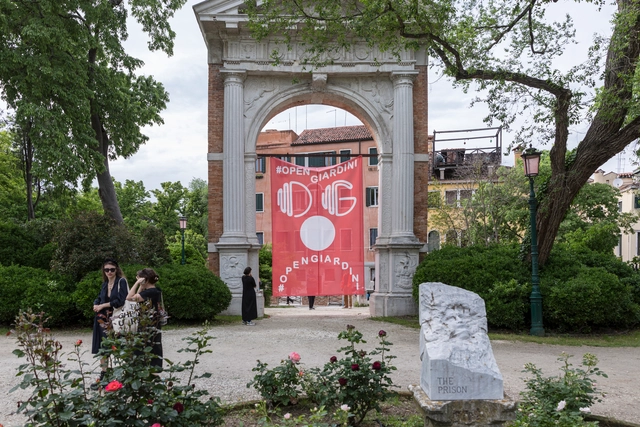
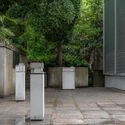
The Unfolding Pavilion is a recurring exhibition and editorial project by Daniel Tudor Munteanu and Davide Tommaso Ferrando that aims to highlight previously inaccessible but architecturally significant spaces. Now in its fourth edition, the exhibition is dedicated to the Giardini della Biennale, the Venetian garden that became the main location for one of the most important architecture exhibitions worldwide, the Venice Biennale. Through a series of site-specific interventions and photographs by Laurian Ghinițoiu, the Unfolding Pavilion #OPENGIARDINI set out to explore the paradoxical state of this public space that is not publicly accessible.
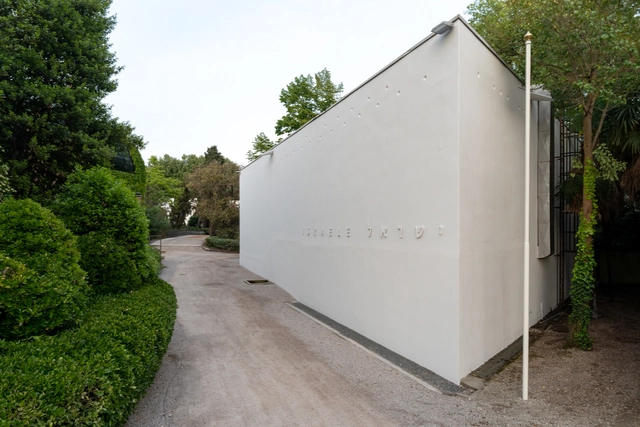
The National Pavilion of Israel presents “Cloud-to-ground,” an immersive installation exploring the nature of modern communication networks at the 18th International Architecture Exhibition of La Biennale di Venezia. The exhibition, curated by Arch. Oren Eldar, Arch. Edith Kofsky, and Hadas Maor, aims to initiate a multifaceted discussion regarding the physical aspects of virtual networks: the data centers and telephone exchanges commonly referred to as “black boxes.” The chosen theme is relevant for Israel due to its strategic location set at the intersection of continents and cultures. The pavilion in the Giardini will remain open for visitors until November 26, 2023.
While exploring the 18th International Architecture Exhibition onsite in Venice, ArchDaily had the chance to speak with Jayden Ali and Joseph Henry, two of the co-curators of the British National Pavilion. The exhibition titled “Dancing Before the Moon” was created together with Meneesha Kellay and Sumitra Upham, and features creations from six designers and artists. As the curators explain, the aim of the installations is to expand the general understanding of what architecture is and to integrate it into a wider conversation with fashion, music, art, dance, and performance, rather than separating it as its own class of creativity. On June 20th, a few days after the conversation, the British National Pavilion was awarded a special mention at this year's award ceremony.
At the 18th International Architecture Exhibition of La Biennale di Venezia, The PhilippinesPavilion presents an exhibition that investigates the ecology and social implication of the Tripa de Gallina estuary in Manila. The body of water, once a mechanism for flood mitigation, has now become congested and polluted, affecting the lives of the nearby communities. The Pavilion aims to present the initiative that set out to gather and investigate the guts of the estuary and to work with the residents to find adequate and sustainable architectural solutions. Titled “Tripa de Gallina: Guts of Estuary,” the exhibition in Venice is co-curated by Architect Choie Funk and Sam Domingo and presents the work of the Architecture Collective, represented by Bien Alvarez, Matthew Gan, Ar. Lyle La Madrid, Noel Narciso and Arnold Rañada.
In parallel to this year's Venice Architecture Biennale, The European Cultural Centre (ECC) presented the sixth edition of its extensive architecture exhibition titled Time Space Existence. The 2023 iteration of the group show draws attention to expressions of sustainability in its numerous forms, ranging from a focus on the environment and urban landscape to the unfolding conversations on innovation, reuse, community, and inclusion. A total of 217 projects by established participants like Snøhetta or MADWORKSHOP and emerging players such as Urban Radicals or ACTA are currently on show through the 26th of November, 2023, at Venice's Palazzo Bembo, Palazzo Mora, and Marinaressa Gardens.
In response to climate change, the installations on show investigate new technologies and construction methods that reduce energy consumption through circular design and develop innovative, organic, and recycled building materials. Participants also address social justice by presenting living solutions envisioned for displaced communities and minorities, while others examine the tensions between the built urban environment and the nature surrounding it to identify opportunities for coexistence.
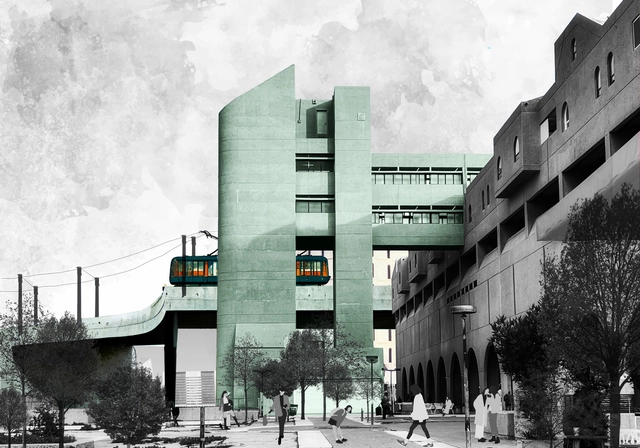
Rabab Raes Kazem, Envisioning the future of Kuwait, 2023. Collage, Print on Mylar, 42cmx29.7cm. Image Courtesy of NCCAL
The Kuwait Pavilion, titled 'Rethinking Rethinking Kuwait,' at the 18th International Architecture Exhibition — La Biennale di Venezia, delves into innovative architectural and urban design methods arising from space and time. The project is an ongoing exploration addressing the consequences of modernist urban planning, which erased much of Kuwait's historic built environment.
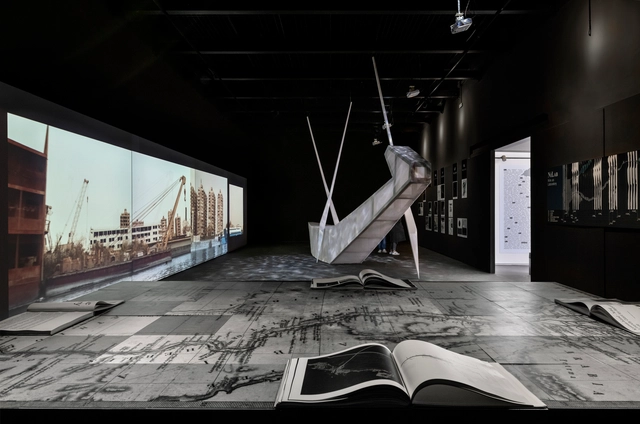
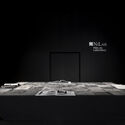
Installation at La Biennale di Venezia. Image Courtesy of NiLab
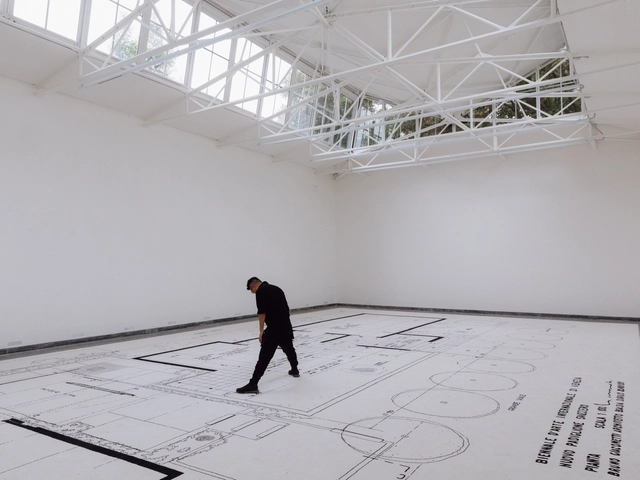
Along the longest river in the world, the Nile River, various landscapes and natural environments have been negatively impacted by interventions that do not consider the context or respect local cultures. In response, NiLab the Egyptian Pavilion at the 18th International Architecture Exhibition of La Biennale di Venezia, aims to revisit these places and highlight the value of architectural design in promoting more sustainable and culturally aware development along the river. The exhibition titled "NiLab: Nile as Laboratory", recognizes the Nile's exceptional geographical size, historical significance, and impact on natural and human landscapes, making it an ideal backdrop for reflection on contemporary issues.
Taking a broader perspective on architecture, the exhibition shifts its focus towards the discipline rather than just the profession. It’s not “about building buildings per se”, explains the curator to ArchDaily. Instead, it seeks to question our conventional understanding of architecture, and with that, architectural exhibitions. The 2023 Biennale is a laboratory in every sense of the word, a global platform of experimentation, and a space to explore new ideas in the absence of spaces that allow us to do so. "It borrows its structure and format from art exhibitions, but it differs from art in critical ways which often go unnoticed", states Lesley Lokko in her initial statement.
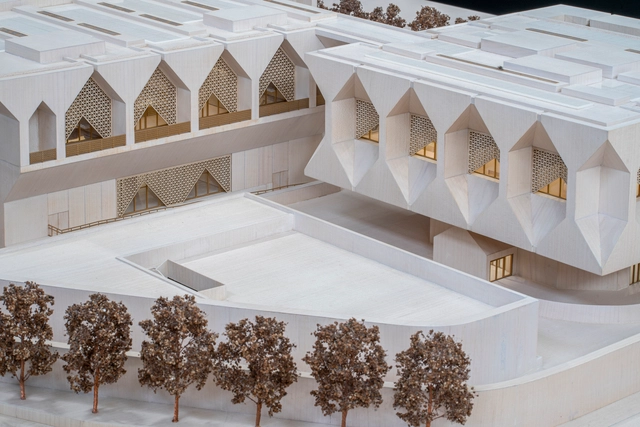
Architectural model of the new KNMA New Delhi. Image Courtesy of Adjaye Associates and KNMA
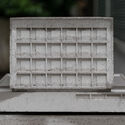
The Kiran Nadar Museum of Art (KNMA) has revealed an architectural model of its new building during the 18th International Architecture Exhibition - La Biennale di Venezia, as part of the Curator’s Special Projects, titled Mnemonic, presented at the Arsenale - Artiglierie in Venice. The building, designed by Ghanian-British architect Sir David Adjaye in collaboration with S. Ghosh & Associates as the local architect of record, is set to become India’s largest cultural center. The project is scheduled to open in Delhi in 2026.