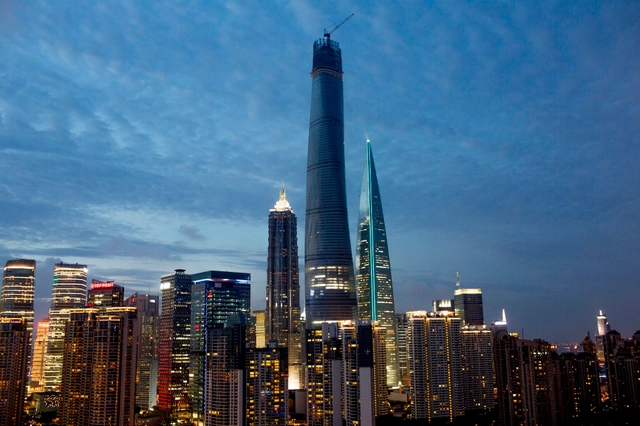
After nearly eight years of design and construction, what will soon be China’s tallest and the world’s second tallest building has entered into its final phase of construction. Designed by Gensler, the 632-meter (2,073 feet) spiraling Shanghai Tower is now set to be completed in 2015, becoming the centerpiece of the city’s Lujiazui commercial district.
In light of the tower reaching its final phase of construction, Marshall Strabala, the Chief Architect of the building, has unveiled new photos of the construction process. Enjoy these photos as well as a video interview with Strabala on the construction process after the break…
Following the recent announcement of Aedas' demerger into two separate companies - one retaining the Aedas name and the other now known as AHR - we spoke to Keith Griffiths, Chairman of Aedas' global board and a practicing architect for close to three decades. The company, which was recently ranked by the Architects' Journal as the 5th largest and most influential practice in the world, have now moved their head office to London's Chandos Place and are championing a new approach to urban regeneration in the UK's capital. Alongside discussing how an international practice of Aedas' scale successfully operates, Griffiths offered his insight into how the future looks for European cities based on a tried and tested Asian model of densification.
To find out how Aedas approach sustainability in flourishing Asian markets, as well as the significance of the 'urban hub' typology for London's metropolitan future, read the interview in full after the break.
I look into myself, trying to express myself. I think sometimes maybe you have an idea from a dream. It sounds ridiculous but you draw something out of your dream. Where does this dream come from? It must somehow relate to some situation. So what I'm interested in is to keep discovering what is really inside of me. I'm not a genius that from the first moment I already know what I want. - Ma Yansong -
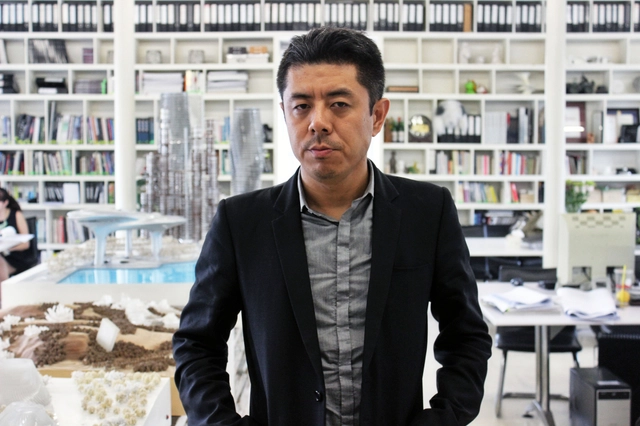
Beixinqiao district, in Beijing, is changing fast: the ancient urban tissue is being demolished as new high-rises are growing.Located in this environment, Ma Yansong’s office sits within an old and anonymous construction. In contrast to its exterior, the inside is characterized by wood, white walls and plants that transform the place into a sophisticated environment.International young architects are busy modeling new organic-shaped buildings on the other side of the world; meanwhile a golden fish swims in the eternal loop of the “fish tank” in the centre of the room.
In the following interview, Ma Yansong explains contemporary cities as environments that are out-of-scale with nature. He believes a new approach must be used, one that breaks the monotonous “chessboard” of contemporary Urban China and re-establishes the balance between human beings and the natural world.
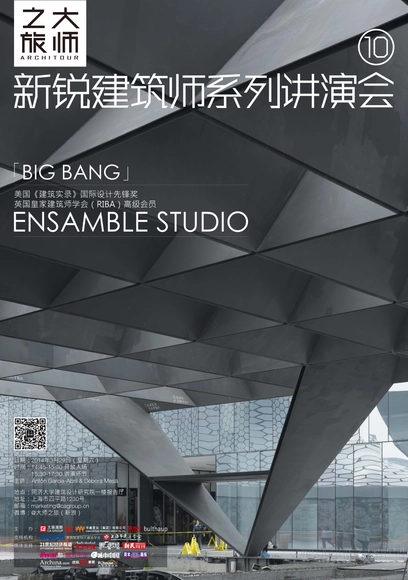
As part of the CA Group’s lecture series, “Architour,” principal of Ensamble Studio, Antón García-Abril & Débora Mesa, will give a lecture at 15:30 on March 29th at Tongji Architectual Design (Group) Co.,Ltd.(TJAD) auditorium in Shanghai. For 2013 through 2015, “Architour” has as its theme “New Force of Architecture – Leading Young Architects”: each year, the CA Group will select nine young, global leaders in architecture (four from Asia and five from the West) to lecture on topics that cross typologies and disciplines, from architectural design, urban planning to interior design. Sou Fujimoto, Hirata Akihisa, Christian Kerez and Thomas Heatherwick were the series’ first speakers.
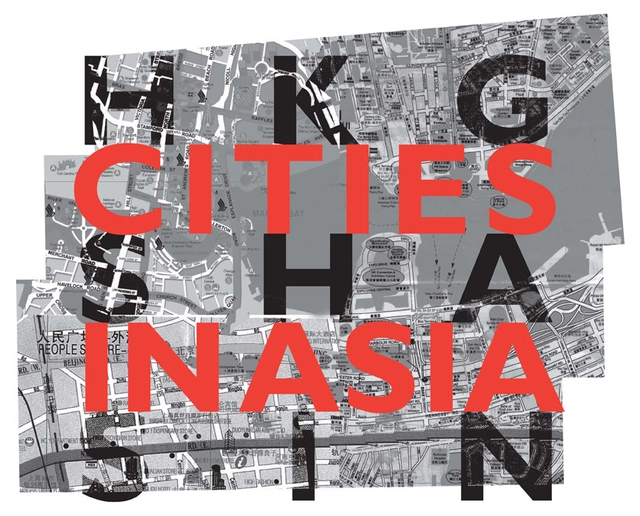
Cities in Asia HKG-SHA-SIN is a four-week design and research studio organized by the University of Hong Kong Faculty of Architecture. Taught with daily learning activities by a diverse group of faculty members from the University of Hong Kong, and speakers from internationally renowned universities and independent research groups, this course offers participants a design studio experience within Asia's most vibrant contexts.
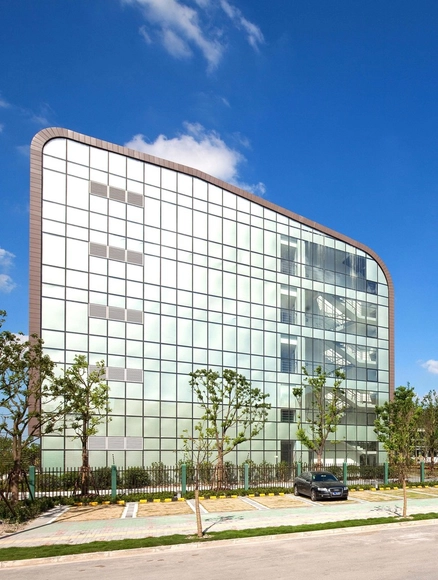
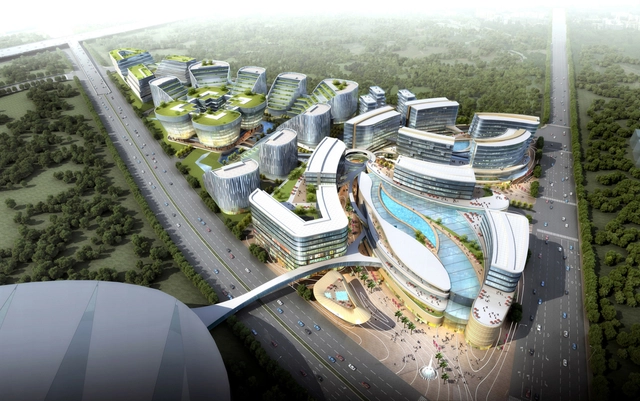
Urban Architecture (UA Studio 7) and Aedas' winning proposal for the Hongqiao Central Business District has broke ground at Shanghai’s domestic Hongqiao Airport, mainland China's fourth busiest airport. The 18.4 hectare office and retail center, masterplanned by UA, has been divided into two parts: UA Studio 7 will design the office district, “a flower with eight leaves,” while Aedas designs the shopping, hotel, and conference center along a "bow curve" of pedestrian flow.
According to UA, the winning scheme's success was "due to a highly energy-efficient architecture proposal combined with an urban plan that allows for pedestrian-friendly spaces."