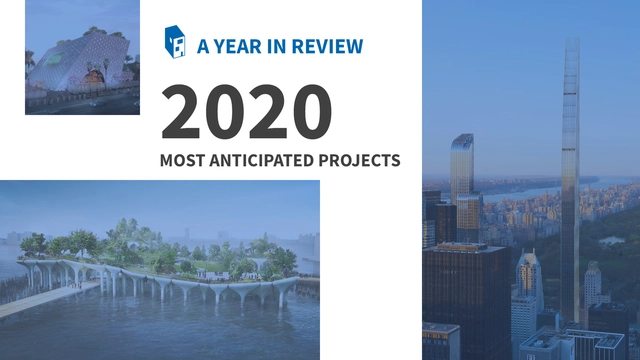
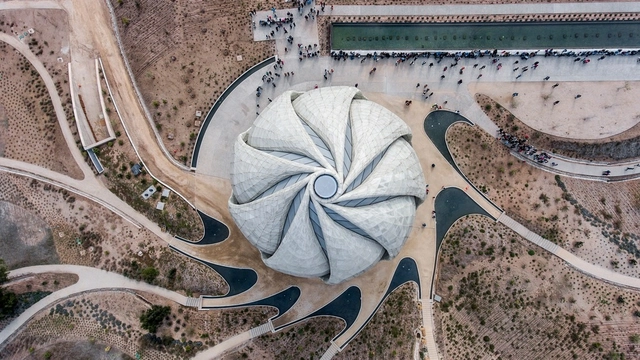
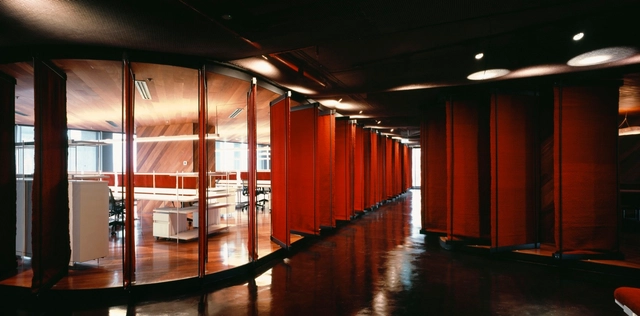
As 2019 winds down, we're taking a look ahead to the projects we're most looking forward to in 2020. With a mix of cultural and commercial programs, the designs are located across five continents, with many under construction for multiple years. Designed across a wide range of scales, they represent a mix of interconnected landscapes, museums, and the world's newest skyscrapers.
Regardless of where you live or work or who you’re friends with, you usually move around the same neighbourhoods and streets of your city. It may be London, Santiago, Shanghai, or Moscow, but in any of these places, there are always districts you have never set a foot in. Have you ever considered how many ‘cities’ are within your own city?
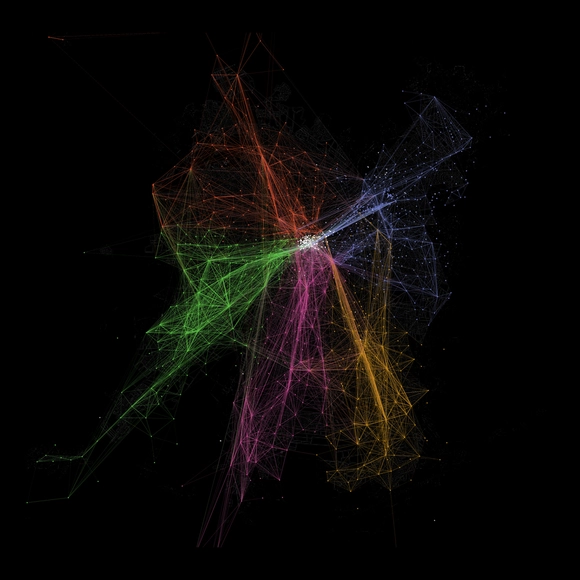
A research article published in The Royal Society Open Science and signed by Chilean researchers utilizes big data to analyze and visualize urban segregation, delivering spatial tools that allow us to develop strategies in a city of many cities. "We know there are [social] bubbles in Santiago, Chile, and that therefore, there is segregation," says Teodoro Dannemann, co-author of the research paper The time geography of segregation during working hours, in a conversation with ArchDaily. “We know that each person explores only a small fraction of the city, which is basically the home-work trajectory. This implies that we only engage with a small group of citizens," he adds.
Vienna, Austria has been ranked as the city with the best quality of life in the world for ten consecutive years. The ranking made by multinational consultancy Mercer is dominated by Western European cities in the highest positions, while Vancouver, Canada reached third place, becoming the highest-ranking city in North America for the last 10 years.
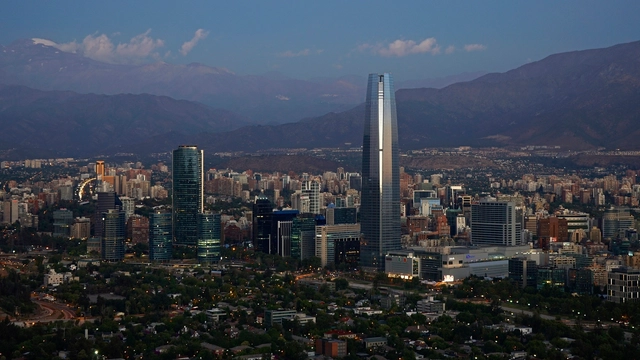
Santiago, Chile. Image via Flickr User: alobos Life. Used under CC BY 2.0
The American Institute of Architects Committee on Design is holding its first South American conference this week in Santiago and Valparaíso, Chile. Starting on October 20 and running through the 27th, the conference is organized by the Copperbridge Foundation in collaboration with Chilean Constructo and Massantiago. The CoD conference will include a focus on each city's contemporary architecture and urban fabric, as well as tours, presentations and exhibitions with Chilean institutions.
Mercer released their annual list of the Most Livable Cities in the World last month. The list ranks 231 cities based on factors such as crime rates, sanitation, education and health standards, with Vienna at #1 and Baghdad at #231. There’s always some furor over the results, as there ought to be when a city we love does not make the top 20, or when we see a city rank highly but remember that one time we visited and couldn’t wait to leave.
To be clear, Mercer is a global HR consultancy, and their rankings are meant to serve the multinational corporations that are their clients. The list helps with relocation packages and remuneration for their employees. But a company’s first choice on where to send their workers is not always the same place you’d choose to send yourself to.
And these rankings, calculated as they are, also vary depending on who’s calculating. Monocle publishes their own list, as does The Economist, so the editors at ArchDaily decided to throw our hat in as well. Here we discuss what we think makes cities livable, and what we’d hope to see more of in the future.