-
Architects: Personal Architecture
- Area: 120 m²
- Year: 2016
-
Professionals: Nelissen Ingenieursbureau
Het Nieuwe Instituut, the Dutch institute for architecture, design, and digital culture in Rotterdam, have announced an open call for three research fellows to work in residence between June and December 2016. Alongside the institute’s exhibitions, lectures, publications, and archives, the Fellowship program will explore and challenge how research is conducted within an institutional context, pursuing alternatives to the expectation of predetermined outcomes, the use of official jargon, and the inertia power of the curriculum vitae. In the long term, the program is also intended to complement, reflect on, interact with, and critique the ongoing activities of the institute.
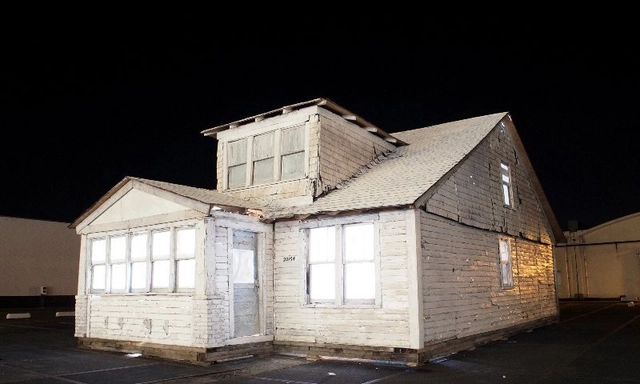
An empty house from Stoepel Street 20194, Detroit, is now in Rotterdam, The Netherlands. In this article for The Guardian, artist Ryan Mendoza describes his impetus and process for translocating a worn, abandoned former family home from one continent to another – as well as the statement he hoped to make. "When I arrived in Detroit in March 2015 I realised that this city – in the country I had left in 1992 out of distaste for its nationalistic, isolationist, police-dog mentality and its privatised prison system, [...] had, aside from the positive developments that were mostly in the downtown area, begun to look like a war zone."
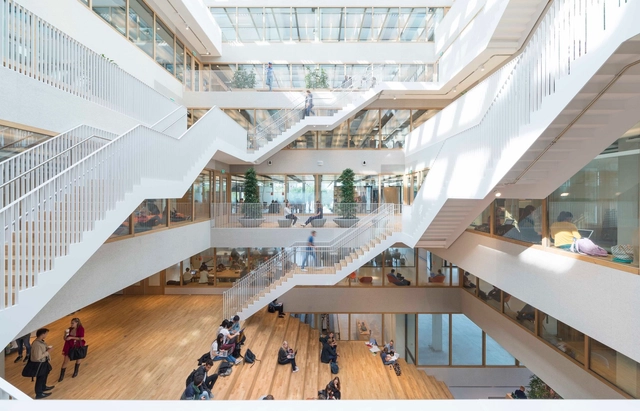
As part of OMA co-founder Rem Koolhaas' sixth interview with Charlie Rose, the Rotterdam-based Architect discusses why the Dutch port-city is his practice's base – and why he switched from journalism and scriptwriting to architecture. In the discussion, of which four snippets have been made available, Koolhaas also explains why he feels that smart technology has a "sinister dimension," and on how he—and his practice—have a tendency to "resist aesthetic."
In the latest video from the youtube channel #donotsettle, architects Wahyu Pratomo and Kris Provoost explore OMA’s recently opened Timmerhuis in Rotterdam. The duo compare the conceptual design and renderings to the finished building, look at the impact the new building is having on the cityscape, and with some good fortune find their way through some locked doors.
#Donotsettle was started to reconcile the disparity between film as architectural representation and as an experiential medium. For more #donotsettle, check out their youtube page, where they walk through the Markthal, designed by Rotterdam-based practice MVRDV and the train station in Delft, designed by Delft-based practice Mecanoo, among many other sites.
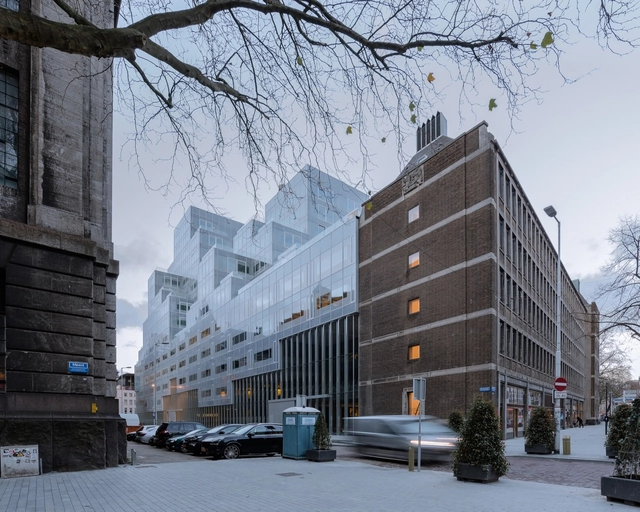
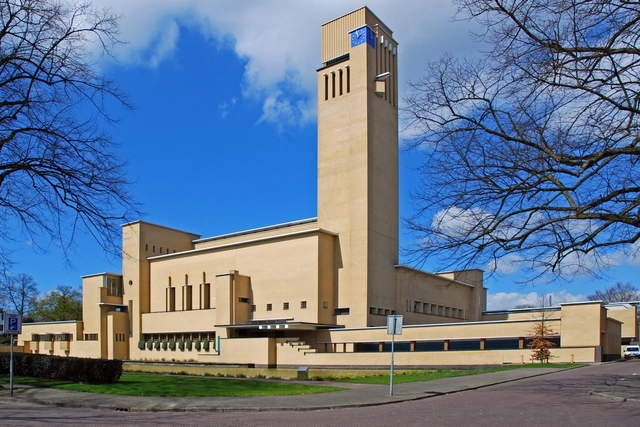
Willem Marinus Dudok (6 July 1884 - 6 July 1974) was one of The Netherlands' most influential Modernist architects. Formally trained as an engineer, Dudok spent his formative years designing military barracks for the Dutch forces, and his time with the military has been credited with the development of his early linear style, though he was known to borrow elements from Frank Lloyd Wright's prairie school of architecture. Dudok's architectural legacy is undeniable: with a career spanning several decades, his portfolio encompasses nearly all civic buildings in Hilversum, along with a series of projects in Rotterdam, Utrecht, and Paris, among others.
More than forty years after Dudok's death, Dutch journalist Peter Veenendaal has produced two videos documenting the architect's best projects, both in Hilversum: Town Hall and the Sports Grandstand. Serving as sequels to Veenendaal's documentary "City of Light" which delved into Dudok's design for retailer De Bijenkorf in Rotterdam, the videos highlight Dudok's impressive eye for form and linearity.
Check out Veenendaal's videos and find out more about Dudok's influential architecture after the break
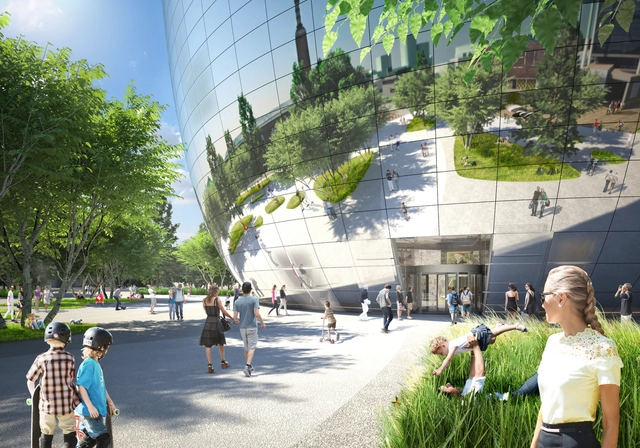
Rotterdam will soon have a new cabinet of curiosities to add to its collection of architectural icons. For many years the city's Museum Boijmans van Beuningen, originally established in 1849, has required a safer space to house its world-class collection of painting, sculpture and prints – a collection which is said to have a total value of €7billion ($7.5billion). Last week the Municipality of Rotterdam voted in favour of the building’s construction and, with zoning approved, "the world’s first fully accessible art storage facility" is now slated to open its doors in 2018.
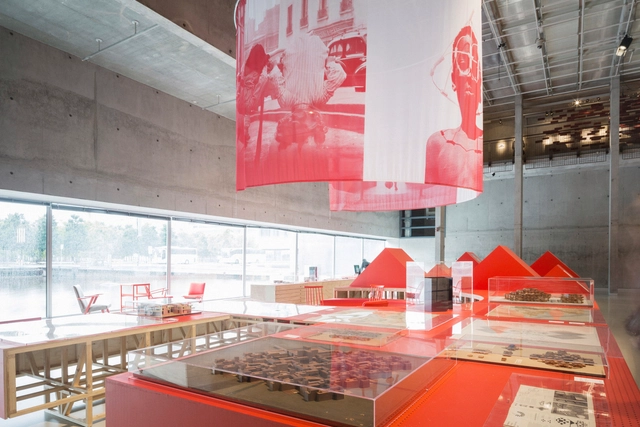
The Jaap Bakema Study Centre's second annual conference, entitled Research on Display: The Architecture Exhibition as Model for Knowledge Production, will begin next month in Delft and Rotterdam (The Netherlands). Featuring presentations and discussions from members of universities around the world—including Ghent, Valencia, London, Warsaw, Paris, Michigan, Yale, Oslo and Zürich—the two-day programme seeks to examine what it means to curate architectural research.
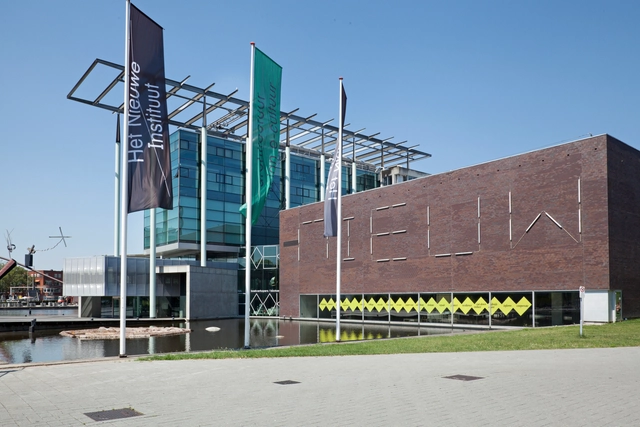
Rotterdam-based practice MVRDV have begun a transfer of their early work, spanning fifteen years from 1993 to 2008, to Het Nieuwe Instituut — the central architecture archive of The Netherlands. This collection, which will eventually be made available to the public, will be in the institute's first primarily digital donation (approximately eight terabytes of data) and consisting of material from 400 of the practice's 680 total projects, including the Villa VPRO, the Silodam in Amsterdam, and the Markthal Rotterdam, as well as unrealised projects such as Meta City Datatown, Pig City, and 3D City Cube.
Perhaps the only material on the architectural market known for its "thirst," ultra-porous concrete is being hailed as the future of urban water runoff management for warm climates. The emerging material reached mainstream popularity in recent weeks thanks to a viral video depicting an apparently ordinary car park absorbing an inordinate amount of water; 1.2 million views later, the video has ignited debate on viability and possible uses for water-absorbent concrete.
Ultra-porous concrete is gaining a foothold thanks to extensive research being conducted by architects and engineers around the world. Known for its rainy climate, daring use of innovative materials and unorthodox architecture, it comes as no surprise that the Dutch city of Rotterdam has embraced water-absorbent concrete for testing.

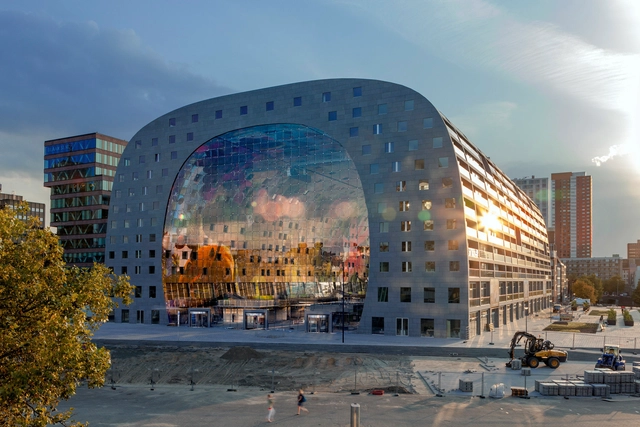
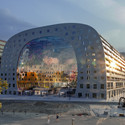
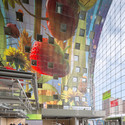
MVRDV’s Markthal in Rotterdam has received a High Commendation in the category of “Mixed-Use Architecture” at the 2015-2016 European Property Awards.
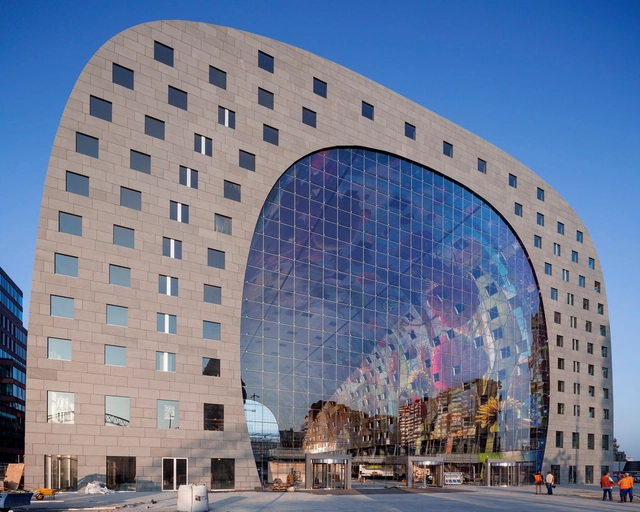
Becoming "the Sistine Chapel of Food" required a lot of invisible hard work. As Rotterdam's Markthal turns one year old, MVRDV's Head of Public Relations and Business Development Jan Knikker reflects on how the PR and media hype around Markthal Rotterdam was organized. This article is also supplemented by an interview conducted by ArchDaily with Winy Maas and Jan Knikker, which connects the parallel lines of the building's design and its PR campaign.
If I say that this is a PR story will you believe a single word? Markthal Rotterdam is a PR story with astonishing results: since its opening by queen Maxima in October 2014, our office MVRDV has nearly doubled in size to 110 staff members and it’s still growing. We - and The Financial Times - call it the “Markthal Effect”. In the first year the building reached over 8 million visitors, more than the Eiffel Tower, Bilbao Guggenheim or Tate Modern. 800 articles were published worldwide. It was hailed as a Sistine Chapel for food, a symbol of urban renaissance, a cool place to go. With the roughly 4 million visitors that came from outside of Rotterdam, the city saw its tourism grow.
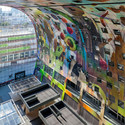
How did that happen? It would be an easy assumption to think that a great building naturally attracts this kind of attention. But it all started quietly. In 2004 developer Provast and MVRDV won the competition with a plan that resembles the current design, except with one big difference: the colorful art piece which brightens up the inside of Markthal was at that stage also all over the outside facade. In any other city that would have lead to an instant protest movement against the zeppelin hangar covered in a gigantic fruit wallpaper. But not in Rotterdam. Public awareness started only once the construction became noisy.
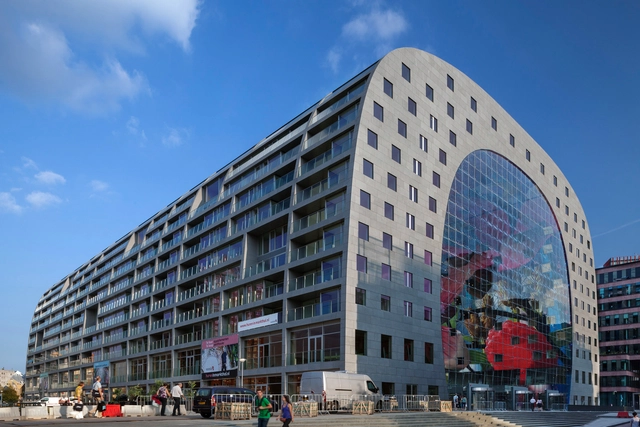
Today marks one year since Queen Máxima of the Netherlands opened MVRDV's Markthal in Rotterdam to great public fanfare. In the 12 months since this event, the building has come to be recognized by the architectural establishment as being among the most important of MVRDV's designs. Perhaps more interestingly though, it has become widely popular among the general public - on Google you can find references to "Rotterdam's Sistine Chapel" in a variety of languages, and articles about the building have appeared in publications everywhere from Colombia to Vietnam.
MVRDV Head of Public Relations and Business Development Jan Knikker's article, published today on ArchDaily, shows that this widespread recognition was not accidental; it was the result of a widespread and comprehensive PR strategy initiated by MVRDV and carried out by a team that included every one of the building's major stakeholders. It's a fascinating and provocative tale that offers an insight into one of the least trusted facets of architectural practice. However, it also largely ignored one important element that undoubtedly contributed to the building's popularity: its design.
In order to connect the two parallel lines of Markthal's design and its PR campaign, we spoke to Knikker and founder of MVRDV Winy Maas to talk about Markthal, PR, awards and architectural media. Read on for the full interview.
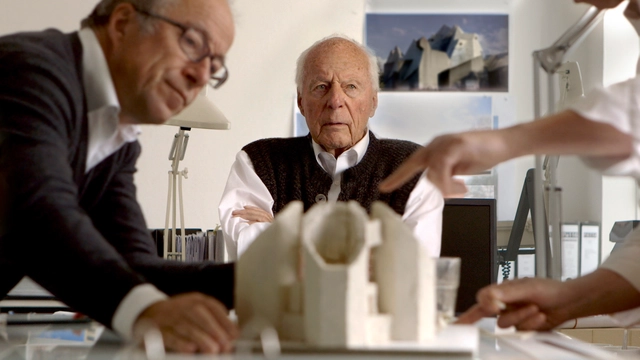
It's only logical that Rotterdam, one of Europe's leading cities for architecture and architectural practice, has a biennial film festival. Since its inception in 2000, the city's homage to architectural cinema now claims to be the biggest architectural film festival in the world. Featuring over one hundred international documentaries, feature films and shorts—as well as debates, lectures and seminars—this year's festival plans to "provide a podium for discussing the city and future of spatial development." From cinematic journeys into the world of the illusive Böhm family to Zaha Hadid, Chinese ghost cities to London's Barbican estate, this year's programme circles around the theme of the Global Home.
With the eighth incarnation of the Architecture Film Festival Rotterdam (AFFR) opening next week (running from the 7th - 11th October 2015), we've selected our five top picks from this year's schedule.









way_fotograafLisaKlappe.jpg?1443783006 "Courtesy of Rainaway")

Way_Flood.jpg?1443782976)