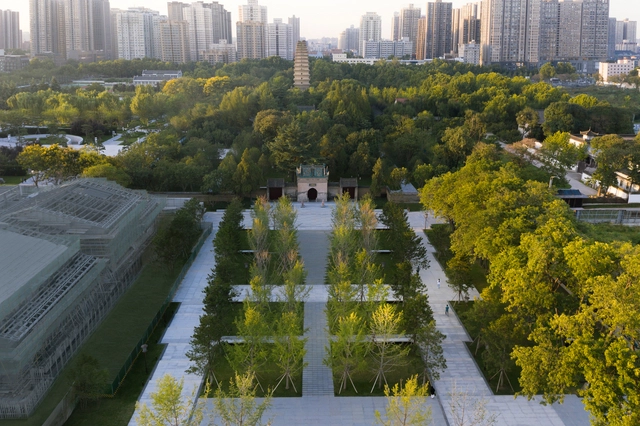
Cities around the world share a common goal: to become healthier and greener, supported by civic infrastructure that restores ecosystems and strengthens public life. The question is how to reach this. Global climate targets, local building codes, and municipal standards increasingly guide designers and planners toward better choices. Still, many cities struggle to translate these frameworks into everyday, street-level comfort and long-term ecological protection. What happens if the city is no longer treated as a traditional city, but as a national park?
National parks operate through systems of protection that treat land as a network of ecological relationships rather than a collection of isolated sites. They establish a shared baseline for what must be preserved, maintained, and made accessible over time. When this logic is applied to the urban environment, success can inspire pride and a sense of shared responsibility among designers, policymakers, and residents, fostering a collective commitment to health, habitat, and civic infrastructure.
Health has become a central concern in architecture, planning, and design, driven by a growing awareness of how the built environment influences physical, mental, social, and environmental well-being. In 2025, this awareness moved beyond specialized building types or performance metrics and became central to architectural decision-making, informing how spaces are conceived, built, and inhabited across diverse contexts. Architects are no longer treating health as an external requirement but as an integral condition of everyday life.
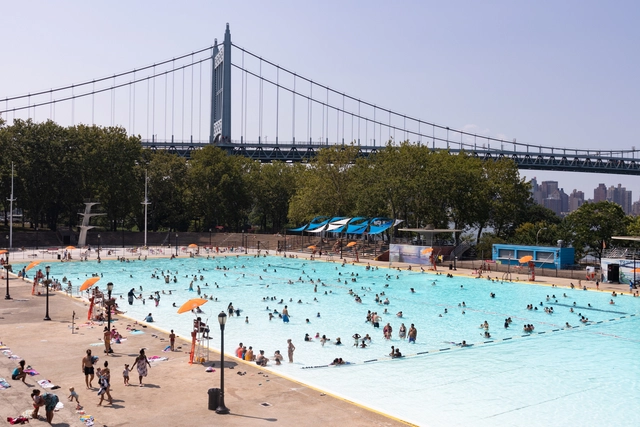
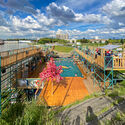
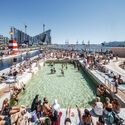
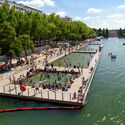
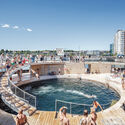
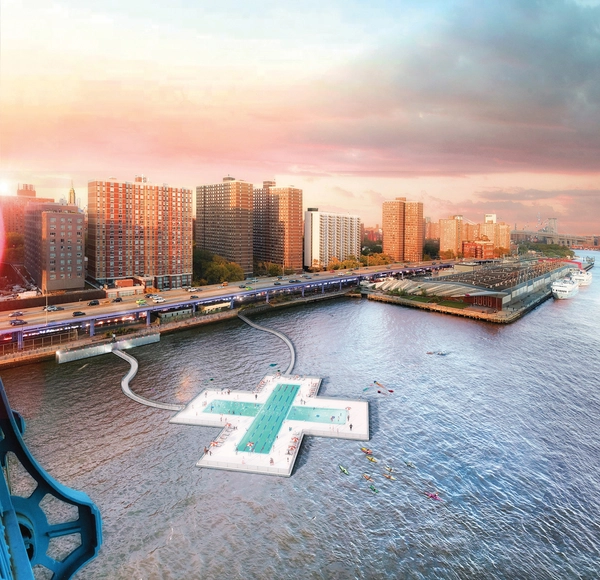
When one thinks of public spaces, the image of a pool rarely comes to mind. Public spaces are the center of civic life, places where most interactions, activities, and behaviors follow strict social and cultural norms to ensure the safety and comfort of all users. In contrast, swimming and bathing represent something more intimate and primordial, a sensorial experience distinct from any other. In addition to the health benefits, the act of floating in space creates a break from everyday life and its constraints.
As social spaces, public baths, and pools offer an even more unusual experience. Here, regular conduct rules and norms no longer apply. Social nudity becomes the new norm, and, as people strip off their clothes, they also lose their status markers, transforming the pool into an egalitarian oasis. Across history, these often-discredited spaces offered a heightened social experience, fostering connections and bringing a new element to dense urban environments. As a typology present since antiquity, public baths and pools have also been a disputed space, as a manifestation of difficult topics such as gender and racial segregation, gentrification, and surveillance in contrast to the freedom they promise.
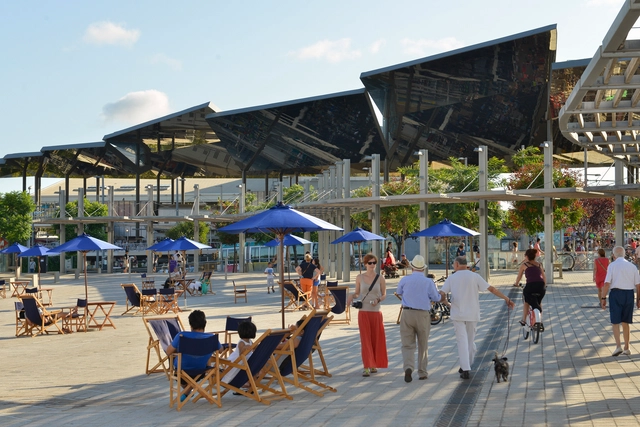
Urban green spaces are considered one of the most appropriate and accessible ways to mitigate the effects of rising temperatures in urban environments. As the global climate warms, cities worldwide face more frequent and extreme heat waves, putting their citizens at risk. Many cities are employing strategies for reducing the impact of urban heat islands, which are generated when natural land cover is replaced with surfaces that absorb and retain heat, such as pavements and buildings. This raises the temperature by several degrees compared to the surroundings. Cities have their micro-climate, influenced by this phenomenon combined with a series of often overlooked factors. For a climate strategy to be efficient, all factors need to be taken into consideration.
Due to climate change, heat waves are becoming increasingly frequent and intense, and they present a critical challenge for the design of urban spaces. Elevated temperatures exacerbate public health issues, increase energy consumption, and diminish cities' overall quality of life. Urban design must adopt strategies that promote resilience to mitigate these effects rather than merely replicating traditional formats that do not address the thermal stress experienced by many.
For quite some time, we have recognized the positive effects of urban green spaces, interaction with nature, water, and soil, and the associated health and well-being benefits for residents living next to parks. The significance of this matter has been further underscored, particularly in the aftermath of the panic induced by the Covid-19 pandemic. However, the present moment once again highlights the influence of our urban models on modern life, now grappling with unprecedented extreme temperatures.
While not entirely dependent on one another, the relationship between architecture and mental well-being is an important topic, as designers and architects can contribute to creating a more enjoyable environment for everyone. From strategies to enhance mental health in shared workspaces to the ways in which architecture can contribute to preventing cognitive decline, understanding the potential impact of environmental neurosciences and the ways they apply to architecture is an essential skill for our profession.
On November 30, 2023, the UN COP28 climate summit begins in Dubai, the United Arab Emirates. The name stands for the Conference of the Parties under the UNFCCC, and symbolizes the annual meeting of world governments for the purpose of establishing strategies to limit the extent of climate change and its adverse effects. Last year’s summit concluded with several important measures, including the promise of a global fund aimed at providing financial aid to developing countries affected by climate disasters.
The main purpose of COP is to reinforce the commitments of the Paris Agreement, signed in 2015, which strives to keep the global temperature rise under 1.5C degrees. As the construction industry accounts for 39% of global emissions, architecture plays an important role in helping to lower our carbon footprint, making COP28 a crucial event for architects.
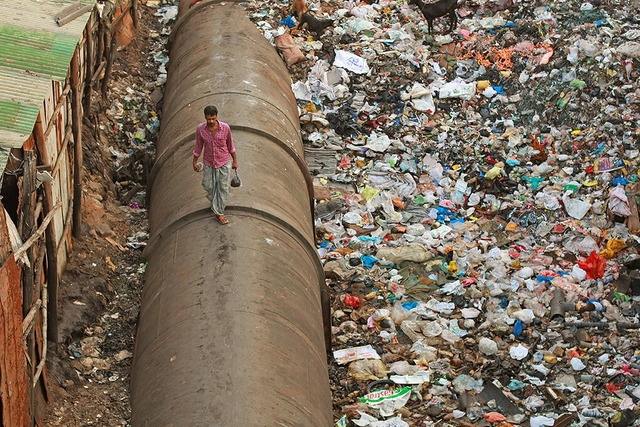
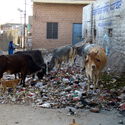
With large populations come formidable challenges, particularly in the realm of health and hygiene. In the last century, upholding sanitary conditions in urban areas has remained a persistent challenge, particularly in a nation that houses over 1.5 billion people. India grapples with a myriad of issues- inadequate infrastructure for sanitation, lack of public toilets, and poor waste management practices. In densely populated cities, the struggle intensifies as sanitation and cleanliness management falters. India's rapid urbanization has outpaced the development of sanitation infrastructure and cleanliness issues have deeply entrenched in the nation's built environment.
By the time I was 17 years old, I had moved 11 times. Because of my own experience relocating from one place to another, I’ve spent the better part of the last several decades focused on making sure that everyone has a place to call home, that everyone enjoys the human right to housing. But it was not until my time at Enterprise Community Partners, a nonprofit focused on community development and affordable housing, that I realized the methods and materials we employ to realize that human right matter.
The climate crisis has made heatwaves more likely and more intense around the world. Record-breaking high temperatures are being reported across the world. According to international data, the first week of July 2023 was the hottest week on record, putting millions of people in danger. All throughout this summer, recurring heatwaves have been affecting large portions of Asia, Europe, and the United States, priming the land for fires in places like Greece, Spain, and Canada, triggering unhealthy air warnings, evacuations, and heat-related deaths. The increasingly threatening effects of the climate crisis are also felt in cities worldwide, as extreme heat proves to be a rapidly growing health risk to millions of urban dwellers.
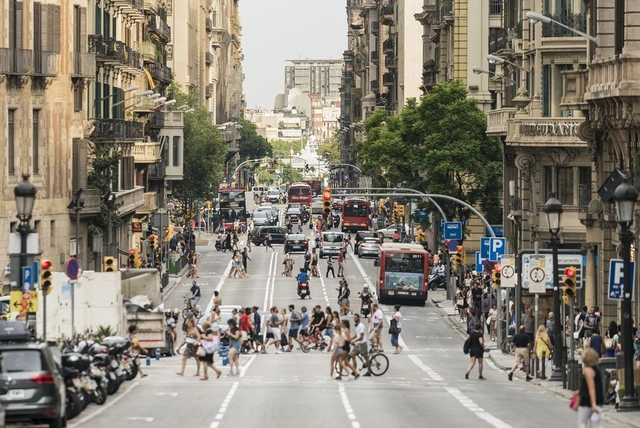
Cities are on the front lines of this public health emergency. People living in urban areas are among the hardest hit when heatwaves happen, partly because of urban heat islands. This is a phenomenon that occurs when cities replace the natural land cover with dense concentrations of surfaces that absorb and retain heat, like pavements and buildings. Heat risk levels also vary by neighborhood, with less affluent and historically marginalized sectors being the most affected due to the density of the population, limited access to cooling systems, and the limited availability of green urban spaces.
Landscape architecture is having a moment. The latest proof: last week, the US Department of Homeland Security decided to accredit the field with its prestigious STEM designation. As part of the science, technology, engineering, and mathematics (STEM) educational disciplines that fall under this category, landscape architecture students can now spend an additional 24 months seeking employment and training post-graduation in the United States after an initial period of a year granted to all graduates. The title also promises more prestige, higher entry salaries, and additional career flexibility. Torey Carter-Conneen, CEO of the American Society of Landscape Architects (ASLA), calls the development a significant advancement for 'landscape architecture education and practice, and that is great for America and the global community.'
The news corresponds to a growing emphasis on landscape architecture as a pivotal practice around the globe in recent years – one that is closely connected to notions of public health, environmental design, biophilia, sustainability, and re-wilding. It also underlines the intimate relationship between technology and the discipline. Landscape proposals increasingly rely on advanced science and technology to predict how ecological interventions might alter an existing terrain and determine what measures will yield the highest benefit for both humans and nature. The contemporary ideal of wild meadows and biodiverse forests may exist free from external influence, but the path to get there requires assistance.
In this fourth feature, we met with co-chairs ofdesign for Health architectArif Hasan, former Visiting Professor NED University Karachi and member of UNs Advisory Group on Forced Evictions, and architectChristian Benimana, Senior Principal and Co-Executive Director atMASS Design Group
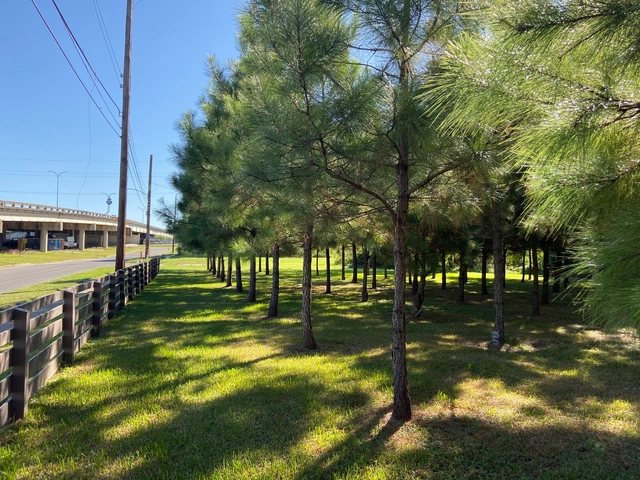
New Orleans experiences the worst urban heat island effect in the country, with temperatures nearly 9 F° higher than nearby natural areas. The city also lost more than 200,000 trees from Hurricane Katrina, dropping its overall tree canopy to just 18.5 percent.
The non-profit organization Sustaining Our Urban Landscape (SOUL) partnered with landscape architects at Spackman Mossop Michaels (SMM) to create a highly accessible, equity-focused reforestation plan for the city that provides a roadmap for achieving a tree canopy of 24 percent by 2040. But more importantly, the plan also seeks to equalize the canopy, so at least 10 percent of all 72 neighborhoods are covered in trees. Currently, more than half of neighborhoods are under the 10 percent goal.
As a response to global challenges such as climate change, discrimination, and physical vulnerability, designers and engineers from across the world have developed innovative construction materials that put the human wellbeing first in urban, architecture, and interior projects.
Discussions of architectural form demonstrate how disability is negatively imprinted into the field of architecture. In architectural theory and the history of architecture, “form” typically refers to the physical essence and shape of a work of architecture. In the modern idea of form, it is a quality that arises from the activity of design and in ways that can be transmitted into the perceptions of a beholder of architecture. Form provides a link between an architect’s physical creations and the aesthetic reception of these works. It occupies a central place within a general understanding of architecture: the idea of the architect as “form-giver,” among many other turns of phrase, conveys the sense of some fundamental activity and aesthetic role of form within architecture, what architects create, and how people perceive works of architecture.