1. ArchDaily
  2. Postmodernism

Postmodernism: The Latest Architecture and News

Subscriber Access

How Slovakia's Soviet Ties Led to a Unique Form of Sci-Fi Architecture

How Slovakia's Soviet Ties Led to a Unique Form of Sci-Fi Architecture - Image 10 of 4
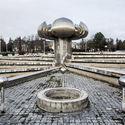
Memorial and Museum of the Slovak National Uprising, by architect Dušan Kuzma, 1963-1970. Banská Bystrica, Slovakia. Image © Stefano Perego

The history of Slovakia is riddled with political unrest and unwanted occupation, with the Slovak people having repeatedly been denied a voice throughout history. In the years following World War I, Slovakia was forced into the common state of Czechoslovakia; the territory was dismembered by the Nazi regime in 1938 and occupied by the Nazis for most of the Second World War, before being eventually liberated by Soviet and Romanian forces in 1945. Over the next four decades of communist rule—first by communists within Czechoslovakia itself and then later by the Soviet Union—the architecture of Slovakia came to develop into a unique form of sci-fi postmodernism that celebrated the shift in industrial influence at the time.

Photographer Stefano Perego has documented the Slovakian architecture from the 1960s–80s and has shared some of his photos with ArchDaily.
How Slovakia's Soviet Ties Led to a Unique Form of Sci-Fi Architecture - Image 1 of 4How Slovakia's Soviet Ties Led to a Unique Form of Sci-Fi Architecture - Image 2 of 4How Slovakia's Soviet Ties Led to a Unique Form of Sci-Fi Architecture - Image 3 of 4How Slovakia's Soviet Ties Led to a Unique Form of Sci-Fi Architecture - Image 4 of 4How Slovakia's Soviet Ties Led to a Unique Form of Sci-Fi Architecture - More Images+ 13

Was the AIA's Failure to Give its Twenty-Five Year Award In 2018 a Snub to Postmodernism?

This article was originally published by Common Edge as "Did the AIA Take a Pass on Postmodernism?"

People perceive architecture in different ways. “Style” is often an easy classification, traditional or modern. Popular residential work is often categorized dismissively by architects as “vernacular.” The branding of the product of the profession, an oeuvre of work embodied in buildings and their meaning in our culture as celebrated by the American Institute of Architects, has many levels of recognition, from local AIA Chapter Awards, to national Awards.

No AIA Award has more meaning or lustre inside the profession than the “Twenty-five Year Award” for buildings that have “stood the test of time.” The award has been given continuously for the last 56 years. This year, the Design Jury chosen to select a seminal building has opted not to give an award to anything, any building 25-35 years old.

Demolition Begins on Lobby of Philip Johnson's AT&T Building

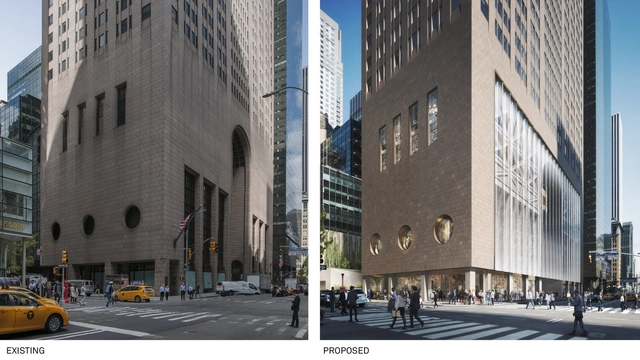
While the exterior of Philip Johnson’s iconic AT&T awaits its fate in an upcoming New York City landmarks designation hearing, demolition of its granite-clad interior lobby has already begun.

Citing the fact that the lobby had already been altered in the 1990s – including the removal of the “Golden Boy” statue – when the building switched tenants from AT&T to the Sony Corporation, the Landmarks Preservation Commission decided last month that the interiors were not deserving of landmark status.

Subscriber Access

Postmodern Post-Mortem: Why We Need To Stop Using Architecture's Most Misunderstood Word

Postmodern Post-Mortem: Why We Need To Stop Using Architecture's Most Misunderstood Word - Imagem 1 de 4
© Giacomo Pala

We were hoping for it to happen in the early 2000s. We saw it coming with the opening of the exhibition “Postmodernism: Style and Subversion, 1970 – 1990” at the V&A in London in 2011. But now, after recent discussions on the umpteenth supposed “postmodern revival,” it is finally sure: the word “postmodernism” is back and it’s here to stay. But as clear as it is that the word “postmodernism” is once again fashionable, it is not really clear what we mean when using it. Indeed, this word has been used to imply every possible meaning: architects have used it to describe fashionable and “cute” designs, some critics have used it to categorize everything that is colorful, while some theorists have been using it to affirm that, because of this concept, architecture has surrendered to technology or form, becoming nothing more than a caricature of its own presupposed moral values.
Whether we agree with such commentaries or not, there is one thing that we still need to discuss: what does “postmodern” mean? And, even more urgently: what could it mean today? After all, if we have to deal once again with one of the most misinterpreted and contradictory words ever introduced in our field, we should at least discuss what it means, before using it.

Subscriber Access

Why Postmodernism's New-Found Popularity Is All About Looking Forward, Not Back

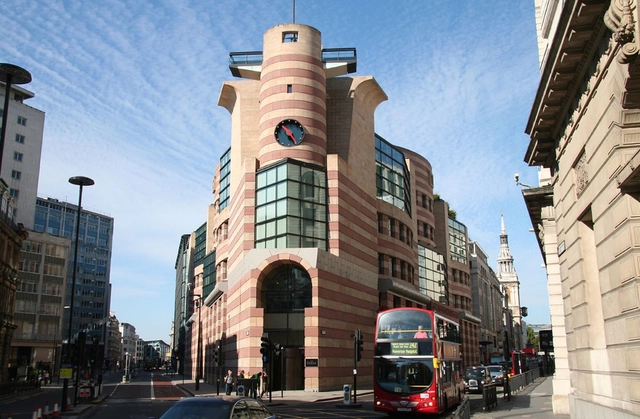
Postmodernism is back, it seems, and the architectural establishment has mixed feelings about it. This revival has been brewing for a while. In 2014, Metropolis Magazine created a “watchlist” of the best postmodernist buildings in New York that had been overlooked by the city’s Landmarks Preservation Commission, and were therefore at risk of being altered or destroyed. Last year, the listing of James Stirling’s One Poultry in the City of London kicked off a discussion about the value of Britain’s postmodernist buildings from the 1980s, as they reach an age when they are eligible for listing for preservation by Historic England. More recently Sean Griffiths, co-founder of the former architectural practice FAT, warned against a postmodernist revival, arguing that a style that thrived on irony could be dangerous in an era of Donald Trump, when satire seems to no longer be an effective political tool. The debate looks set to continue as, next year, London’s John Soane museum is planning an exhibition devoted to postmodernism.

Why Postmodernism's New-Found Popularity Is All About Looking Forward, Not Back - Image 1 of 4Why Postmodernism's New-Found Popularity Is All About Looking Forward, Not Back - Image 2 of 4Why Postmodernism's New-Found Popularity Is All About Looking Forward, Not Back - Image 3 of 4Why Postmodernism's New-Found Popularity Is All About Looking Forward, Not Back - Image 4 of 4Why Postmodernism's New-Found Popularity Is All About Looking Forward, Not Back - More Images+ 7

Facing Major Renovations, Philip Johnson’s AT&T Building Gets Hearing for Landmark Designation

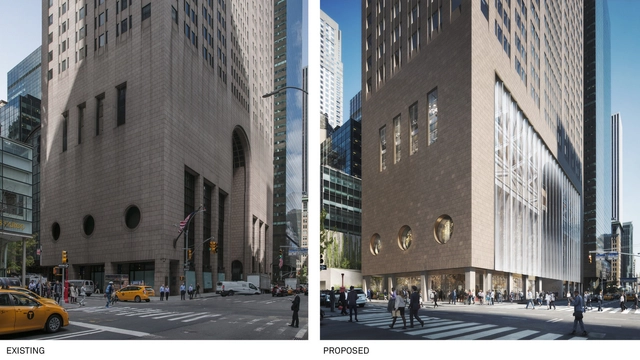
Facing plans for a major renovation that would significantly alter the street presence of the building, Philip Johnson’s Postmodern icon, 550 Madison (formerly AT&T Building) has now cleared the first stage in the process of becoming a designated New York City landmark.

Today, an application to schedule a hearing to landmark the building was approved unanimously by the city’s Landmarks and Preservation Commission (LPC). In a few months time, the LPC will hold a public forum for the building, followed by a deliberation on whether or not the tower deserves official landmark status.

WeWork to Become Primary Tenant of James Stirling's No 1 Poultry After Renovations

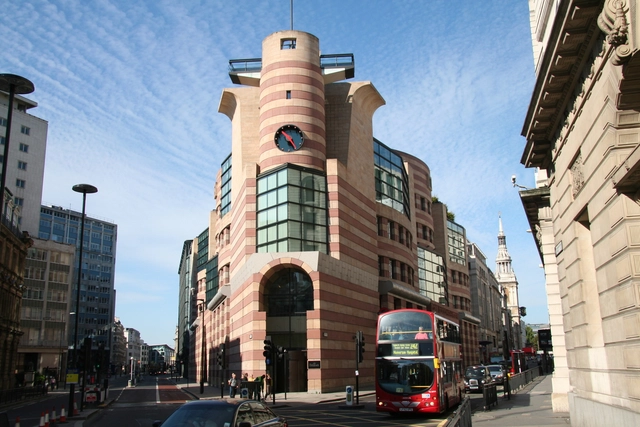
After being saved from a major renovation that would have eliminated its iconic Postmodern facade, James Stirling’s No 1 Poultry building is now receiving a gentler retrofit that will upgrade its spaces to house 110,000-square-feet of contemporary office space.

Fitting right in with the update, coworking giant WeWork has now been announced as the building’s first tenant, and the company has revealed some details of how the building will work for its users.

WeWork to Become Primary Tenant of James Stirling's No 1 Poultry After Renovations - Featured ImageWeWork to Become Primary Tenant of James Stirling's No 1 Poultry After Renovations - Image 1 of 4WeWork to Become Primary Tenant of James Stirling's No 1 Poultry After Renovations - Image 2 of 4WeWork to Become Primary Tenant of James Stirling's No 1 Poultry After Renovations - Image 3 of 4WeWork to Become Primary Tenant of James Stirling's No 1 Poultry After Renovations - More Images

Subscriber Access

Postmodern Revivalism Doesn't Exist; Now Is Not the Time to Be Criticizing It

This essay by the academic and writer Martin Lampprecht responds directly to an opinion piece penned by Sean Griffiths, a former partner of FAT, entitled "now is not the time to be indulging in postmodern revivalism".

Oh my. Where to begin? My first impulse was just to move on and shake my head in wonder, perhaps, that a well-established designer and architectural thinker would wish to publish an article so dyspeptic. It is, after all, a common pattern: the young pranksters of yesteryear, once their hairlines have started to recede, transform into  schoolmasters as befitting their recently-acquired academic sinecures. It’s all just part of the normal generational cycle that keeps a culture moving forward. Business as usual.

Spotlight: Michael Graves

Spotlight: Michael Graves - Featured Image
Portland Building (1982). Image © Wikimedia user Steve Morgan licensed under CC BY-SA 3.0

As a firm believer in the importance of making good design accessible to the public, Michael Graves (July 9, 1934 – March 12, 2015) produced an enormous body of work that included product design alongside his architecture. Graves brought Postmodernism to the public eye through his emphasis on ornament and aesthetics, and stood firmly behind his design philosophy even as it went out of vogue.

AD Classics: Kafka's Castle / Bofill Taller de Arquitectura

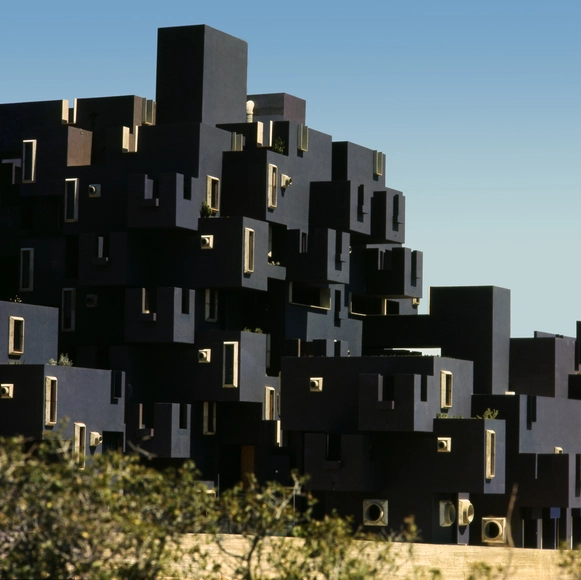
AD Classics: Kafka's Castle / Bofill Taller de Arquitectura - ApartmentsAD Classics: Kafka's Castle / Bofill Taller de Arquitectura - ApartmentsAD Classics: Kafka's Castle / Bofill Taller de Arquitectura - ApartmentsAD Classics: Kafka's Castle / Bofill Taller de Arquitectura - ApartmentsAD Classics: Kafka's Castle / Bofill Taller de Arquitectura - More Images+ 14

Subscriber Access

Understanding British Postmodernism (Hint: It’s Not What You Thought)

In this essay by the British architect and academic Dr. Timothy Brittain-Catlin, the very notion of British postmodernism—today often referred to as intimately tied to the work of James Stirling and the the thinking of Charles Jencks—is held to the light. Its true origins, he argues, are more historically rooted.

I grew up in a beautiful late Victorian terrace with ornamental brickwork, shaped ‘Dutch’ gables and pretty arts and crafts stained glass windows – and so I didn’t think then, and I don’t think now, that I had much to learn from Las Vegas. It turns out that I wasn’t the only one. Of British architects who made their names as postmodernists in the 1980s, not a single one would say now that they owed much to Robert Venturi, the American architect widely considered to be a grandfather of movement.

Understanding British Postmodernism (Hint: It’s Not What You Thought) - Image 1 of 4Understanding British Postmodernism (Hint: It’s Not What You Thought) - Image 2 of 4Understanding British Postmodernism (Hint: It’s Not What You Thought) - Image 3 of 4Understanding British Postmodernism (Hint: It’s Not What You Thought) - Image 4 of 4Understanding British Postmodernism (Hint: It’s Not What You Thought) - More Images+ 1

Subscriber Access

6 Unique Long Weekend Travel Ideas for Architects

The "architectural pilgrimage" is much more than just everyday tourism. Studying and admiring a building through text and images often creates a hunger in architects, thanks to the space between the limitations of 2D representation and the true experience of the building. Seeing a building in person that one has long loved from a distance can become something of a spiritual experience, and architects often plan vacations around favorite or important spaces. But too often, architects become transfixed by a need to visit the same dozen European cities that have come to make up the traveling architect's bucket list.

The list here shares some sites that may not have made your list just yet. Although somewhat less well known than the canonical cities, the architecture of these six cities is sure to hold its ground against the world's best. The locations here make ideal long weekend trips (depending of course on where you are traveling from), although it never hurts to have more than a few days to really become immersed in a city. We have selected a few must-see buildings from each location, but each has even more to offer than what you see here—so don't be afraid to explore!

Subscriber Access

Mies van der Rohe's Tower in London That Never Was

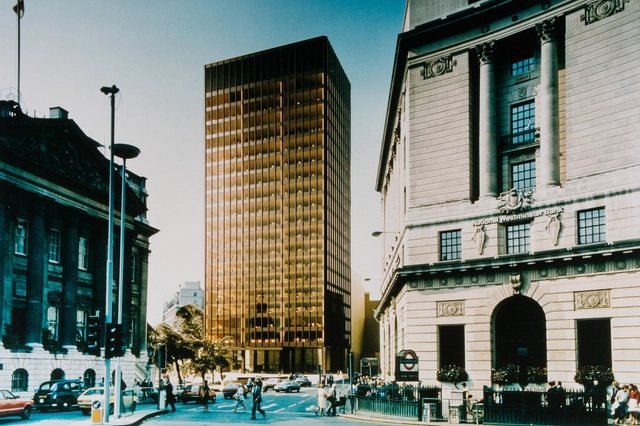
In the 1960s James Stirling asked Ludwig Mies van der Rohe why he didn’t design utopian visions for new societies, like those of Frank Lloyd Wright’s Broadacre City or Corbusier’s Cité Radieuse. Mies replied that he wasn’t interested in fantasies, but only in “making the existing city beautiful.” When Stirling recounted the conversation several decades later it was to the audience of a public enquiry convened in London – he was desperately trying to save Mies’ only UK design from being rejected in planning.

It couldn’t be done: the scheme went unbuilt; the drawings were buried in a private archive. Now, for the first time in more than thirty years, Mies’ Mansion House Square will be presented to the public in both a forthcoming exhibition at the Royal Institute of British Architects (RIBA)—Mies van der Rohe and James Stirling: Circling the Square—and, if it is successful, a book currently being funded through Kickstarter by the REAL foundation.

Mies van der Rohe's Tower in London That Never Was - Image 1 of 4Mies van der Rohe's Tower in London That Never Was - Image 2 of 4Mies van der Rohe's Tower in London That Never Was - Image 3 of 4Mies van der Rohe's Tower in London That Never Was - Image 4 of 4Mies van der Rohe's Tower in London That Never Was - More Images

The AR Celebrates 50 Years of Venturi's "Complexity and Contradiction in Architecture"

The Architectural Review has recently published an article celebrating the 50th anniversary of Robert Venturi’s book, Complexity and Contradiction in Architecture, which is regarded as one of the most important writings about architecture since Le Corbusier’s Vers une Architecture. In the article, Martino Stierli—Chief Curator of Architecture and Design at the Museum of Modern Art—delves into the significance of Venturi’s work, the motivation behind it, its continuing impact, and more. Read the full article at the Architectural Review, here.

14 Short Stories About Architects, Attitudes and Odd Architectural Anecdotes

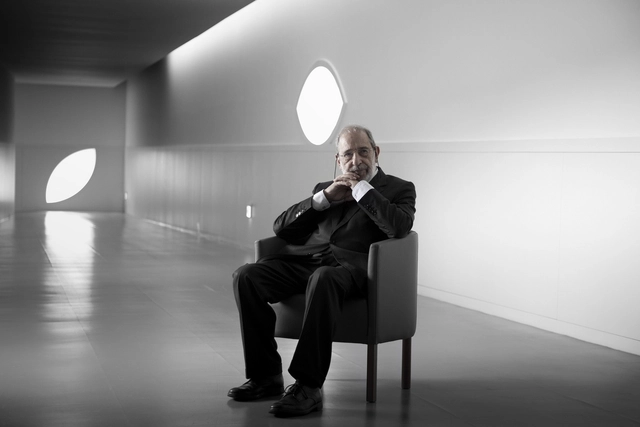
A new collection of five minute-long On Design stories—developed by the team behind Section D, Monocle 24's 24's weekly review of design, architecture and craft—profile a person, survey a place, or unpack an idea that’s changing or shaping design and architecture today. We've selected fourteen of our favorites from the ongoing series, examining issues as wide as Postmodernism and the architectural competition, to five-minute profiles of Alvaro Siza, Josef Hoffman, Kengo Kuma and Superstudio.

14 Short Stories About Architects, Attitudes and Odd Architectural Anecdotes - Image 1 of 4

AD Classics: Palazzo dei Congressi / Louis Kahn

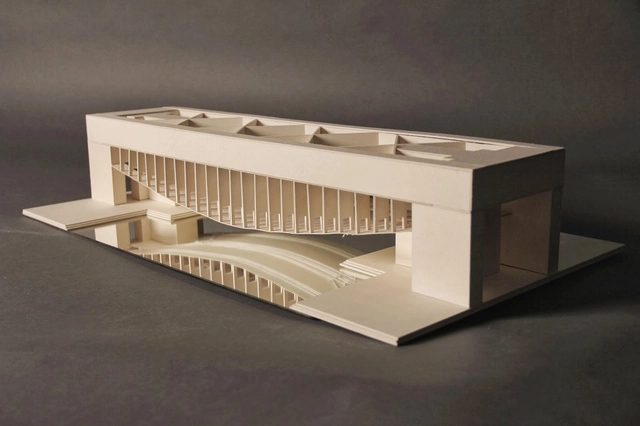
The city of Venice has been caught in a tug of war between progress and traditionalism for many years, and particularly since the construction of a railroad viaduct in 1846 linked the island city to the Italian mainland for the first time in its history.[1] Over a century later, the Venetian government commissioned Louis Kahn to design a new Palazzo dei Congressi for the city; his proposal, while paying respect to the histories of both the Republic of Venice and a unified Italy, could not escape similar controversy.

AD Classics: Bonnefantenmuseum / Aldo Rossi

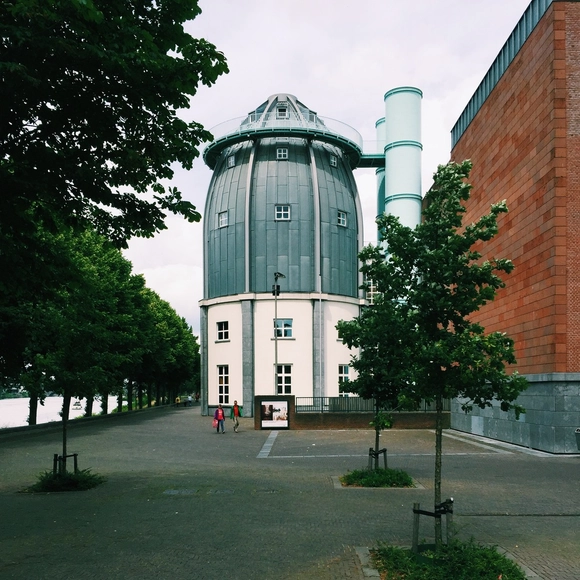
Situated in a former industrial district in the southern Dutch city of Maastricht, it’s perhaps fitting that the Bonnefantenmuseum has often been called a “viewing factory.” The museum, with its ‘E’-shaped plan and distinctive domed tower, is one of the most prominent landmarks along the River Meuse that flows around the city center. Europe’s rich cultural history was a key impetus for architect Aldo Rossi’s design, which employed a number of historical architectural gestures to place the Bonnefantenmuseum within a collapsed European canon.

AD Classics: Bonnefantenmuseum / Aldo Rossi - Stairs, Facade, ArchAD Classics: Bonnefantenmuseum / Aldo Rossi - Facade, StairsAD Classics: Bonnefantenmuseum / Aldo Rossi - FacadeAD Classics: Bonnefantenmuseum / Aldo Rossi - Door, Facade, Stairs, ArchAD Classics: Bonnefantenmuseum / Aldo Rossi - More Images+ 11

Terry Farrell Among Speakers at Forthcoming Conference on Postmodernism

The British Twentieth Century Society (C20) have announced a forthcoming conference in London on Postmodernism. Speakers including Sir Terry Farrell, Piers Gough and Charles Holland (Ordinary Architecture) will join Alan Powers, Emily Gee and Elain Harwood of Historic England to "raise the profile of Britain’s best Postmodernist buildings following concerns over proposed changes to leading examples of this much maligned style."