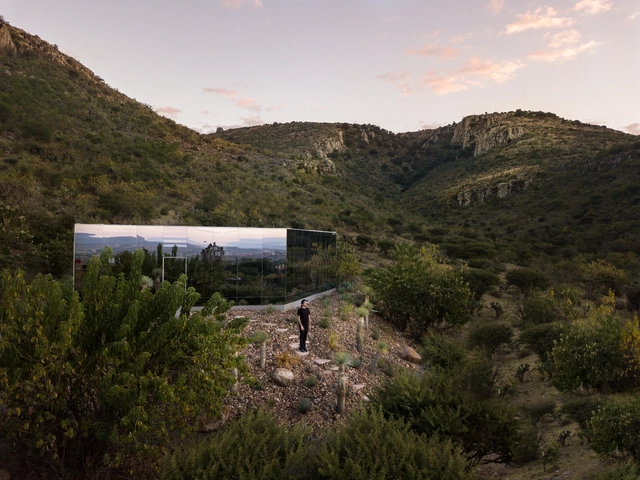
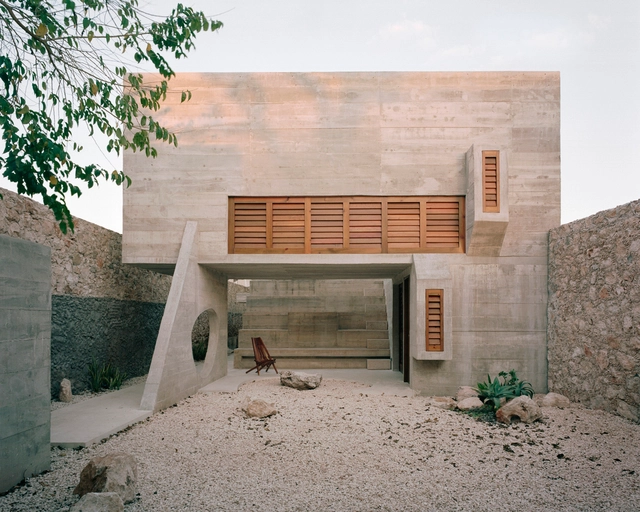
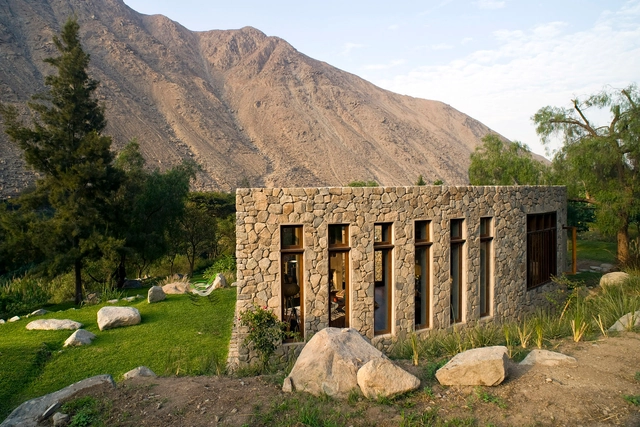
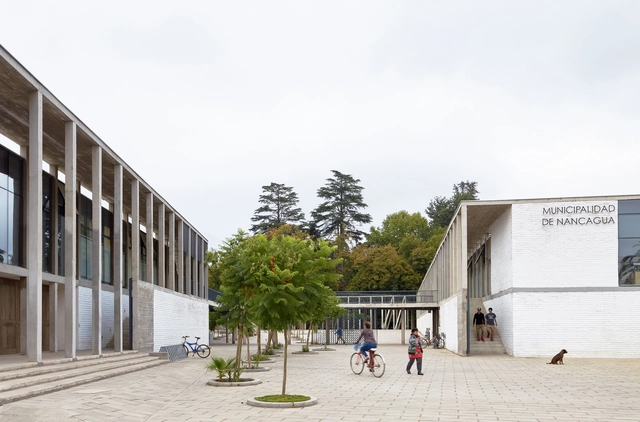
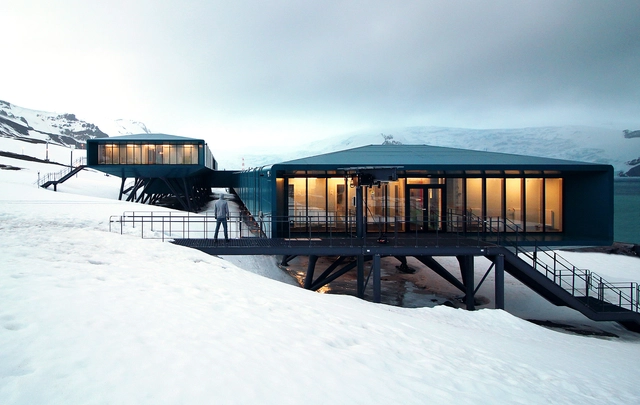
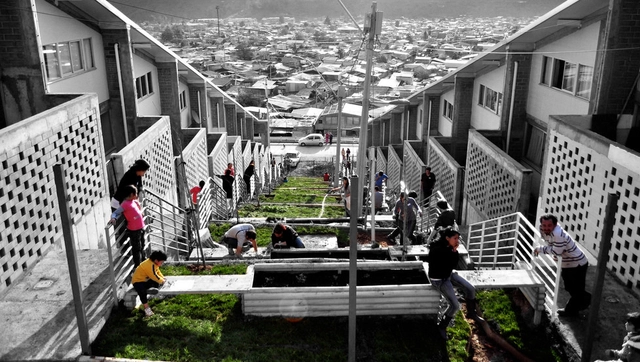
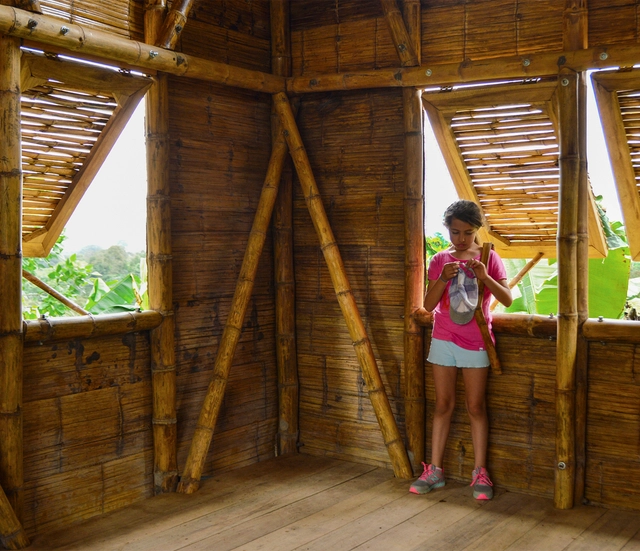
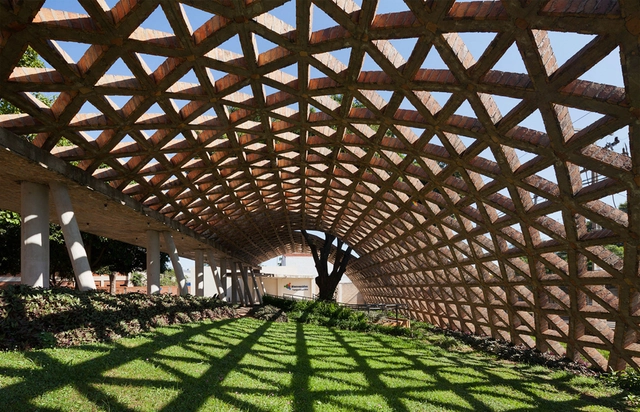
Latin American architecture is rich and diverse. This is reflected in the various stones used across different regions over the centuries. These materials highlight the varied geology of Latin America and illustrate how local cultures have adapted their construction methods to natural conditions, resulting in unique and meaningful architecture. In contemporary architecture, stone aligns with sustainability principles due to its durability, low carbon footprint, and local availability. Additionally, stone's aesthetic appeal enhances the creation of timeless spaces that strengthen the connection with nature and the surrounding landscape.
Organizing, shaping, stacking. Transforming raw materials from the soil into architecture. This is a challenge that many Latin American architects embrace, demonstrating that scarcity can be daunting but also a rich opportunity to unleash creativity.
The use of materials extracted from the local soil serves a dual purpose. In regions with limited industrialization, using locally sourced materials makes economic sense because industrial materials such as concrete and steel are expensive and often require long-distance transportation, adding to their cost. Environmentally, choosing locally sourced materials from the start of a project reduces transportation needs and carbon emissions, supporting sustainability efforts.
February 20th marks a new edition of the World Day of Social Justice. The theme, "Overcoming barriers and unlocking opportunities", is a perfect occasion to reflect on the importance of equity in all areas of society - and especially from architecture and urbanism. And yes: they both have a fundamental role in building accessible cities and are important tools for addressing the challenges of economic inequality and social exclusion.
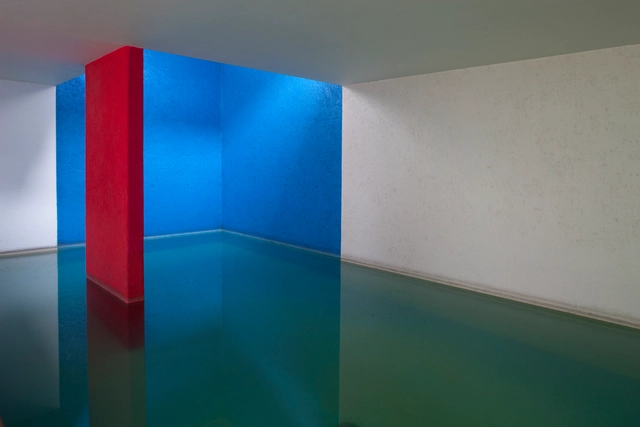
The great architect Luis Barragán, at 80 years of age, and after almost 10 years of inactivity, carried out his last work on a plot of land measuring 10x36 meters, between party walls in Mexico City. A work that reflects the influence of Mexican culture and painters Diego Rivera and Frida Kalho, where the most interesting thing, according to Barragán, was the challenge of the enormous jacaranda tree that had to be maintained, and the pool requested by the owner as part of the program.
The small pink house, which closes towards the street, reinforcing its interiority, is ordered on the longitudinal axis of the plot. Towards the back, the house is divided into two; the front volume, which contains the services and bedrooms, and the back, where the living room, dining room, and pool are located. These two volumes are joined by a corridor, forming a patio that surrounds the Jacaranda tree.
Although the circular economy involves other principles such as the regeneration of natural systems, the reuse or recycling of materials plays an important role in contributing to the reduction of waste generation by giving a second useful life to elements that could be considered waste. Wood, metal sheets, bricks, and stones, among others, can be reused, bringing sustainability and efficiency criteria to the projects, helping to consolidate this concept that still has a long way to go.
Within the Latin American territory, many architecture professionals have proposed to apply in their design and construction processes the implementation of strategies that collaborate with the use of resources, either by reusing, recycling, or restoring different materials and elements in search of satisfying the needs and concerns of those who inhabit the spaces.
Arquitectonica has refuted Koolhaas’ accusation that “Modern architecture had never achieved the promised alchemy of quantity and quality,” and Alistair Gordon’s enormous compendium of the firm’s work certainly disproves it.
But what of Rossi’s backhanded praise: “In America … quantity is quality!”? Although absolutely deserving of praise, the quantity of the work is not the basis for Arquitectonica’s achievement—even when associated with the virtuosity of design. The importance of Arquitectonica derives from certain specific contributions to modern architecture in the United States.
What are the stories of the first Ibero-American women architects? This is the main question we seek to answer in celebration of ArchDaily's theme: Women in Architecture.
Seeking to put their motivations, inspirations, and trajectories on the table, we carried out a research project to make visible and highlight some names that have not had their deserved recognition. Meet Doris Clark Núñez, Guadalupe Ibarra, Matilde Ucelay Maórtua, Filandia Pizzul, Dora Riedel, Luz Amorocho, María Luisa Dehesa, Arinda da Cruz Sobral, and Julia Guarino, below.
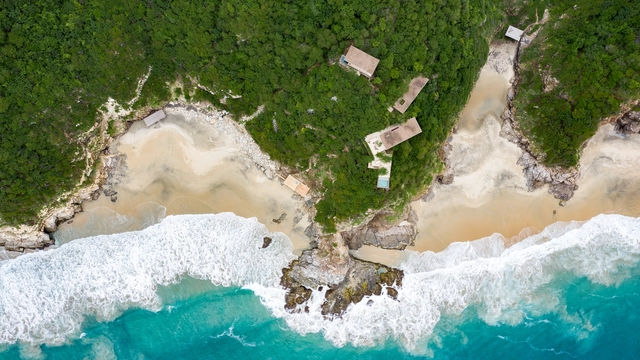
Is there only one way to inhabit the coast? The Pacific coast, the largest ocean on earth, is a vast territory with a great diversity of temperature, winds, and topography, among others. Consequently, it has a great variety of ecosystems, ranging from the freezing point near the poles, vast deserts and forests, to the hot tropical rainforest. Such majestic diversity is no stranger to architecture, responding to the different contexts in which it is placed. As a result, there is a great variety of architectural works, all of which share in framing the views of the sea.
The following list shows 30 residential projects along the Latin American Pacific coastline, revealing the diverse architectural approaches that exist along the coast.
Globalization and its pension for both virtual and physical connectivity has led to the linking of the world's economies, territories, and cultures and nowhere is this more evident than in the field of architecture.
This year's Biennial of Latin American Architecture (BAL 2021) has chosen the top emerging works of architecture in Latin America, which will be presented during the second installment of the event in September 2021 in Pamplona, Spain.
The judges for the Oscar Niemeyer Award, one of the most prestigious of its kind in the realm of Latin American architecture, have announced the 20 finalists for the competition's third edition.
We know you're an architecture aficionado and that your passion takes you places that inspire and awe. Even though a visit to the classic tourist sites can result in an amazing trip, visiting lesser-known places can make for an unforgettable experience. It is because of this passion for parts unknown that we have compiled this list of some of Latin America's hidden architecture gems for you to consider as you plan your next trip.
Imagen editada por Fabian Dejtiar. Image Cortesía de Mi Parque
The series of articles developed by Nikos A. Salingaros, David Brain, Andrés M. Duany, Michael W. Mehaffy and Ernesto Philibert-Petit researches the peculiarities of social housing in Latin America. This time, examples of strategies and planning in their construction are reviewed, such as the importance of collaborative social processes and the specific sequences of stages.
https://www.archdaily.com/944295/examples-of-patterns-and-generative-codes-on-socially-organized-housing-in-latin-americaNikos A. Salingaros, David Brain, Andrés M. Duany, Michael W. Mehaffy & Ernesto Philibert-Petit
Casa Meche / ENSUSITIO Arquitectura. Image Cortesía de ENSUSITIO Arquitectura
The series of articles developed by Nikos A. Salingaros, David Brain, Andrés M. Duany, Michael W. Mehaffy and Ernesto Philibert-Petit researches the peculiarities of social housing in Latin America. This time the authors explain a construction strategy through iterative design and the emergence of form.
https://www.archdaily.com/944293/a-construction-strategy-for-socially-organized-housing-in-latin-americaNikos A. Salingaros, David Brain, Andrés M. Duany, Michael W. Mehaffy & Ernesto Philibert-Petit
The focus of buildings should ultimately be the well-being of the people using them. When we think of our experiences in hospitals, clinics, the dentist's office, and other medical facilities, the feeling is rarely pleasant. Perhaps it's the smells, the dull, monotone colors, or the sound of medical gadgets working away on some unlucky patient.
This article was originally published by KatariMag, a blog that explores the history of contemporary culture in its most sophisticated and fresh expression. Follow their Instagram and read more of their articles here.
Brutalist architecture responds to a specific moment in history. As WWII was coming to an end, a new form of State was rising from the ashes, along with a global order that would include and increase the relevance of peripheral nations. Brutalist architecture was born as a response to the ideas of the robust nations that would lead the masses. Critic Michael Lewis said, "brutalism is the vernacular expression of the welfare state."