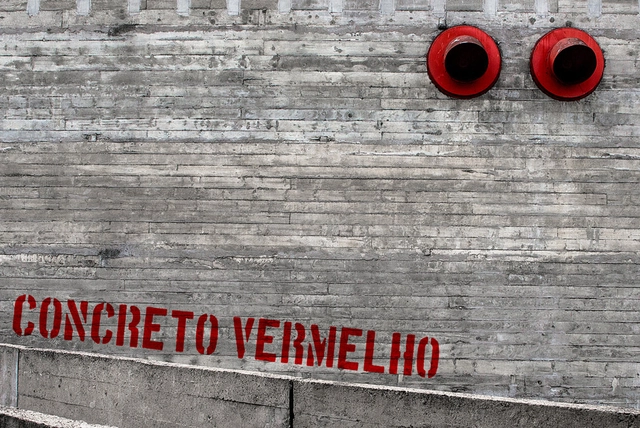
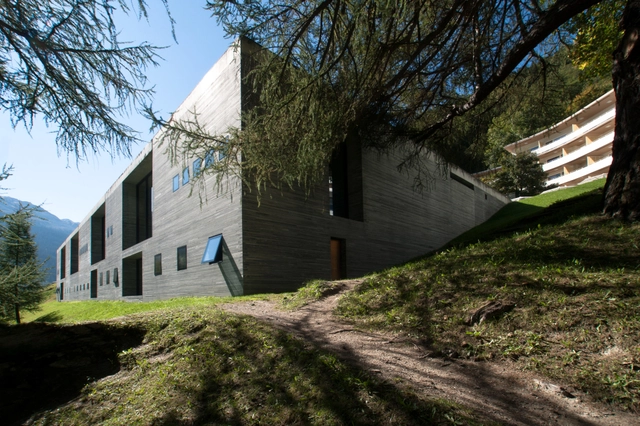
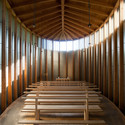
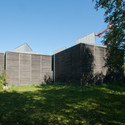
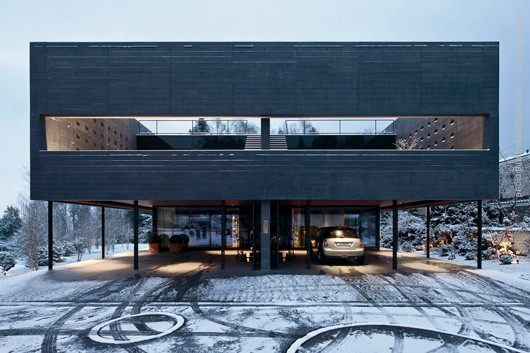
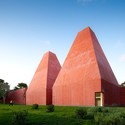
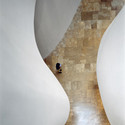
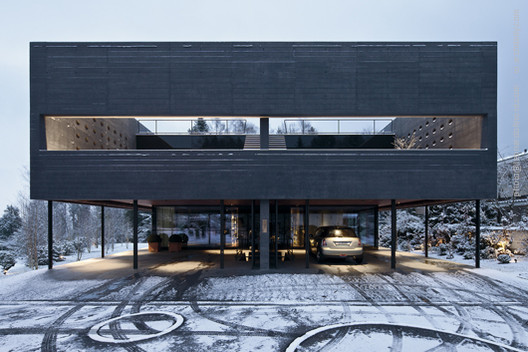
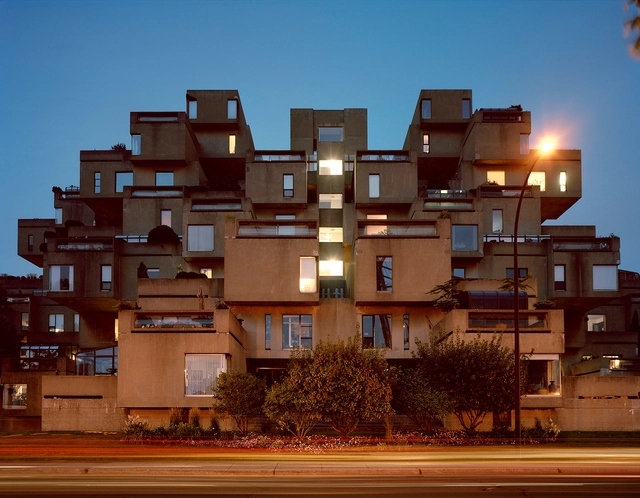
Our friend and architectural photographer Felipe Camus recently embarked on an architectural pilgrimage to the valley of the Rhein. Located in the Graubünden region in Switzerland, the valley boasts many of the seminal works of Pritzker Prize Laureate Peter Zumthor, all within a 60-kilometer radius. Born in Graubünden himself, Zumthor designed the works in relation to their location and time by paying special attention to details and materials. As a result, the works all present Zumthor’s unparalleled skills of craftsmanship and his uncompromising integrity.
Join us for a special AD Architectural Mountain Guide, including a detailed map, photos and descriptions of Zumthor’s works, after the break….
In honor of World Photo Day, we've rounded up the 13 architectural photographers who have been impressing us most in 2013. From industry heavyweights, like Iwan Baan and Thomas Mayer, to relative new comers, such as Miguel de Guzmán and Fran Parente, these photographers have traveled the world, getting the architectural shots we only dream of. See all 13, after the break...
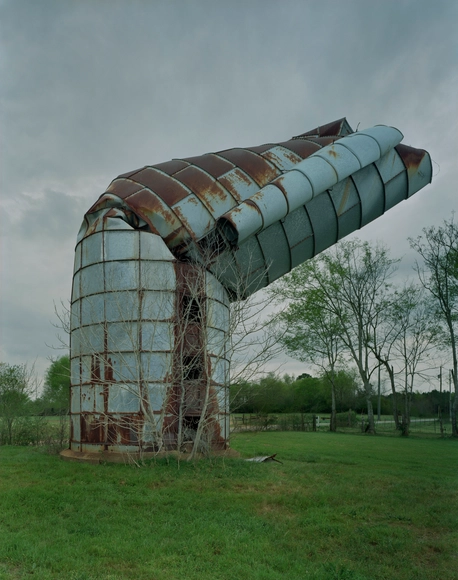
Compelled by its utilitarian structure and its run in with a tornado, well-known photographer Tim Hursley came across a damaged grain silo while spending 16 years in Hale County, Alabama documenting the work of Mississippi architect Samuel Mockbee and his Rural Studio project. The structure quickly became more than just another object to see and photograph, so he eventually bought the silo after documenting it periodically over a span of three years. Hursley is currently thinking about moving it around - from one place to another - through means of digital media and technology. As he puts it, he simply, 'encountered and saw it,' and by moving it from one place to the next, he leaves discovery up to the observer. More images and a video after the break.
Since 2007, Jade Doskow has been photographing the remains of World's Fair Sites: once iconic spots that displayed the ambitions/ideals of their eras, now, often forgotten and left to decay. Now, for the 50th anniversary of the 1964 World's Fair in New York (in just a few weeks time), Doskow has a new goal: to shoot all the iconic North American fair sites - from Seattle's Space Needle to San Francisco's Treasure Island. To do so, she's launched a Kickstarter campaign:LOST UTOPIAS. See more of Doskow's stunning images, and find out how to support her Kickstarter campaign, after the break...
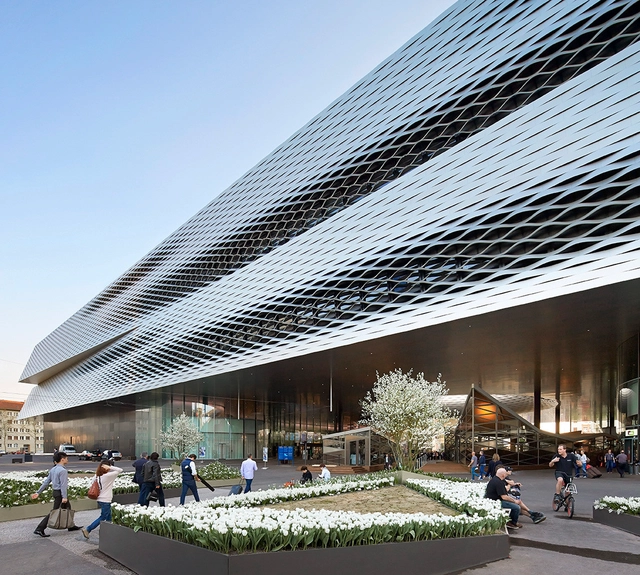
Designed by Herzog & de Meuron, the Messe Basel New Hall stands out as an important urban planning matter for the development of the surrounding Kleinbasel neighborhood. The exceptional photographic work of Hufton + Crowhighlights the highly modern building and optimum exhibition areas while showing how this interconnected design ensures flexibility for various events. The concentration of exhibition halls around the Messeplatz (Exhibition Square) is the key entrepreneurial aim of the Messe Basel leadership in its further development. A complete gallery of images can be viewed after the break.
Located at the mouth of Marseille’s World Heritage-listed harbor, the Vieux Port Pavilion, designed by Foster + Partners, provides a new sheltered events space on the eastern edge of the port. Bringing new focus to the city, these photographs by Edmund Sumner demonstrate the stainless steel canopy's ability to amplify and reflect the surrounding movement of the harbor, creating a spectacle that encourages pedestrians to linger. Since its opening early this year, the project is truly an invitation to the people of Marseille to enjoy and use this grand space for events, markets and celebrations once again. A complete gallery of Sumner's images can be viewed after the break.
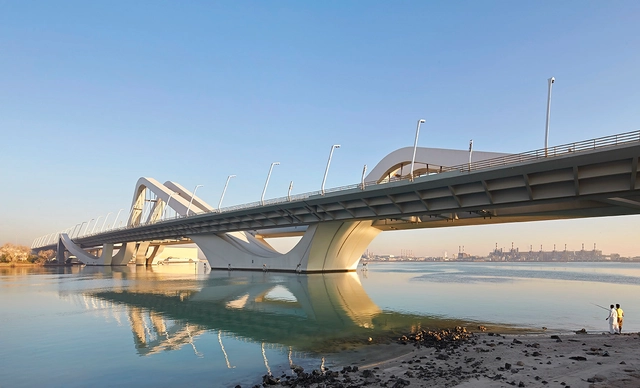
Becoming a destination in itself and potential catalyst in the future urban growth of Abu Dhabi, the Zaha Hadid designed Sheikh Zayed Bridge was conceived in a highly mobile society that requires a new route around the Gulf south shore, connecting the three Emirates together. Hufton+Crow shared with us their photos as they capture the many viewpoints of this sinusoidal waveform structure. A complete gallery of images after the break.
Inspired by a childhood spent filming planes at LAX with an 8-millimeter videocamera, New York photographer and former Berkeley architecture student Jeffrey Milstein has turned his fascination for aviation into a career. Typically known for photographing the underbellies of aircrafts, Milstein's latest series captures the artistic composition and elaborate array of patterns formed by airports and only seen from above. He describes this series as revealing "the patterns, layering and complexity of cities, and the circulation patterns for travel, such as waterways, roads, and airports that grow organically over time much like a living organism."
Iwan Baan's name may ring a bell for all those following Hurricane Sandy's devastation across New York City and New Jersey's coast. The photographer's iconic photograph made headlines when it was featured on New York magazine's front page days after the storm, showing lower Manhattan in complete darkness, set against its vibrant counterpart uptown, as the United States' east coast was recovering from the extensive damage left in Sandy's wake. The image not only brings to mind the absolute helplessness that New York City faced during the storm, but also lends a hand in a social commentary that is notably pervasive in Baan's work. The Perry Rubenstein Gallery in Los Angeles will feature the photographer's work in a two-month exhibition entitled The Way We Live, honing in on the images that encapsulate the world of architecture, urbanism and human engagement.
Brad Feinknopf, a nationally recognized architectural photographer, kindly shared with us his recent photographic work on Zaha Hadid‘s Eli & Edythe Broad Art Museum at Michigan State University. Known for his traditional, yet cutting edge approach to photography, his quality work here emphasizes the unique exterior and interior spaces of the building created by Hadid’s investigation into the lines of circulation and visual connections. Photographed during the day and night, he also captures its interface between city and campus. Additional images by Feinknopf can be viewed after the break.
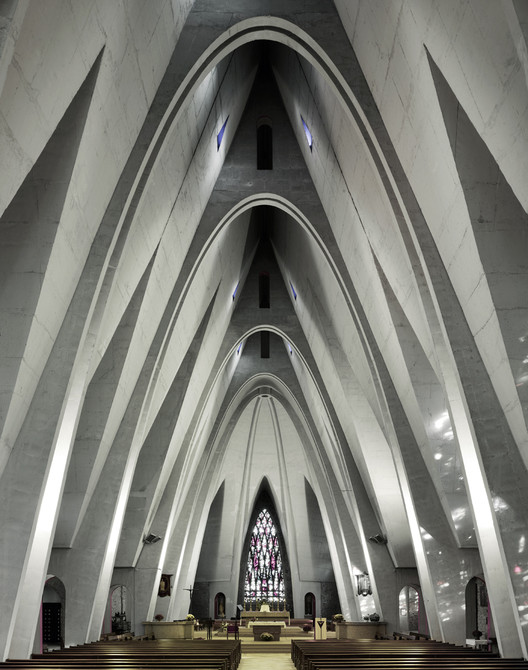
As Europe recovered from the death and destruction of World War II, countries got back to the business of rebuilding their communities and, of course, their churches. The need to make sense of the madness of the War was palpable - as was the need to express this modern-day spirituality in a form that broke from the past and embraced this new world.
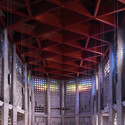
The result was a bevy of European churches that - although often misunderstood by practitioners - represent some of our best-preserved examples of Modernist architecture. Photographer Fabrice Fouillet made it his mission to photograph these beauties in a series he calls "Corpus Christi." You can see the images - as well as Fouillet's description of the work - after the break...
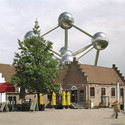
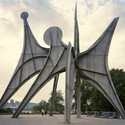
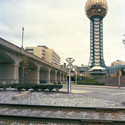
Since 1851, World Fairs have offered glimpses into specific moments in time - giving us insight into what was once innovative, high-tech, and down-right radical. But the structures, the icons of each Fair, don't always stand the test of time - no matter their architectural pedigree. In Flushing Meadows Park, New York, for example, Modernist icon Philip Johnson's 1964 New York State Pavilion now stands neglected, overgrown in ivy. Mies van der Rohe's German Pavilion for the 1929 Barcelona Expo was promptly demolished (although eventually reconstructed).
On the other hand, the Eiffel Tower, although considered "vulgar" in its day (1889), was maintained because its height made it well-suited for emitting radio signals; it's now Paris' most important tourist attraction.
The fate of World Fair Structures is the theme of New York-based photographer, Jade Doskow, who has already shot 19 former World’s Fair sites. Take a peek at Doskow's images and find out how World Fair structures have fared, some better than others, after the break...
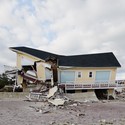
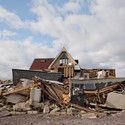
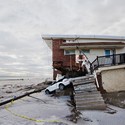
Hurricane Sandy has come and gone, but the destruction she left in her path remains a stark reminder of her strength.
Photographer Amanda Kirkpatrick has shared with us her images of The Rockaways in Queens, an upper-class beach neighborhood that was one of the areas hit hardest by the storm. Kirkpatrick's objective eye documents the twisted boardwalks and unrecognizably distorted homes in an almost "clinical" way, honestly portraying the damage from the perspective of the broken structures themselves.
If you're interested in getting involved with Hurricane Sandy Recovery Efforts, you can get more information here. For more images from Amanda Kirkpatrick, read on after the break...
We got in touch with Iwan Baan to ask him how on earth he got that incredible aerial shot of a Sandy-struck New York City for New York Magazine; he told us what it was like to face the frenzy and fly into the storm itself. Read his incredible story, after the break...
Indeed, largely because of their gargantuan energy requirements and high-tech secrets, Data Centers have been shrouded in mystery since their beginnings. This is particularly true in Google’s case. When Andrew Blum, author of Tubes: A Journey to the Center of the Internet, visited Google’s Data Center in The Dalles, Oregon, he said it was like “ a prison,” and couldn’t even get past the cafeteria. Nary a peek has been seen of a Google Data Center.
Until now, that is. Google just launched a new website,Where the Internet Lives, which features never-before-seen images of eight of Google’s 9 data centers, the places the “physical internet” calls home.
Check out the images of these never-before-seen Data Centers, after the break…
It’s hard to imagine Le Corbusier – the bespectacled legend of 20th century Modernism, known for his ultra-clean aesthetics – as living in the everyday, messy world that we all inhabit. Which is why the Fondation le Corbusier‘s decision to display rare color photographs of Le Corbusier is such a treat for us all.
The photographs were taken for the magazine Paris Match in 1953 by Willy Rizzo, a fashion photographer better known for his shots of 1950s stars and starlets. The images depict the then 66-year-old Corbusier in various spots about Paris: the Musée National d’Art Moderne, his apartment, in front of a blackboard (sporting a sketch of Unité d’Habitation).
In her Fast Company article, Kelsey Campbell-Dollaghan explains that these images give us a glimpse of the man behind the myth: “Even the way we talk about him now, as Le Corbusier, refers to an idea as much as a person. Captured 12 years before he drowned in the Mediterranean at his beloved summer home, Rizzo’s photographs give us a glimpse of the pre-sainted man–aka Charles-Édouard Jeanneret.”
In continuation of their exhibition program on architectural photography taking place in New Delhi, Photoink is currently presenting Chandigarh: Portrait of a City by French photographer, Manuel Bougot until October 27th. Bougot’s interest in Le Corbusier’s architecture began in the 1980s when he worked on Caroline Maniaque’s thesis in architecture–on the Jaoul Houses built in 1954 in Neuilly, France. Since 2006, Bougot renewed his interest in Le Corbusier, attending talks on Chandigarh and photographed the only building the architect ever built for himself – a cabanon (a summer cabin) in Roquebrune-Cap-Martin. Photographing Chandigarh was therefore necessary to further any understanding of Le Corbusier, the urban designer and his philosophy about architecture and modernism. More images and information on the exhibition after the break.