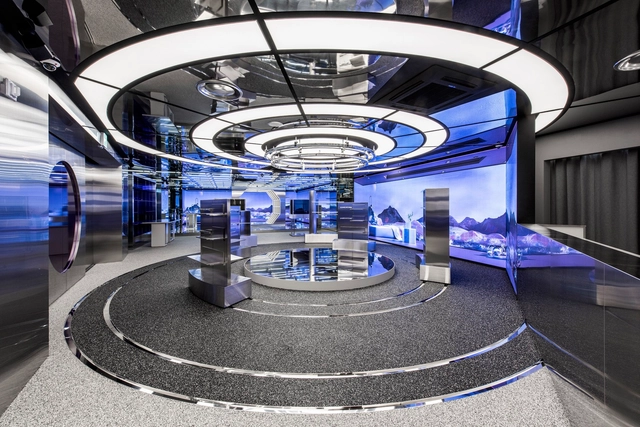
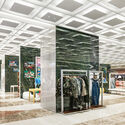
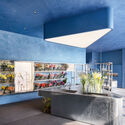
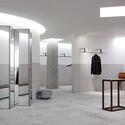
A rising number of studies suggest that well-considered lighting affects and boosts consumer behavior. Add to that the new Instagramability and promotional requirements, and the role of lighting becomes pivotal to achieving a filtered and commercially appealing visual. The latter has encouraged the implementation of new technology lighting panels and fixtures that offer a range of colors and dimmability, modifying the mood and even the overall color palette of a space. The results are some fun, sometimes almost cartoonish, settings that suggest the best backdrops and inviting venues.
Arquitectonica has refuted Koolhaas’ accusation that “Modern architecture had never achieved the promised alchemy of quantity and quality,” and Alistair Gordon’s enormous compendium of the firm’s work certainly disproves it.
But what of Rossi’s backhanded praise: “In America … quantity is quality!”? Although absolutely deserving of praise, the quantity of the work is not the basis for Arquitectonica’s achievement—even when associated with the virtuosity of design. The importance of Arquitectonica derives from certain specific contributions to modern architecture in the United States.
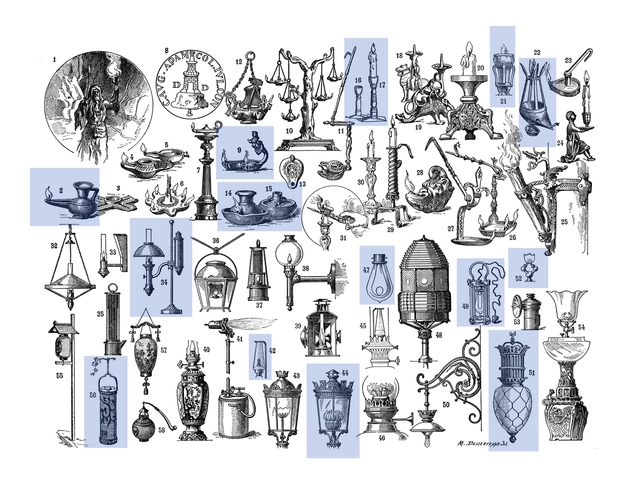
The simple activity of taking a walk in the evening can easily turn from a relaxing leisurely activity to a dangerous endeavor by removing just one element from the streetscape: public lighting. While not often recognized as defining aspect of urban environments, artificial illumination has played an essential role in defining the character of modern cities. Crime control, the appeal of nightlife, the rise of the shop window, revolutionary movements, utopias, and ideals of social equity are all concepts whose development is tightly linked to the history of public lighting. Technological advancements over the past centuries have continuously shaped the appearance and symbolism of streetlamps. Still, the this element has remains a constant throughout its history.
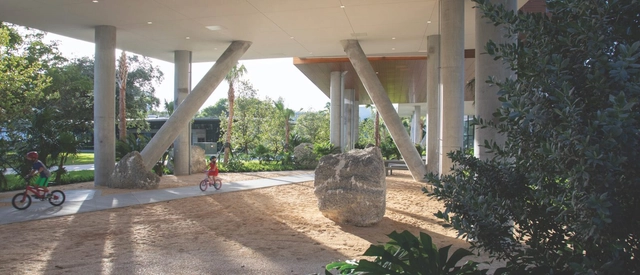
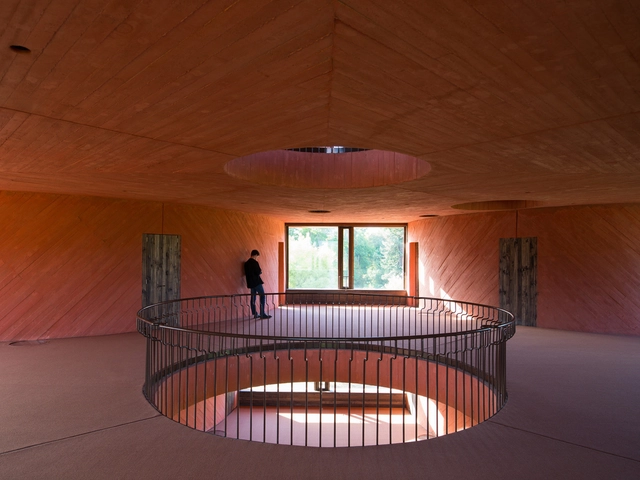
INES Centro de innovación / Pezo von Ellrichshausen. Image Cortesía de Pezo von Ellrichshausen
While colors can accentuate architectural designs, there is no single color that is "best". The choice depends on the style and purpose of the architecture, as well as the effect you want to create. However, colors that contrast with predominant tones can help highlight important details - and yes: red tones here can create an intense visual contrast.
Following two exciting weeks of nominations, ArchDaily’s readers have evaluated over 700 projects and selected 10 finalists for the Building of the Year Award China. Architects and enthusiasts participated in the nomination process, choosing projects that exemplify what it means to push architecture forward. These finalists are the buildings that have inspired ArchDaily readers the most, which also reveal the growing trend of Chinese architecture.
'Ecologías en movimiento', tema del pabellón de Chile en la Bienal de Venecia 2023. Image Cortesía de Ministerio de las Culturas, las Artes y el Patrimonio de Chile
The Chilean Ministry of Cultures, Arts, and Heritage selected architect Gonzalo Carrasco and Beals Lyon Arquitectos as curators of the Chilean pavilion at the Venice Biennale 2023 with their proposal themed "Moving Ecologies" ("Ecologías en Movimiento").
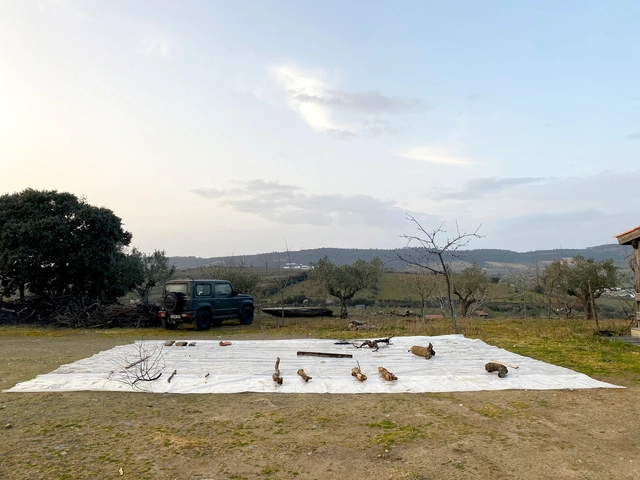
"Moving Ecologies" will address how "architecture and science made it possible to imagine the future of a country that was entering modernity" in the XIX century in such a project as the Quinta Normal park, according to the organizers. Moreover, the proposal parallels the current challenges around ecological repair and restoration with the study of soil recovery processes with endemic seeds.
Hidden in plain sight, ceilings are often the final surface interior designers and architects think about, but the expansive plane of unobstructed plaster or concrete offers mar more creative freedom than we realize. Modern design rules demand that the ceiling is kept clean. Not with a telescopic mop attachment, but by stripping off the popcorn spray, wood-chip wallpaper, or plaster patterning that haunt my own memories of ceilings-past.
While many clients greet this contemporary need for clean lines with acquiescence, choosing smooth, skimmed plaster finishes with unobtrusive yet forgetful recessed spots, other bolder clients recognize the ceiling’s potential for the creative outlet it is.
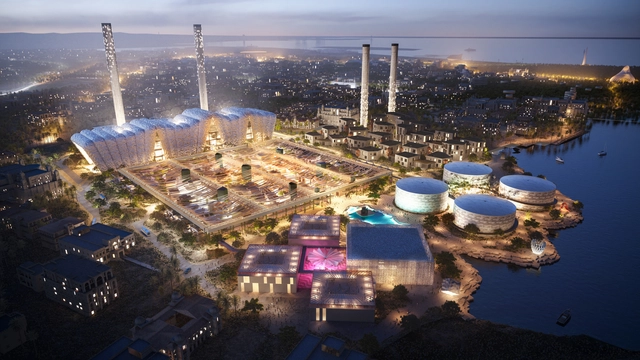
Heatherwick Studio has unveiled a new project to transform an old desalinization plant into the centerpiece of a new cultural district on the waterfront of Jeddah, Saudi Arabia. The industrial structure is set to be reconfigured to become The Museum, large complex offering production spaces, studios, and ateliers for artists and makers. Its program also includes exhibition spaces that can accommodate large-scale commissions to help visitors to learn and feel inspired by the next generation of artists.
The Portugal pavilion at the 18th International Architecture Exhibition - La Biennale di Venezia 2023 will present the Fertile Futures project, curated by Andreia Garcia and assistant curators Ana Neiva and Diogo Aguiar. The project aims to address water resources issues in seven Portuguese hydro geographies and encourage reflection on building a sustainable, equitable, and fertile future. The exhibition will take place at Palazzo Franchetti from May 20 to November 26, 2023.
At ArchDaily, we strive to keep our community well-informed on all aspects of architecture. Whether it's breaking news, upcoming events, competitions, built projects, or brand-new materials, our readers receive a selection of curated newsletters tailored to their preferences.
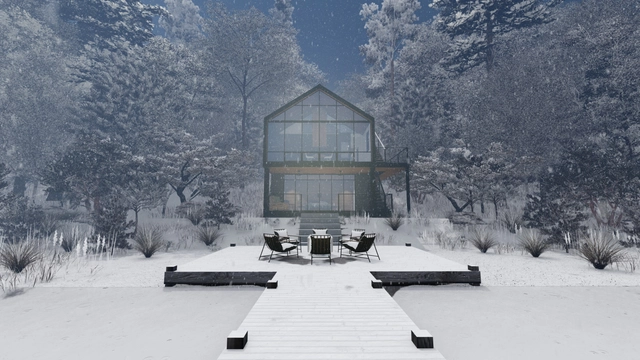
Lake House, Hudson Valley, New York. Image Courtesy of RS Mannino
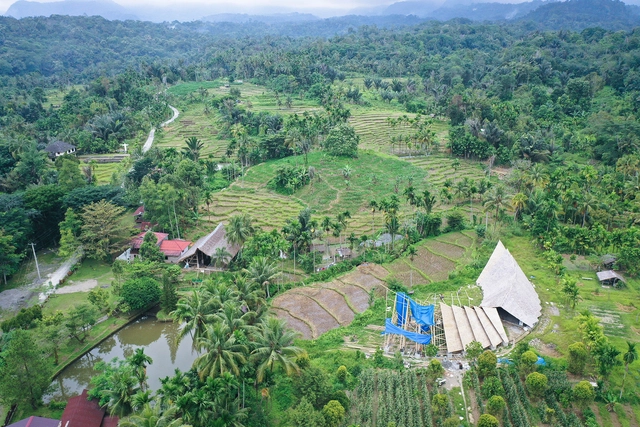
This week’s curated selection of Best Unbuilt Architecture highlights visionary villas submitted by the ArchDaily community. From a modern lake house weekend retreat in New York, a Mediterranean Villa in Portugal that blends outdoor and indoor, and a rammed earth residential complex of five villas that fold into the Balinese landscape, this round-up of unbuilt projects showcases how architects are moving forward from conventional residential architecture, pushing the boundary of luxury.
Each project has a different vision, generated by unique site conditions, and has been designed specifically for the future users of the villa. Moreover, firms like Bittoni Architects, Lipman Architects, RS Mannino Architects have all presented work that plays with materiality, giving the houses unique characteristics.
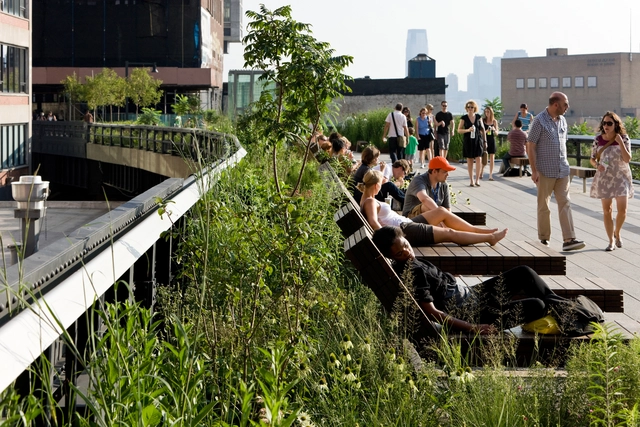
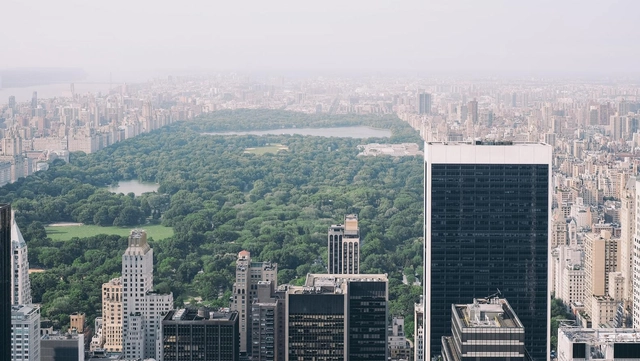
“How do we ensure new parks don’t cause ‘green gentrification,’ which can lead to the exclusion and displacement of underserved communities? How can we ensure we don’t displace the communities that new parks are meant to serve?,” asked Dede Petri, CEO of the Olmsted Network (formerly the National Association of Olmsted Parks), during an Olmsted 200 event.
New parks are meant to be accessible to everyone, but in many urban areas, developer-driven parks mostly attract wealthier Americans. Cities benefit from increased development adjacent to these new parks, bringing in higher tax revenues, but that raises questions about whether these spaces can, in effect, lead to community displacement.
https://www.archdaily.com/997686/new-strategies-for-preventing-green-gentrificationJared Green
As one of the major signature events taking place in connection with Copenhagen as the UNESCO World Capital of Architecture in 2023, Open House Copenhagen has revealed more than 50 sites included in its program. The event represents an invitation for visitors to take a look inside iconic buildings that are typically only visible from the outside. Included in the list are examples of floating architecture on Refshaleøen, one of Arne Jacobsen’s masterpieces, along wth unusual spaces such as the interior of a power plant or an underwater passage tunnel. Open House Copenhagen takes place on the weekend of March 25–26 2023. The event is open for everyone and is free of charge, but registration is required.
The Architecture in Development Global Challenge has just announced the finalists for the 2022 edition of the competition. Highlighting and celebrating the ongoing efforts of self-built community-led initiatives worldwide, the Global Challenge offers a platform for those initiatives while connecting partners and collaborators globally.
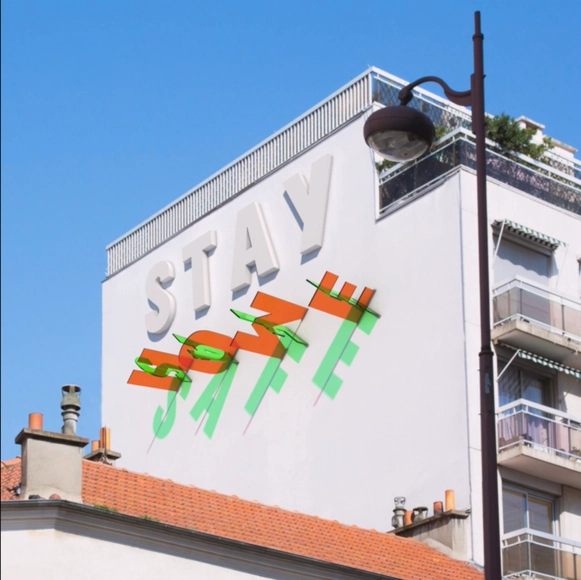
When transparent facade elements deliberately evolve from the course of the sun, we can explore a fascinating slow movement in stark contrast to the hectic urban street life on the ground. Especially the French designer Pierre Brault has responded to the accelerated rhythm of our society with facade installations that combine the principle of the sundial with colorful pop design. His three-dimensional works made of recycled colored plexiglass mesmerize through simple but dramatic movements of colored shadows. In the interview, Brault explains his inspiration, the experimental approach and his interest in working responsibly with material.
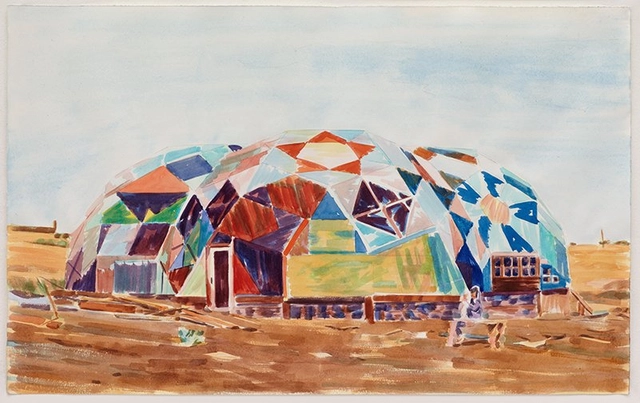
The Law of Polarity holds good in relation to human society and cultures as well - everything has an opposite. Countercultures have erupted as condemnations of “the ways of the world”. A countercultural movement expresses the ethos and aspirations of a population during a specific time. As new lifestyles are explored, supporting architecture evolves to satiate the utopian ideals of new societies. Architecture is a product of the culture it is designed for.
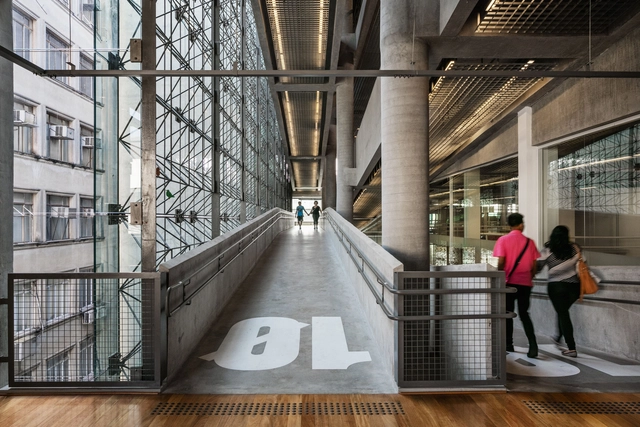
The ramp is one of the architectural elements that, besides facilitating movement between different heights and floors, provide greater accessibility to spaces. In Brazil, a series of decrees and regulations seek to ensure citizenship rights and promote equality and social inclusion of people with disabilities, which permeates issues related to their mobility and freedom to come and go. Architecture plays a key role in this inclusion, by devising strategies to ensure that these people can transit, participate and interact in any environment, whether public or private.
Infrastructure is widely known by the population in general, defined simply as a set of fundamental services for the socio-economic development of a region, such as sanitation, transportation, energy, and telecommunication. The commonly presented examples always refer to man-made physical structures. However, a new concept of infrastructure has emerged in recent decades, driven primarily by the urgent need for reconciliation between humans and nature for the survival of species.