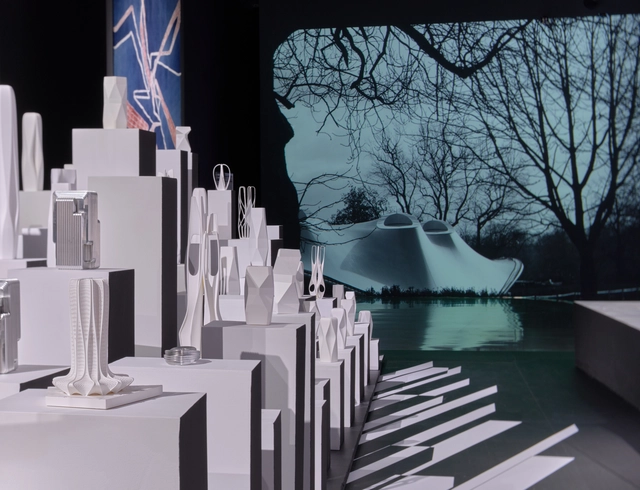
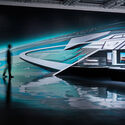
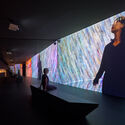
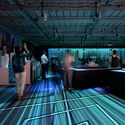
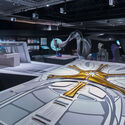
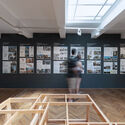
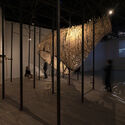
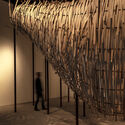
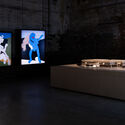
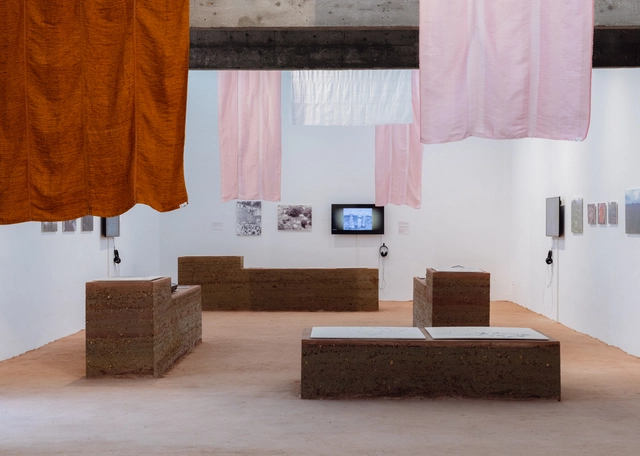
Zaha Hadid Architects (ZHA) celebrates their 15-year journey in China with an exhibition at the Guardian Art Center in Beijing. “The New World” highlights their work and research in the fields of architecture and urbanism. Moreover, it details the evolution of ZHA’s work since opening its first office in China. The exhibition showcases the studio’s approach to projects, with a heavy focus on their new digital design tools and technology.
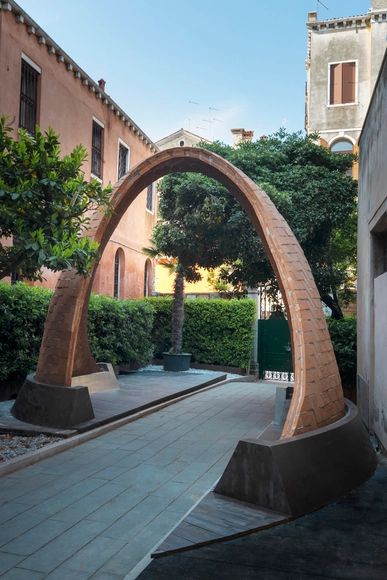
The European Cultural Centre (ECC), a non-profit organization dedicated to fostering cultural exchanges on an international scale, showcased its sixth edition of the Time Space Existence architecture exhibition alongside this year's Venice Architecture Biennale. The 2023 installment was centered on the theme of sustainability in its various forms, encompassing subjects related to migration,digital building technologies and material research, future urban developments, and housing, bringing together architects, designers, artists, academics, and photographers from 52 different countries.
Through diverse mediums and perspectives, participants have explored the philosophical concepts of Time, Space, and Existence. With a total of 217 projects on display, the exhibition is held at Palazzo Bembo, Palazzo Mora, and the Marinaressa Gardens in Venice, throughout the six-month duration of the 2023 Venice Architecture Biennale, running from May 20th to November 26th, 2023. Focusing also on emerging young architects, designers, and researchers, the 2023 edition of the exhibitionis a proactive endeavor to reimagine alternative lifestyles and reconceptualize architecture within the contemporary landscape.
Foodscapes: Spain's Pavilion for the Venice Architecture Biennale 2023, curated by Manuel Ocaña and Eduardo Castillo-Vinuesa, explores the Spanish agro-architectural context to address global issues. It analyzes the past and present of food systems and the architectures that construct them, in order to look towards the future and question other possible models that are capable of feeding the world without devouring the planet.
https://www.archdaily.com/1003304/foodscapes-a-journey-into-the-architectures-that-feed-the-worldArchDaily Team
The 18th International Architecture Exhibition of the Venice Biennale, inaugurated on May 20th, is truly embodying its theme: "The laboratory of the future". Presented by the main curator Lesley Lokko, it invited "architects and professionals from an expanded field of creative disciplines to draw examples from their contemporary practices that would pave a path for the audience to move forward, imagining for themselves what the future may hold."
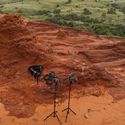
The Chilean pavilion, curated by Gonzalo Carrasco, and Alejandro Beals, as well as Loreto Lyon (Beals Lyon Arquitectos), was centered on "Moving Ecologies." The exhibition presented the current challenges regarding ecological repair and restoration, focusing on the study of soil recovery processes using endemic seeds.
https://www.archdaily.com/1003230/moving-ecologies-the-future-will-not-only-be-built-but-also-sown-and-plantedArchDaily Team
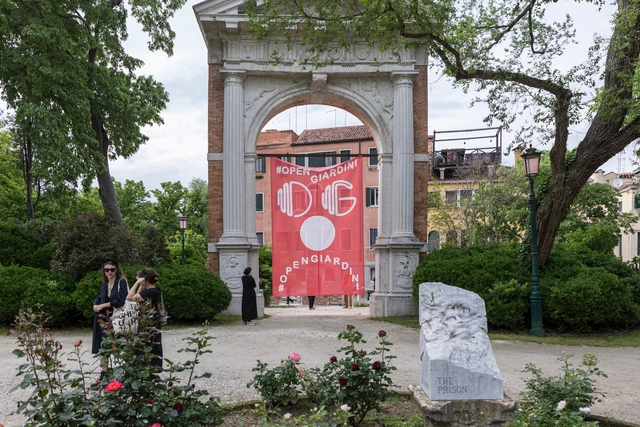
The Unfolding Pavilion is a recurring exhibition and editorial project by Daniel Tudor Munteanu and Davide Tommaso Ferrando that aims to highlight previously inaccessible but architecturally significant spaces. Now in its fourth edition, the exhibition is dedicated to the Giardini della Biennale, the Venetian garden that became the main location for one of the most important architecture exhibitions worldwide, the Venice Biennale. Through a series of site-specific interventions and photographs by Laurian Ghinițoiu, the Unfolding Pavilion #OPENGIARDINI set out to explore the paradoxical state of this public space that is not publicly accessible.
The final installment of The Architect's Studio series at the Louisiana Museum of Modern Art showcases the works of Cave_bureau, an architectural studio from Kenya. The exhibition explores the volcanic caves of Kenya, emphasizing the concept of "reversed futurism." Cave_bureau believes that by studying the past, they can develop sustainable solutions for the future.
Studio KO’s curation of the Uzbekistan Pavilion for the Venice Biennale is based on research, curiosity, workshopping, and experimenting with the senses. For over two years, the studio has worked alongside the Arts and Cultural Development Foundation, designing the Center for Contemporary Arts and their initiatives to restore and rehabilitate vernacular houses, transforming them into artist residencies. While exploring the 18th International Architecture Exhibition onsite in Venice, ArchDaily had the chance to speak with the founders of Studio KO, Karl Fournier, and Olivier Marty, curators of Uzbekistan National Pavilion. Their exhibition for this year’s theme, “The Laboratory of the Future,” focuses on the country’s rich heritage as a potential tool and inspiration for developing a more sustainable future.
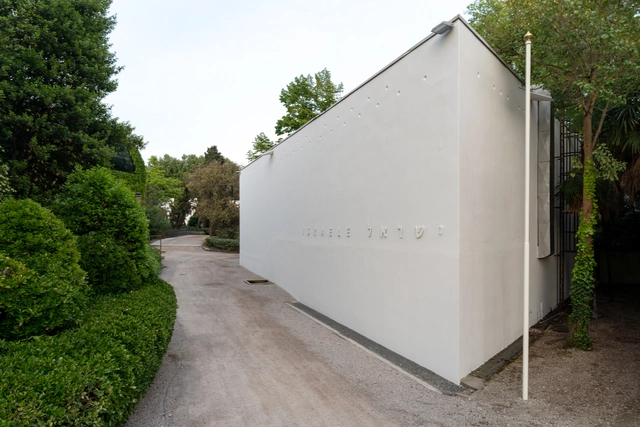
The National Pavilion of Israel presents “Cloud-to-ground,” an immersive installation exploring the nature of modern communication networks at the 18th International Architecture Exhibition of La Biennale di Venezia. The exhibition, curated by Arch. Oren Eldar, Arch. Edith Kofsky, and Hadas Maor, aims to initiate a multifaceted discussion regarding the physical aspects of virtual networks: the data centers and telephone exchanges commonly referred to as “black boxes.” The chosen theme is relevant for Israel due to its strategic location set at the intersection of continents and cultures. The pavilion in the Giardini will remain open for visitors until November 26, 2023.
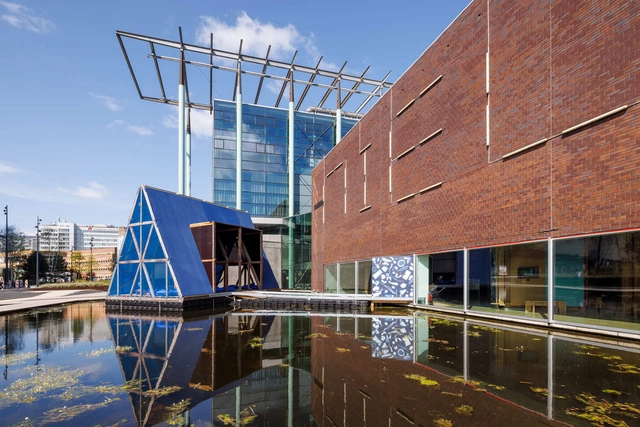
Nieuwe Instituut in Rotterdam has inaugurated the ‘Water Cities Rotterdam. By Kunlé Adeyemi,’ a cultural project comprising of exhibitions along with several floating pontoons and artist installations that present the Nigerian-Dutch architect Kunlé Adeyemi’s waterfront designs in the Netherlands. The exhibition brings a seven-meter-high floating wooden pavilion on the institute’s outdoor ponds. Inside the pavilion, landscape architect and artist Thijs de Zeeuw has created an artwork to allow visitors to experience the pavilion from the perspective of nature while contemplating the consequences of building and living on the water for the surrounding ecology and biodiversity. The entire exhibition is on display at the Nieuwe Instituut until 22 October 2023.
The Croatian Pavilion at the Venice Architecture Biennale 2023 celebrates the harmonious coexistence of the wild and domesticated, natural and man-made, and inanimate and living elements. Modeled after the Lonja Wetlands in Croatia, where communities that have adapted to the continuously shifting landscape have coexisted harmoniously for generations to create a dynamic habitat, the Pavilion is a hub for ongoing research into potential futures through educational experimentation and practice. The exhibition was curated by Mia Roth and Tonči Čerina, in collaboration with their design team: Luka Fatović, Vedran Kasap, Ozana Ursić, Niko Mihaljević, and Ivica Mitrović .“Same As It Ever Was” places a focus on the connections among actors from various backgrounds around the world.
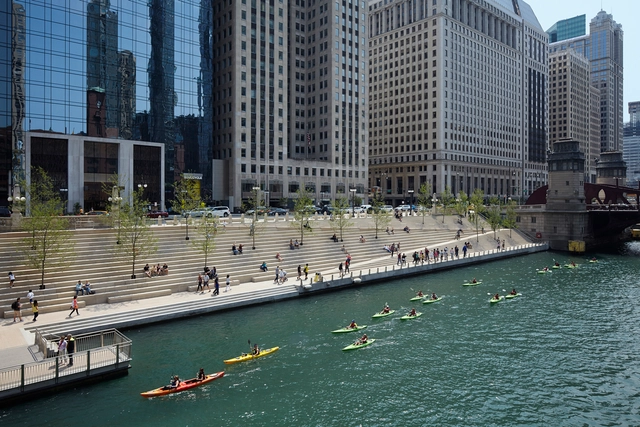
Photo by Kate Joyce, Ross Barney Architects Chicago Riverwalk. Image Courtesy of Chicago Architecture Biennial
The fifth edition of the Chicago Architecture Biennial just announced its list of participants. Under the artistic direction of Floating Museum, a collective of artists, designers, poets, and educators focused on building connections between art, community, architecture, infrastructure, and public institutions, CAB 5 will be presented at multiple sites throughout the city. "This is a Rehearsal" will focus on the community and process-related aspects of architecture, emphasizing how it helps to improve urban life and foster communal responsibility. The participants, chosen by Floating Museum, will look at global environmental, political, and economic challenges while addressing local circumstances. The goal of CAB 5's more than 100 activations, including installations and performances, is to get people to think about how society is impacted by physical infrastructure, societal history, aesthetic, and spatial design.
The Chicago Architecture Biennial is a nonprofit organization that aims to bring together people from around the world to explore innovative ideas and collectively imagine and shape the future of design. The exhibition will open on September 21, 2023, and will be on view until January 2, 2024, spanning various locations across the Chicago metropolitan area. Over 70 creative practitioners, including artists, architects, designers, and performers, will be featured in this citywide exhibition.
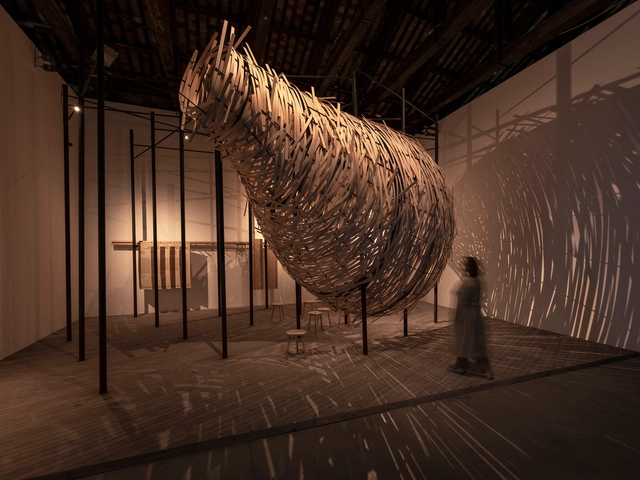
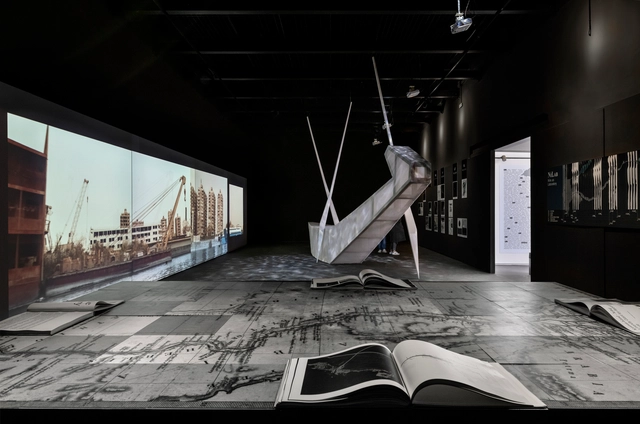
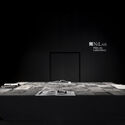
Installation at La Biennale di Venezia. Image Courtesy of NiLab
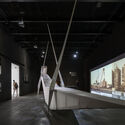
Along the longest river in the world, the Nile River, various landscapes and natural environments have been negatively impacted by interventions that do not consider the context or respect local cultures. In response, NiLab the Egyptian Pavilion at the 18th International Architecture Exhibition of La Biennale di Venezia, aims to revisit these places and highlight the value of architectural design in promoting more sustainable and culturally aware development along the river. The exhibition titled "NiLab: Nile as Laboratory", recognizes the Nile's exceptional geographical size, historical significance, and impact on natural and human landscapes, making it an ideal backdrop for reflection on contemporary issues.
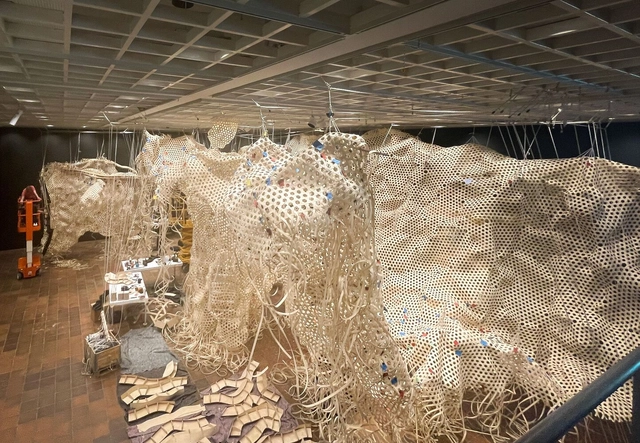
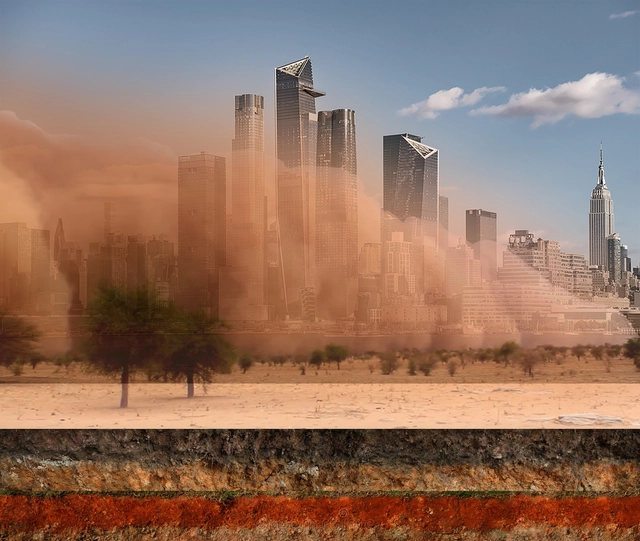
The Office for Political Innovation, led by Andrés Jaque, collaborated with a network of activists and community representatives from Xholobeni (South Africa), experts in seismographs and transduction from Poland, researchers, sound editors, and prop makers to bring a research-based installation at the Arsenale of the 18th Venice Architecture Biennale. Titled ‘XHOLOBENI YARDS. Titanium and the Planetary Making of SHININESS / DUSTINESS,’ the intervention addresses architecture’s problematic fascination with shininess.
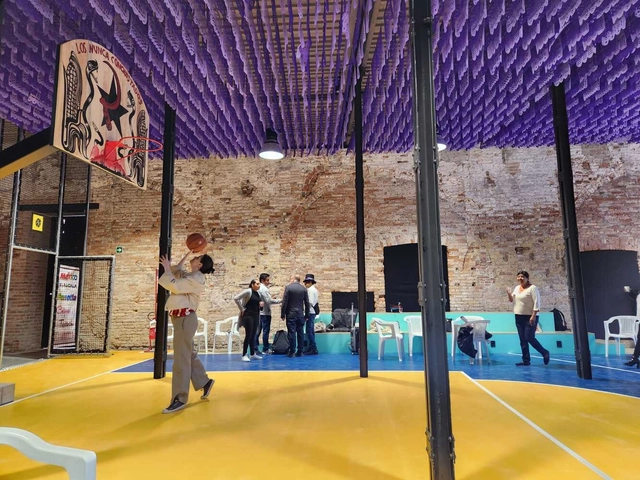
On Thursday, May 18, the Government of Mexico, through the Secretariat of Culture, celebrated the inauguration of the Mexican Pavilion at the 18th International Architecture Exhibition of the Venice Biennale 2023, with the proposal "Utopian Infrastructure: The Campesino Basketball Court". The pavilion, which had an investment of 9,059,600 pesos, aims to invite dialogue and play to engage in conversations about the topics that concern the world of architecture in relation to various aspects of social, cultural, and political life.
Taking a broader perspective on architecture, the exhibition shifts its focus towards the discipline rather than just the profession. It’s not “about building buildings per se”, explains the curator to ArchDaily. Instead, it seeks to question our conventional understanding of architecture, and with that, architectural exhibitions. The 2023 Biennale is a laboratory in every sense of the word, a global platform of experimentation, and a space to explore new ideas in the absence of spaces that allow us to do so. "It borrows its structure and format from art exhibitions, but it differs from art in critical ways which often go unnoticed", states Lesley Lokko in her initial statement.
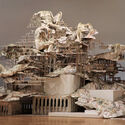
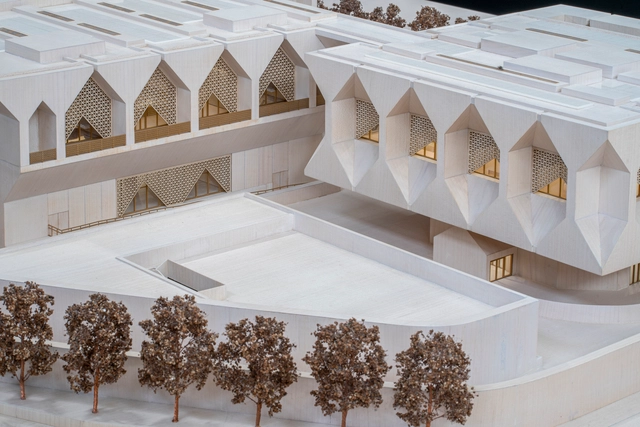
Architectural model of the new KNMA New Delhi. Image Courtesy of Adjaye Associates and KNMA
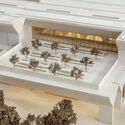
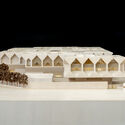
The Kiran Nadar Museum of Art (KNMA) has revealed an architectural model of its new building during the 18th International Architecture Exhibition - La Biennale di Venezia, as part of the Curator’s Special Projects, titled Mnemonic, presented at the Arsenale - Artiglierie in Venice. The building, designed by Ghanian-British architect Sir David Adjaye in collaboration with S. Ghosh & Associates as the local architect of record, is set to become India’s largest cultural center. The project is scheduled to open in Delhi in 2026.