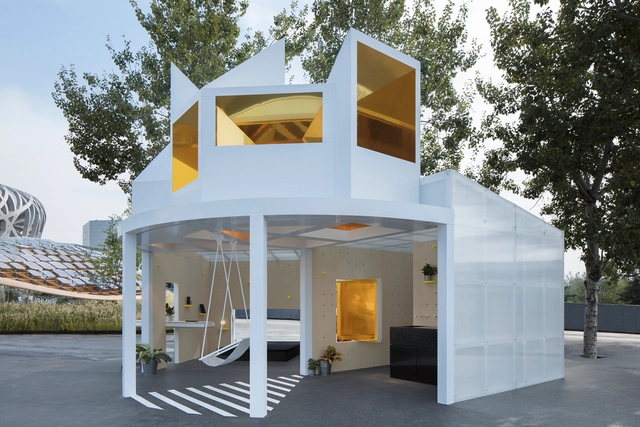
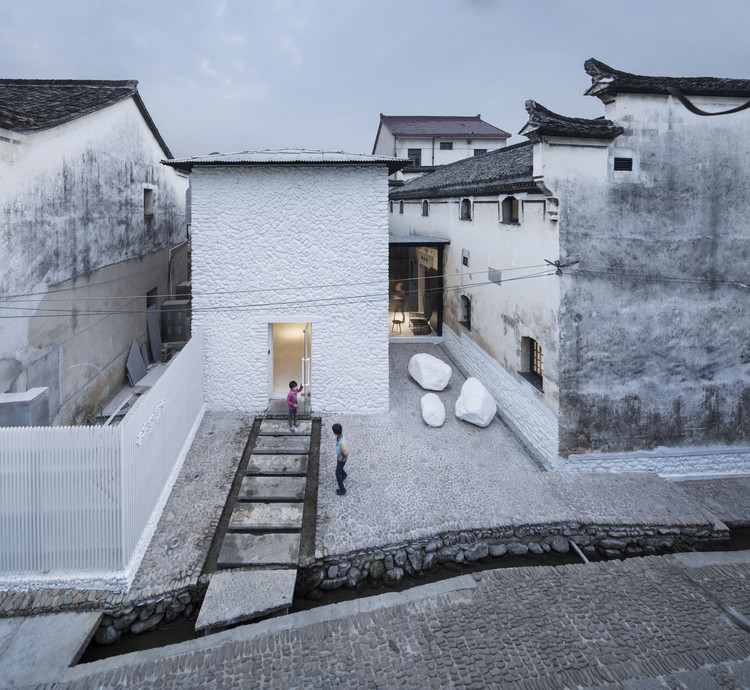
Take a second to imagine a building or a room. Chances are you are envisioning flat rectangular surfaces and straight lines. Whether it be walls, beams or windows, most architectural elements come in standard and extremely practical orthogonal shapes. However, the pandemic has shed light on designs that are not only functional, but also that improve our mood and well-being. In that sense, the power of curved, free-flowing surfaces is unmatched, which explains why they have been making a comeback as a modern design trend. Adopting beautiful nature-inspired shapes, organic curls and bends energize rooms and make users feel good. In fact, neuroscientists have shown that this affection is hard-wired into the brain; in a 2013 study, they found that participants were most likely to consider a space beautiful if it was curvilinear instead of rectilinear. In short, humans love curves.
Just as the colors of an abstract painting or photograph can produce a certain mood, so can the colors of a building or room profoundly influence how the people using it feel. Physiologically, study after study has shown that blue light slows the production of melatonin, keeping people more alert or awake even at night. Psychologically, people associate certain colors with certain feelings due to cultural symbols and lived experiences – for example, they might perceive the color red as menacing or frightening because of its connection to blood.
Altogether, the way a room is colored can have complex effects on how its users feel, while a façade can be perceived in dramatically different ways depending on how it is colored. Below, we summarize the emotional associations of every color, assessing their differing effects as each is used in architectural space.
https://www.archdaily.com/930266/how-color-affects-architectureLilly Cao
What elements and qualities does space need for a well-balanced physical and spiritual recovery? How to design spaces that are healthy for both our minds and our bodies? What makes an environment livable and sustainable in the long term?
These are the questions we need to address in the era of the rapidly developing real estate market. Why do we tend to inhabit more and more high-density residential towers? Are we necessarily more mentally secure? If not, what are the spatial solutions or cures for the current urbanites’ anxiety? In this article, we will explore ways of unwinding and finding cures in space.
As architecture has evolved to include advanced building envelopes, innovative structural systems, and hybrid programs, new boundaries have been drawn. Sustainable practices and passive strategies have led architects to re-imagine building skins and the relationship between interior and exterior. While different typologies are designed with varied levels of permeability, libraries demand rigorous attention to performative facades and protected programs. This holds especially true when libraries are placed within radically changing landscapes.
Vladimir Belogolovsky speaks with Chinese architect LI Xinggang of Beijing-based office Atelier Li Xinggang about the particularities of working within a design institute, the architect’s philosophy referred to as “poetic scenery and integrated geometry,” and his role in the design of the Bird’s Nest and why he thinks it is the most important piece of contemporary architecture in China.;
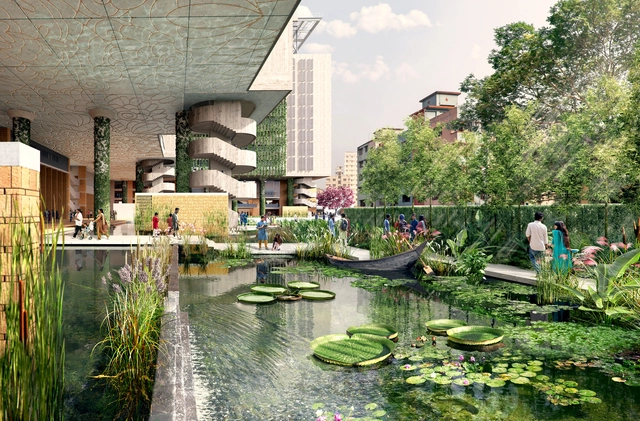
WOHA and BRAC University have unveiled the latest images from the 5.3-acre university campus, scheduled for completion in 2021. Located in Dhaka, Bangladesh, the intervention will transform a polluted and flooded wasteland into a sustainable inner-city campus and public park.
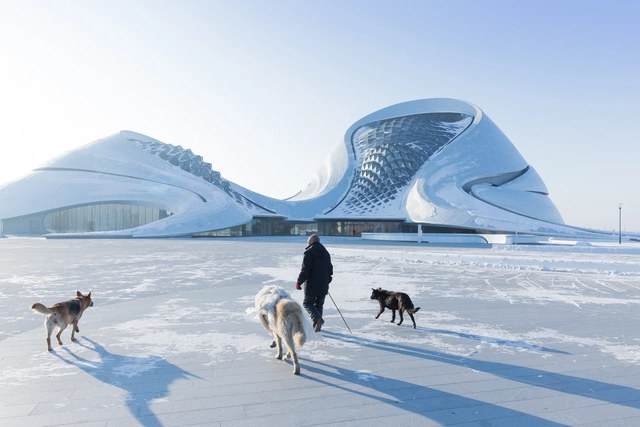
Founder of the innovative architecture firm MAD Architects, Ma Yansong (born 26 November 1975) has helped to give China a name in the international architecture scene. The first Chinese architect to receive a RIBA fellowship, Ma explores contemporary architecture in relation to traditional eastern values of nature, resulting in buildings that are complex and contextually aware, but sometimes even surreal.
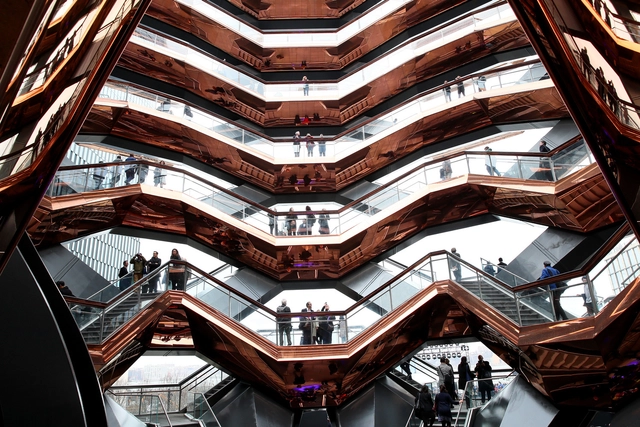
Vessel Public Landmark - Heatherwick Studio. Image Courtesy of Getty Images
Innovation can take on so many definitions. It can revolve around finding solutions, tackling with novel ideas, or just an original way of perceiving life. It can also be a very concrete technological advancement or an intangible concept. There is no right or wrong when it comes to innovation, just different points of view.
ArchDaily had the chance to discuss the topic of Innovation with Thomas Heatherwick and Yosuke Hayano from MAD Architects, during the reSITE 2019 event in Prague, where prominent thinkers from around the world shared their ideas about the future of cities under the theme of REGENERATE. The interdisciplinary conversation, in its 8th edition, explored natural and urban revitalization, as well as the recurring problems of our times like climate change and housing affordability.
China seems to be at the peak of a refurbishment fever. Not only hutongs in historic downtowns, but abandoned industrial factories are becoming new tech or cultural hubs, and even buildings in the risk of collapse are refurbished to extend their lifespan. Why is this happening? Who is investing? How could this happen in a country where you cannot buy properties?
In this edition of Editor's Talk, our editors from ArchDaily China share their thoughts on how in a fast-paced development process, such as the one China is going through, there is a refurbishment fever in its biggest cities.
Recently, a new trend in architecture has emerged: Several of the latest projects highlighted by ArchDaily, including some winners in the Building of the Year Awards, are using permeable facades as an attractive option for their exterior finishes.
As part of our 2018 Venice Architecture Biennale coverage we present the proposal for the Chinese Pavilion. Below, the participants describe their contribution in their own words.
The motivation for this exhibition is more than just xiangchou, a Chinese term that refers to nostalgia for rural lands. We return to the countryside where Chinese culture originated to recover forgotten values and overlooked possibilities; from there, we will build a future countryside. – Li Xiangning (Curator)
One of the major challenges facing contemporary built environments is the future of rural development. In China, the countryside has become a new frontier for experiments in this area, and the country is developing its countryside at a speed and scale unseen in the West. Drawn by the promise of boundless opportunity, architects, artists, developers—as well as capital flow—are converging in rural areas across the nation.

.jpg?1645781972&format=webp&width=230&height=230&crop=true)
.jpg?1645781751&format=webp&width=230&height=230&crop=true)
.jpg?1645782629&format=webp&width=230&height=230&crop=true)
















_MAD_Architects.jpg?1479857306&format=webp&width=230&height=230&crop=true)