.jpg?1447005293&format=webp&width=230&height=230&crop=true)


-
Architects: WANG, CAI & ASSOCIATES
- Area: 1530 m²
- Year: 2014
.jpg?1443794805&format=webp&width=640&height=580)
Text description provided by the architects. Following up a year of development, Penda has unveiled their installation for Beijing Design Week (BJDW) 2015 – Rising Canes, a structural system made entirely of bamboo and ropes. Meant to be a speculation system for larger developments, the installation is fully modular, ecological and easy to expand in every direction. Bamboo was chosen as the main construction material for its long traditional roots in China and fantastic structural capability, as well as part of a desire to fight its current obscurity as a construction material.
.jpg?1433216600&format=webp&width=640&height=580)
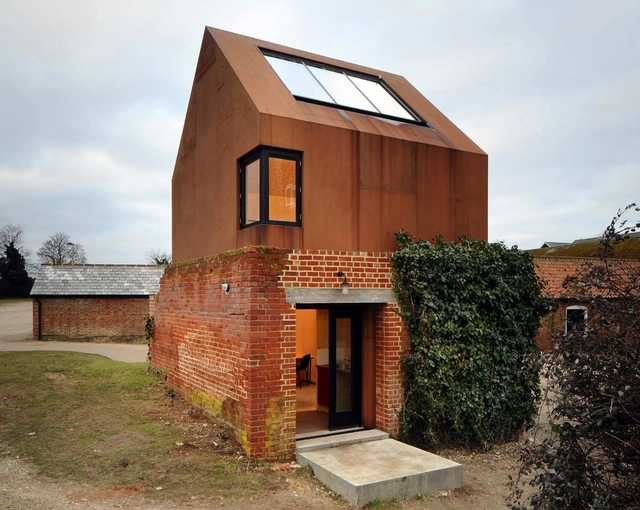
One of the most interesting trends in architectural materials of recent years is the increase in use of weathering steel - more commonly referred to by its trademark name, Cor-Ten. Thought the material has been around for decades, first being used for architectural purposes in the Eero Saarinen-designed John Deere Headquarters in 1964, the material has seen a surge in popularity in the last decade or so, being used in everything from individual houses and tiny kiosks, to SHoP's design for the Barclays Center in Brooklyn, which used a staggering 12,000 weathering steel panels.
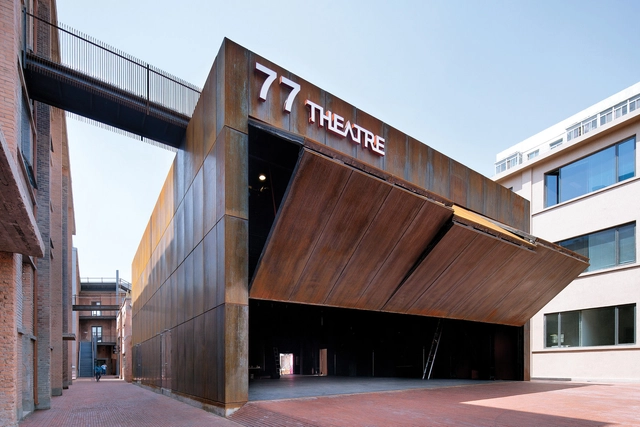
To celebrate this material we've rounded up nine of the most innovative and striking uses of weathering steel from recent years: Haworth Tompkins' tiny Dovecote Studio; Feilden Clegg Bradley Studios' offices and student housing at Broadcasting Place; the perforated facade of IGC Tremp by Oikosvia Arquitectura; the rusted ribbons of Ron Arad's Design Museum Holon; vertical striations on The Corten House by DMOA Architecten; Tony Hobba Architects' Third Wave Kiosk and its corrugated Cor-Ten walls; striking patterned facades in Santiago's Gabriela Mistral Cultural Center by Cristian Fernandez Arquitectos, Lateral Arquitectura & Diseño; weathered facades and louvers in Guillermo Hevia's Ferreteria O´Higgins; and finally the folding garage-style doors of Origin Architect's Refurbishment of the Offset Printing Factory.

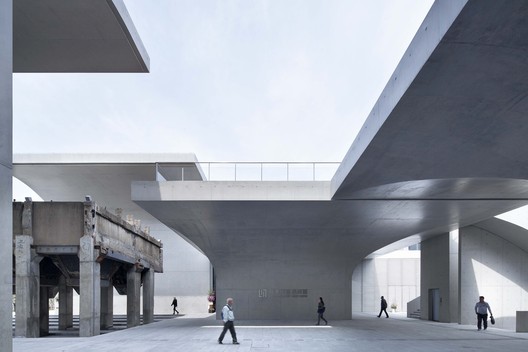
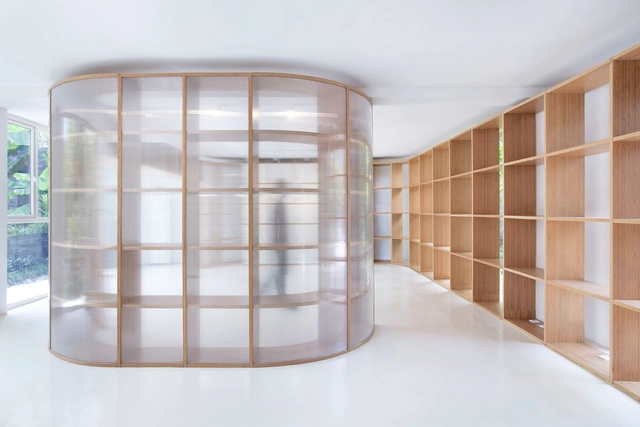
“We use two aspects to express architecture: Qing [emotion], Jing [pattern]. Jing is the architectural pattern that we apply, to certify the living and working style, to consider what our architecture can bring. Another thing is the relationship between architecture and the site, the city and nature. Ancient Chinese dwellings are usually enclosed by walls, creating an introverted space. This is the second aspect Qing, more related to traditional customs, aesthetics, and our attitude towards the environment and nature. The enclosed space originates from our interpretation of Qing. What we have captured about the ancient spirit of aesthetics is a kind of uncertainty, a kind of blurry and ambiguous feeling.”
- Chen Yifeng, Shanghai, 2013
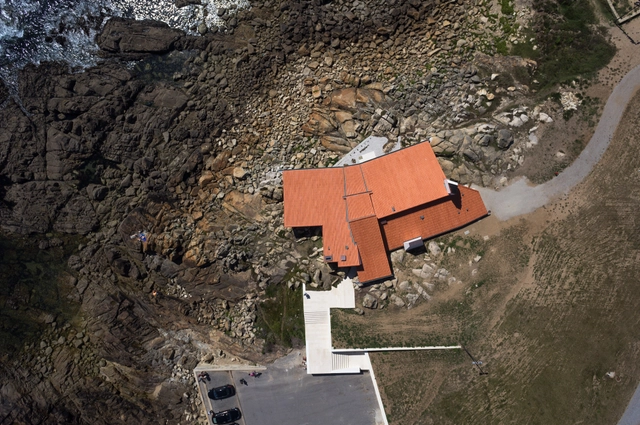
What is the draw of the aerial view? Whereas architects and designers often find solace in this particular spatial perspective there is a more inclusive, universal appeal to this way of seeing. The ease of access to online mapping services has increased our collective reliance on understanding our world from above.
Maps condense the planet into a little world inside our pocket, the commodification of which has universalised the ‘plan-view’ photograph. The question of whether or not their ubiquitous availability, having now been assimilated into our collective consciousness, is a positive step for the status of the plan is a discussion ongoing. Yet, in the face of this dilemma, architectural photographers are pushing the boundaries of drone technology in order to find new meaning.
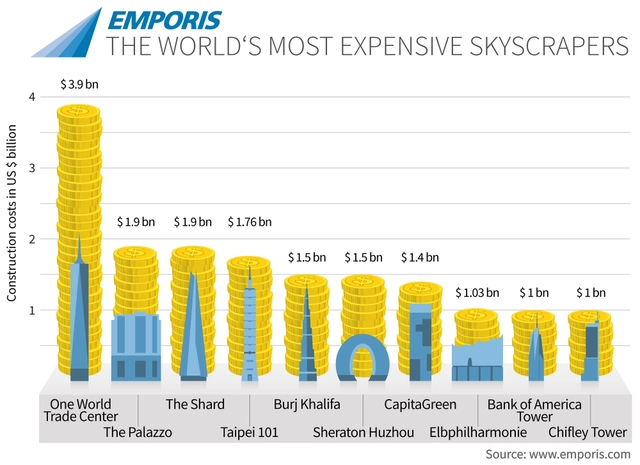
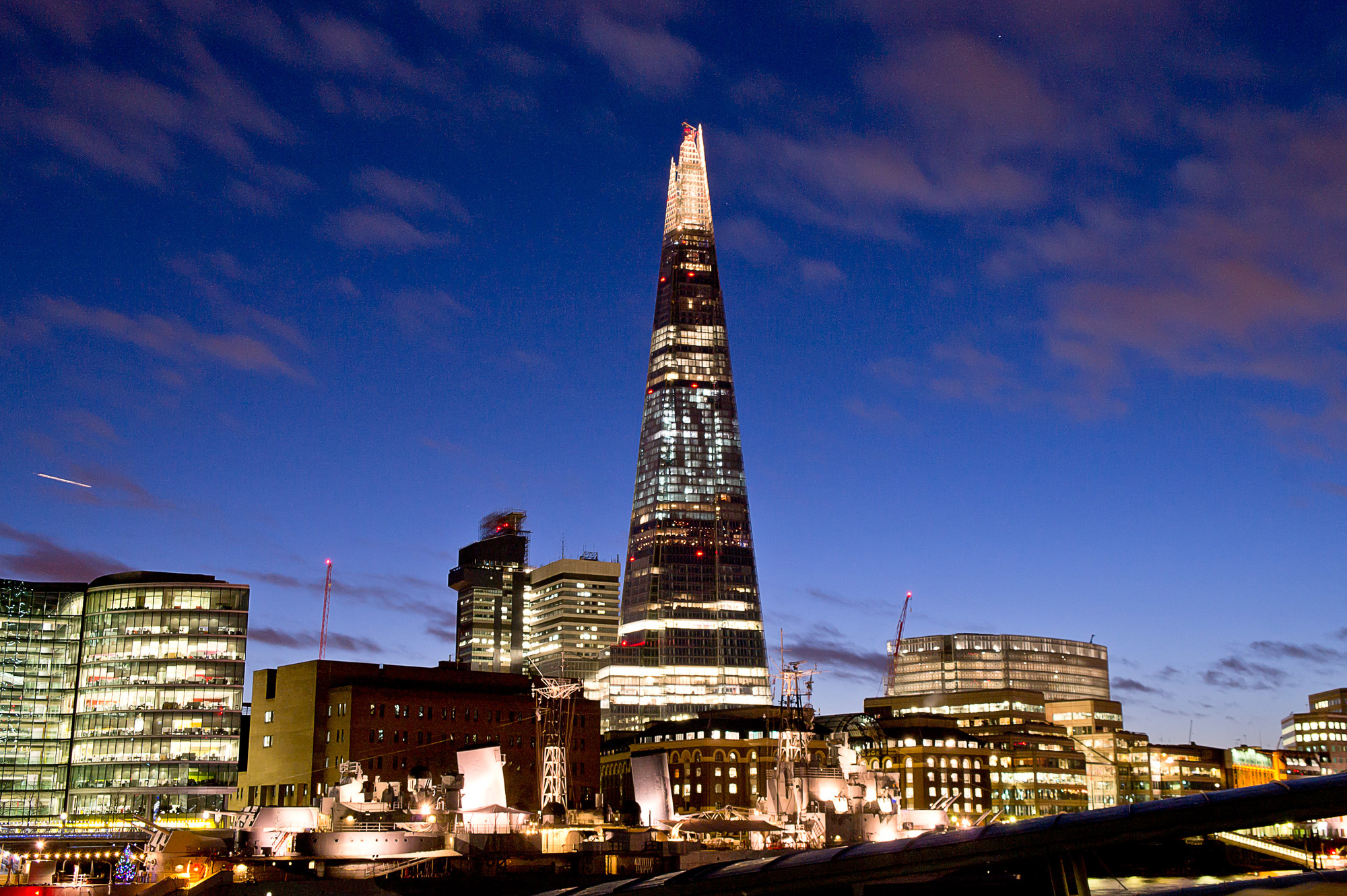
It may or may not be the tallest building in North America, but one thing's for sure: when it comes to costs, no other skyscraper comes close to New York's One World Trade Center. This is the conclusion of Emporis, whose list of the world's top ten most expensive buildings puts 1WTC way out in front at $3.9 billion. Originally estimated at just half that cost, this sets a trend in the top ten list, with many of the featured buildings suffering staggering overruns. The second-place Shard, for example, overshot it's original £350 million ($550 million) budget nearly four times over (although this is to be expected in London).
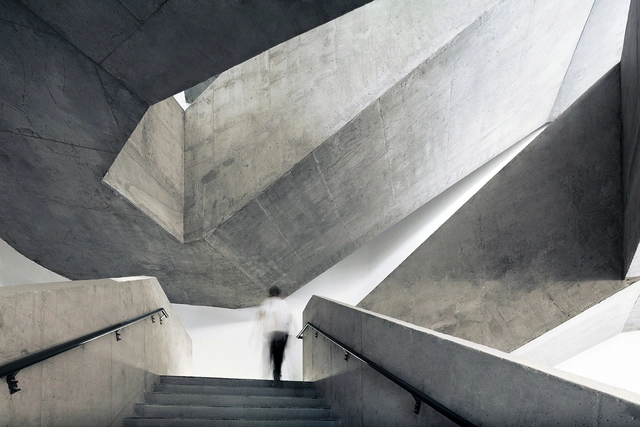
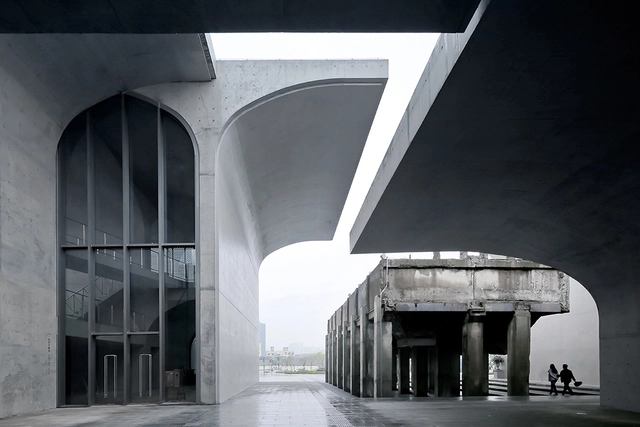
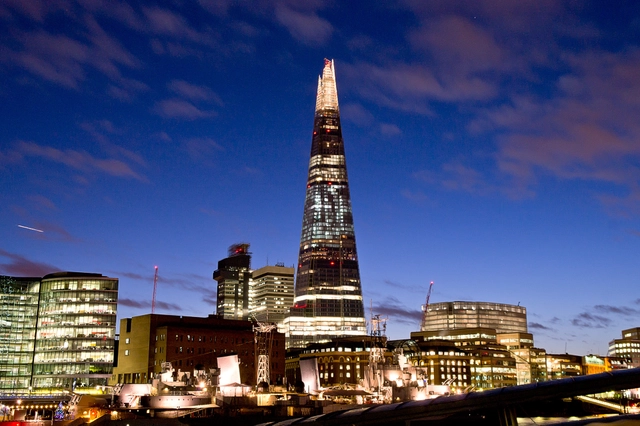
The Shard has been awarded this year's Emporis Skyscraper Award, bringing the award back to Europe after two consecutive wins in North America - by Absolute Towers in 2013 and New York by Gehry in 2012. Each year, the award honours the world's best new building over 100m tall.
The award's jury praised the Shard's "unique glass fragment-shaped form and its sophisticated architectural implementation", resulting in "a skyscraper that is recognized immediately and which is already considered London's new emblem."
Read on to find out the remaining 10 buildings to take home awards

Last June, we published our first list of must-see Instagram feeds to follow, but we knew it was only the tip of the iceberg. Once again we’ve scoured the web (and followed your excellent suggestions) to track down the 25 Instagrammers who will be sure to inspire – including dare-devil adventurer raskalov, up-and-coming architecture photographer nicanorgarcia, and our very own editor-in-chief.
See the 25 awesome architecture instagrammers, after the break…


.jpg?1443795381&format=webp&width=230&height=230&crop=true)
.jpg?1443795335&format=webp&width=230&height=230&crop=true)
.jpg?1443794787&format=webp&width=230&height=230&crop=true)
.jpg?1443794843&format=webp&width=230&height=230&crop=true)
.jpg?1443794805)


.jpg?1433216579&format=webp&width=230&height=230&crop=true)
.jpg?1433217035&format=webp&width=230&height=230&crop=true)
.jpg?1433216657&format=webp&width=230&height=230&crop=true)
.jpg?1433216416&format=webp&width=230&height=230&crop=true)
.jpg?1433216600)





.jpg?1429208050&format=webp&width=640&height=580)
.jpg?1429208125&format=webp&width=230&height=230&crop=true)
.jpg?1429209154&format=webp&width=230&height=230&crop=true)
.jpg?1429208029&format=webp&width=230&height=230&crop=true)
.jpg?1429209086&format=webp&width=230&height=230&crop=true)
.jpg?1429208050)