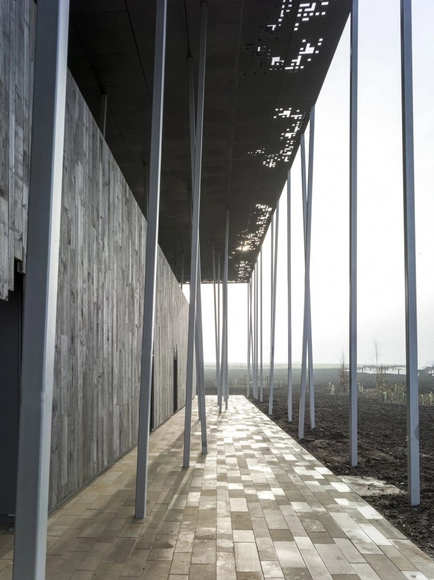
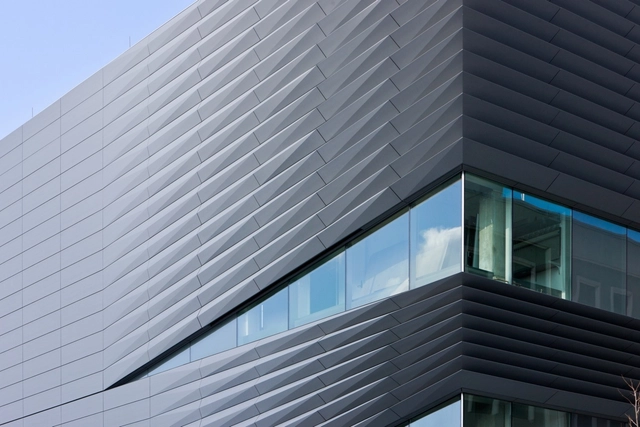
Zinc is a natural element extracted from ores. Its symbol, which appears in the dreaded Periodic Table, is Zn. Through a metallurgical process of burning its impurities (reducing zinc oxide and refining), it assumes a much more friendly appearance, and later becomes the sheets, coils, and rollers used in construction. The main characteristic of this material is its malleability, which allows it to be worked easily, allowing to cover complex forms in facades and roofs of buildings.
The first moon landing, widespread anti-war protests, Woodstock and the hippies, rural communes and environmentalism, the Berlin Wall, the women’s liberation movement and so much more—the tumultuous decades of the Sixties and Seventies occupy an unforgettable place in history. With injustices openly questioned and radical ideas that set out to unseat existing conventions and practices in various spheres of life, things weren’t any different in the architectural world.
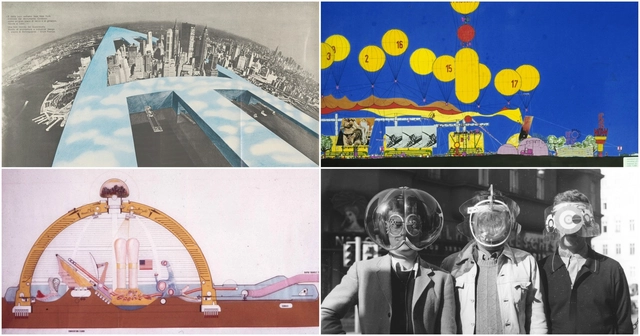
The grand visions dreamt up by the modernists were soon challenged by utopian experiments from the “anti-architecture” or “radical design” groups of the 1960–70s. Reestablishing architecture as an instrument of political, social, and cultural critique, they drafted bold manifestoes and designs, experimented with collage, music, performance art, furniture, graphic design, zines, installations, events, and exhibitions. While certain individuals from this era like Cedric Price, Hans Hollein, and Yona Friedman remain important to the realm of the radical and the unbuilt, the revolutionary spirit of these decades also saw the birth of various young collectives. For eccentricity at its very best, read on for a (by no means exhaustive) list of some groups who dared to question, poke, expand, rebel against, disrupt and redefine architecture in the 60s and 70s.
https://www.archdaily.com/880253/9-of-the-most-bizarre-and-forward-thinking-radical-architecture-groups-of-the-60s-and-70sZoya Gul Hasan
The Bartlett School of Architecture, UCL, is celebrating the opening of its new building at 22 Gordon Street with an exhibition of work by visionary architect Sir Peter Cook. Running from 23 February to 10 March 2017, the exhibition marks Sir Peter’s 80th year with a celebration of 80 of his inspired and pioneering projects.
The computer does things correctly, and I think it's very important in architecture to also have the incorrect. – Peter Cook
In connection with the exhibition "Peter Cook. Retrospective" currently on view at the Museum for Architectural Drawing in Berlin, the Tchoban Foundation has released a video of the architect discussing the importance of drawing in the architectural world. Cook compares drawing to new computer-based techniques, arguing that while software can do amazing things (including being instrumental in realizing his own Kunsthaus Gratz), drawing allows the architect to learn, communicate and experiment in a way that is irreplaceable. Watch the teaser to the Tchoban Foundation's video above, or read on for the full discussion.
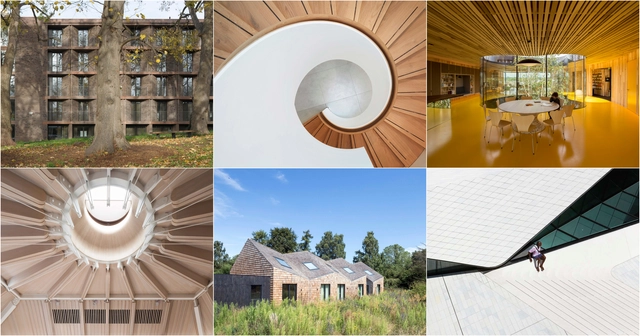
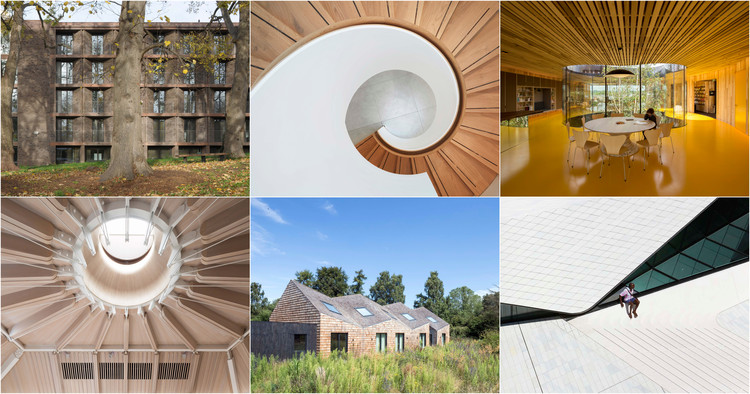
A total of sixteen projects have been shortlisted for RIBA East 2015 Awards, featuring buildings by Hawkins\Brown, Proctor & Matthews, Allies & Morrison, and AHMM. All shortlisted buildings will now be assessed by a regional jury. Regional winners will then be considered for a RIBA National Award in recognition of their architectural excellence, the results of which will place some projects in the running for the 2015 RIBA Stirling Prize.
See the complete list of shortlisted projects after the break.
Many times, the most innovative minds in architecture aren't the architects themselves. They can come in the form of students, researchers and in this case - providers. We recently asked VMZINC, a company that provides material solutions for architects, a few questions about the use of zinc in architecture, the Stonehenge Visitors Center and more.


_Sarah_Blee.jpg?1530722704&format=webp&width=230&height=230&crop=true)
_Peter_Landers.jpg?1530722948&format=webp&width=230&height=230&crop=true)
_Jack_Hobhouse.jpg?1530722837&format=webp&width=230&height=230&crop=true)
_Keith_Barnes.jpg?1530723141&format=webp&width=230&height=230&crop=true)
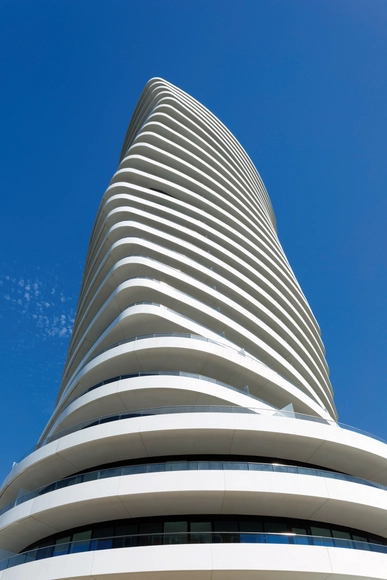


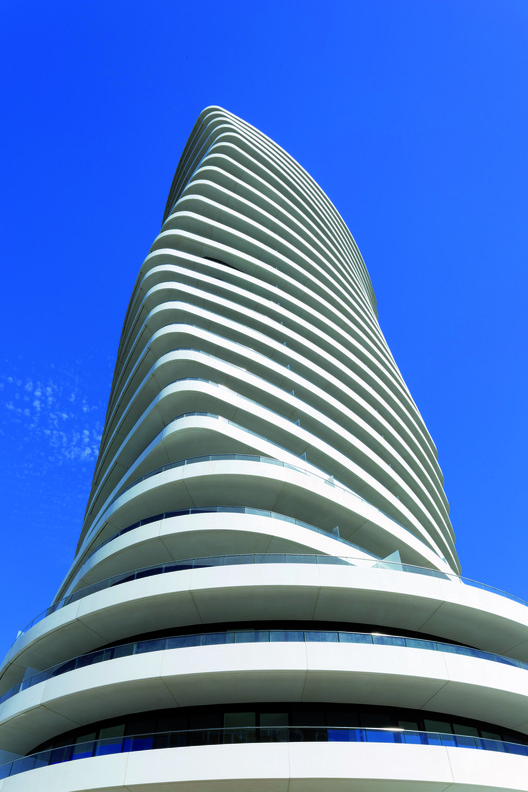
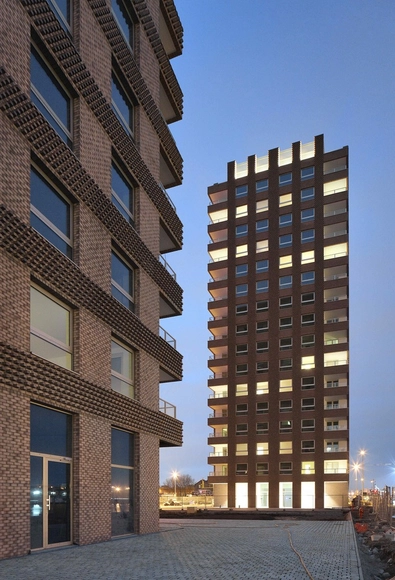


Peter_Cook.jpg?1494566937&format=webp&width=640&height=580)
Peter_Cook.jpg?1494566914&format=webp&width=230&height=230&crop=true)
Peter_Cook.jpg?1494566979&format=webp&width=230&height=230&crop=true)
Peter_Cook.jpg?1494567016&format=webp&width=230&height=230&crop=true)
Peter_Cook.jpg?1494567029&format=webp&width=230&height=230&crop=true)
Peter_Cook.jpg?1494566937)

.jpg?1469805798&format=webp&width=640&height=580)
.jpg?1469798106&format=webp&width=230&height=230&crop=true)
.jpg?1469797457&format=webp&width=230&height=230&crop=true)
.jpg?1469797287&format=webp&width=230&height=230&crop=true)
.jpg?1469804400&format=webp&width=230&height=230&crop=true)
.jpg?1469805798)



Tim_Crocker.jpg?1429192296&format=webp&width=640&height=580)

.jpg?1425513674&format=webp&width=230&height=230&crop=true)