This guide explains how to structure roles, assign permissions, and maintain governance across teams in the RunDiffusion platform.

This guide explains how to structure roles, assign permissions, and maintain governance across teams in the RunDiffusion platform.

Art Nouveau, or new art, was an artistic movement that emerged in Belgium in the late 19th century and rapidly spread across several European countries and the United States. It was "new" art because it rejected academic canons and marked a break with the past. Spurred by the developments and societal changes brought about by the Second Industrial Revolution, the movement's artists sought to create a visual language that aligned with the advancements of their time, transcending antiquity, academicism, and aesthetic conservatism. Consequently, their works combined classical elements with contemporary details, merging different styles to form an original whole.

The Ipiranga Museum, located in São Paulo's south zone, has launched a virtual tour that allows users to follow the progress of the restoration and expansion of the building and its immediate surroundings. The digital tour features 360-degree camera footage captured across various spaces of the building and construction site, providing an overview of the renovation's progress.

Methods of shading facades and preventing direct solar radiation from entering a building's interior have been present since ancient architecture. However, modern architecture popularized the use of the brise-soleil, one of the most widespread passive climate control devices, which shades spaces while allowing for cross-ventilation when necessary.

Portugal is the host country for the 2021 European Conference on Architectural Policies — CEPA, and as such, will organize, through the Portuguese Association of Architects (Ordem dos Arquitectos), a discussion forum to analyze, discuss, and present proposals for architectural policies at the European level. CEPA 2021 presents an opportunity to respond to the challenge launched by the President of the European Commission, Ursula von der Leyen, toward building a New European Bauhaus, proposing a dialogue on current challenges for a post-pandemic future at the intersection of architecture, art, the city, and politics.

Today, the IABsp announced the winning team of the co-curatorship competition for the 13th International Architecture Biennale of São Paulo. Titled Travessias, the team comprises nine Brazilian members from various fields: Carolina Piai Vieira, Larissa Francez Zarpelon, Louise Lenate Ferreira da Silva, Luciene Gomes, Pedro Cardoso Smith, Pedro Vinícius Alves, Raíssa Albano de Oliveira, Thiago Sousa Silva, and Viviane de Andrade Sá.

With the goal of discovering the architects, projects, and stories behind landmark Portuguese architecture, Sara Nunes, of the architectural film production company Building Pictures, launched the podcast No País dos Arquitectos, where she talks with key figures of contemporary Portuguese architecture.
In its first episóde, Sara spoke with architect João Luís Carrilho da Graça about his Lisbon Cruise Terminal, and then welcomed João Mendes Ribeiro for a conversation on heritage, the reuse of old structures, and landscape architecture, based on the rehabilitation project of the Coimbra Botanical Garden greenhouse. In this third episode, Sara talks with architect Inês Lobo about the Public Library and Regional Archive of Angra do Heroísmo. Read the full interview or listen to the podcast below.

Throughout the 20th century, road construction was primarily based on the premise that more infrastructure eases traffic. However, evidence shows that instead of reducing congestion, building more roads actually increases traffic. When driving times are reduced, convenience increases. Consequently, alongside the appeal of private vehicles as status symbols of wealth and social standing, people tend to make more trips by car. A recent study by researchers at the University of Barcelona analyzed data from 545 European cities between 1985 and 2005. It confirmed that efforts to expand road capacity over those two decades led to an increase rather than a reduction in vehicle traffic, and failed to ease congestion.

The magazine bears the welcoming name of Engawa. It is welcoming because, as a transitional space, it suggests ideas like hospitality and invitation, or, conversely, projection and openness.

The global transition to a green economy could create 18 million jobs, with the potential to generate quality employment and livelihoods worldwide. But what about the people and communities whose livelihoods currently depend on fossil fuels and high-carbon sectors?
An estimated 6 million jobs in coal-fired power generation, oil extraction, and other sectors could disappear by 2030. Many of these new green job opportunities will require different skills than those needed for previous roles, or will be located in new areas.

At a time when urbanization has become planetary and humanity has become a geological force capable of profoundly altering Earth's thermodynamic cycles, it is urgent to reinvent the urban way of life and rehearse other forms of coexistence between humans, animals, and plants—between cities, forests, rivers, and mountains. Furthermore, it is urgent to design, with our feet on the ground and in collaboration with the peoples and sciences of the Earth, the conditions for future habitability.

France is investing in initiatives to combat climate change, including shifting to more sustainable modes of transport. Owners of older cars can now receive a government subsidy of up to 2,500 euros to trade in their vehicles for electric bicycles.
“For the first time, it is recognized that the solution is not to make cars greener, but simply to reduce their number,” noted Olivier Schneider of the French Federation of Bicycle Users.

Few public figures were more deeply Brazilian than the Italian architect Lina Bo Bardi. Arriving in Brazil shortly after World War II, she grew so attached to Brazilian culture that she became one of its main interpreters, capable of an understanding of local traditions that was both rigorous and comprehensive.
Architecture critic and essayist Francesco Perrotta-Bosch examines the trajectory of this brilliant artist in light of the following question: how was a foreigner able to see so much of a country that was not her own, to the point of translating it for Brazilians themselves?
.jpg?1619525533&format=webp&width=640&height=580)
While they can serve various functions in many projects, stairs are, first and foremost, elements of vertical circulation used to connect two or more levels. Due to the relatively intermittent nature of their use, many designs for small spaces leverage this characteristic to explore solutions that go beyond traditional configurations and standard riser dimensions.

Applications are open until June 30 for the 4th Tomie Ohtake Institute Leroy Merlin Design Award, aimed at college students and recent graduates from all fields. The award seeks to recognize proposals that highlight and conceptualize the relationship between design and other disciplines, such as communication, architecture, biology, engineering, fashion, technology, economics, physics, education, mathematics, and chemistry, among others. The theme of this fourth edition is the verb to welcome.

The roof of London's Euston Station serves as a virtual application for the integrated Metaplas system, a project developed by students at The Bartlett School of Architecture, UCL. As part of an investigation by Research Cluster 8 (RC8) of the MArch Architectural Design program, students developed a 3D-printed multi-material system using biodegradable and recyclable thermoplastics. By transforming a series of flat panels into complex three-dimensional forms, the students created a geometric pleated structural system capable of passively controlling interior lighting.

On Monday, May 3rd, at 5:00 PM, the FAUUSP YouTube channel will host the launch of Anna Bokov’s book, "Avant-Garde as Method: Vkhutemas and the Pedagogy of Space, 1920-1930." The work stands as one of the most significant publications on the often-overlooked Soviet school of art, design, and architecture from 1920s Moscow. The school was the first to implement mass art and technological education, which were considered essential to the dominant modernist paradigm in the Soviet Union. Better known in the West as the sibling of the Bauhaus, Vkhutemas (Higher Art and Technical Studios) possesses a history that diverges somewhat from the German experience, which has been extensively studied by researchers worldwide. In contrast, Vkhutemas has had only one major pioneering book prior to Bokov’s, released by researcher Selim Khan-Magomedov in the 1990s.

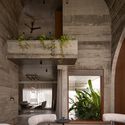
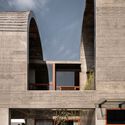
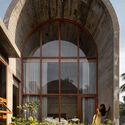
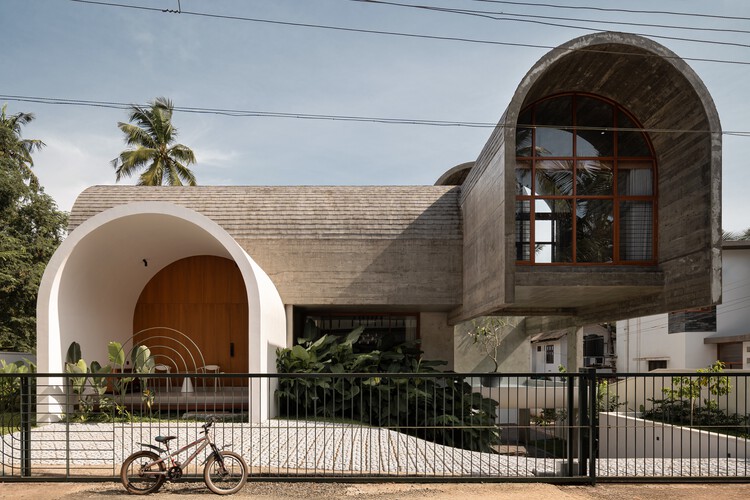
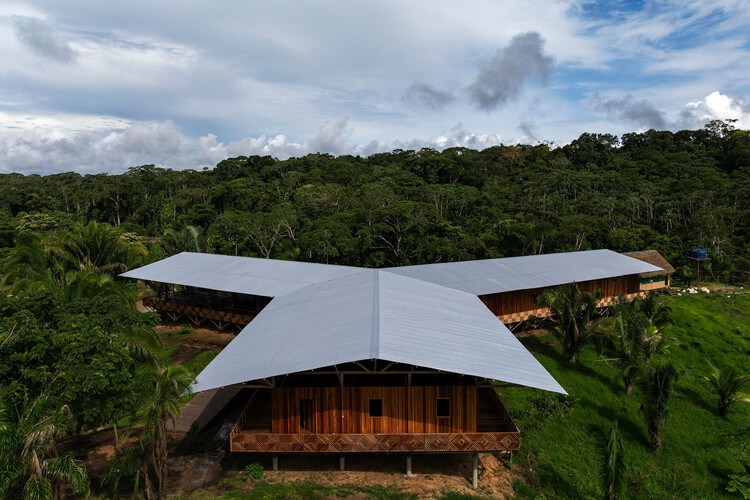
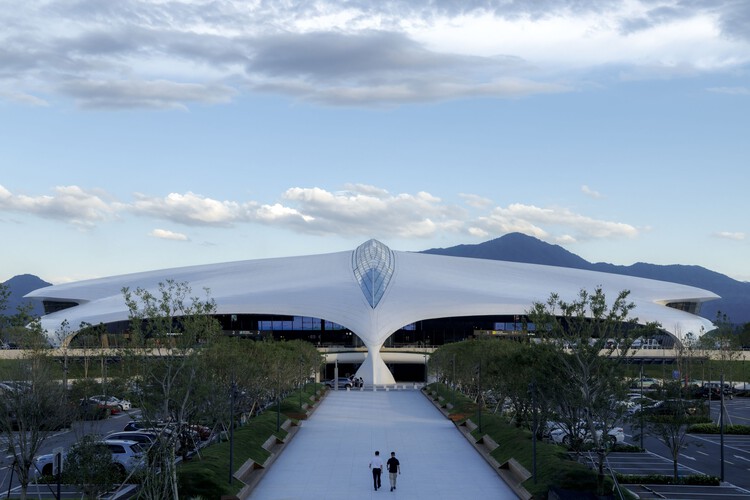
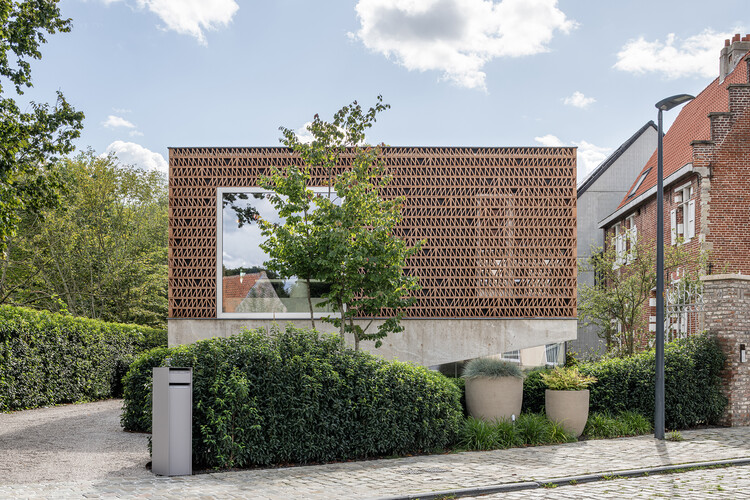
Flat slabs, pitched roofs, and straight-line designs are relatively recent developments in human history. Historically, curved roofs predominated in Indigenous architecture. Today, although they are not the most common choice, some firms are exploring how more organically designed roofs can better engage with their context and introduce functional benefits, influencing the project from the construction site to the ultimate comfort of its users.
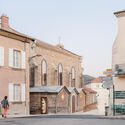
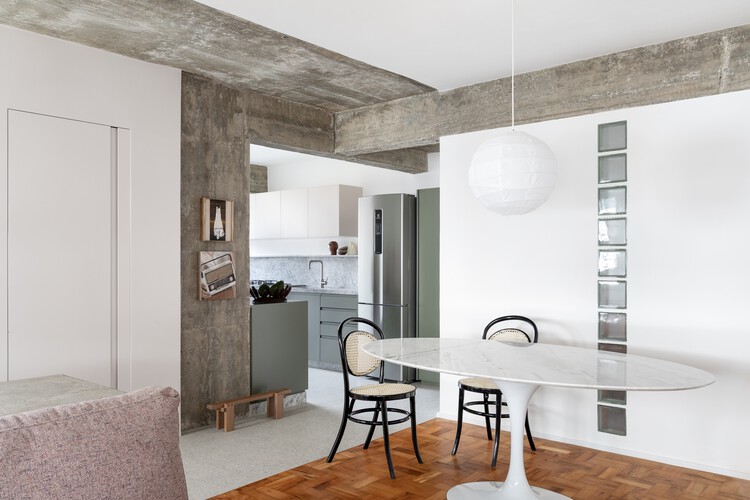
The relationship between architecture and structure has been widely discussed and is repeatedly revisited by architects with every new project. Much like plumbing and electrical systems, the structural system is one of the essential disciplines that make up a building. Yet, it is one of the most impactful on the architectural outcome, directly shaping the spatial experience and the chosen materiality. Mastering structural design and understanding how to best integrate it into the architectural project grants architects greater autonomy and expands the possibilities of design solutions.
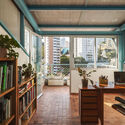
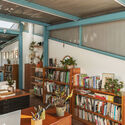
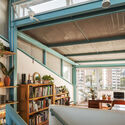
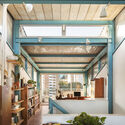
Selecting a structural system and deciding how to incorporate it into the architectural design is a pivotal decision in any project. On one hand, architects can choose to absorb structural elements, camouflaging them within the building envelope to make them imperceptible. On the other, the structural system can be brought to the forefront, turning into a defining feature of the design—whether through its structural logic, its materiality, or by being elevated to a nearly sculptural element.