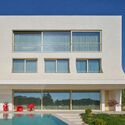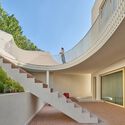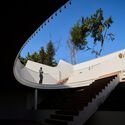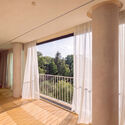
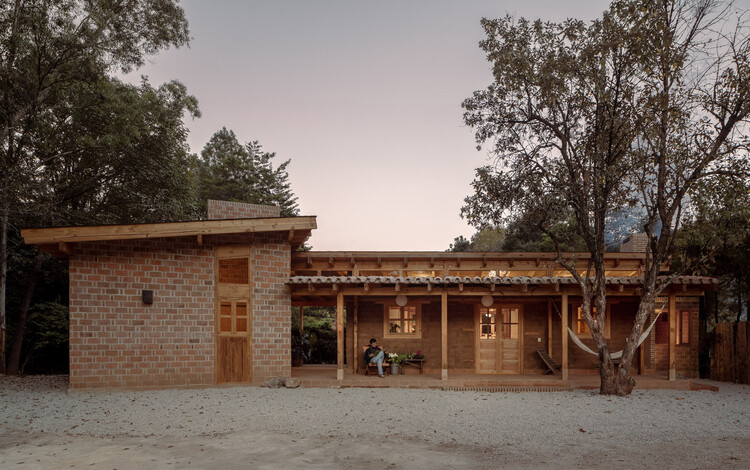
-
Architects: COLAR Colectivo de Arquitectura
- Area: 165 m²
- Year: 2026

Unlike buildings, which are anchored to foundations and respond to climate from a fixed position, yachts are designed for constant movement and change. Interiors sway with the vessel, light changes by the minute, humidity is a permanent design condition, and every kilogram influences performance. Designing for the sea therefore requires architects, naval architects, engineers, and interior designers to solve questions that rarely exist on land: how can space remain calm while everything around it is in motion?

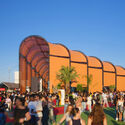
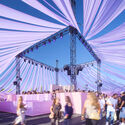
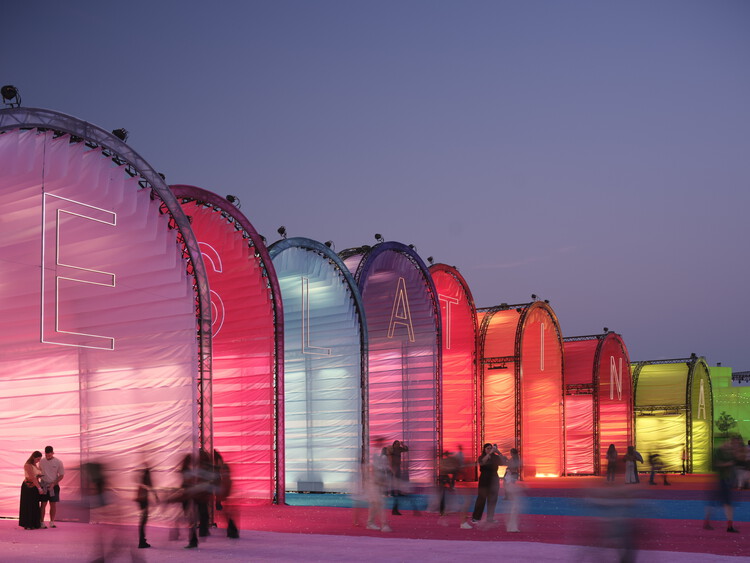
Following the opening weekend of Shakira's Madrid residency, Macondo Park has officially opened at the Iberdrola Music venue in Villaverde, Madrid. Designed by Bjarke Ingels Group (BIG) in collaboration with Komodo and Vampire, the 185,000-square-meter temporary destination surrounds the venue designed by BIG for Shakira's concerts, extending the venue with a series of cultural and public spaces inspired by the fictional town of Macondo from Gabriel García Márquez's One Hundred Years of Solitude. The park will host daily cultural programming alongside the concerts throughout the singer's 12-show residency, which continues through October 11, before its temporary structures and landscape elements are dismantled and removed from the site.


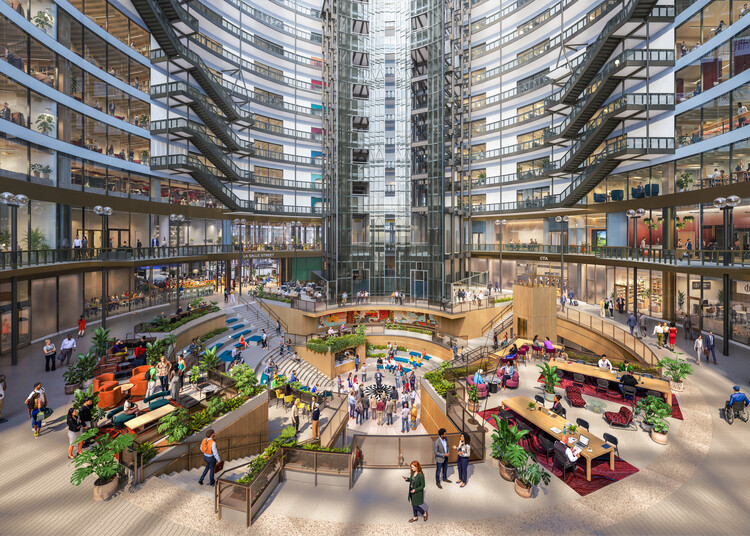
On September 16, 2026, Google announced the redevelopment of Chicago's Thompson Center as a space for work, culture, and community. The James R. Thompson Center is a postmodern architectural landmark designed by Helmut Jahn and completed in 1985. Commissioned by Illinois Governor James R. Thompson, the building reinterprets the classical state capitol by turning the traditional dome-and-public-plaza concept inside out. Occupying an entire city block in Chicago's Loop, it features a multicolored, curved glass atrium and a sloping, transparent corner entry. Controversial from day one, it has been criticized for poor climate control, high maintenance costs, and structural and leak issues. To restore it rather than demolish it, the company collaborated with Architecture Plus Information (A+I) to design a project that would integrate the building into the urban life of Chicago's Loop.



Despite being among architecture's oldest structural forms, domes continue to offer possibilities for creating large, column-free spaces and working with circular or free-form geometries beyond conventional rectangular building types. Their evolution has been closely tied to changes in materials, construction methods, and design tools. Today, digital platforms are adding another layer to this process, allowing some of the decisions traditionally developed later in a project to be explored much earlier.

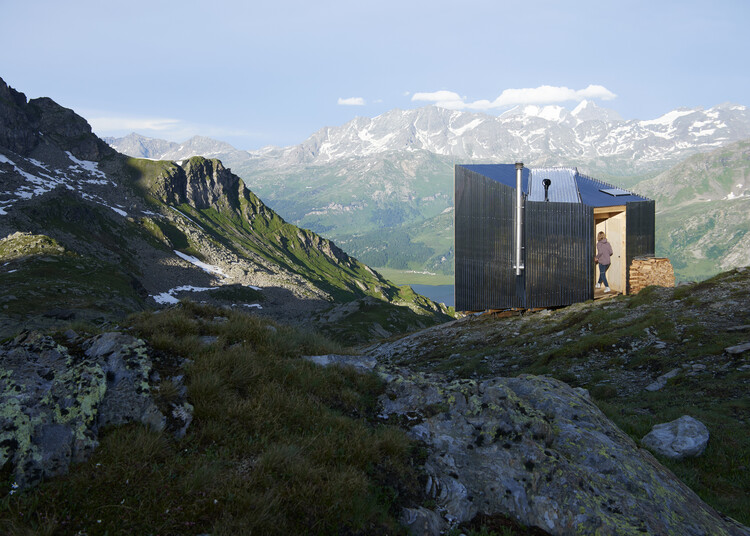
There is no harder place to build than a high mountain, and none where a building feels more provisional. From the Andes to the Himalaya to the Alps, high-altitude construction strips architecture back to its most elementary transactions. The rock reads as permanence itself, yet a structure set near the limit of habitation exists in negotiation with almost everything around it: with wind that arrives without obstruction, with a ground too steep and too frozen to excavate, and with everything it needs arriving from far below. What can be carried up, what can be assembled by few hands, and what can sustain itself are some of the terms of the problem.
Those constraints have produced a remarkably consistent building culture across otherwise unrelated ranges. The refuge, the hut, the bivouac, and the observatory belong to a shared typology in which shelter is inseparable from logistics, and where lightness, prefabrication, and self-sufficiency were structural necessities long before they became virtues.






As architectural projects grow more complex and requirements evolve, the ability to iterate quickly is increasingly important to the design process. For Bellway, one of the UK's largest homebuilders, faster design iteration and visualization have become key to meeting these demands. It is not just a way to present finished designs, but also a tool for testing ideas, communicating options, and making decisions earlier in the development process.