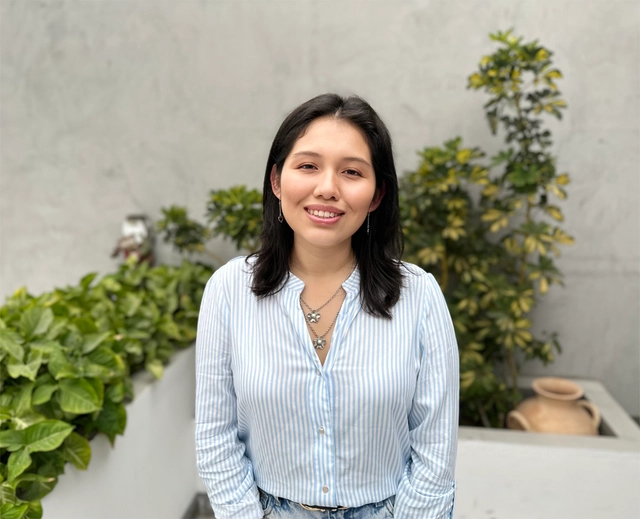
Martha Pomasonco, winner of the 2023 RIBA Norman Foster Travelling Scholarship. Image via RIBA
The Royal Institute of British Architects (RIBA) has announced that Martha Pomasonco, from the University of Lima in Peru, has been selected as the winner of the 2023 RIBA Norman Foster Travelling Scholarship in recognition of her outstanding project, "Upgraded Barrios" (Barrios Mejorados).
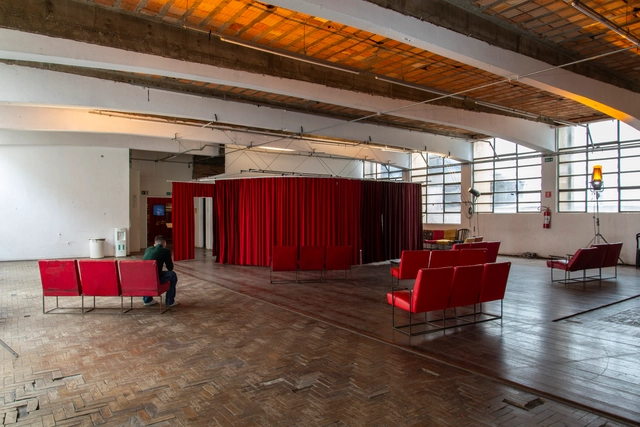
An apparent fragility shapes the design of the set built for the exhibition Taib: A History of the Theater, about the Brazilian Yiddish Art Theater (Teatro de Arte Israelita Brasileiro), founded in 1960 and built in the basement of Casa do Povo, a cultural center in Bom Retiro, São Paulo. With exhibition design by the collective Goma Oficina — a transdisciplinary design, architecture, and art association — the theater is staged on the first floor, presenting the powerful history of survival and re-existence of Jewish poetry despite the persecution and violence of the Nazi regime until the end of World War II.
Through August 31, 2023, CAU Brasil will accept proposals for papers on the theme of Education, Professional Scope, and Practice. The goal is to discuss ideas that answer the question: What kind of architect do we need and what kind of architect do we want? Selected papers will be presented during CAU's 2nd National Seminar on Education, Professional Scope, and Practice. The free, hybrid event is organized by the Education and Training Commission of the Council of Architecture and Urbanism of Brazil (CEF-CAU/BR) and is scheduled to take place from September 18 to 20 in Brasília.
blōma project by SPBR Arquitetos in Curitiba. Courtesy of SPBR Arquitetos
The "Kilometer Zero" concept has been gaining popularity in contemporary architecture, promoting environmentally conscious approaches to reducing carbon emissions. One application of this concept is the blōma project by SPBR arquitetos, led by Angelo Bucci. The São Paulo-based firm's first project in Curitiba, the residential building was designed to prioritize local resources and labor.
https://www.archdaily.com/1135911/spbr-arquitetos-designs-a-residential-building-based-on-the-kilometer-zero-concept-in-curitibaArchDaily Team
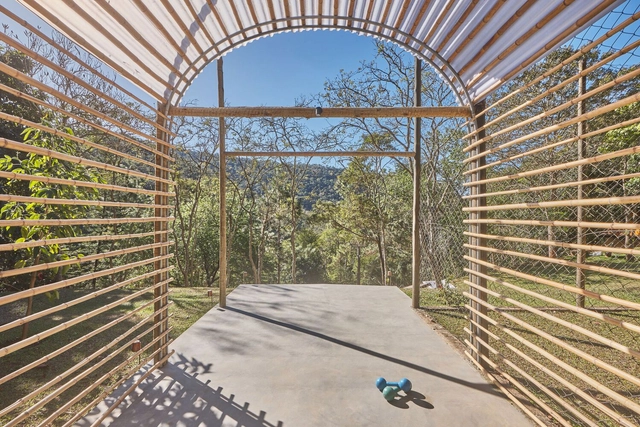
The firm gru.a, established in Rio de Janeiro in 2013 by Caio Calafate and Pedro Varella, has developed small-scale projects and installations, focusing particularly on the intersection of art, architecture, and infrastructure. Notable works include the installation La playa y el Tiempo and the Abrigo Alto and Academia shelters.
On Monday, August 14, the Di Tella Architecture Prize—organized by the School of Architecture and Urban Studies (EAEU) at Universidad Torcuato Di Tella (UTDT) through its Center for Contemporary Architecture Studies (CEAC), and funded by a donation from the Instituto Di Tella—was awarded to this emerging practice.
While studying and traveling through cities around the world, one of the most striking urban scenes I witnessed was a square in Tokyo filled with uniformed children playing during their school recess. The square had only a low fence, yet a diverse range of people (like myself) could mingle and interact among the children. Childhood independence in Japan is world-renowned and was recently depicted in the Netflix series "Old Enough," where children under six run errands outside the home alone, without their parents. While these might be ordinary scenes for a Tokyo resident, for someone with a different urban reference point, the question "how is this possible?" immediately arises, so far removed is it from the reality of most of our large cities.
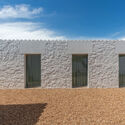
A technique used for centuries, particularly in hot, dry climates, limewashing can be applied to both interior and exterior walls. Beyond its affordability, this rustic finish offers numerous benefits that extend far beyond aesthetics: its light tone and striking texture create a compelling contrast between the building and its surroundings. Learn more about its advantages and how to apply this finish below.
On August 24, Romano Guerra Editora will release the book Arquitetura e escrita: relatos do ofício, which brings together twenty-four interviews with Brazilian and international architectural historians and critics from various theoretical and professional backgrounds, academic disciplines, and generations. Mostly previously unpublished, the interviews were conducted both in response to local interest in the subjects and to reflect the global momentum of theoretical and historiographical debates in the field over recent decades.
https://www.archdaily.com/1135908/new-book-by-romano-guerra-features-24-unpublished-interviews-with-brazilian-and-international-architectural-historians-and-criticsArchDaily Team
Throughout history, schools and prisons have shared the same spatial principles, as they were built to discipline and direct their inhabitants and users. However, in recent years, new visions have finally begun to emerge regarding how we should teach within an increasingly less hierarchical and pyramidal system, and how spaces intended to foster the creation and exchange of knowledge should be designed. Simultaneously, educational buildings in Colombia have become increasingly regulated, bringing their design to a level of specialization comparable only to hospital architecture.
In recent years, population density in Santiago de Chile has gained significant prominence as an urban and architectural topic, as well as an economic, political, social, and environmental one. Its vast impact—both positive and negative—has generated conflicting viewpoints among experts, prompting us to ask: should we densify Santiago?
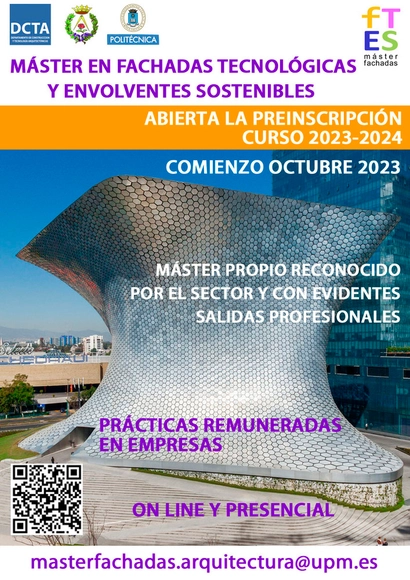
Learn more about the Master's in Facades at the Technical University of Madrid (UPM). Pre-registration for the 2023-24 academic year is now open for both in-person and online formats. The program begins in October 2023.
The contemporary understanding of neuroarchitecture has sparked a renewed focus on inclusive design, emphasizing the creation of environments that respect and respond to people's specific needs. Against this backdrop, the architectural design approach for individuals on the autism spectrum has gained prominence.
The latest edition of the long-standing magazine from the Association of Architecture Offices (AOA) covers the evolution, regeneration, and recovery of cities, along with the need to challenge the paradigms that have been mandatory in planning and that must be reconsidered to significantly improve the quality of life in neighborhoods, towns, and cities. This was stated by the magazine's director, Yves Besançon, while unveiling the contents of issue #48 at an event that brought together associates, professionals, and partners at Espacio AOA.
Color is fundamental to the dynamics and daily rhythm of urban life, but its impact goes far beyond appearance and aesthetics, especially for people with visual impairments. For this segment of the population, color plays an even more significant, yet often underestimated, role in shaping and improving the accessibility of public spaces. Architecture plays an important role in this inclusion, which involves the conscious choice of colors that have the power to improve urban accessibility and create a more welcoming environment for people of all abilities.