The Turba Tol Hol-Hol TolPavilion is a collective project led by curator Camila Marambio that proposes an experimental path towards the conservation and visibility of peatlands, a type of wetland considered to be the most efficient natural ecosystem for accumulating carbon in the atmosphere and yet one of the least researched.
Presented by the Ministry of Cultures, Arts and Heritage and the Ministry of Foreign Affairs of the Government of Chile at the 59th International Art Exhibition - La Biennale di Venezia, which will have its official opening on the 23rd of April, was a collaborative work between art, science and traditional knowledge, promoting research and ecological transition from the environmental humanities. In this sense, a diverse multidisciplinary team was brought together: sound artist, Ariel Bustamante; art historian, Carla Macchiavello; filmmaker, Dominga Sotomayor; and architect, Alfredo Thiermann.
In most countries around the world, value is placed on older buildings. There’s something about the history, originality, and charm of an older home that causes their value to sometimes be higher than newly constructed projects. But in Japan, the opposite is almost always the preference. Newly-built homes are the crux of a housing market where homes are almost never sold and the obsession with razing and rebuilding is as much a cultural thing as it is a safety concern, bringing 30-year-old homes to a valueless market.
Until this Friday, April 29th at 23:59 EST you can submit your work for the second edition of the ArchDaily Architectural Visualization Awards. For us, visualizations have become a powerful tool that has helped us to think without limits about the design of our future cities, buildings, and structures. This is one of the reasons why we decided to launch this competition: to find the best talent from around the world and discover who is setting trends with their work and aesthetics, helping us to visualize the future of architecture.
Virtual reality has given architects alternative ways to work. Paired with real-time visualization software, it offers a robust tool with endless capabilities for your design workflow. It can help develop the design, address needs, and win over clients. Here are four key reasons why you need to implement VR into your design workflow.
To celebrate Earth Day, real estate developers Urban Villages and Studio Gang have unveiled and broken ground on "Populus", the first carbon positive hotel in the United States. Set to open in late 2023, the 265-room hotel in Denver features a rooftop restaurant and bar, designed as a significant milestone for the future of sustainable travel that meets the needs of travelers, the community, and the environment.
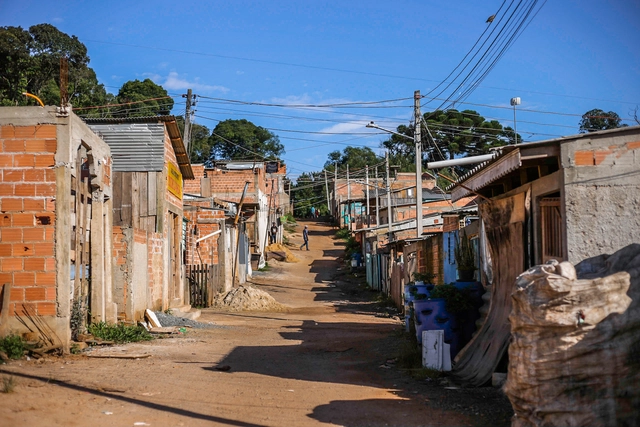
The 29 de Março community, in the Cidade Industrial de Curitiba (CIC), was one of two Brazilian regions selected by the Action Fund Brazil to receive investments to combat climate inequality. Ambiens Sociedade Cooperativa, a local cooperative, was responsible for the project — a 15-month initiative in one of the city's most vulnerable neighborhoods. The other project was implemented in Porto Alegre, Rio Grande do Sul.
https://www.archdaily.com/1132364/solar-project-brings-renewable-energy-to-curitibas-periphery-for-public-lightingArchDaily Team
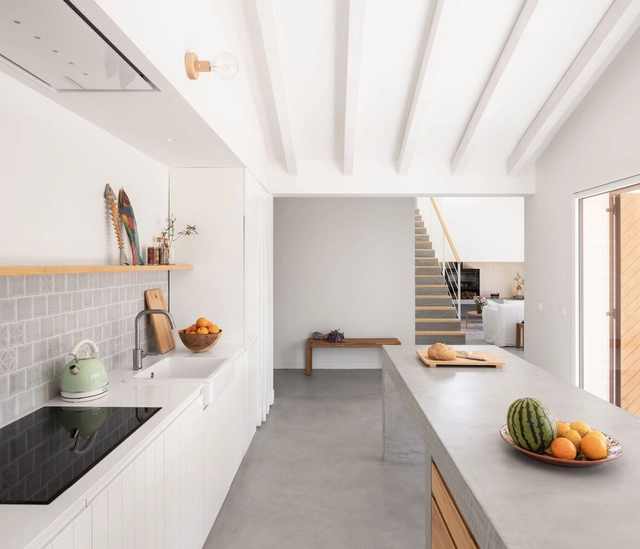
Kitchens as we know them today have functionality as their main feature and for that their space was historically organized from an industrial logic. The development of home appliances and the precise definition of the layout guarantee a functional floor plan and the optimization of work in the kitchen. As part of this layout we find the worktops, horizontal half-height surfaces that have multiple uses and, therefore, many possible configurations.
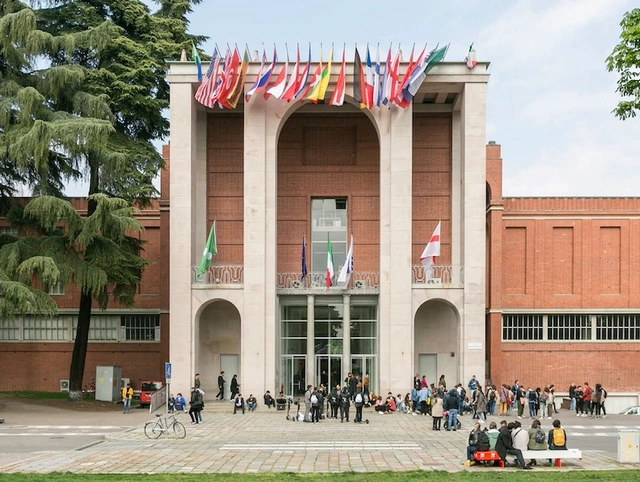
Under the theme Unknown Unknowns. An Introduction to Mysteries, the 23rd Triennale Milano International Exhibition will open to the public on July 15th until December 11th, 2022, with installations, interventions, and special projects that "question what we don’t know we don’t know". This year's exhibition will display an array of artwork and installations designed by notable architects and designers hailing from 40 countries, such as Francis Kéré, winner of the 2022 Pritzker Architecture Prize, who will design an installation that brings together the voices of Africa and its diaspora.
Una Mesa / AAA (Alejandro Lobo, Elías Martínez Ojeda, Federico Rodríguez). Image Cortesía de Concéntrico 08
From the 1st to the 6th of September 2022, the eighth edition of the International Architecture and Design Festival of Logroño, called Concéntrico, will take place, which invites us once a year to reflect on the urban environment and the city. Through installations, workshops, exhibitions, meetings and activities, it offers the opportunity to explore the city thinking about new collective uses that strengthen the character of community within public spaces.
Walking through the city. A territory in constant motion. It is complex, shaped by an infinite tangle of yearnings. These may drive the construction of a new place—whether physical or otherwise—but also the deconstruction of others that, despite being well-established, remain burdened with past conceptions. Amidst all this, there is an inevitable need for individuals to seek spaces where they can connect with others, so that their diverse identities may find expression.
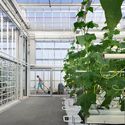
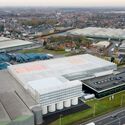
Europe's largest research center for urban food production has opened in West Flanders, Belgium. Named Agrotopia, the space is a giant greenhouse where innovative urban horticulture techniques will be applied.
Vegetables and fruit trees are being planted across the 6,000-square-meter cultivation area. The space is divided into four climate zones, allowing for the cultivation of diverse species.
A new kind of architecture distinguished by unique regional characteristics emerged in the mid-1990s when in China, architects started practicing independently from government-run design institutes. The leading Chinese architects of this time succeeded collectively in producing a unique architectural body of work when so many buildings built around the world were no longer rooted in their place and culture.
In China Dialogues, Vladimir Belogolovsky charts a panorama of Chinese architecture through the words of its main participants, lifting the veil on a prolific new generation of designers, each sharing a highly intellectualized and conceptual understanding of architecture. Following the course of 21 interviews accompanied by over 120 photographs and drawings of beautifully executed projects uprooted throughout the country since the early 2000s, China Dialogues opens up the thinking process of the country's top architects, providing an insight into their ideas, intentions, and visions in unusually revealing and candid ways.
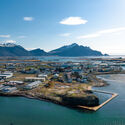
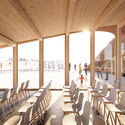
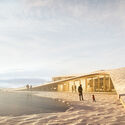
Portuguese architecture firm Sastudio, in partnership with Icelandic studio Hjark and the firm Landmotun, has won the international design competition for a community center in Hornafjörður, Iceland. This marks the second competition won by the two offices; the first, for a kindergarten in Garðabær, is scheduled to begin construction in May of this year and is expected to be completed by mid-2023.
One of the most talked-about films of the year is part of an acclaimed franchise that features the city as one of its main characters. While the protagonist is a well-known superhero, it is impossible to talk about Batman without talking about Gotham City. In this episode, Arquicast discusses the latest installment of the Caped Crusader's saga, following his journey to rescue Gotham from the clutches of organized crime and restore a sense of citizenship that might bring unity and hope to the city's unequal and battered population.
Photo: Valter Campanato | Agência Brasil, via CicloVivo
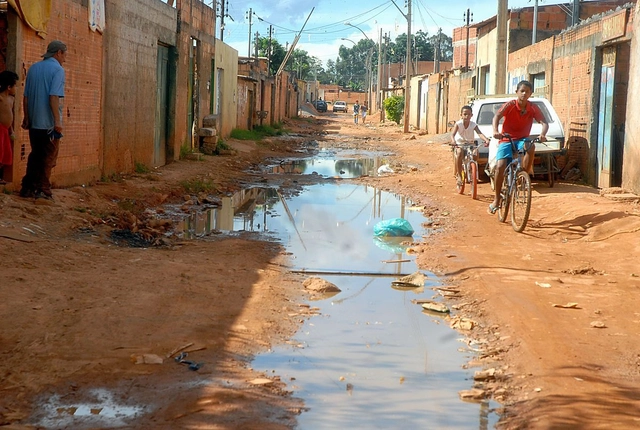
Even as 5G technology is about to launch in major cities, placing Brazil among a select group of countries with advanced technology installed, 35 million people still lack access to quality drinking water and 100 million do not even have sewage collected from their homes. Furthermore, a volume of sewage equivalent to 5,300 Olympic swimming pools is discharged into nature every day without any treatment in the country.
Nestled in the heart of the jungle, in the village of Francisco Uh May resides the AZULIK residence, within the same compound as the AZULIK UH MAY, a cultural center for the arts. Heavily influenced by the natural forms of nature itself, Roth’s home takes a biomorphic approach to design, challenging architectural conventions and presenting a harmonious relationship with nature.
No País dos Arquitectos is a podcast created by Sara Nunes, who also runs the architectural film production company Building Pictures. The podcast aims to introduce the professionals, projects, and stories behind contemporary Portuguese architecture. With just over 10 million inhabitants, Portugal is a fascinating country when it comes to this professional field, and its architectural output far exceeds what its population or territorial scale might suggest.
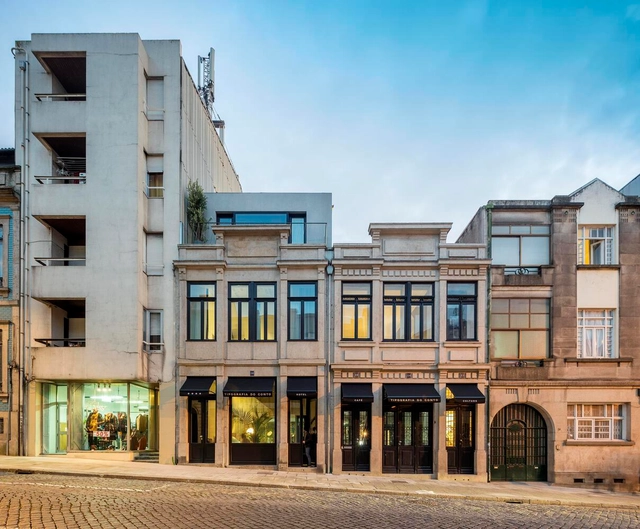
In this episode, Sara talks with Nuno Grande, from the office Pedra Líquida, about Casa do Conto and the Hotel Tipografia do Conto. Listen to the full interview and read an excerpt of the conversation below:
Recruitment and talent retention is the number one most challenging issue for architecture firms, so in order to attract good talent that doesn't only fit your brand but also elevates it overtime, you have to invest in marketing efforts, sometimes thinking out of the box.
Primer Lugar: Invsible Inheritance. Image Cortesía de arkitekturo
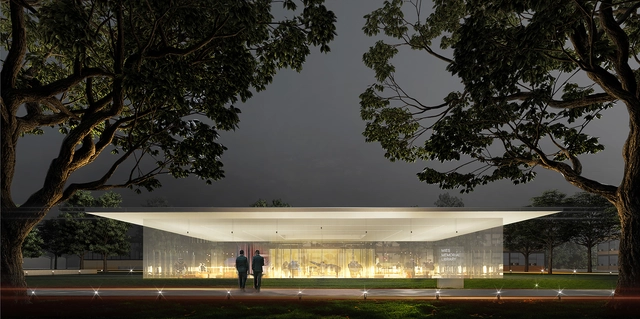
Between October 2021 and February 2022, the Mies Memorial Library Architecture Student Competition was held. With 430 students from around the world participating, 105 projects were submitted to envision a building on the IIT campus in south Chicago that could preserve the history and celebrate the life, work, and legacy of one of the fathers of modern architecture, Mies van der Rohe.
For the past couple of years, the metaverse has been gaining prominence, prompting architects to consider its implications for our relationship with the physical environment and how can architecture contribute to this new virtual space. Architecture in the metaverse is no longer a fringe subject, having been embraced by established firms. "The metaverse is where much of the architectural action and innovation will be happening in the coming period,"says Patrick Schumacher. Unbound from restraints such as physics, material properties and construction costs, the metaverse unlocked a new realm of architectural expression. The following looks at some of the various ways the profession engages with the expanding field of digital environments.
Metal façades give buildings an air of sophistication and modernity. They also bring a cleanness to the façade, due to their precise fabrication and well-resolved connections between other materials and building elements. There are currently multiple product options available for coatings, offering extensive colour options, including metallics, with different levels of durability (natural aging and corrosion). One of the main issues when approaching metal façades is the risk of corrosion, which can create points of weakness in the material and interfere with the aesthetics of the building. So, with this in mind, what do architects need to focus on to ensure that building envelopes age gracefully, while maintaining aesthetics and performance over time?
As the climate crisis continues to present itself as a significant threat to the future of the ecosystem and built environment, this year's IPCC report, titled Climate Change 2022: Impacts, Adaptation, and Vulnerability, found that while adaptation efforts are being observed across all sectors, the progress being implemented so far is greatly uneven, as there are gaps between the actions taken and what is needed. On this year's Earth Day, we explore the progress being made by governments and architects to achieve net-zero operations within the next decades.
Norman Foster met with the Mayor of Kharkiv, Ihor Terekhov, on Monday to discuss the city's rebuilding, following discussions at the 2nd UN Forum of Mayors in Geneva. Since the onset of Russia's invasion of Ukraine, the city of Kharkiv suffered significant damage due to heavy shelling, losing much of its infrastructure, including housing, hospitals, schools, cultural institutions, and historic buildings. The second-largest city in Ukraine is already planning its rebuilding, with Norman Foster undertaking the task of bringing together the "best minds" to envision the city's future.



_Studio_Gang.jpg?1650877866&format=webp&width=640&height=580)
_Studio_Gang.jpg?1650877933 "© Studio Gang")
_Studio_Gang.jpg?1650877902 "© Studio Gang")
_Studio_Gang.jpg?1650877802 "© Studio Gang")
_Studio_Gang.jpg?1650877866)
.jpg?1650379701&format=webp&width=640&height=580)




.jpg?1649183431&format=webp&width=640&height=580)




.jpg?1650549341)
Adam_Mork.jpg?1650549635 "MAD Architects, Harbin Opera House, Harbin, China, 2015. Image © Adam Mørk")


_schranimage.jpg?1650549533 "Studio Zhu Pei, Jingdezhen Imperial Kiln Museum, Jingdezhen, Jiangxi Province, China, 2020. Image © Schran Images")
.jpg?1650549341)







.jpg?1650608161)


.jpg?1650608161)