The Second Studio (formerly The Midnight Charette) is an explicit podcast about design, architecture, and the everyday. Hosted by Architects David Lee and Marina Bourderonnet, it features different creative professionals in unscripted conversations that allow for thoughtful takes and personal discussions.
A variety of subjects are covered with honesty and humor: some episodes are interviews, while others are tips for fellow designers, reviews of buildings and other projects, or casual explorations of everyday life and design. The Second Studio is also available on iTunes, Spotify, and YouTube.
https://www.archdaily.com/995571/the-second-studio-podcast-interview-with-eva-hagbergThe Second Studio Podcast
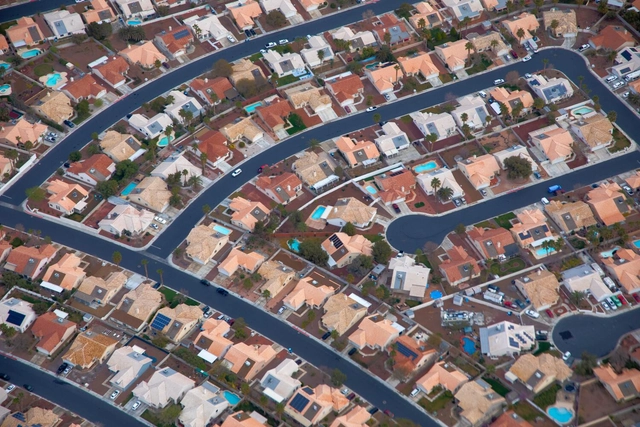
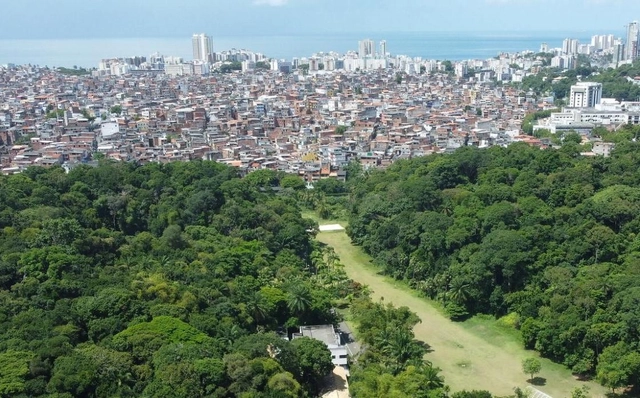
Zoning is the primary tool for urban regulation adopted worldwide. It consists of dividing urban territory into a series of zones, establishing permitted uses for each and setting parameters for the structures that can be built on each lot. In theory, zoning pursues two main objectives: preventing nuisances generated by specific uses and limiting development density to the capacity of existing infrastructure.
COP27, held in Sharm el-Sheikh, Egypt, concluded with a historic breakthrough to help vulnerable countries cope with the loss and damage resulting from climate change. However, negotiations also disappointed many stakeholders by failing to include any significant new measures to reduce emissions, which is essential to keeping global temperature rise below 1.5°C. Regarding adaptation, despite some positive signs, progress also fell short of expectations.
https://www.archdaily.com/1136056/cop27-key-outcomes-and-outlook-for-2023Natalia Alayza, Preety Bhandari, David Burns, Nathan Cogswell, Kiyomi de Zoysa, Mario Finch, Taryn Fransen, Maria Lemos Gonzalez , Nisha Krishnan, Paige Langer, Gaia Larsen, Jamal Srouji, Nate Warszawski e David Waskow
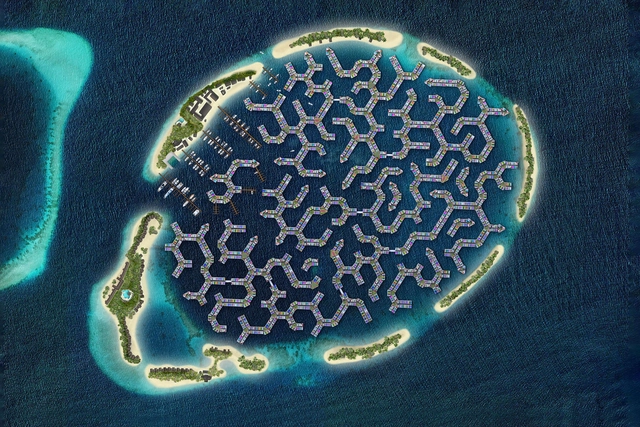
The threat of climate change is looming before us. Sea level rise concerns over 410 million people at risk of losing their livelihoods. Coastal cities are choked with high-rise buildings and traffic-laden roads, consuming land insufficiently. Synthesizing these problems, architects across the world have proposed a potential answer - floating cities. A future of living on water seems like a radical shift from how people live, work, and play. Vernacular precedents prove otherwise, offering inspiration for what our cities could morph into. As world leaders discuss courses of action to tackle climate change at the COP27 climate summit in Egypt, ArchDaily dives into the concept of radical water-based settlements.
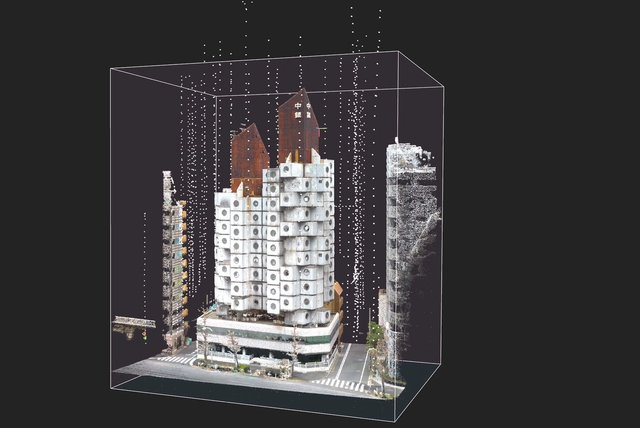
Imagine that you have scheduled a visit to an important building for the history of architecture, a reference work for all enthusiasts. Probably you would equip yourself with a camera or a good cell phone, take a pencil, notebook and even a measuring tape to record all its aspects.
However, this is not the only way to “visit” a building of historical importance nowadays or, at least, that is what some researchers are trying to show. The metaverse is being explored for its role in architecture and culture preservation, embracing different generations.
In recent years, the term “co-creation,” a buzzword in the business and management sector, has made its way into the architecture and urban planning discourse. The termis used to define a large concept that describes working intentionally with others to create something jointly. But architecture is already the result of a collaboration between multiple actors, architects, clients, investors, developers, and local administration, to name a few. Can the term still apply to this field, can it bring forth new forms of knowledge, and does it differ from the concept of participatory design?
As the urgency to replace fossil fuels increases, new electric vehicle models are announced with growing frequency. From urban cars to models equipped with solar panels, the focus is on prioritizing electric mobility, with automakers shifting production lines and countries and cities passing laws to accelerate the energy transition.
Instalación LAGUNA. Image Cortesía de Diego González Albarrán
The Doctores neighborhood (Mexico City) is a complex territory; understanding it requires observing the interrelations between objects in space, rather than space and the objects in themselves. Formerly known as Colonia Hidalgo and later renamed after its streets, it has undergone multiple processes of transformation and appropriation over time, ranging from the construction of its first homes during the viceregal period to the spatial and social shift brought about by the 1985 earthquake.
Today, January 27, marks the 113th birthday of Félix Candela—of Spanish and Mexican nationality—who is one of the most globally recognized architects of the 20th century. His career was defined by his exploration of reinforced concrete through experiments that resulted in his famous cascarones (concrete shells): key structural and design elements that support many of his works, such as the Cosmic Rays Pavilion at UNAM, Mexico City (1951); the Palmira Chapel in Cuernavaca (1958); the Los Manantiales Restaurant, Xochimilco (1958); and the Palacio de los Deportes for the 1968 Olympic Games in Mexico City.
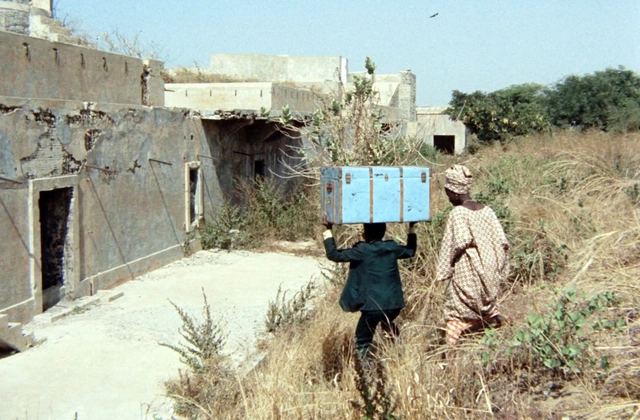
Abandoned house in "Touki Bouki". Image Courtesy of Janus Films
Simultaneously gripping, disconcerting, and chaotic, Djibril Diop Mambéty’s Touki Boukiis an exhilarating cinematic ride. The 1973 drama — the first full-length film by the Senegalese director — is the fantastical narration of a young couple in Dakar, eager to escape the Senegalese capital for the allure of Paris. It’s a character-driven film in many ways, primarily centered on the couple’s adventures, but it is also a subtle visual examination of the urbanism of post-independence Dakar, where the city and its architecture are essential fixtures in a surreal storyline.
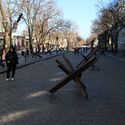
The World Heritage Committee decided to inscribe the Historic Center of the Port City Odesa, Ukraine, on the World Heritage List. The decision symbolizes the recognition of the outstanding value of the site and the commitment of the 194 States Party of the Convention not to undertake any deliberate step that may damage it and to help protect it. The site has also been inscribed on the List of World Heritage in Danger, which gives it access to international financial or technical assistance to ensure its protection and, if necessary, assist in its rehabilitation, according to UNESCO.
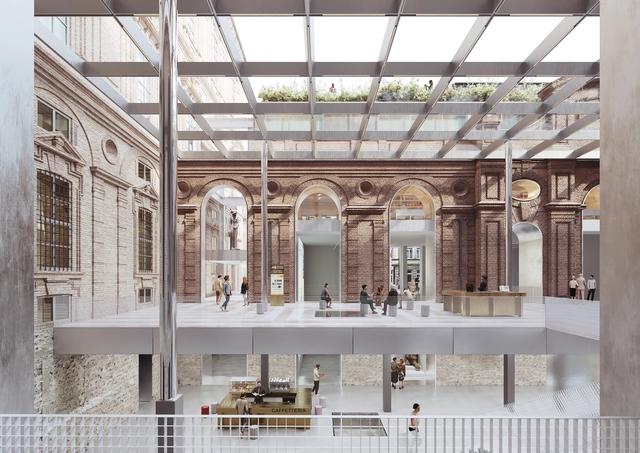
OMA / David Gianotten and Andreas Karavanas have won the competition to renovate the world’s oldest museum for Ancient Egyptian culture, the Museo Egizio founded in 1824 and housed in Collegio dei Nobili in Turin, Italy. The winning project aims to put in place a 2024 vision for the Museo Egizio, transforming the museum into a destination for scholars and a rediscovered public place for all.
In collaboration with, local architects Andrea Tabocchini Architecture, T-Studio, and historical consultant Professor Andrea Longhi, the proposal seeks to open the cultural space to all by creating a covered courtyard and a series of connected urban rooms within the existing settlement.
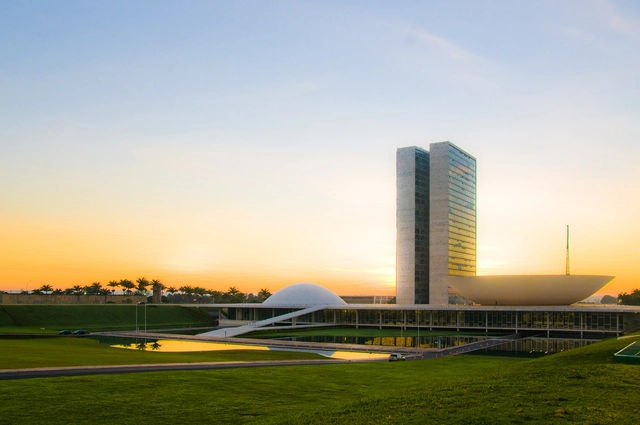
National Congress. Photo: congressonacional.leg.br
The National Institute of Historic and Artistic Heritage (Iphan), along with representatives from the institutions involved and affected by the January 8 attacks, began coordinating efforts last week to restore Brazilian Cultural Heritage in Brasília (DF).
During the meeting, representatives from the technical departments of infrastructure, restoration, and architecture outlined the damage, ongoing actions, and immediate needs—specifically regarding funding and specialized restorers—as well as proposals for joint initiatives. Discussions also covered potential funding sources for emergency actions and medium- to long-term restoration projects, including private donations and resources from UNESCO.
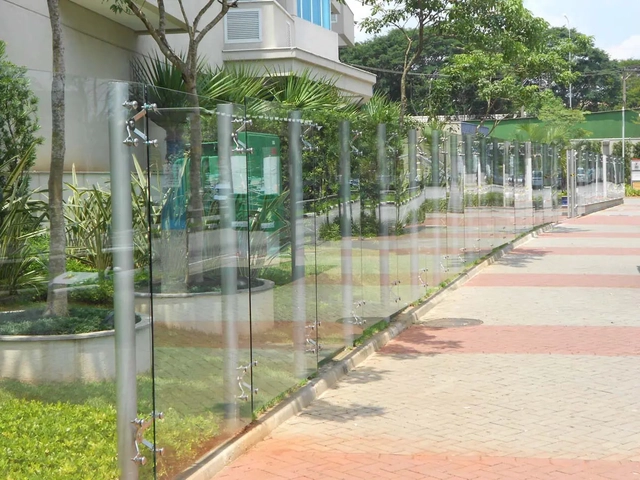
Via construcaoemvidros.com.br. Image used under fair use terms.
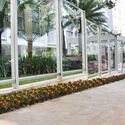
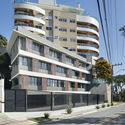
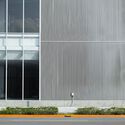
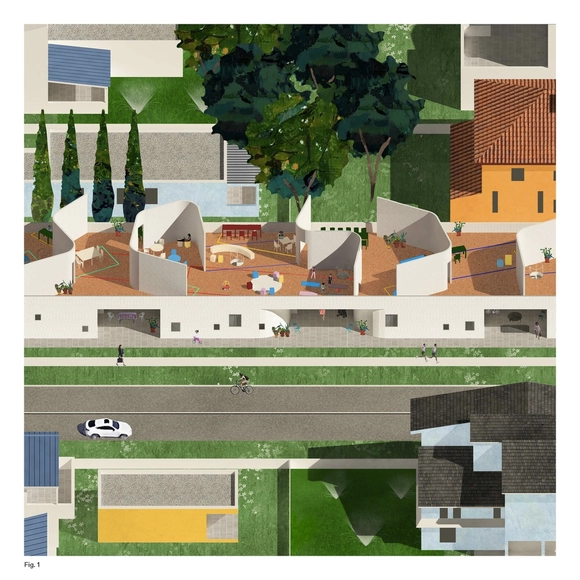
In the past, in a less densely populated urban context, houses and buildings were built with a direct connection to the street, with no need for walls and front fences. Over time, the urban fabric was transformed, and the division between public and private spaces became increasingly evident and — under the argument of public safety — necessary. Although this division occurs in different ways in Brazilian cities, in general, walls, fences and railings are used on the facades, creating a transitional space between the building and the street, transforming the relationship between them.
Overall Winner- Shadow Housing- Jeffrey Liu and Haylie Chan. Image Courtesy of Arch Out Loud
A home is one of the most significant architectural typologies that we experience throughout our lives. Largely serving as a significant private space, a home represents safety, ownership, and a sense of respite away from the rest of the world. It’s also historically been a place of routine, where we both begin and end our day, following the same patterns through different rooms of a home that we utilize. We can expect to sleep in our bedrooms, relax in a living room, cook in a kitchen, and eat in a dining room.
About 50 years ago, the renowned architect, educator, and author Charles Moore was hired by Frederick and Dorothy Rudolph to design a vacation house on Captiva Island, Florida, and about a decade later, in the late 1970s, they hired him again to design their permanent residence in Williamstown, Massachusetts.
Moore was often called the father of Postmodernism and was a prolific proponent through such books as The Place of Houses. With the exception of his small houses, however, I was never a big fan of his work. But I still have a tattered copy of that book, because when I read it, it was the first time that someone had articulated the process of designing a house, including a programmatic checklist to follow.
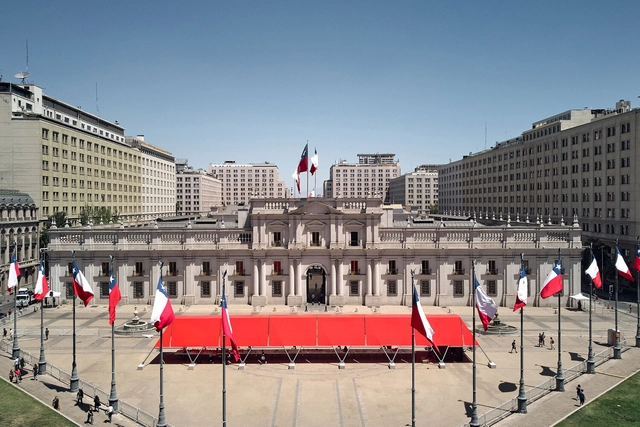
The Exhibition Pavilion for the 2023 Chilean Biennial of Architecture and Urbanism was located in the Plaza de la Constitución, just steps from the Palacio de La Moneda. The structure references and reinterprets a pavilion designed on this very site in 1972 by architect Montserrat Palmer for the Ministry of Public Works (MOP) to mark the opening of UNCTAD III—the headquarters of the Third United Nations Conference on Trade and Development in the Third World.
Creating a landscape that dialogues with architecture through natural elements that shape the space. Bringing together different textures, materials, and species. Harmonizing the rhythm of nature with that of construction. Many phrases could attempt to summarize landscape design, which, guided by its drawings, references, and concepts, is fundamental not only for enhancing the beauty of a place, but also its comfort and quality.
https://www.archdaily.com/1136410/the-best-brazilian-landscape-architecture-projects-of-2022ArchDaily Team
The Venice Architecture Biennale is an event organized by the Italian State that brings together some of the world's most prestigious international architecture exhibitions. The Giardini and the Arsenale serve as the event's main venues. These spaces have hosted various exhibitions, national pavilions, and collateral events spread throughout Venice.
A new platform launched by 3D Agora is looking to revolutionize the architectural visualization industry by sweeping out all of its cluttered corners. Finding the most suitable 3D Artist for a project, exchanging large files of various kinds with them and keeping track of all versions, requests and changes are said to become much easier with 3D Agora's worldwide database, smart filtering system, feedback panel and the industry-specific project collaboration board.
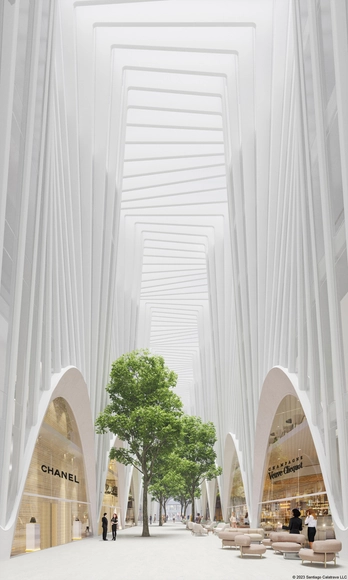
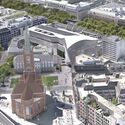
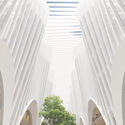
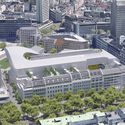
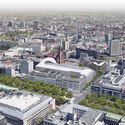
Spanish architect and engineer Santiago Calatrava has unveiled the design of the Calatrava Boulevard, a complex offering upmarket restaurants, retail, and office spaces in Düsseldorf, Germany. Located on a highly visible site between Königsallee boulevard, Königstrasse, and Steinstrasse, the new complex features a curved and vaulted 135-foot-tall roof and a flowing interior street, creating the appearance of a sculptural light-filled canyon. The project, done in collaboration with Uwe Reppegather, Founder and Managing Director of the CENTRUM Group, is set to be completed by 2028.
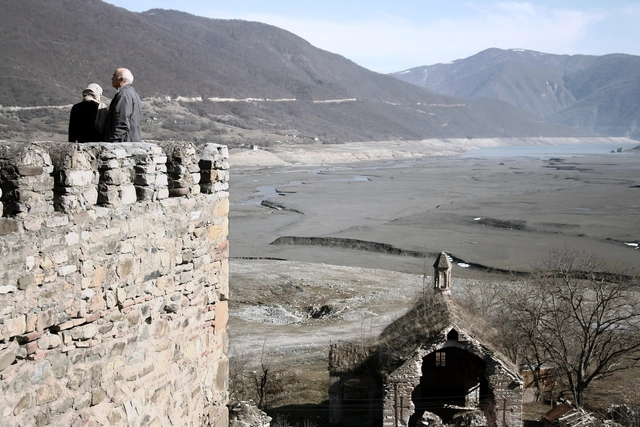
Titled "January, February, March", the Georgian Pavilion at the 2023 Venice Architecture Biennale is curated by the Tbilisi Architecture Biennial. Exploring the relationship between the flow of time and energy, the Georgian intervention "will represent dead and living nature through the story of an artificially altered settlement in the Dusheti region of Georgia". Running from May 20th to November 26th, 2023 in the Giardini, at the Arsenale, and at various sites around Venice, the 18th International Architecture Exhibition investigates "the Laboratory of the Future".
"The flat floor is an invention of architects. It suits machines, not humans." Inspired by the Viennese Secessionists and Austrian artists Egon Schiele and Gustav Klimt, as well as bold Gaudinian forms, the author of this phrase, Friedensreich Hundertwasser (1928-2000), was a prolific painter, sculptor and architect. His works are marked by the dualities between discipline and indiscipline, the predictable and the unexpected, rational and irrational. In his creative adventure, Hundertwasser was not just an enemy of the straight line. He despised architectural rationalism, claiming fluid forms and striking colors.
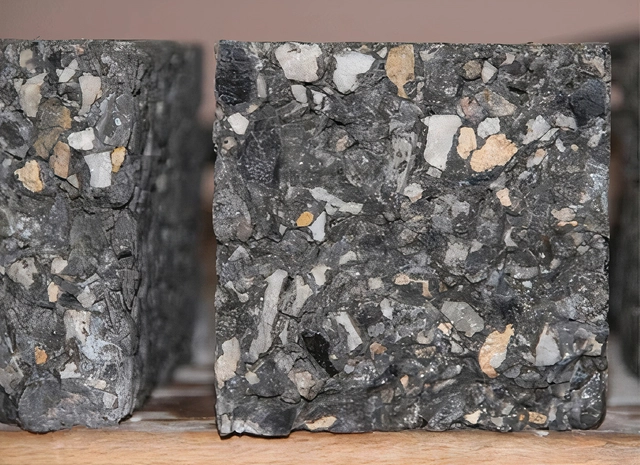
No-Fines Concrete with Steel Slag Samples by L.Korat et al. (2015). Image via ResearchGate. Licensed Under CC BY-SA 3.0
The construction industry is one of the largest in the world, and cement and concrete are literally the building blocks of its success. Evolving from prehistoric caves to today’s towering skyscrapers, concrete structures have and will continue to be vital components of modern civilization, providing long-lasting, reliable support for buildings, roads, bridges, tunnels and dams. So much so that concrete is the most consumed material on Earth, second only to water, while the steel used to reinforce it is by far the most commonly used metal. But this doesn’t come without high environmental costs: concrete accounts for 8% of global CO2 emissions, much of which come from the extraction and transportation of aggregate materials such as sand, gravel and crushed stone.