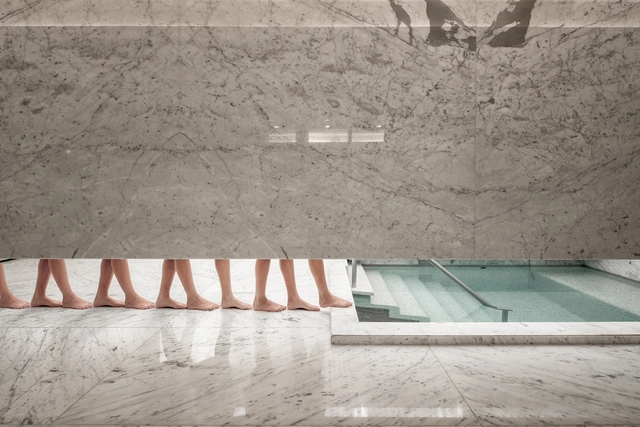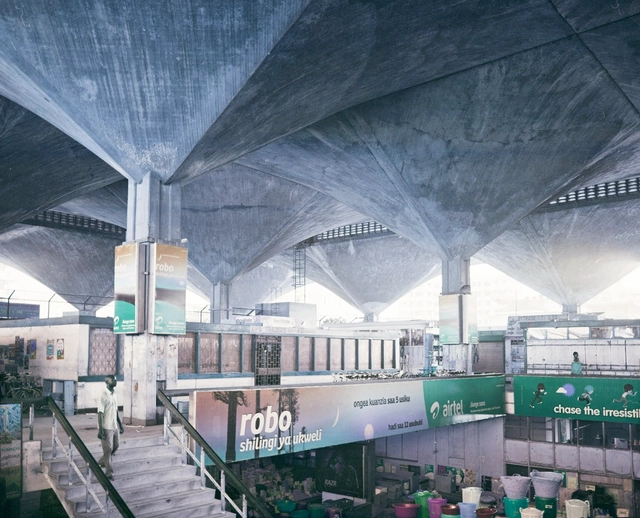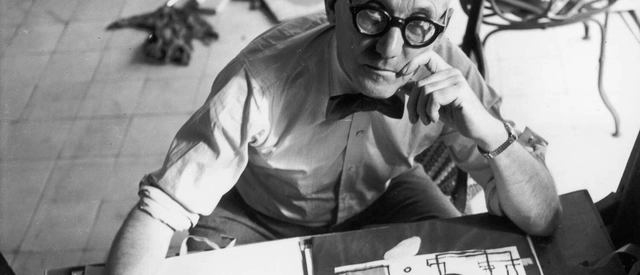
The eternal task of architecture is to create embodied and lived existential metaphors that concrete and structure our being-in-the-world. Architecture reflects, materializes, and eternalizes ideas and images of real life. Buildings and cities allow us to structure, understand, and remember who we are. 1 —J. Pallasmaa
We understand architecture as a series of processes directly linked to two phases. The first involves the birth of ideas, and the constant emergence and creation of questions, affirmations, and negations. It is a back-and-forth between affirmation and self-questioning, between narrative and utopia, arising from our architectural proposals. However, we chose to dedicate this documentary to the second phase: the materialization of that flow of ideas.
Videos
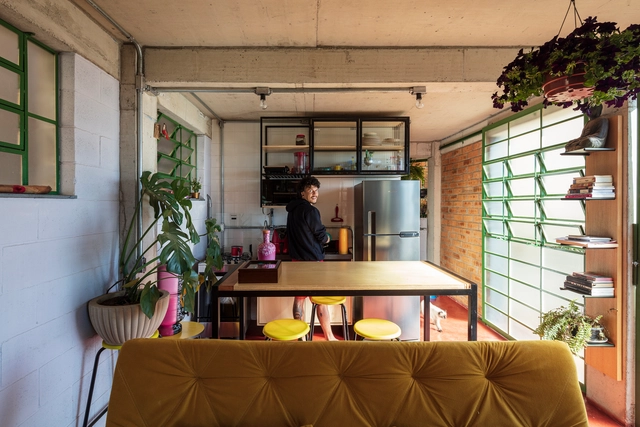
Experience #1. Image Cortesia de Guto Requena
The First Industrial Revolution took place in the United Kingdom in the late 18th century with the mechanization of the textile industry. Over the following decades, instead of making things solely by hand, the use of machines spread across the globe.
The Second Industrial Revolution began in the United States in the early 20th century with the assembly line, ushering in the so-called Era of Mass Production.
Today, we are living through a new industrial revolution, driven by digital culture and technology, with 3D printers serving as one of its key catalysts. And believe it or not, you will eventually own one. As they become increasingly affordable, these machines are capable of printing three-dimensional objects. The most common technique involves depositing and bonding, layer by layer, minute particles of materials such as plastic, ceramic, glass, or metal.
More than 100 buildings will open their doors during Open House Buenos Aires 2018, the architecture festival that, over the course of two days—October 27 and 28—will grant access to numerous buildings of architectural value that are normally closed to the public.
As is the case every year, the festival is completely free, offering a unique invitation and opportunity to rediscover both the architecture of the Autonomous City of Buenos Aires and the stories of its citizens.
Discover all the buildings you can visit during the event below.
On August 6, the NOVA Design Award 2018 announced its competition finalists. The NOVA Design Award 2018 is the inaugural edition of the NOVA Design Award (NDA). Under the theme of "Future Living Space," the competition explores the possibilities of residential living over the next decade within a residential space of under 50 square meters with a ceiling height of no more than 6 meters in a first-tier Chinese city, aiming to build a physical prototype of "future living."
The competition selected five finalists from 131 submissions across more than 20 countries to enter the final round of judging.
Happy New Year! Champagne, hugs, phone calls, and new goals. A few days pass, and it feels like this year you really will achieve everything you want. It's a great attitude, but not everyone is so clear on what those goals are or where to direct their career. In this day and age, anything seems possible. If a friend is traveling the world, you want to do it too. If another joined the gym, you want to do it too. If former classmates are pursuing a master's degree, you want that too—but we know we can't do everything at the same time.
During an official tour in late April, the Metro company revealed new details of the alignment for the Bogotá Metro's first line. The inaugural route will feature 16 stations, 10 of which will integrate with Transmilenio, the Colombian capital's mass transit bus system.
According to local newspaper El Tiempo, a 32-hectare site in the Bosa district will house the metro's train yard and workshop, serving as the "starting point for the 23 trains scheduled to begin operating in 2022." Currently, the site is located near the Cundinamarca canal—a stormwater reservoir that, along with a major power transmission tower, will be modified to accommodate the project.
In interior design, striking a balance between aesthetic style and the functional needs of a project is essential. In this regard, it is fascinating to see the diverse solutions that Colombian architects and designers have recently proposed. We have selected eight local projects that demonstrate a compelling balance between functionality and aesthetics in interior design.
Can you imagine arriving at a bus stop in the early hours of the morning—after a party, work, or school—and knowing the exact minute your public transit will arrive? Cities like London, New York, Madrid, and Melbourne have successfully implemented night transit systems with fixed schedules, yielding various financial and safety benefits for residents while boosting tourism and encouraging sustainable mobility. What would happen if this system were applied to the second-largest avenue in the Americas, after Buenos Aires' Avenida 9 de Julio?
Mexico City already has a night transit service: the Nochebús. With 11 routes operating between midnight and 5:00 a.m., it serves late-shift workers, night-lifers, and others needing late-night transportation. However, the service faces several challenges, many of which stem from uncertainty around arrival times—largely due to a much lower frequency than daytime public transit.
Yesterday, the citizen forum "Modern Landscape, Transforming Territories" began in Chillán, an event that aims to reflect on the city's architectural and cultural heritage through various actions in the city.
Three main venues have been chosen to host all of the event's activities: the Municipal Theater, the Escuela México, and the iconic Copelec building, a landmark of modern Chilean architecture.
https://www.archdaily.com/1113790/signals-in-a-modern-landscape-republica-portatil-will-intervene-in-public-spaces-for-number-forochillanPola Mora
The 21 projects making up the Official Selection of the Mexican Pavilion at the 16th International Architecture Exhibition of the Venice Biennale converge across latitudes, geographical regions, and echoes of the territory, responding to the curatorial theme “Freespace.” In four installments, we will share the work and philosophy of each of the participants representing Mexico in Venice. Read on to discover the second part of these projects.
The more hidden and remote, the greater the magic; the more land, sky, and water come into view, the deeper the mystery. To know its towns is to enter el Perú profundo, a territory spanning coast, highlands, and jungle. Alongside the vast ocean lies the coastal desert, the towering peaks of the Andes Mountains traversing the country from north to south, and the expansive rainforest harboring the source of the Amazon River. Upon this landscape rest the settlements and structures of ancient cultures. Imagine, then, how many atmospheres remain to be discovered in the most remote corners of this biodiversity. The climatic variety is proportional to the diverse typologies of its towns: towns of sorcerers, ghost towns, lost towns, floating towns, towns of ancient or forgotten languages, of musicians, of stone, of clay, of colors...
On this occasion, the Arquia Foundation Blog, alongside architect Sabrina Gaudino Di Meo, presents an article on the urban antipathy of our cities—which has unfortunately become a daily experience, a naturalized condition, and a fixture of the collective imagination. Faced with this situation, who is responsible? Where are urban planning and social policies when it comes to making our cities friendlier?
https://www.archdaily.com/1113865/experiencing-urban-antipathySabrina Gaudino Di Meo
On Thursday, November 15, a new edition of the Obra del Año Awards took place—the competition that gathers votes from ArchDaily readers to determine the best architectural works built in Latin America over the past year.
https://www.archdaily.com/1113858/this-is-how-the-2018-building-of-the-year-awards-were-experienced-in-santiago-chilePola Mora
Kiosko, the Alumnos47 initiative that explores publications outside of publishing, now has a winning design for its pavilion. Following the launch of the open call last year, forty-nine proposals were received from different states across Mexico, as well as one from abroad. After a lengthy and rigorous deliberation, the jury—composed of Chus Martínez, Daniel Garza Usabiaga, Tiago Pinto de Calvalho, and Fermín Espinosa—awarded an honorable mention and selected five finalists, from which a winner was chosen.
Invited by the organizers of UIA2020Rio, architect Paulo Mendes da Rocha will chair the Honorary Committee of the World Congress of the International Union of Architects, which will take place in two years in Rio de Janeiro under the theme "All worlds. Just one world. Architecture 21."
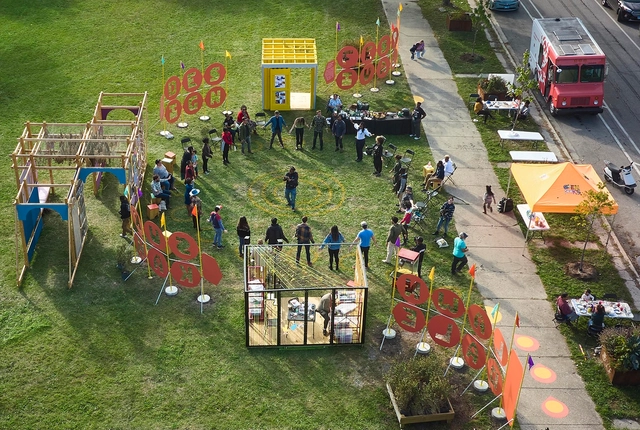
Museo Jumex presents 'Proposals for a Plaza,' a collaborative project by artists Fritz Haeg (United States, 1969) and Nils Norman (United Kingdom, 1966). This temporary installation, commissioned as part of the series 'Agora: A Blueprint for Utopia,' will invite the public to imagine and participate in an alternative vision of the museum's plaza.
Inspired by the outdoor spaces of Mexico City, the project draws elements from public parks and the wildlife areas surrounding the city, while also integrating informal uses of open space. It features seating and sleeping areas, a kiosk, a fire pit, bleachers, and outdoor spaces designed for contemplation, gathering, resting, and play.
The Council of the International Union of Architects (UIA), meeting in Oaxaca, Mexico, unanimously approved on May 18 the nomination of the city of Rio de Janeiro as the UIA/UNESCO World Capital of Architecture for 2020. Securing this title is part of the program proposed by the City of Rio, with support from the Institute of Architects of Brazil (IAB), for 2020, when the city will host the 27th World Congress of Architects.
Paraty, RJ. Photo: Chaval Brasil on Visual hunt / CC BY-NC-ND
With the aim of promoting the care and recognition of cultural heritage, the Cultural Heritage Law Research Group of the Federal University of Ouro Preto (UFOP), the Technical Office of the National Institute of Historic and Artistic Heritage (Iphan) in Ouro Preto (MG), and the Public Ministry of Minas Gerais (MP-MG) have developed the Manual for Residents of Heritage-Listed Houses.
Researchers recently announced the discovery of the world's largest termite mound complex, located in northeastern Brazil. The total volume of excavated soil is estimated to equal 4,000 Pyramids of Giza, with the complex itself averaging 4,000 years of age and covering an estimated area of 230,000 square kilometers—equivalent to the size of Great Britain.
Protagonistas del V Congreso Internacional de Arquitectura y Sociedad. Image Cortesía de Fundación Arquitectura y sociedad
Yesterday, June 13, marked the opening of the 5th International Congress of Architecture and Society, an event presided over by King Felipe VI for the second consecutive edition. The President of the Government of Navarra, Uxue Barkos, and the Minister of Development, José Luis Ábalos, also participated in the official opening.
Architect Francisco Mangado was responsible for opening the event, which in its fifth edition will focus on cities and the challenges architecture faces in addressing urban demands. The architect from Navarra stated that “Architecture is not an isolated event of personal preferences; it is a profoundly cultural and social act, linked to the city as a reality that belongs to the common good,” adding that “the quality of architecture and the city is not a luxury, it is a right for all citizens.”
https://www.archdaily.com/1113864/francisco-mangado-opens-the-v-congress-of-architecture-and-society-the-quality-of-the-city-is-not-a-luxury-it-is-a-rightJavier García Librero
Most committed architecture students will agree that as the years of learning go by, a growing urge arises to speak up, express ourselves, and mobilize in different ways to bring the architecture we study in school to life. This spark is further ignited in a country where development is largely controlled by private interests rather than public ones, and where, above all, deep inequality persists amidst vast potential diversity. Outraged, our voices are increasingly being heard as citizens. We are stepping out of the classroom, seeking dialogue, marching more frequently, and carving out new paths to intervene in and transform our social reality. And we realize, or rather, we return to the natural understanding of our political role within architecture.
Together with an archaeologist and a visual artist, the team led by architect and University of Chile academic Claudia Torres has documented a series of industrial ruins in rural areas throughout Chile for the project “From Noise to Silence: Valuing Industrial Ruins in Rural Areas,” a research project funded by Fondart 2017.
With a diameter of 100 meters and the capacity to service 36 steam locomotives simultaneously, the authors of this article—Claudia Torres, Sandro Maino, Ricardo Labra, Valentina Soto, and Laura Gallardo—argue that the San Rosendo railway workshops must be declared a Historical Monument in Chile.
From the viewpoints of the town of San Rosendo (Chile), the railway workshop complex can be appreciated in all its splendor, situated at the foot of the town, on the banks of the Biobío River, and connected to the imposing railway bridge that crosses the Laja River.
AA48 – Responsive Archipelago. Image Cortesía de TU Delft
Twenty proposals for informal settlements from Brazil to Bangladesh have been awarded in Confronting Informality, the first edition of the competition organized by TU Delft's Department of Urbanism, alongside universities from around the world.
Launched last April, this ideas competition addresses the challenge of urban settlements based on the principles of the New Urban Agenda. Through their projects, architecture and urban planning students from all over the world answered the following question: how can we create healthy, safe, and resilient environments in informal settlements while simultaneously preserving social networks and a sense of community?
"We live in an urban world, but explosive, unplanned urbanization processes in developing countries mean that new informal settlements are growing in population and size—often without infrastructure, access to sanitation, or quality public spaces," the organizers explained in the competition brief.