Over the last twenty years, the world has never been so connected. At the turn of the century, the digital realm seems to have invaded analogue layers, redefining standards, lifestyles, interactions, and the way we connect and use spaces. This social redefinition is strongly attributed to Generation Z—the cohort born during the transition from the 20th to the 21st century, between the 1990s and 2010s. But do you know the defining characteristics of this group?
Following two weeks of enthusiastic voting, ArchDaily readers have narrowed down more than 300 nominees to the top 10 finalists of the year.
During the nomination phase, we witnessed how this award highlights the collective progress and evolving boundaries of architecture. These shortlisted projects represent the most inspiring, impactful, and resonant works chosen by our readers.
The finalists showcase a diverse spectrum of practice, spanning established industry leaders alongside emerging boutique firms with highly distinct design voices. Collectively, these projects also highlight architecture's profound capacity to improve our built environment.
After at least five years of study, the time comes for architecture and urbanism students to complete their final graduation projects—often referred to as TCC, TFG, or Final Projects. In choosing their topics, students highlight civic, urban, or theoretical projects that are of great importance in sparking a debate about the future of our cities, the built environment, urban infrastructure, mobility, and many other fundamental issues shaping how we inhabit space.
Completing these projects requires a major effort in data collection, research, and design development to address complex challenges. Since they are not always recognized as they deserve, we launch an annual call to showcase the best work by students from Portuguese-speaking countries, helping them reach a wider audience and inspire the general public with new ideas.
A project developed for the Rio 2016 Olympic Games has been awarded Gold in architecture at the 2018 iF Design Award. The Dancing Pavilion, designed by architect and designer Guto Requena for the Olympics in Brazil, has just received the Gold Award, the highest architectural category of the iF Design Award. The trophy was presented to the designer during a ceremony in Munich, Germany, in March. According to the jury:
The 60th visit of the open course Arquitetura Paulistana, taught by architect Marco Artigas, took participants to the bar Pitico, a project designed in collaboration by Marina Portolano, Julia Masagão, Joana Barossi, Marcelo Dionísio, and Anna Ferrari.
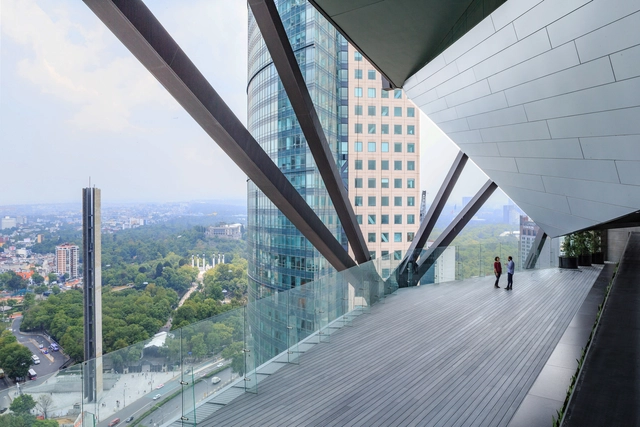
The IHA is considered the world's most important architectural prize for high-rises. It is aimed at architects and developers whose buildings are at least 100 meters tall and were completed in the last two years. The jury consists of architects, structural engineers, real estate experts, and architecture critics. They evaluate the nominated projects based on the following criteria: future-oriented design, functionality, innovative construction technology, integration into the urban context, development schemes, sustainability, and cost-effectiveness. This year, the five finalists chosen from 36 nominees across 15 countries have finally been announced; among them is Torre Reforma, designed by Benjamín Romano.
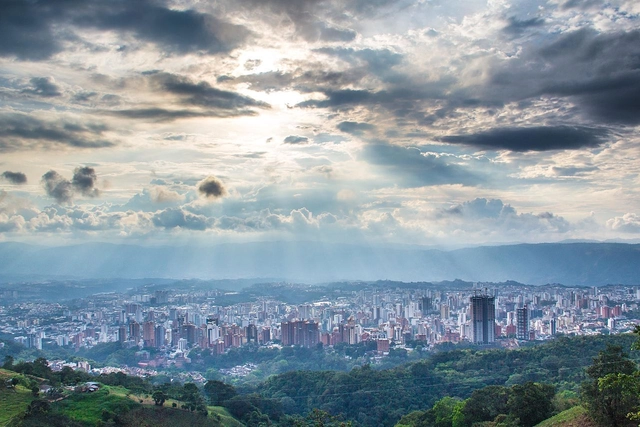
The cities of Bucaramanga (Colombia) and Cipolletti (Argentina) are the winners of the second edition of the international competition “City for People,” organized by the Government of the City of Buenos Aires and the Inter-American Development Bank (IDB).
The award ceremony, held in Buenos Aires, recognized the Argentine city in the Sustainable Mobility category for its proposal to implement a sustainable mobility plan designed for youth. Meanwhile, the Colombian city won in the Reviving Cities category with the renovation of the Patio de los Edecanes, a late-18th-century structure in downtown Bucaramanga.
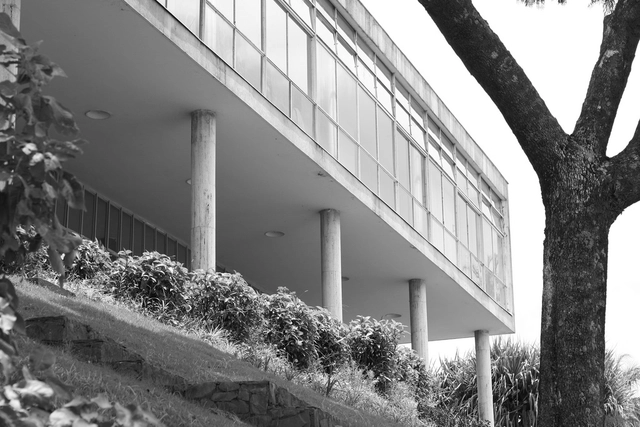
The Belo Horizonte Municipal Secretariat of Culture has reopened the Pampulha Art Museum following a suspension of its projects, exhibitions, and the Bolsa Pampulha program. Since the 16th of this month, visitors can participate in the *Museu por Dentro* (Museum from Within) project, which offers a closer look at the museum's history, architecture, and collection, as well as its surrounding landscape.
The new initiative offers various activities, such as a guided tour of the building's interior and telescope viewing of the Pampulha Modern Ensemble, which includes the Church of Saint Francis of Assisi, the Casa do Baile, the Yacht Tennis Club, the Kubitschek House, and the Art Museum itself.
Based on the Urban Design Planning and Implementation Scheme for Banxuegang High-Tech City, this international competition was launched to implement the phase results of the implementation scheme through four sub-projects. The project evaluation meeting has been successfully concluded. Following the competition rules (the jury has provided evaluation opinions on the top two winning agencies of each project and recommended them to the host; the host will further study and determine the final ranking of the top two winning agencies based on full respect for the expert evaluation opinions, and the top two winning agencies will receive different bonuses and undertake corresponding follow-up work), the host has decided to launch a public consultation based on these results to widely collect opinions and suggestions as an important reference for the final ranking and subsequent design refinement. The competition consists of four sub-projects, covering planning, architecture, landscape, and art, with two winners selected for each category.
Winners of the International Competition for the Architectural Conceptual Design of Banxuegang Art Center and Surrounding Plots: URBANUS Architecture & Design, Architectural Design & Research Institute of South China University of Technology & Shenzhen WAAO Architects (Consortium) Winners of the International Competition for the Conceptual Design of the Integrated Connectivity of Characteristic (Country) Parks Around "Bantian in the Forest": Guangzhou Landscape Architecture Design and Research Institute, MLA+ B.V. Winners of the International Competition for the Landscape and Greenery Enhancement of Urban Streets and Nodes in Banxuegang High-Tech City: Shenzhen Meidao Landscape Architecture & Urban Planning Design Institute Co., Ltd. & Beijing Vision 4D Directional System Planning & Design Co., Ltd. (Consortium), Beijing Zhonghai Huayi Urban Planning & Design Co., Ltd. & Shenzhen Gardens Co., Ltd. (Consortium) Winners of the International Competition for the Visual Identity (VI) and Application Design of Banxuegang High-Tech City: Shenzhen Shida Creative Design Co., Ltd., Thonik Design Studio
https://www.archdaily.com/1114189/exhibition-of-winning-proposals-and-public-consultation-international-design-competition-for-the-core-area-of-longgang-banxuegang-science-and-technology-city韩爽 - HAN Shuang
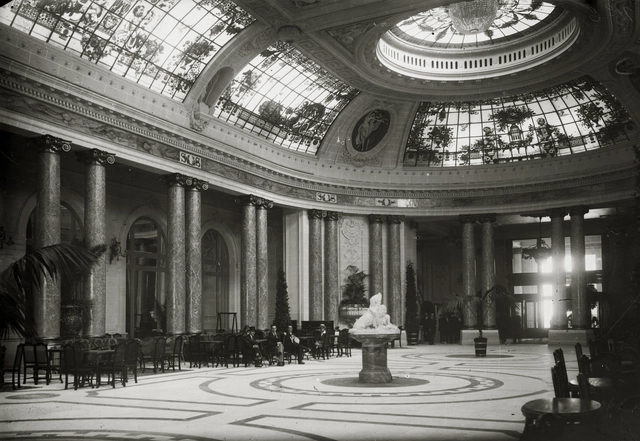
Interior de Kursaal. Image Cortesía de MUGAK Bienal de Arquitectura
On Friday, December 22, 2017, the inaugural MUGAK Basque Country International Architecture Biennial opened the exhibition "The City We Lost: Urban Heritage Management in San Sebastián, 1950-2017" at the Santa Teresa Convent in San Sebastián, Spain. The exhibition showcases recognizable local buildings that have disappeared over the last few decades.
Curated by the Áncora association, the exhibition traverses San Sebastián's neighborhoods to examine a city that now exists only in collective memory—specifically, buildings lost over the past seven decades. Stretching from Martutene to Igeldo, and including Alza, Amara, El Antiguo, and Ibaeta, the survey goes beyond the city's iconic heritage, looking past San Sebastián's most prominent areas to highlight other architectural works.
Image from the São Paulo Fire Department - PMESP, via Twitter
A massive fire caused the collapse of a 22-story skyscraper in downtown São Paulo overnight. Located at the intersection of Avenida Rio Branco and Largo Paissandu, near Vale do Anhangabaú, the building previously served as the headquarters of the Federal Police and was occupied by about 90 families from a housing movement.
According to residents, the fire started around 1:30 a.m. following an explosion on the fifth floor and quickly spread throughout the structure, also affecting neighboring buildings, such as the Martin Luther Church located on the square and another high-rise facing the collapsed structure.
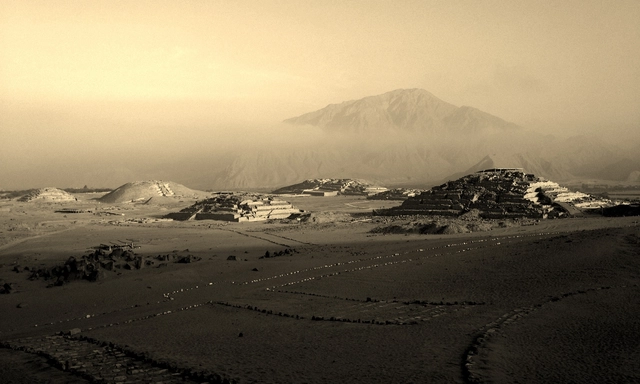
Although these are amateur contemporary photographs, we should look beyond the surface. These "false hills" hide huacas that—whether they were ceremonial centers, administrative complexes, or food storehouses—offer a message of peeling back layer after layer. Here, different stages of history and the ways of life of our pre-Hispanic ancestors are revealed, offering us a sense of wonder as we look beneath the overlaps of time. The huacas teach us to see with greater breadth and perspective.
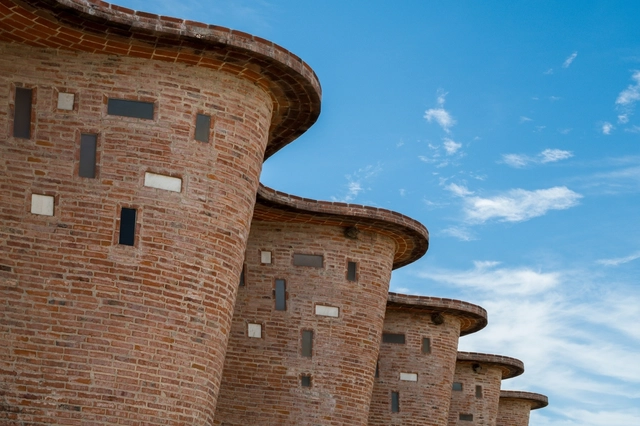
Born in Artigas, Uruguay, in the second decade of the twentieth century, Eladio Dieste became an exceptional builder, with most of his work located in Montevideo, the capital of his home country, and its adjacent cities. However, his work gained broader international recognition posthumously, after the Massachusetts Institute of Technology (MIT) celebrated it in 2005 through the theoretical work of Stanford Anderson. Trained as an engineer, his relationship with the construction site and in situ experimentation allowed him to push materiality and structural possibilities to their absolute limits.
With a practice deeply connected to the relationship between materiality and the construction site, he developed a rich architectural output based on studies of thin ceramic shells, which he termed reinforced ceramics. Alongside this construction technique, Dieste found that ceramic bricks offered the essential structural resolution he sought. The material possessed excellent structural properties—highly resistant to compression, quick to build with, and easy for local labor to handle—while the addition of steel reinforcement allowed it to resist tension and bending. Consequently, he found in brick the ideal medium for the plasticity and structural design he envisioned, enabling him to span large distances with slender self-supporting structures anchored only at their ends. Free of central supports, these structures unified walls, floors, and ceilings into a single cohesive body.
But what makes Eladio Dieste such a remarkable builder?
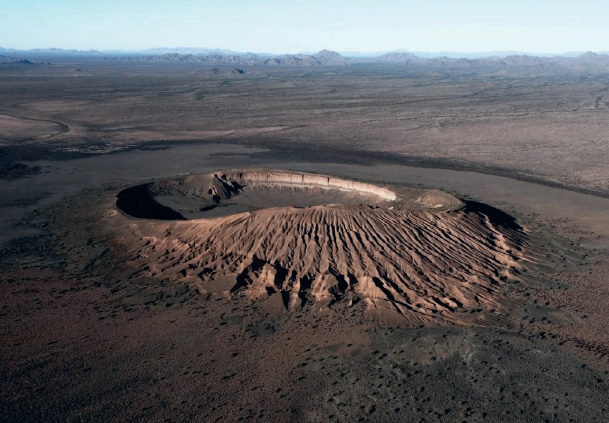
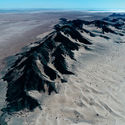
Santiago Arau is a renowned photographer whose work focuses on aerial shots of the Mexican territory. His lens travels from Ciudad Juárez to Cancún and Holbox, from the northern border to the Mexican southeast, spanning from 5,500 to minus five meters above sea level, from minus 15 to 45 degrees, and covering over 5,000 kilometers. Arau defines this approach as "a different perspective than what we are used to, since seeing things from above situates where we stand; it is a way to calibrate the human, urban, and geographical scale within a territory. The framing possibilities a drone offers are infinite; you can choose the height, framing, and technique to photograph an object, maximizing the power of a camera."
Possibly the largest exhibition dedicated to Brazilian architecture held outside the country since Brazil Builds, shown in 1943 at MoMA, opens today at Casa da Arquitectura in Matosinhos, Portugal. The Portuguese Centre for Architecture is also presenting the exhibition "Duas Casas" (Two Houses) by Paulo Mendes da Rocha, who will receive the title of Honorary Member of Casa da Arquitectura at a ceremony on September 30. This exhibition will feature the Gerassi House and the House on Rua do Quelhas in Lisbon, which was co-designed with Portuguese architect Inês Lobo.
https://www.archdaily.com/1114201/the-exhibition-infinite-span-90-years-of-brazilian-architecture-opens-todayPedro Vada
Since the mid-20th century, the Castagnino Museum has established itself as one of Argentina's most important cultural spaces. The historic building by the architectural firm Hérnandez Larguía-Newton (1937) was built in a privileged setting, conceived as the gateway to the city—a condition that will be further emphasized by the new intervention.
There is nothing personal against the color yellow, but let us be honest: we were saturated by the monotony.
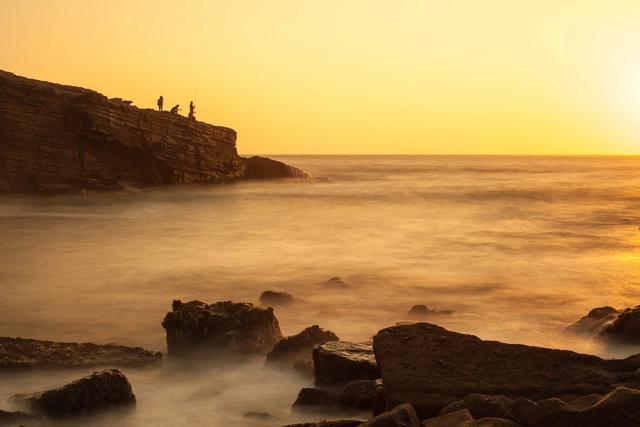
We love yellow, but not when it is used tastelessly and to mask corruption. We like the yellow that is natural to Lima, like the one in the header image—that earthy tone, the tone of every sunset, the one that shines like the sun. In recent years, our city has been forcibly invaded by this color: yellow staircases, yellow bridges, yellow walls, yellow railings... perhaps too much. And even if certain works were not yellow themselves, the intentions behind them carried a distinct whiff of that hue.
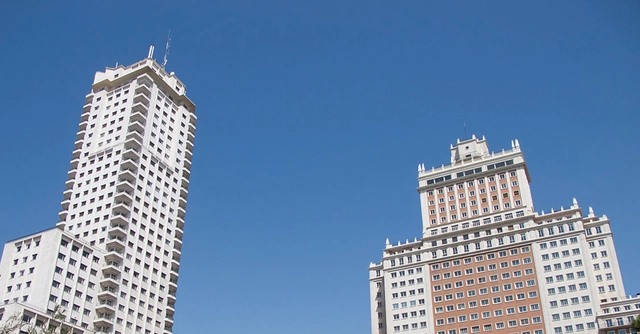
Architect Antonio Miranda, writing for the ARKRIT Collective, invites us to reflect in this article on romantic subjectivism in criticism, presenting a simple example in defense of the objective criticism of the object, which speaks to us much more honestly and sincerely than the author of the work themselves. He puts this assertion to the test by comparing two famous buildings in Madrid's Plaza de España: the Edificio España and the Torre de Madrid.
https://www.archdaily.com/1114195/false-criticisms-edificio-espana-versus-torre-de-madridAntonio Miranda
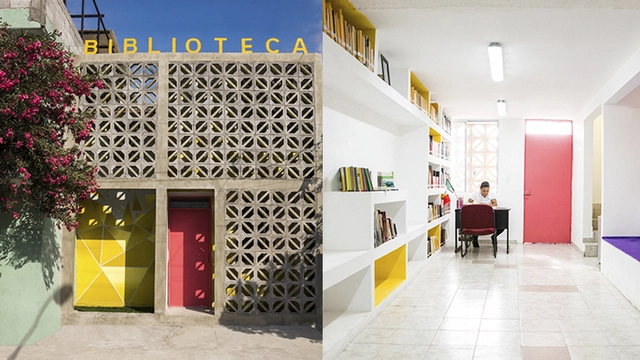
The Infonavit Cuauhtémoc Neighborhood Library is the latest project by Proyecto Reacciona A.C. located in Monterrey, Nuevo León, Mexico. Led by architect Antonio Garza Ferrigno in collaboration with muralist Juan Alcocer Zúñiga, the project spans 135 m² (1,453 sq ft) and was completed on a budget of 120,000 Mexican pesos. Read on to learn more about the project:
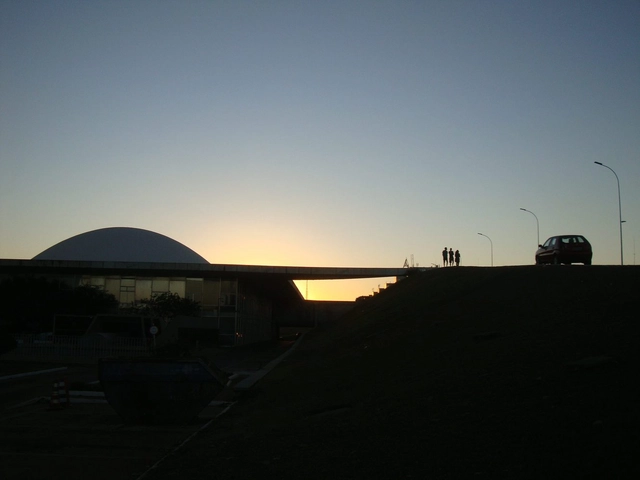
Whenever I cross the imaginary line on the Monumental Axis connecting the National Congress to the Itamaraty Palace, catching a glimpse of the Three Powers Plaza from the top of the ramp leading into it, I am overcome by a genuine emotion that never fades with repetition. This privileged view of the plaza as a whole, flanked by its three main buildings and framed by the perspective of the Itamaraty Palace on the right, is an image comparable only to the great iconic urban spaces of the world.
The Three Powers Plaza is a contemporary construction that evokes classical urban planning tradition, whether that of the "people's Versailles," as Lucio Costa envisioned, or the ancient Greek agora. Yet, there are also references to the "plazas mayores" or "plazas de armas" of Iberian and Spanish-American cities, as well as the plazas of the Brazilian colonial period. This mix of influences could have resulted in a postmodern pastiche of styles were it not for Lucio Costa's genius in translating it into the clear, elegant synthesis of a modernist design, complemented by Niemeyer's architecture, which has already been so widely discussed and praised.
Videos
Cortesía de Bienal de Arquitectura de Chile "Diálogos Impostergables"
Earlier this week, we reported that New York-based Catalan architect Eva Franch i Gilabert was selected as the new Director of the Architectural Association in London. Prior to this appointment, Franch served for seven years as Chief Curator and Executive Director of Storefront for Art and Architecture in New York.
https://www.archdaily.com/1114194/eva-franch-i-like-to-define-myself-as-a-facilitator-to-provoke-discourse-and-discussionPola Mora
Videos
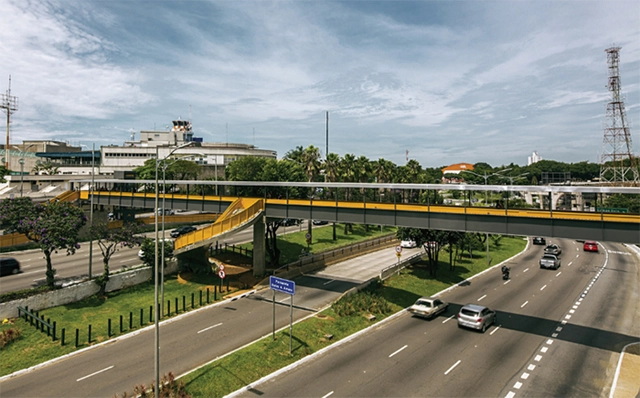
Congonhas Airport Footbridge. Courtesy of Arquitetura Paulistana
The open course Arquitetura Paulistana, organized by Marco Artigas, took students to visit the Congonhas Airport Pedestrian Bridge project, designed by Estúdio Artigas in partnership with the firm H2C Arquitetura. Begun in 2014, the project took four years to complete and featured the participation of Nitsche Arquitetos, who were responsible for the project's visual communication.
Olhe o Degrau Ermelino Matarazzo.. Image Cortesia de Cidade Ativa
Today in Brazil, there are several groups spearheading initiatives aimed at improving our living environment. Unfortunately, many face difficulties in getting their ideas off the ground, primarily due to a lack of financial resources, as shown by data gathered by the Como Anda Project.
The Fenômenos Foundation sees this demand as an opportunity: through the Fenômenos Challenge, the organization supported the implementation of three ideas with great transformative potential in the city of São Paulo. The challenge's premise was to select initiatives promoting physical activity and sustainability in vulnerable areas, offering solutions to local issues. The selected groups were: Cidade Ativa, Canto da Arte Jaguaré, and the Dente de Leão Collective. The selection process considered criteria such as impact, feasibility, and how the program could help boost the projects.
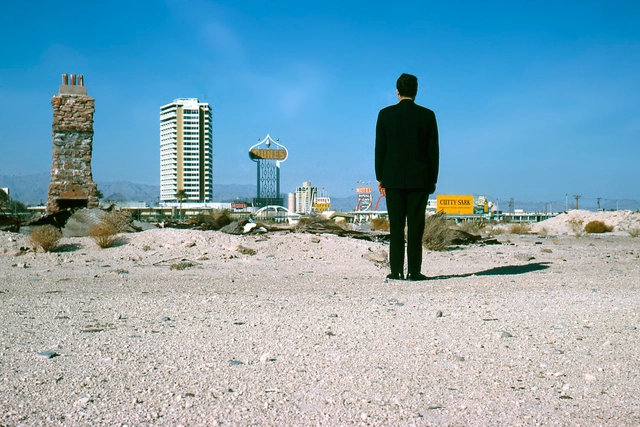
My mind is undoubtedly diffuse and scattered, gathering and comparing disparate elements, architectures from distant eras, reading and enjoying them with equal passion. There is no doubt that an early reading of this article's protagonist has shaped my thoughts and those of many of us. Having just passed away (on Tuesday, September 18), Robert Venturi, at the age of 93, remains an essential reference for us.
And why is that? Robert Venturi wrote a book titled Complexity and Contradiction in Architecture, which acted as a catalyst for the entire discipline. It seems that in this book, Venturi set out to explain a quote by Charles Rennie Mackintosh: “There is hope in honest error; none in the icy perfection of mere stylisticism.”
.jpg?1521590183&format=webp&width=640&height=580)
















.jpg?1537636136 "Franklin Court / Venturi Scott Brown. Image © Mark Cohn")