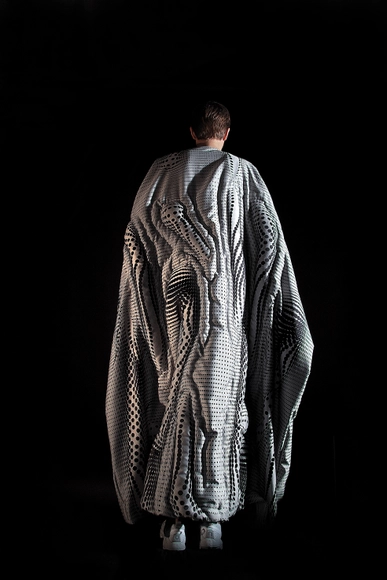
The Austrian firm Coop Himmelb(l)au has designed a wacky quilted coat that blocks electronic surveillance. With pockets to protect your collection of phones and tablets, the Jammer Coat was commissioned for the Workwear exhibition at the Triennale in Milan.
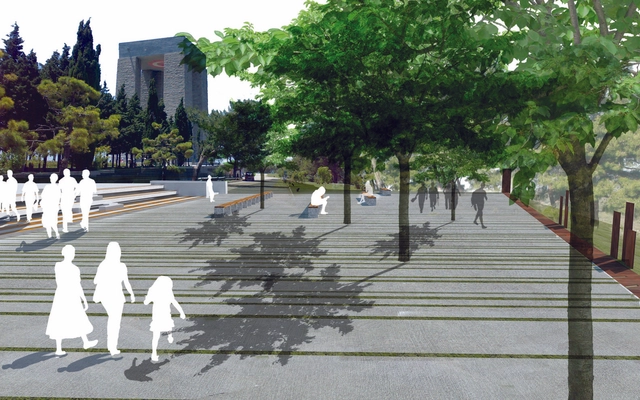
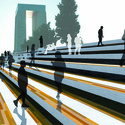
The Gallipoli Peninsula, at the Western end of Turkey, holds a particular significance for the country as the site of a major World War One battle in which the declining Ottoman Empire repelled an attempted invasion by British forces. Today, it is seen as one of the defining moments that contributed to the formation of modern day Turkey, and the site of the battle is commemorated by a national park which includes a series of monuments and memorials at the southern tip of the peninsula.
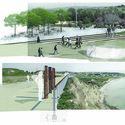
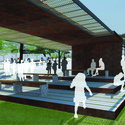
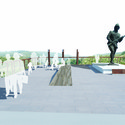
Aiming to consolidate these sites in to a more coherent whole, the Çanakkale government launched a competition to redesign the area, which was won by Istanbul-based practice Sekiz Artı. Read on after the break for more on their design.
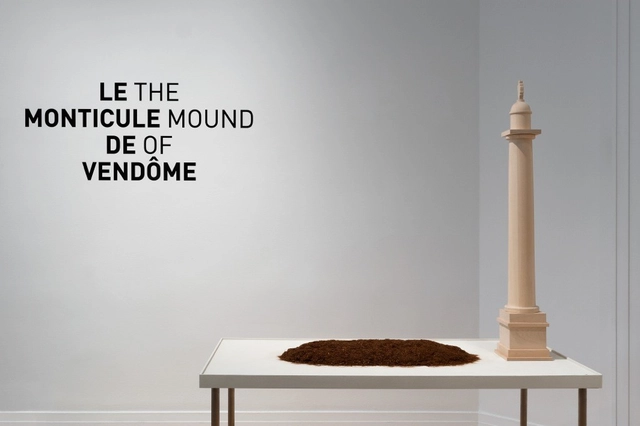
On view at the CCA from 19 June to 14 September 2014 and curated by architectural historian David Gissen, The Mound of Vendôme revisits one key episode of French history when the Commune de Paris in 1871 voted to demolish the Vendôme Column, abolishing all allusions to the Napoleonic era. To protect the surrounding architecture during demolition, a radical landscape was erected on Place Vendôme. Informed by the methods of experimental history, Gissen’s ongoing research project and installation at the CCA traces the provocative history of the column and mound, while arguing for its historicisation and reconstruction.
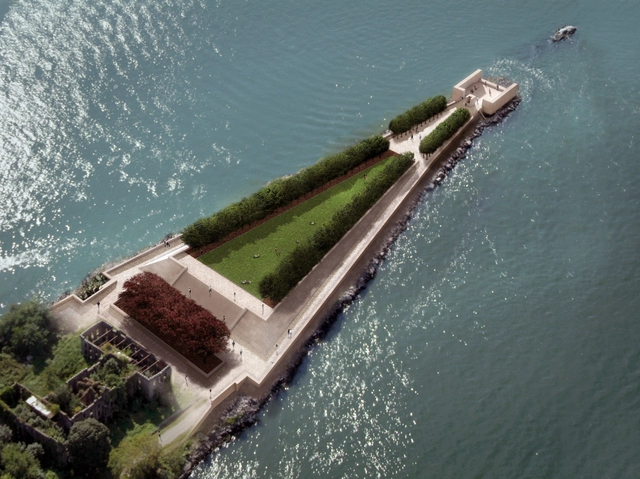
Aerial Rendering Prior to Completion. Image Courtesy of Franklin D. Roosevelt Four Freedoms Park, LLC
Built four decades after Louis Kahn's death, New York City'sFour Freedoms Park - the architect's posthumous memorial to Franklin D. Roosevelt and his policies - is becoming one of the architect's most popular urban spaces. In a recent article for the Guardian, Oliver Wainwright investigates what he describes as perhaps Kahn's "best project". Wainwright's spatial description of the monument is interweaved by fragments of Kahn's personal history, building up a picture of a space with "the feel of an ancient temple precinct" and "a finely nuanced landscape". Although Gina Pollara, who ultimately realised the plans in 2005, argues that Four Freedoms Park "stands as a memorial not only to FDR and the New Deal, but to Kahn himself", can a posthumous project ever be considered as an architect's best? Read the article in full here.
Storefront TV is an online channel focused on the communication of contemporary art and architecture ideas with an emphasis on experimentation with a live TV format.
Throughout the entire period of its existence, humankind was developing numerous methods of elimination of each other. And with invention of the nuclear weapons this desire has endangered the being itself. Matterbetter researches how the design community in contemporary world can contribute to making this world a little safer and more friendly.
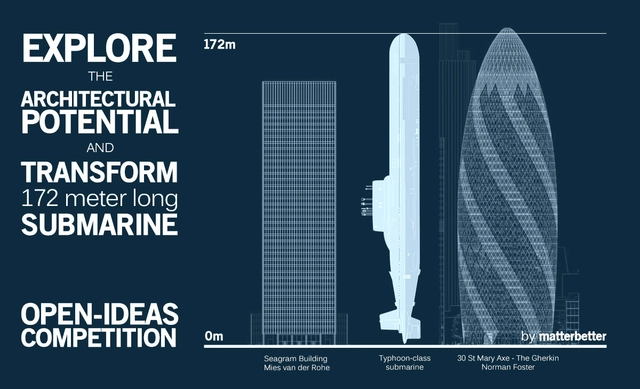
Matterbetter invites architects and designers to participate in open-ideas competition that aims to explore the architectural potential and transform the biggest nuclear submarine ever built into a peaceful architectural object.
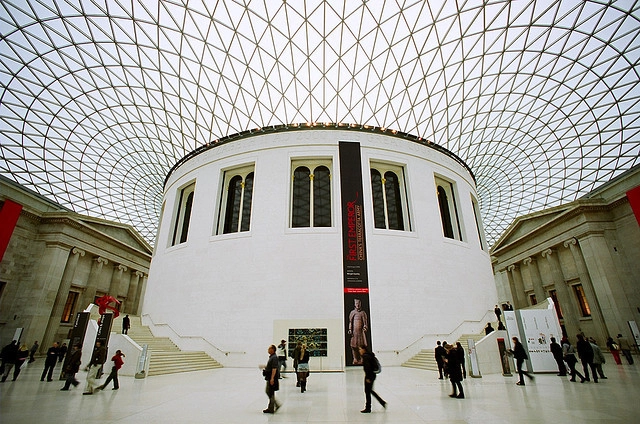
"They've got the mall. They've got the food court. Now they've got the multiplex." Rowan Moore's latest piece for the Guardian discusses the collaged plight of London's British Museum as Rogers Stirk Harbour + Partners (RSHP) complete a large extension of exhibition spaces. Describing it as a "composite Foster-Rogers" building, Moore argues that "a strange distribution of space" coupled with "an inattention to the cultural complexities of the modern museum" have led to "a void, wrapped in a void, with another void to the side." Although he states that "there are many things to like about RSHP's building", the total compilation of spaces, extensions and interventions have led to a museum more like a mall than a house of culture.
The controversial Mount Pleasant development in London has sparked another row this week, as campaigners accused Mayor Boris Johnson of "compromising his neutrality" over the 681-home scheme which he has called in to review personally. Though he is supposed to remain neutral until the hearing, last week Johnson remarked in a speech that the development "will be a wonderful place to live." However many have expressed concern over the design, including Thomas Heatherwick, who lives locally and called the scheme "empty, cynical and vacuous." Read all the details at BD Online.
This weekend, at the AIA's national conference in Chicago, Russell A Davidson was elected the AIA's 2016 president. Davidson, who served as the AIA's Vice President in 2012-13 and president of AIA's New York State chapter in 2007, will be joined by William J Bates and Francis M Pitts as Vice presidents, and John A Padilla as AIA Secretary.
In addition to electing its next leaders, the AIA also adopted a new board structure, which will see it add a new body, the 'Strategic Council', which will inform the Board and other Institute bodies of important professional issues.
More on these developments from the AIA National Conference after the break
Russian city dwellers live their daily lives, drive cars on busy streets, sit in front of computers in offices, buy groceries and other goods in supermarkets and shops, bring up their children and watch television at home. This decidedly typical Lebenswelt, routine, everyday, the gigantic and complex world of the ordinary, is under-researched and poorly analysed. The theme for Strelka’s 2013-2014 research school year is Urban Routines.
Student research, public lectures, and talks on Urban Routines constitute an attempt to figure out what the everyday life of Russian cities is made of.
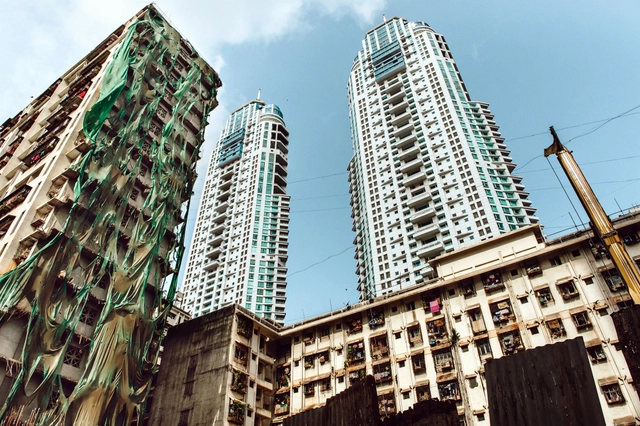
"The Indian poor live in perpetual darkness, while the Indian rich live in perpetual light." This fact is obviously embedded in Mumbai, where luxury condominiums rise in the middle of slums. Many of these extravagant buildings were designed by India's most commercially successful architect, Hafeez Contractor, who believes his arrestive work is the beginning of slum redevelopment. Learn about his crusade and how he's been criticized in this New York Times article by Daniel Brook.
The Guga S’Thebe Arts and Cultural Centre in Langa, Cape Town's oldest township, is expanding to include a theatre exclusively for children and adolescents. The main component of the theatre, set for completion this fall, will be a large, multi-functional space for hosting performances. The project, a collaborative effort between future users and international architecture students, is aimed at stimulating sustainable development while widening the possibilities for the target demographic. To check out more project images, continue after the break.
Two weeks ago, David Rockwell took a step away from his usual work of interior and set design to present his foray into the prefab game - an adaptable 2,400 square-foot house called "Pinwheel." His design aims to challenge two assumptions about prefabrication: one, affordability and luxury are mutually exclusive and two, pre-fab's limited flexibility makes a cookie-cutter result inevitable. Rockwell says the project, a collaboration between himself and Fred Carl, founder of modular housing venture C3 Design, was inspired by his childhood in Mexico, where "outdoor space was part of the lifestyle." Check out the plan and more designs after the break.
PlanGrid, touted as "the fastest blueprint viewer" available, is one of the most mature apps for viewing, amending and discussing construction drawings on a collaborative cloud-based platform. This week they launched PlanGrid for Education, allowing students full and uninhibited access to every feature of the app free of charge. According to the company, they currently have "40,000 blueprints being uploaded to PlanGrid daily and over 9 million blueprints stored digitally", making the platform one of the fastest growing in its market.
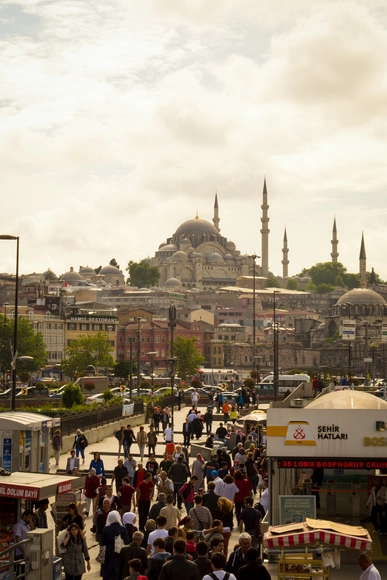
MAXXI and Insula architettura e ingegneria with Based Architecture present “Cose Turche”, a conversation of six voices about Istanbul, aimed to recognize and trace the pulsating identity of a metropolis, which in its present metamorphosis is able to tell us about significant pieces of third millenium urban culture.
Recently some of Istanbul public spaces as Gezi Park, Taksim square with Ataturk Cultural Center by Hayati Tabanlioglu and Third Bosphorus Bridge became symbol and central places of an intense debate still open, which assumed a global broader connotation.
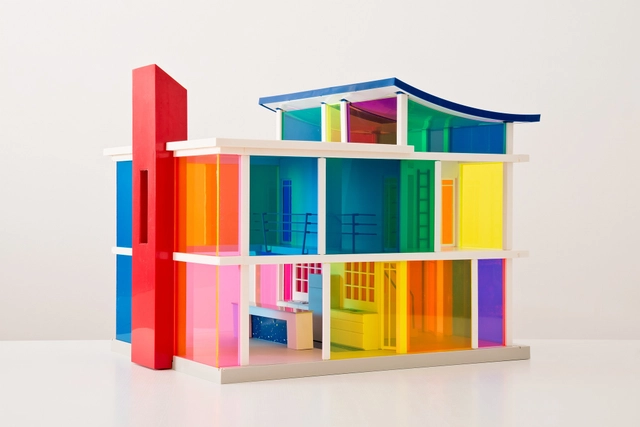
A new exhibition in Germany looks at the history of the architectural model in contemporary art. It begins with a legendary model by Charles Simonds, covers the 1990s with Ludger Gerdes, Hermann Pitz and Thomas Schütte, and ends up in the present day with Alicia Framis, Hinrich Sachs and Carlos Garaicoa.
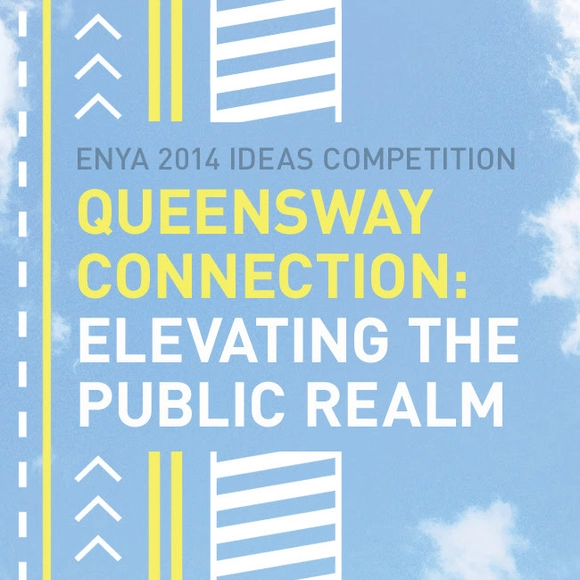
The Emerging New York Architects (ENYA) committee of the AIA New York Chapter is pleased to announce the opening of its sixth biennial design ideas competition exhibition, QueensWay Connection: Elevating the Public Realm on Thursday, July 17 at 6:00 PM at the Center for Architecture.
In an interesting analysis in the Guardian, Olly Wainwright draws attention to the questionable process by which of Thomas Heatherwick's Garden Bridge proposal has gained such strong support from the British government. It is, according to Wainwright, the product of "one voguish designer, one national treasure and one icon-hungry mayor" - however he contends that compared to other more needed potential bridges over the Thames, the Garden Bridge may just be "a spectacular solution to a problem that doesn't really exist," and a terrific waste of infrastructure funds. You can read the article in full here.





.jpg?1403720514)