1. ArchDaily
  2. Editor's Choice

Editor's Choice

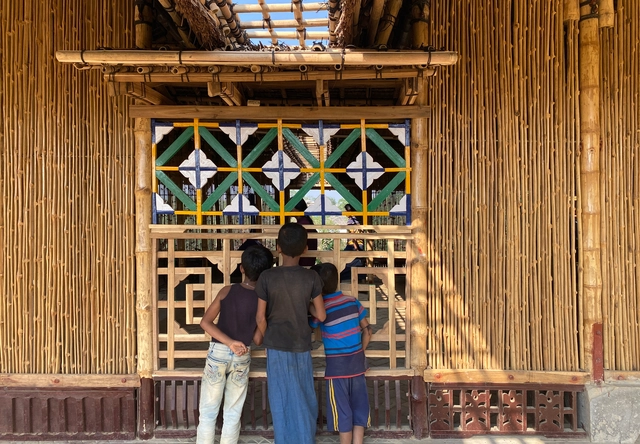
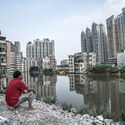
Saving South-East Asia: 5 Social Design Projects by Local Architects

Subscriber Access | 

Architecture has been criticized for being a primary elitist indulgence. Most architectural projects are funded by the wealthy and seen as a means of bringing beauty into the surrounding environment. Architecture, however, is a double-sided coin with functionality balancing out aesthetics. With the ability to strategize radical solutions, architects equally find themselves at the forefront of solving complex issues. The context of Southeast Asia offers a demanding challenge with various social problems, giving architects a chance to save the world with humanitarian design.

The 23 Most Anticipated Projects of 2023

Subscriber Access | 

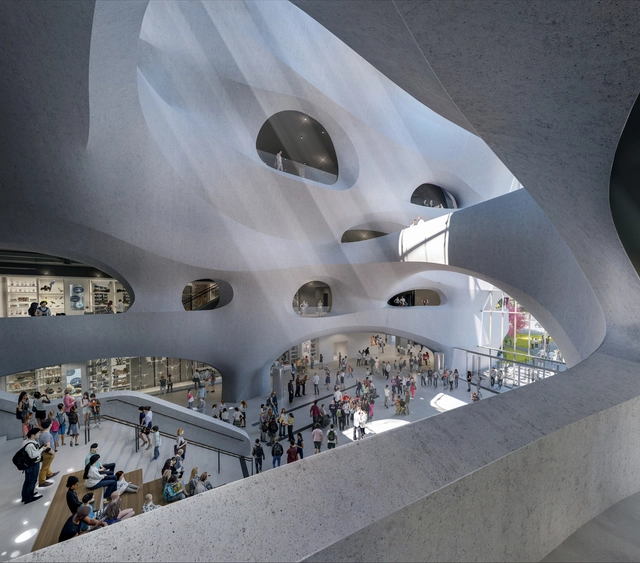
As the new year begins, we look forward to the most exciting projects planned to open in 2023. The world's second-tallest tower is currently under construction in Malaysia; Egypt is almost ready to open its largest archeological museum, while MVRDV is currently renovating a large-scale brutalist landmark in Albania. Featuring internationally renown architectural offices such as Snøhetta, OMA, Studio Gang, Zaha Hadid Architects, BIG, along with the latest winner of the Pritzker Prize, Francis Kéré, the following selection presents projects from all around the world. They also range in scale and program, from international airports to sculptural arts galleries or museum expansions.

Several projects presented here have also featured in the previous year's compilation. Resource availability and labor issues generated by the pandemic have also continued to influence opening schedules, but with a diminishing impact. Following the predicted trends for 2023, more and more projects involve the adaptive reuse of existing structures. An underlying theme is visible in the increased interest in expanding artistic and cultural venues and integrating historical heritage into the expression of contemporary architecture.

The 23 Most Anticipated Projects of 2023 - Image 1 of 4The 23 Most Anticipated Projects of 2023 - Image 2 of 4The 23 Most Anticipated Projects of 2023 - Image 3 of 4The 23 Most Anticipated Projects of 2023 - Image 4 of 4The 23 Most Anticipated Projects of 2023 - More Images+ 20

Best Articles of 2022: Sources of Inspiration, Tools and Knowledge

2022 brought with it what is now known as the triple ‘C’ crises – COVID, Climate, and Conflict, with new environmental challenges, boiling disputes, and an ongoing health emergency, fueling a growing inequality, creating wider gaps, and contributing to more poverty. However, 2022 wasn’t only a year of difficulties, it actually opened up a closed-off world, allowing people to come together through traveling, events, and lesser health restrictions, to reflect on how to build “more resilient, sustainable, and healthy societies” that can survive current and future threats.

Always true to our vision of "empowering everyone who makes architecture happen to create a better quality of life", the 2022 ArchDaily's Best Articles selection highlights a huge spectrum of topics. Tackling past, present, and future, the themes explored ranged from the architecture of the metaverse and AI to history and theory 101, retracing stories, adjusting common misconceptions, and projecting a future that is already here. Moreover, this year, editorials offered more tips and ideas for everyone’s living spaces while also investigating the multidisciplinary aspects of the field, in order to broaden perspectives and present new notions. The very diverse ArchDaily team delved into territories, not commonly portrayed in the media, to tell the architectural story of every typology, community, and movement. Believing in contextuality and locality, inclusiveness, and leaving no one behind, our articles reflected our vision for a better world. 

Best Articles of 2022: Sources of Inspiration, Tools and Knowledge - Image 1 of 4Best Articles of 2022: Sources of Inspiration, Tools and Knowledge - Image 2 of 4Best Articles of 2022: Sources of Inspiration, Tools and Knowledge - Image 3 of 4Best Articles of 2022: Sources of Inspiration, Tools and Knowledge - Image 4 of 4Best Articles of 2022: Sources of Inspiration, Tools and Knowledge - More Images+ 26

Best Houses of 2022

As 2022 winds down, ArchDaily brings together the highlights of architecture in a series of retrospectives. As part of this effort, the Projects Team turns to one of the most popular categories among readers—residential architecture—with the objective of gathering the houses that represent the best of a vast world of architectural production according to our worldwide audience.

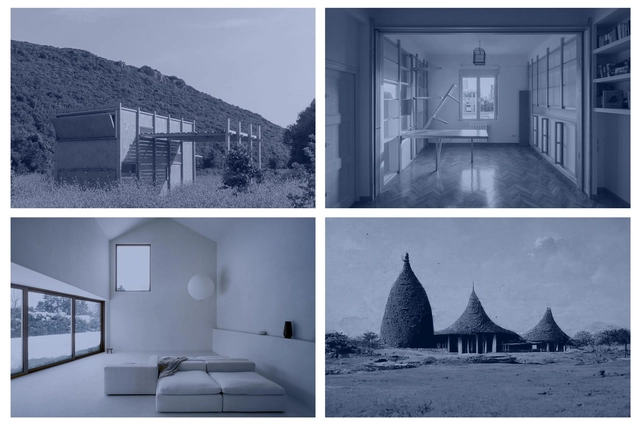
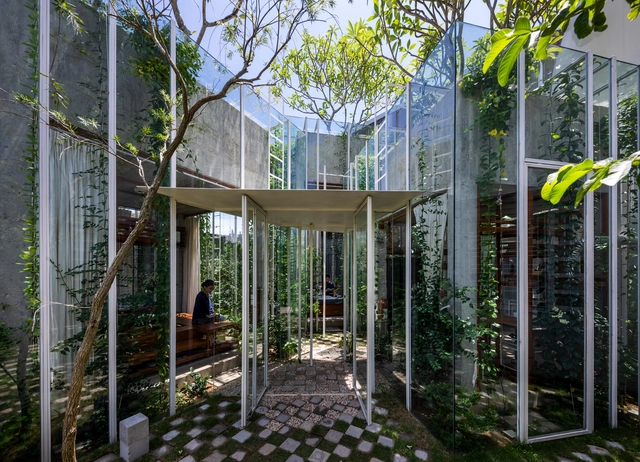
Best Houses of 2022 - Image 1 of 4Best Houses of 2022 - Image 2 of 4Best Houses of 2022 - Image 3 of 4Best Houses of 2022 - Image 4 of 4Best Houses of 2022 - More Images+ 46

Pritzker Prize Laureate Arata Isozaki Passes Away at the Age of 91

2019 Pritzker Prize laureate Arata Isozaki passed away this Thursday, December 29, at the age of 91, as reported by the Spanish newspaper La Vanguardia.

Best Architectural Projects of 2022

Every year, ArchDaily features thousands of new projects that make up the largest online architecture library in the world. Our team of curators review, seek and make sure to explore some of the most innovative and relevant architectural works around. Just like the projects that appeared in our first ArchDaily book, our aim is to open up our platform and highlight (What is) Good Architecture. For that, we look into all natures and sizes of interventions, that reflect sustainable traits, local awareness, technological advancement, and comfort/well-being. The ArchDaily top 100 listing, in particular, combines all these factors with the data we get from our users: which projects are they looking at the most.

An Artificial Intelligence Bot Picks The Architecture Trends of 2023

2022 could be remembered as the year when surprising AI-fueled tools became accessible to a larger audience: from text-to-image generation Stable Diffusion, Midjourney, and DALL-E 2 to unsettling design experiments such as This House Does Not Exist, to surprisingly smart OpenGPT, a language-processing designed artificial intelligence to generate human-like text.

Cautiously described by OpenAI CEO Sam Altman as "a preview of progress", any user can talk with OpenGPT about almost anything: the results are astonishing and it easily can embody an umpteenth so-called threat for creative-related jobs. However, OpenGPT does not have access to browse the internet. Instead, it interacts based on the gigantic database that it has been trained on. As expressed by Gannett's Eric Ulken, "even the best generative AI tools are only as good as their training", so what an "inappropriate request" is has previously been tuned (by humans) as well.

What Makes an Outstanding City? 10 Cities in Focus in 2022

Cities evolve over countless years, each moment of change building up to larger societal and architectural shifts. Metropolises across the world are constantly subject to social, political, economic, or environmental forces that alter their fundamental identity - a character that is meant to be dynamic. As cities develop in size and impact, advancements in the understanding of cities and urbanism grow more complex. 

Cities are formed from a sequence of narratives, characteristics, relations, and socio-spatial values that reflect the identity of the place. The livelihood of the city also depends on its people and a mutual relationship with them. Along with their communities and their circumstances, cities morph to reflect their residents' needs and values.

What Makes an Outstanding City? 10 Cities in Focus in 2022  - Image 1 of 4What Makes an Outstanding City? 10 Cities in Focus in 2022  - Image 2 of 4What Makes an Outstanding City? 10 Cities in Focus in 2022  - Image 3 of 4What Makes an Outstanding City? 10 Cities in Focus in 2022  - Image 4 of 4What Makes an Outstanding City? 10 Cities in Focus in 2022  - More Images+ 6

ArchDaily Selects the Best New Practices of 2023

Subscriber Access | 

25 practices, sole practitioners, and startups from 5 continents and 18 countries have been chosen as part of the 2023 New Practices, the latest edition of the global annual survey by ArchDaily. Ongoing since 2020, the review detects and showcases those who are taking architecture in its new direction under unstable times and demanding challenges.

ArchDaily's New Practices has invited not only designers to apply but those practicing within the broadest definition of architecture and its exercise to share their innovative, fresh, and forward-thinking mission with us. As a result, the 2023 edition features designers, landscape architects, researchers, curators, activists, writers, and three ground-breaking startups—the modular construction U-Build, Urban Beta with their Beta Port building system, and the "Google Doc of Space Design" Rayon—thus joining previously highlighted firms: AEC-industry-oriented management software Monograph, energy transition startup Baupal, online design platform and marketplace CANOA, and 3D-printed housing company ICON.

10 Interior Design Trends of 2022

As we wrap up 2022, we take a look back at how this year introduced new adaptations to the way we live, work, and interact with our built environment, especially after emerging from years of unprecedented changes. One way to describe this year's design identity is that there isn't one. Going through this transitional period, inspiration came from foreign travels, immersive virtual worlds, being one with the planet and the serenity that came with it, platforms that promote expressionism and individuality, and a trend-setting generation known for its bold perspectives.

10 Interior Design Trends of 2022 - Image 1 of 410 Interior Design Trends of 2022 - Image 2 of 410 Interior Design Trends of 2022 - Image 3 of 410 Interior Design Trends of 2022 - Image 4 of 410 Interior Design Trends of 2022 - More Images+ 41

12 Architecture Events to Pay Attention to in 2023

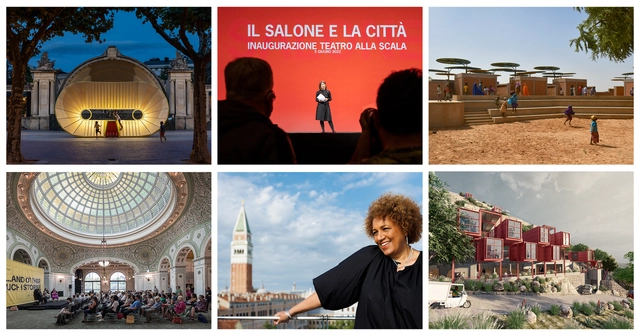
As expressed by 2023 Venice Architecture Biennale curator and architect Leslie Lokko, "after two of the most difficult and divisive years in living memory, architects have a unique opportunity to show the world what we do best: put forward ambitious and creative ideas that help us imagine a more equitable and optimistic future in common."

From Venice's approach to Africa as the lab for the future to Seoul's road to its next 100 years as a megapolis; from Chicago's art-meets-architecture-meets-civic-participation to Sharjah's "beauty of impermanence" in the Global South motto, 2023 will witness a series of architectural events trying to embody those forward ambitious and creative ideas, as explained by Lokko.

Lina Ghotmeh Selected as Designer of the 2023 Serpentine Pavilion, with a Proposal Aiming for the Smallest Possible Carbon Footprint

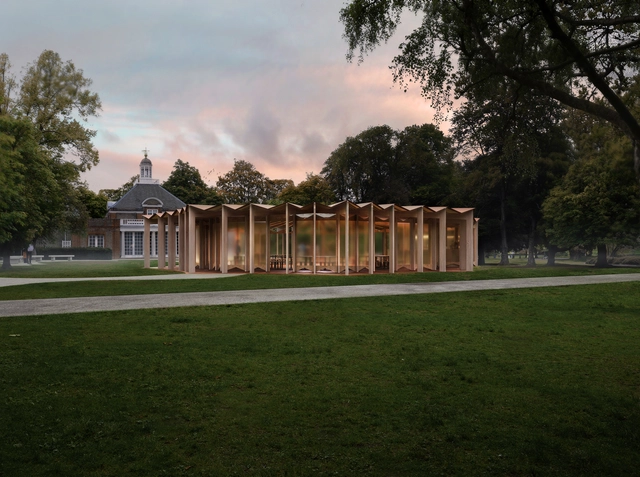
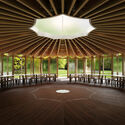
Beirut-born, Paris-based architect Lina Ghotmeh has been announced as the designer of the 22nd annual Serpentine Gallery Pavilion. Titled “À Table,” the French expression for sitting together to eat, her proposal introduces a slender wooden structure with nine pleated petals supported by radial ribs. Inside the pavilion, a ring of tables and benches invites visitors to enter, sit down and relax, eat or work together. According to the architect, the modest space and low-slung canopy is meant to make people feel close to the earth. The Serpentine Pavilion will be open from June to October 2023.

Lina Ghotmeh Selected as Designer of the 2023 Serpentine Pavilion, with a Proposal Aiming for the Smallest Possible Carbon Footprint - Image 1 of 4Lina Ghotmeh Selected as Designer of the 2023 Serpentine Pavilion, with a Proposal Aiming for the Smallest Possible Carbon Footprint - Image 2 of 4Lina Ghotmeh Selected as Designer of the 2023 Serpentine Pavilion, with a Proposal Aiming for the Smallest Possible Carbon Footprint - Image 3 of 4Lina Ghotmeh Selected as Designer of the 2023 Serpentine Pavilion, with a Proposal Aiming for the Smallest Possible Carbon Footprint - Image 4 of 4Lina Ghotmeh Selected as Designer of the 2023 Serpentine Pavilion, with a Proposal Aiming for the Smallest Possible Carbon Footprint - More Images

The ArchDaily 2023 New Practices Is Now Open for Submissions

As the growing complexity of our world presents us with ever-growing challenges at an unprecedented speed, our built environment has become one of our society’s most critical questions. From energy scarcity to inequality, density, diversity, waste, food production, circular economy, and identity—it all converges into the built environment. To face this, architecture needs to evolve and scale. 

During the last century, our profession has followed a linear evolution since the breakthrough of modernism, but the growing pressures have laid out the perfect scenario to push architecture to take its next leap. We see an increasing number of architects questioning the way we organize and practice, seeking to have a wider, stronger, faster, and more scalable impact. And they are choosing to do things in a new way, creating new practices, companies, collectives, or startups that are leading the revolution with their new approaches, proposals, and solutions, and inspiring others to join. 

World Population Milestone: Global Community Reaches 8 Billion People

According to the World Population Clock, the human population reached 8 billion on November 15th. According to the UN, this milestone represents a celebration of human longevity due to improvements in public health and medicine, but it also comes with warnings about inequality, limited access to food and resources, and environmental damage. Despite the impressive number, the annual World Population Prospect report shows that the global population is growing at the slowest rate since 1950, and it predicts a continued deceleration in the second half of this century.

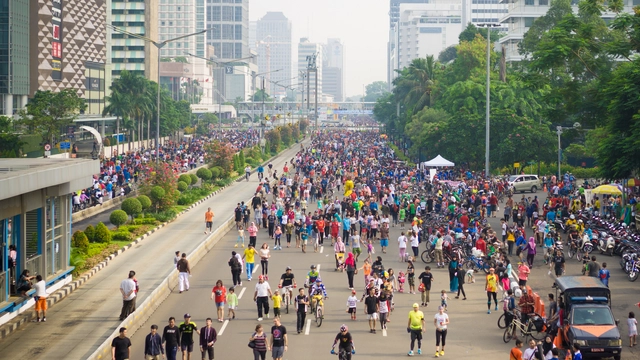
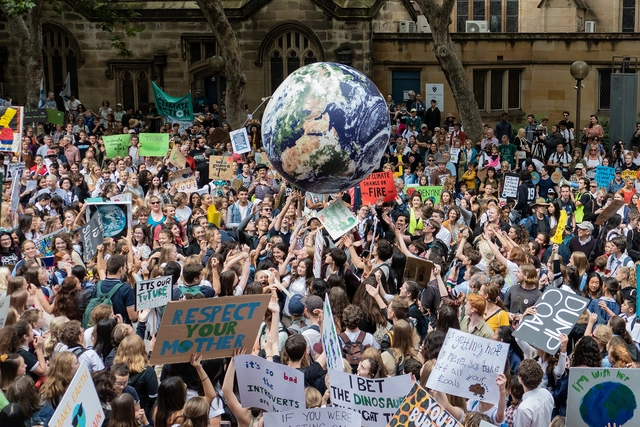
As more than half of the world population lives in cities, an estimated 55.7%, according to UN-Habitat’s latest reports, the urban challenges are growing exponentially. The UN expects this number to increase to 68% by 2050, with close to 90% of this increase taking place in Asia and Africa. Accelerated urbanization can pose significant risks, such as increasing inequality, poverty, sectorized development, social exclusion, and pollution. In this context, a well-balanced urban agenda becomes crucially important in achieving inclusive, safe, and sustainable cities.

World Population Milestone: Global Community Reaches 8 Billion People - 1 的图像 4World Population Milestone: Global Community Reaches 8 Billion People - 2 的图像 4World Population Milestone: Global Community Reaches 8 Billion People - 3 的图像 4World Population Milestone: Global Community Reaches 8 Billion People - 4 的图像 4World Population Milestone: Global Community Reaches 8 Billion People - More Images+ 6

During COP27, the Necessity to Achieve Net Zero Comes into Sharp Focus

Starting on November 6, world leaders are gathering in Sharm el Sheikh, Egypt, for COP27. The name stands for the 27th conference of parties, an almost annual event started under the 1992 UN framework convention on climate change (UNFCCC). The purpose of these conferences is to ensure that counties around the world are committed to taking action to avoid dangerous climate change and find ways to reduce greenhouse gas emissions globally in an equitable way. The effectiveness of these meetings varied throughout the years, with some successful initiatives, like the 2015 Paris Agreement, a legally binding international treaty adopted by 196 Parties with the goal of limiting global warming below 2, preferably 1.5 degrees Celsius, compared to pre-industrial levels.

During COP27, the Necessity to Achieve Net Zero Comes into Sharp Focus - Image 1 of 4During COP27, the Necessity to Achieve Net Zero Comes into Sharp Focus - Image 2 of 4During COP27, the Necessity to Achieve Net Zero Comes into Sharp Focus - Image 3 of 4During COP27, the Necessity to Achieve Net Zero Comes into Sharp Focus - Image 4 of 4During COP27, the Necessity to Achieve Net Zero Comes into Sharp Focus - More Images+ 1

Johanna Meyer-Grohbrügge and the Spatialization of Content

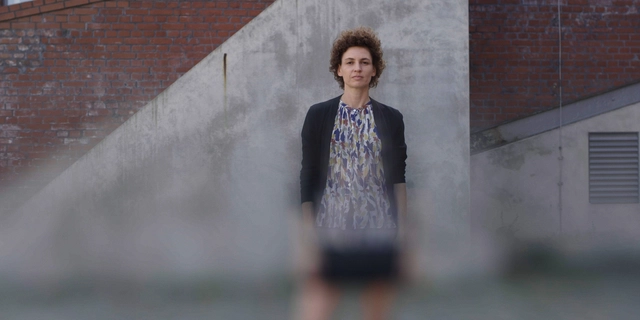
From ending up by accident in architectural studies, to eventually falling in love with the complexity of the field and the multitude of its layers, Johanna Meyer-Grohbrügge was amazed by the dual nature of architecture; its intellectual aspect, and physical outcome. Founder of Meyer-Grohbrügge in Berlin, the architect, and her studio seek to spatialize content, create relationships, and find solutions for living together.

With Toshiko Mori and Gabriela Carrillo, Johanna Meyer-Grohbrügge is part of a new documentary titled "Women in Architecture", premiering on November 3rd. The film by Sky-Frame, in collaboration with ArchDaily, and directed by Boris Noir is a catalyst for debate on one of the most pressing topics in architecture.

Johanna Meyer-Grohbrügge and the Spatialization of Content - Image 1 of 4Johanna Meyer-Grohbrügge and the Spatialization of Content - Image 2 of 4Johanna Meyer-Grohbrügge and the Spatialization of Content - Image 3 of 4Johanna Meyer-Grohbrügge and the Spatialization of Content - Image 4 of 4Johanna Meyer-Grohbrügge and the Spatialization of Content - More Images+ 3

Women on Construction Sites: Our Community Shares their Thoughts, Concerns, and Outlook for the Future

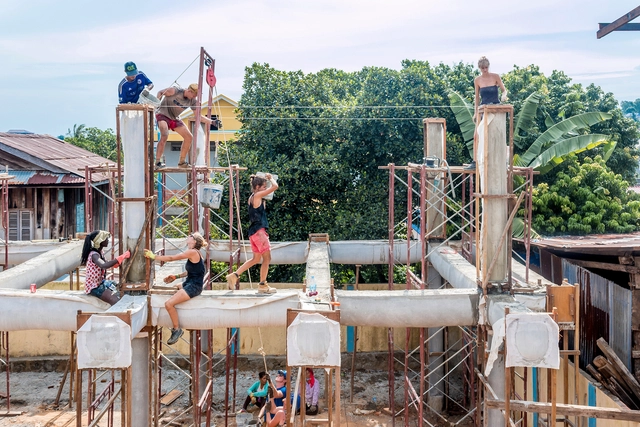
Site work has always been and remains a pivotal stage in forming our built environment. Most architects, designers or engineers have at one point or another been on the grounds and understand the importance of presence within the project development phases. Working on construction sites can be a valuable learning experience and allows different inputs from diverse experts to be considered in forming a better urban, living, and working environment for all. Starting from this idea, and as we delve into Women in Architecture as part of our ArchDaily topics, we published an invitation, encouraging our readers to share their opinion on gender-based discrimination on the construction site.

Women on Construction Sites:  Our Community Shares their Thoughts, Concerns, and Outlook for the Future - Image 1 of 4Women on Construction Sites:  Our Community Shares their Thoughts, Concerns, and Outlook for the Future - Image 2 of 4Women on Construction Sites:  Our Community Shares their Thoughts, Concerns, and Outlook for the Future - Image 3 of 4Women on Construction Sites:  Our Community Shares their Thoughts, Concerns, and Outlook for the Future - Image 4 of 4Women on Construction Sites:  Our Community Shares their Thoughts, Concerns, and Outlook for the Future - More Images+ 8

Toshiko Mori and Good Curiosity in the Exercise of Architecture

In architecture, context is what concerns human existence in a given place. Climate, culture, geography, and pre-existences, to name just a few. For Toshiko Mori, a Japanese architect based in the United States, context is everything that arouses curiosity about the people we design for. In almost four decades as the head of her office in New York, Mori has had the opportunity to exercise her interest in design practice and academia, managing to build her buildings in contexts as diverse as China, U.S., and Senegal.

With Johanna Meyer-Grohbrügge and Gabriela Carrillo, Toshiko Mori is part of the new documentary Women in Architecture, premiering November 3. The film — made by Sky-Frame in exclusive collaboration with ArchDaily, and directed by Boris Noir — is a catalyst for debate on one of the most pressing topics in architecture.

You've started following your first account!

Did you know?

You'll now receive updates based on what you follow! Personalize your stream and start following your favorite authors, offices and users.