1. ArchDaily
  2. Editor's Choice

Editor's Choice

Light Matters: UN Celebrates The International Year of Light 2015

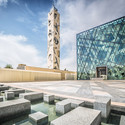
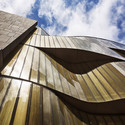
Light is all around us, and it increasingly affects our daily lives. For example, we have started to carry personal light sources around with our smartphones, and in our homes many electrical machines now utilize light to display information and simply to appear more attractive. In a larger context, architecture and cities have also developed a new dimension with the advent of electrical lighting for work and entertainment.

Inspired by the central role of light for our culture and technology, the United Nations has proclaimed 2015 as the “International Year of Light and Light-based Technologies” (IYL2015). With IYL2015 the UN wants to raise the awareness of the importance of light and optical technologies in our lives, our future and the development of society.

Read on after the break for more enlightenment around IYL2015.

Light Matters: UN Celebrates The International Year of Light 2015 - Image 1 of 4Light Matters: UN Celebrates The International Year of Light 2015 - Image 2 of 4Light Matters: UN Celebrates The International Year of Light 2015 - Image 3 of 4Light Matters: UN Celebrates The International Year of Light 2015 - Image 4 of 4Light Matters: UN Celebrates The International Year of Light 2015 - More Images+ 7

Why Putin Likes Columns: 21st Century Russia Through the Lens of Architecture

Subscriber Access | 

In August 1932, Stalin, holidaying in Sochi, sent a memo containing his thoughts on the entries for the competition to design the Palace of the Soviets, the never-to-be-built monument to Lenin and center of government. In this memo he selected his preferred design, the colossal wedding cake of a tower topped with a 260-foot (79-meter) high statue of Lenin, designed by Boris Iofan. Just over 80 years later, Sochi again hosted the architectural whims of a powerful Russian leader for the 2014 Sochi Winter Olympics. An oversimplification? Probably. But it’s got nice symmetry to it.

Why Putin Likes Columns: 21st Century Russia Through the Lens of Architecture - Image 1 of 4Why Putin Likes Columns: 21st Century Russia Through the Lens of Architecture - Image 2 of 4Why Putin Likes Columns: 21st Century Russia Through the Lens of Architecture - Image 3 of 4Why Putin Likes Columns: 21st Century Russia Through the Lens of Architecture - Image 4 of 4Why Putin Likes Columns: 21st Century Russia Through the Lens of Architecture - More Images+ 2

Through the Lens: The Social Implications of Green Roofs in Film

Subscriber Access | 

Film often makes a mockery of architectural features. Glass facades are obliterated by gunfire, grisly murders are set against a white modernist palette, deconstructed stairs are the cause of nasty accidents or ludicrous slapstick, and you just know a tensile fabric roof will be shredded by the time 007 is finished with it.

There is one architectural feature however that has benefited from very complimentary treatment by the film industry, and surprisingly it is a sustainable one. Green roofs and other “architectural” green spaces have been popping up regularly in mainstream movies over the past decade: blockbusters including The Vow (2012) and Source Code (2011) utilized the greenscape outside Gehry's Jay Pritzker Pavilion in Millennium Park; last year the Vancouver Convention Centre was featured in both Godzilla and Robocop; and Kaspar Schroder’s 2009 uber cool documentary My Playground, about the sport of parkour (the art of bouncing off buildings made famous by the opening scenes of Casino Royale), features BIG’s Mountain Dwellings in Copenhagen. And we cannot forget two of the biggest film franchises in history: both of Peter Jackson’s Lord of the Rings and The Hobbit franchises feature green roofs in their portrayal of Hobbiton – home of the virtuous and incorruptible Hobbits.

ARCHISHAPE: "Architecture Shapes in Minimalist Clothing"

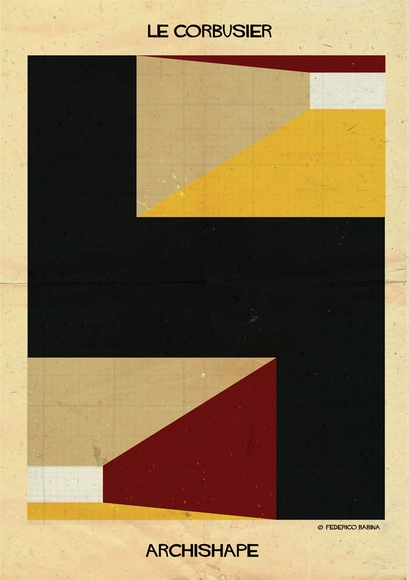
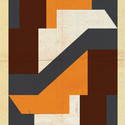
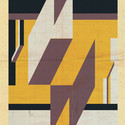
Working in reverse, Italian architect Federico Babina’s latest set of illustrations deconstructs the stylistic forms of 25 famous architects into a series of abstract compositions that embody the essence of each architect's style. This “process,” as Babina says, aims to reveal the “ideal connection between architecture itself as a form of representation and the representation used in its design.”

“The architecture is a set of shapes that draw volumes and voids which sequence generates functions and meanings. These illustrations are one of the possible ways to watch, observe and describe architecture… In these pictures you can read architectural references or simply let your mind get lost between the lines and colors for more imaginative interpretations.”

View all 25 illustrations, after the break.

ARCHISHAPE: "Architecture Shapes in Minimalist Clothing" - Image 1 of 4ARCHISHAPE: "Architecture Shapes in Minimalist Clothing" - Image 2 of 4ARCHISHAPE: "Architecture Shapes in Minimalist Clothing" - Image 3 of 4ARCHISHAPE: "Architecture Shapes in Minimalist Clothing" - Image 4 of 4ARCHISHAPE: Architecture Shapes in Minimalist Clothing - More Images+ 20

AR Issues: The Problem With Memorials and Memory

Subscriber Access | 

ArchDaily is continuing our partnership with The Architectural Review, bringing you short introductions to the themes of the magazine’s monthly editions. In this editorial from AR’s December 2014 issue, AR Editor Catherine Slessor ruminates on the contemporary approach to memorials, arguing that “as architecture can rarely truly grasp the notion of absence, memorial culture lapses into comforting banality.”

Always uneasy bedfellows, this year the relationship between building and memory has had a particularly charged resonance. The centenary of the outbreak of the First World War has been framed by the familiar narratives of slaughter and sacrifice, while the 25th anniversary of the fall of the Berlin Wall marked the moment when Communism in Europe finally faltered and collapsed. No doubt that these are profound, epoch-defining events, but how they are memorialised in built form is frequently problematic.

AR Issues: The Problem With Memorials and Memory - Image 4 of 4

Videos: Bjarke Ingels on His Europa City Project for Paris

In 2013, Bjarke Ingels Group came first in Paris' Europa City competition, an 800,000 square meter cultural and recreational facility on the far North-Eastern outskirts of the city. In an attempt to explain the design of this huge project, filmmakers Squint/Opera have enlisted the help of Bjarke Ingels and a green screen to describe the project - Minority Report style - with a combination of live action and futuristic video effects. In a second video, a detailed walkthrough of the building enlists both 2D and 3D graphics "to capture the excitement and energy of this unique centre." Read on after the break for both videos.

Bjarke Ingels' Advice for the Young: "It's Important to Care"

The latest in a series of videos from Louisiana Channel sees Danish architect Bjarke Ingels of BIG dispensing wisdom for a new generation of architects. Speaking with characteristic zeal, Ingels advises young architects "to care, because if you don't care, it doesn't matter." "We're not here to build for other architects," Ingels says, describing architecture as "fundamentally the art and science of accommodating life."

Defining a More Purposeful Architecture: A Guide to Current Architectural Trends

Subscriber Access | 

The current state of architectural design incorporates many contemporary ideas of what defines unique geometry. With the advent of strong computer software at the early 21st century, an expected level of experimentation has overtaken our profession and our academic realms to explore purposeful architecture through various techniques, delivering meaningful buildings that each exhibit a message of cultural relevancy.

These new movements are not distinct stylistic trends, but modes of approaching concept design. They often combine with each other, or with stylistic movements, to create complete designs. Outlined within this essay are five movements, each with varying degrees of success creating purposeful buildings: Diagramism, Neo-Brutalism, Revitism, Scriptism, and Subdivisionism.

Faith & Form's 2014 Religious Art & Architecture Award Rewards Diversity in Religious Design

Originally published by The Huffington Post as "These Religious Architecture Award Winners Evoke The Sacred In Unconventional Ways," this article reveals the winners in the 2014 Religious Art & Architecture Award run by Faith & Form, an organization dedicated to promoting the architecture of worship.

What makes a space sacred?

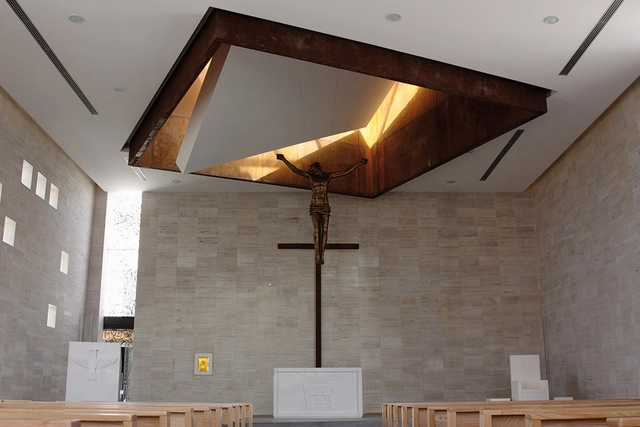
If the winners of Faith & Form's 2014 Religious Art & Architecture award are any indication, it may be something different every time. A high ceiling, curved walls, stained glass windows or lush landscaping -- no two winners are alike, and yet each offers viewers a fresh way of interacting with the divine.

Take a look at some of Faith & Form's 2014 award and honor award winners for religious architecture after the break

Faith & Form's 2014 Religious Art & Architecture Award Rewards Diversity in Religious Design - Image 1 of 4Faith & Form's 2014 Religious Art & Architecture Award Rewards Diversity in Religious Design - Image 2 of 4Faith & Form's 2014 Religious Art & Architecture Award Rewards Diversity in Religious Design - Image 3 of 4Faith & Form's 2014 Religious Art & Architecture Award Rewards Diversity in Religious Design - Image 4 of 4Faith & Form's 2014 Religious Art & Architecture Award Rewards Diversity in Religious Design - More Images+ 14

Audi Urban Future Award 2014: Team Berlin's "Flywheel" Could Revolutionize Personal Mobility

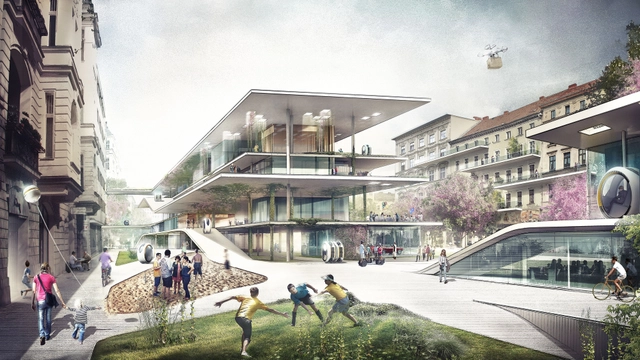
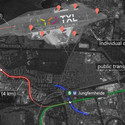
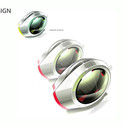
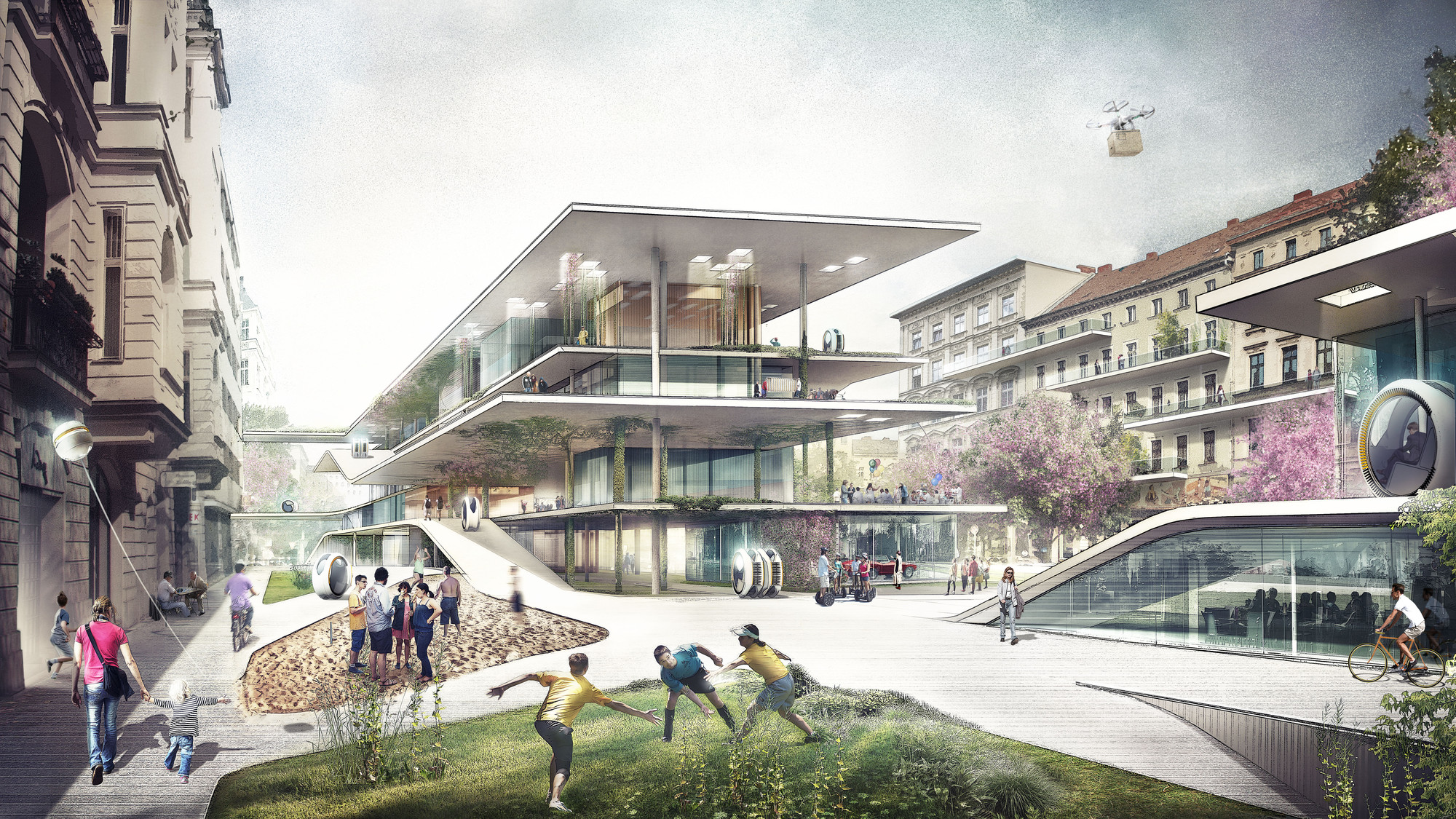
One of three runners-up in the 2014 Audi Urban Future Award, the Berlin Team of Max Schwitalla, Paul Friedli and Arndt Pechstein proposed a futuristic and innovative concept for an entirely new type of personal transport. Drawing inspiration from sources as diverse as elevator technology and biomimicry, their designs offer a thought-provoking alternative to our existing transportation systems that could revolutionize the city as we know it.

Though their proposal ultimately lost out to Jose Castillo's Team Mexico City, the work of the Berlin team correlates closely with the aims of Audi's Urban Future Initiative, offering a compromise between the convenience and status of personal transport and the civic benefits of public transport. Read on to find out how this was achieved.

Audi Urban Future Award 2014: Team Berlin's "Flywheel" Could Revolutionize Personal Mobility - Image 1 of 4Audi Urban Future Award 2014: Team Berlin's "Flywheel" Could Revolutionize Personal Mobility - Image 2 of 4Audi Urban Future Award 2014: Team Berlin's "Flywheel" Could Revolutionize Personal Mobility - Image 3 of 4Audi Urban Future Award 2014: Team Berlin's "Flywheel" Could Revolutionize Personal Mobility - Image 4 of 4Audi Urban Future Award 2014: Team Berlin's Flywheel Could Revolutionize Personal Mobility - More Images+ 14

The Three-Dimensional City: How Drones Will Impact the Future Urban Landscape

Many have come to associate drones with the looming unmanned aircraft deployed in the defense industry, but as technology continues to improve drones have gotten smaller and progressively less expensive. Consumers can now purchase their very own drone for as little as $600 or less and the technology is already proving to be useful for a wide variety of purposes, including possible uses for architects in everything from site analysis to construction.

However, this technology could have much broader consequences on not only the airspace above our streets, but also in how we design for increasing civilian and commercial drone traffic. Just as other technologies such as cars and security surveillance have shaped our urban infrastructure, so too will an emerging network of infrastructure for pilotless technology. Particularly as drones become ever more precise and nimble, opportunities arise for their increased use in urban areas. If these devices can be programmed to learn from repeated maneuvers with the use of cameras and sensors, it is not unrealistic to say that they could soon learn how to navigate through increasingly complex vertical cities. But if drones become fixtures of our urban environment, what impact will they have on exterior spaces? And could they become as ubiquitous in our city’s skies as cars on our streets?

The 14 Best Articles of 2014

Subscriber Access | 

At ArchDaily, we take great pride in bringing our readers the best selection of architectural projects and news stories around, but another big part of our editorial mission also involves giving architects access to the knowledge that will help them improve the lives of future urban dwellers. As the year draws to a close, each of the editors at ArchDaily has personally selected their favorite articles from the past year which complement this editorial mission. These articles may not be the ones that garnered the most attention or views, but we think they are vital nonetheless.

Our top 14 of 2014 includes coverage of crucial events, like the attention-grabbing competition that broke almost every record going, and an architectural model that redefined the idea of political protest; it features profiles of people who are redefining the profession, including both one of the world's most famous architects who had one of his greatest years yet, and a woman who spends most of her time working with sewage; and it includes insightful histories, such as how communist architecture developed in the mid-twentieth century, and how that period is now defining architecture in a modern-day communist superpower. Read on to find out which articles made our list as the best of the past year.

Top 20 Most Read Articles of 2014

Subscriber Access | 

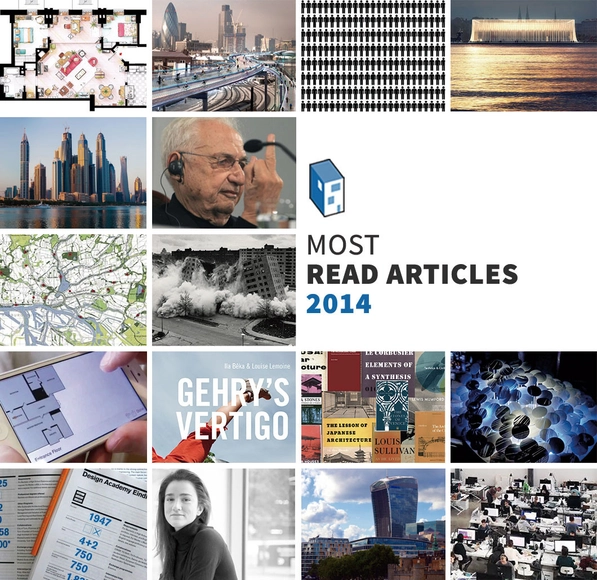
From Frank Gehry giving the finger and claiming that today’s architecture is 98% “pure shit,” to the Guggenheim Helsinki competition receiving 1,715 entries and becoming the most popular architecture competition in history, 2014 has been an eventful year. The following 20 stories were the most read of the year, generating discussion among readers and provoking interesting comments. Ranging from lighthearted lists (25 Free Architecture Books You Can Read Online) to articles analyzing how future cities might look (Hamburg’s Plan to Eliminate Cars in 20 Years), here are the top 20 stories of 2014.

Archiculture Interviews: Shigeru Ban

Subscriber Access | 

“An earthquake doesn’t kill people, the collapse of a building kills people.” In Arbuckle Industries’ latest interview released following their world premiere of Archiculture, architect humanitarian Shigeru Ban clearly delineates “natural” disasters as a product of mankind, rather than nature. Hear the Pritzker laureate’s thoughts on designing for minorities, disasters, and the importance of travel in the video interview above.

The Most Popular Projects of 2014

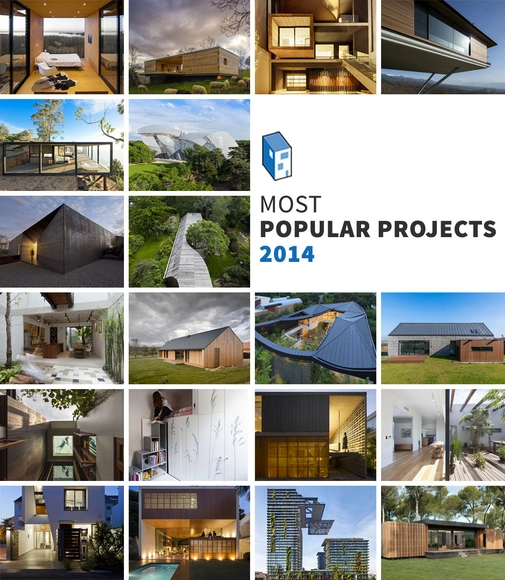
If you needed any more proof that 2014 was a good year for houses, this might be it. Among our 20 most viewed projects this year are no fewer than 17 private residences, which share the limelight with an apartment interior, a residential skyscraper, and a museum which no doubt received a boost in its exposure thanks to a certain jet-lagged octogenarian and his middle finger. From Frank Gehry to Studio MK27—who make the cut with not one but two projects—here are the 20 most popular projects of 2014.

ArchDaily's 50 Best Houses of 2014

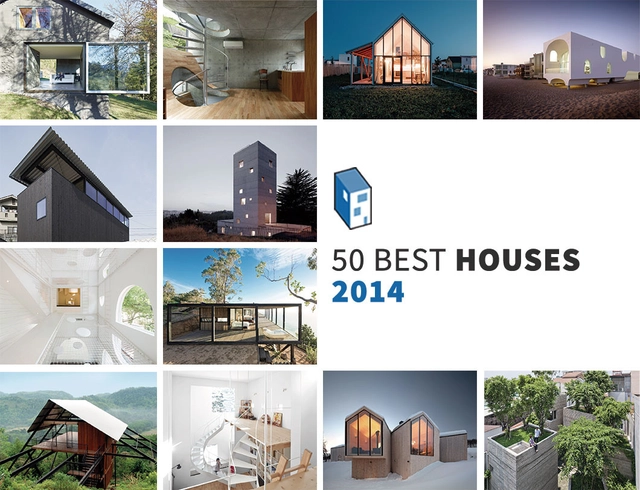
For another year, in 2014 ArchDaily has featured hundreds of houses from designers around the globe, with homes that appear to float above ground, sink below grade, snake through forests, jut over cliffs, and blur the line between building and environment. This year, we've seen some of the most intuitive, outlandish, and creative designs cropping up around the world, from São Paulo to Ho Chi Minh City to Stockholm, and to celebrate the end of the year we've rounded up our 50 best projects from 2014, representing an incredible range of living environments from the world's most innovative architects.

Enjoy the sandy surrounds of House in Miyake or the minimalist paradise of Love House; or escape for a getaway to Weekend House in Downtown São Paulo. Find out which houses stray from the norm, reviving the wooden cottage and redefining the stone cabin with a touch of linearity and serious panoramic views. Step inside wondrous spaces that soar skyward or connect with the earth, speak to the divine or convene with the spiritual – and yet all share the unmistakable feeling of 'home.'

Find out which houses make our list after the break

Watch Now: Cool Spaces! First Full Episode Online Features North America's "Art Spaces"

Subscriber Access | 

Cool Spaces! The Best New Architecture has released their first full episode online. The PBS television series, hosted by Boston-based architect and professor Stephen Chung, AIA, profiles the most provocative and innovative public space architecture in North America. With the general public as its targeted audience, each hour-long episode is organized around a central theme - such as Art Spaces - and profiles three buildings. In this episode, Chung discusses what makes Tod Williams Billie Tsien’s Barnes Foundation, Steven Holl's Nelson-Atkins Museum of Art and Phil Freelon's Harvey B. Gantt Center so cool.

“People often ask me what Cool Spaces is all about. And I never can answer without giving a bit of background,” says host Stephen Chung. “You see, it really begins over seven years ago, during the recession, which decimated the architecture profession. In a four-year span, approximately 30% of all architecture jobs in the U.S. were lost — including my own. This time away from practice allowed me to reflect on the profession and its problems and to think about what role I might play in bringing about some positive change."

Watch Now: World Premiere of 'Archiculture'

Now, after 130 private screenings in 26 countries, you can watch the official world premiere of Archiculture here on ArchDaily. The 25-minute documentary captures a rare glimpse into studio-based design education, trailing five architecture students throughout their final thesis semester at Brooklyn’s Pratt Institute.

You've started following your first account!

Did you know?

You'll now receive updates based on what you follow! Personalize your stream and start following your favorite authors, offices and users.