Rory Stott

Former ArchDaily's Managing Editor. BA in Architecture from Newcastle University, and interested in how overlooked elements of architectural culture —from the media to competitions to procurement processes can alter the designs we end up with.

BROWSE ALL FROM THIS AUTHOR HERE
↓

Future Uncertain for Daniel Libeskind's Maze Peace Centre

After initially getting the go-ahead earlier this year, the design for the Maze Peace Centre in Northern Ireland, designed by Daniel Libeskind in collaboration with McAdam Architects, was dealt a major blow last week, when First Minister of Northern Ireland Peter Robinson retracted his support for the controversial building, saying that it would be wrong to continue with the build without achieving a consensus.

Read on after the break to find out more about the controversy.

Boulevards in Paris: A Mathematical Success?

Since Baron Georges-Eugène Haussmann began his comprehensive redesign of central Paris in the mid-nineteenth century, the Hausmann Plan has been a topic of discussion for architects, planners and social theorists. The network of wide, open boulevards lined by regular (and regulated) neoclassical buildings has come in and out of favor over the years, and now is one of the key factors in the city's popular reputation as a beautiful city.

Now though, a different set of academics have entered the conversation to offer a new way of looking at the Haussmann Plan: a group of mathematical physicists from the CEA Institute of Theoretical Physics in Gif-sur-Yvette have collaborated with a group of social scientists to analyze the changes of the Haussmann Plan using sophisticated network theory, as reported by BBC Worldwide.

Find out about their study's findings after the break

Hello Wood 2013: Step Closer!

Back for its fourth year, the creative camp Hello Wood was held last month in Hungary, set in the countryside north of Lake Balaton. At Hello Wood, 120 young designers and architects worked with leading experts to create installations which approach issues of society and community in architecture, ideas encompassed by this year's motto "Step Closer!" Twelve teams had one week to create these installations using timber as their primary material, with the projects being judged and a winner awarded at the end of the week.

Read on to find out about the installations, and which one was judged the winner, after the break

Hello Wood 2013: Step Closer! - Landscape ArchitectureHello Wood 2013: Step Closer! - Landscape ArchitectureHello Wood 2013: Step Closer! - Landscape ArchitectureHello Wood 2013: Step Closer! - Landscape ArchitectureHello Wood 2013: Step Closer! - More Images+ 9

Successful Workplaces Balance Focus and Collaboration, Gensler Study Finds

Successful Workplaces Balance Focus and Collaboration, Gensler Study Finds - Offices
AOL Offices by Studio A + O . Image © Jasper Sanidad

Gensler, who recently topped out on the world's second tallest skyscraper in Shanghai, have just released a report outlining the keys to designing a successful workplace. Using their custom 'Workplace Performance Index' they surveyed 2035 office workers in the US to find out what makes employees happy and productive in their workplace.

One surprising result which they uncovered is that, in opposition to the trend of workplaces being designed to encourage collaboration, workers are actually spending more time on focused, individual tasks than they were 5 years ago. Consequently, over 50% of respondents said that they were distracted by others when they needed to focus. What's more, the survey found that when employees could not focus individually, collaborative work was also less productive.

Read on after the break to find out more results from the survey

The Architecture Foundation Presents: Three Conversations on "Culture + Commerce"

Having wrapped up their three part series And the Winner is...?, The Architecture Foundation has launched another trio of evening discussions, this time around the ever-encroaching commercial values which are increasingly threatening cultural venues in London. The series, entitled Culture + Commerce, will explore how culture can fight against commercial homogeneity in the face of reduced public funding.

Read on to find out more about the Culture + Commerce series

Beyond 2012: The Story of Commissioning the Olympic Games

Beyond 2012 is a new website launched by the British Design Council to tell the story of how the London 2012 Olympic Games were designed. The site explores how the best British designers were brought in to create the products, fashion, graphics, digital design, and of course the architecture that made the 2012 games a fantastic worldwide spectacle. See the full website here.

Can Sustainability Be Taught? Should It Be?

The Architects' Journal recently published an article pitting five competing views of teaching sustainability against one another. The opinions come from a range of backgrounds, including engineers, tutors and landscape architects, and discuss how architecture students should be taught to design in a sustainable way - or if they should be taught this at all.

The competing opinions are telling in the issues that they highlight, demonstrating how complex the issue of sustainability has become, and how it fits into the wider context of architectural education.

Read the different reactions to the issue of sustainability in education after the break

Ten Spectacular Drawings Win RIBA's "Eye Line" Competition

The results of RIBA Journal's recent drawing competition, Eye Line, are in. Top of the pile was Tom Noonan's drawing "Reforestation of the Thames Estuary," part of his Master's Thesis project at the Bartlett School of Architecture; however, the range of styles and content mean that there's something for everyone in the top ten. Read the full article and see all the drawings here.

Should Architects Design Prisons?

A video game in which you can design your own high-security prison (execution chambers and all) prompts CC Sullivan, in a thoughtful post on Smart Planet, to discuss the implications of architects designing prisons. You can read the full article here, and read ArchDaily's previous coverage on this issue, "The Architecture of Incarceration," here.

The Legacy of London's Skyscraper Boom

A recent profile in Architectural Record highlights the career of Peter Wynne Rees, the chief planner of the City of London: the famous 'square mile' which contains the major financial district of Greater London, as well as some of its great tourist attractions, such as St Paul's Cathedral.

The profile focuses on the new crop of skyscrapers which Rees has ushered in in his 27 years as chief planner, something which has been contentious for preservationists. When he came to the job in 1985, the City of London had just one skyscraper: Tower 42, built in 1980. With the success of the Gherkin in the early 2000s, the surrounding area has seen many more high profile skyscrapers, such as the Heron Tower, 122 Leadenhall Street (The Cheesegrater) and 20 Fenchurch Street (The Walkie-Talkie).

Subscriber Access

Architecture's Brave New Digital World

“Increasingly we experience cities mediated by digital technology — whether that's via smartphone maps, digital transit signage, or texting a friend that you've arrived at a destination. How our city is built to support residents, businesses, and visitors [...] is now part physical and part digital.”

John Tolva, the Chief Technology Officer for the City of Chicago, is on a mission: a mission to bring the physical and digital worlds into conversation.

To embed more and more digital information into the physical world, a growing number of digital specialists are beginning to embrace the worlds of architects, planners and urbanists. But, so far, it has not been a two way street to make the digital leap.

Find out why architects should be at the forefront of the digital/spatial overlap, after the break...

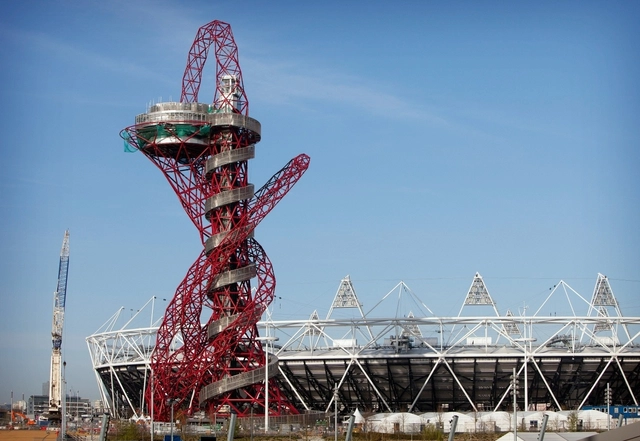
London's Olympic Legacy Called into Question

After a government report earlier this month found that the London Olympics had brought a £10-billion-boost to the UK's economy - effectively breaking even with the initial investment after just one year - the architectural community has begun to question whether the built legacy of the games will be worthwhile in the long run.

Guardian critic Olly Wainwright is scathing about the Olympic park, particularly the developments at the edge of the site: "At every junction of this roaring A-road sprouts a steroidal tower, each clad in ever more lurid colours, transforming the street into a gauntlet of competing ambitions. Looming over adjacent council estates, these brash totems are a monument to Olympian greed... Strip away all the festive colours, though, and you'll find that these are actually mean-minded silos of tightly packed one-bedroom flats, mostly sold overseas for buy-to-let."

Find out more about Wainwright's investigations, and other opinions of the Olympic legacy, after the break.

Do We Need Fewer Architects?

In an article by the Architects' Journal, Tony Fretton is quoted as saying there ought to be fewer architecture schools in the UK, with more difficult entry requirements and a higher failure rate. "There should be a shortage of architects in the UK," he says, "fewer bad architects, fewer good architects".

Citing Switzerland and the Netherlands as countries which do well with just 2 or 3 major architecture schools, he believes that architectural education should be concentrated into just a few schools in order to give students more access to the best tutors.

Read more about Fretton's proposal after the break

Subscriber Access

Is NYC "Landmarking Away" Its Future?

A recent study by the Real Estate Board of New York (REBNY) concluded that by preserving 27.7% of buildings in Manhattan, “the city is landmarking away its economic future.” REBNY is challenging the Landmarks Preservation Commission, arguing it has too much power when it comes to planning decisions, and that by making business so difficult for developers it is stifling the growth of the city.

Yet not three days before releasing this study, president of REBNY Steve Spinola said in an interview with WNYC that “if you ask my members, they will tell you [the twelve years of Mayor Bloomberg's tenure] has been a great period of time for them”. The conclusion of WNYC is that the past decade has actually been a period of increased growth for developers, rather than a period of stagnation.

It would be easy to echo the opinion of Simeon Bankoff, executive director of the Historic Districts Council, who believes the actions of REBNY come down to greed, even comparing its members to Gordon Gekko, the anti-hero of the film Wall Street. But is greed really what’s behind this attack on the Landmarks Preservation Commission? Find out after the break.

The Architecture of Incarceration: Can Design Affect the Prison System?

On July 9th, 30,000 prison inmates across California took part in a hunger strike to show solidarity with those incarcerated in Pelican Bay State Prison, a 'Solitary Housing Unit' in which prisoners are incarcerated - some supposedly for years at a time - in solitary confinement.

Architects/Designers/Planners for Social Responsibility (ADPSR) and its founder Raphael Sperry have made it their mission to make sure that architects are not complicit in designing prisons, even going so far as to form a petition asking the AIA to forbid members from designing execution chambers, 'supermax' prison facilities or solitary confinement facilities, as part of their statement that “members should uphold human rights in all their professional endeavors.”

At ArchDaily we have already questioned whether it may actually be beneficial for architects to design prisons, rather than allowing them to be designed by less-trained people who could end up designing a space that is even less humane. Now, an article on Blouin Art Info seems to take a similar position: rather than retreating from the business of prison design altogether, architects should try to encourage prison design that facilitates rehabilitation rather than emphasizing punishment.

Is This the Best Planned City in the World?

This discussion on Quora, entitled "which is the most well planned city in the world?" certainly got us thinking; not only because of the interesting and diverse answers to the question, but also because of the different reasons which were used to support these answers.

Currently the most popular answer seems to be Zurich, on account of its excellent (and obsessively punctual) public transport, organized waste disposal and numerous public drinking fountains. Other cities which are commended for their public transport and cleanliness are Singapore and Seoul. But other contributors seem to have a very different idea of what makes a well-planned city - read on to find out more.

Richard Rogers Honoured at New London Awards

Richard Rogers Honoured at New London Awards - Featured Image
The Shed by Haworth Thompkins, one of the 17 winners of the New London Awards. Image © Helen Binet

The New London Awards, which recognize the best projects in London - both recently completed and on the drawing-board - were held at London's Guildhall on the 12th of July. Richard Rogers took the top prize of "New Londoner of the Year" in recognition of his life-long commitment to raising the quality of urbanism in the UK capital. The award coincides with his 80th birthday and a major retrospective at the Royal Academy.

See all the winners of the 17 different awards after the break.

Richard Rogers Honoured at New London Awards - Image 1 of 4Richard Rogers Honoured at New London Awards - Image 2 of 4Richard Rogers Honoured at New London Awards - Image 3 of 4Richard Rogers Honoured at New London Awards - Image 4 of 4Richard Rogers Honoured at New London Awards - More Images+ 4

Skaters Rights to Southbank Will Be Preserved

In the latest twist in an ongoing saga, the skateboarders campaigning to save the undercroft of the Southbank Centre have succeeded in a bid to list the space as an Asset of Community Value under the Localism Act, as reported by Architects' Journal. The listing means that any planning decision would have to take the loss to the skating community into account. Read the full article here.