Romullo Baratto is an architect with a PhD from FAUUSP and Managing Editor of ArchDaily. He previously coordinated the editorial team of the 11th São Paulo Architecture Biennial and served as Managing Editor of ArchDaily Brasil, where he led the platform to win the FNA Award—the first time the honor was granted to a media outlet. He collaborated on the editing of the book "Concrete Jungle", published by gestalten, and has curated architecture exhibitions in Brazil, Chile, Denmark, and Italy, as well as delivered lectures and moderated debates in Spain, the United States, and Portugal. His doctoral thesis investigates the urban landscapes of São Paulo through cinema. His work spans academic research and editorial practice, communicating architecture through texts, interviews, lectures, curatorship, and photography. Follow him on Instagram @romullobf.
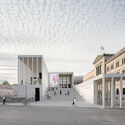
Few architects in history have had the honor and privilege of intervening in the famous St. Mark's Square in Venice — a tourist landmark of incomparable historical value to humanity. Sir David Chipperfield is one of them. As if that was not enough, he also left his mark on another project of inestimable value: the Neue Nationalgalerie, designed originally by Mies van der Rohe in Berlin. The four centuries that separate the design from its restoration seem to pose no difficulties for the 2023 Pritzker Prize winner, who rejects an international style of architecture in search of a trait that highlights local qualities.
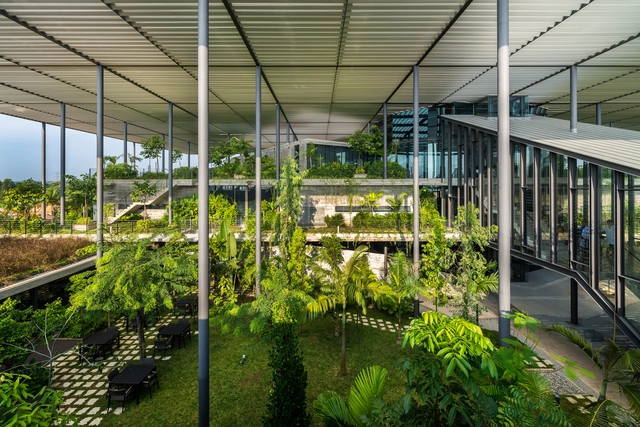
The idea of "Biophilia" was defined as "love of life" in ancient Greece. Although the term may seem relatively new, coming across as a trend in the fields of architecture and interior design, the concept of biophilia was introduced by psychologist Erich Fromm for the first time in 1964 and then popularized in the 1980s by biologist Edward O. Wilson, who studied the lack of connection with nature caused by urban life.
The guiding principle is quite simple: connect people with nature to improve their well-being and quality of life. How could architecture do that? By seeking alternatives to integrate nature – either through natural elements or techniques – into its designs.
Carbon footprint, circularity and environmental sustainability are terms that are increasingly present in many professional fields, but what do they mean? How do they relate to architecture and the built environment? We spoke with civil, environmental and sanitary engineer Lucas Rosse Caldas about these and other emerging architectural issues.
Lucas is a professor at the Graduate Program in Architecture at the Federal University of Rio de Janeiro and the Civil Engineering Program at the same institution. He participated in chapter 9 of the sixth report of the Intergovernmental Panel on Climate Change (IPCC) on buildings. He wrote several scientific and technical articles about architecture and sustainable construction.
Somewhere between 1914 and 1915, Le Corbusier designed the Maison Dom-Ino, a groundbreaking modular structure that replaced the heavy load-bearing walls with reinforced concrete columns and slabs. The open floor plan with minimal thin elements, coupled with large glass facades, would ensure healthy natural daylight for the interior spaces as well as desirable architectural transparency that could blur the boundaries between interior and exterior —at least metaphorically.
No País dos Arquitectos is a podcast created by Sara Nunes, who also runs the architectural film production company Building Pictures. The podcast aims to explore the professionals, projects, and stories behind leading contemporary Portuguese architecture. With just over 10 million inhabitants, Portugal is a fascinating country in this professional field, and its architectural output far exceeds what its population or territorial scale would suggest.
In this episode of the fourth season, Sara talks with Manuel Roque from Pitagoras Group about the rehabilitation of the former Teatro Jordão and Garagem Avenida building. Listen to the conversation and read an excerpt of the interview below.
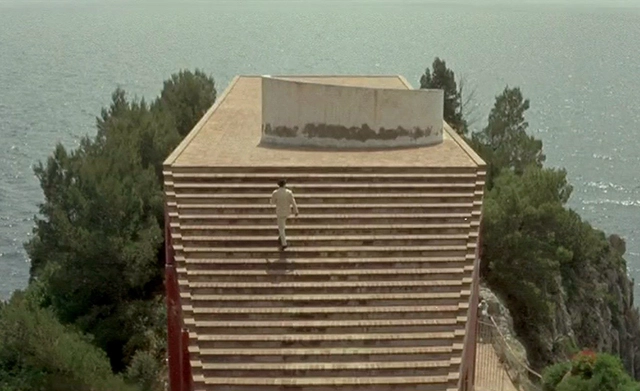
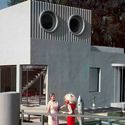
Villa Malaparte in Contempt. Image: movie screenshot
There are many ways to get to know a place. Ask a group of people who know Venice; chances are good that everyone has some mental image of the city and its canals. Once again, ask how many have already visited the Venetian capital. Few or no one may have done so. While traveling is a complete way to experience a place, it's not the only way - images of cities, areas and buildings are everywhere, from advertising to the arts, from Instagram to cinema, and they leave deep impressions on our memory and imagination.
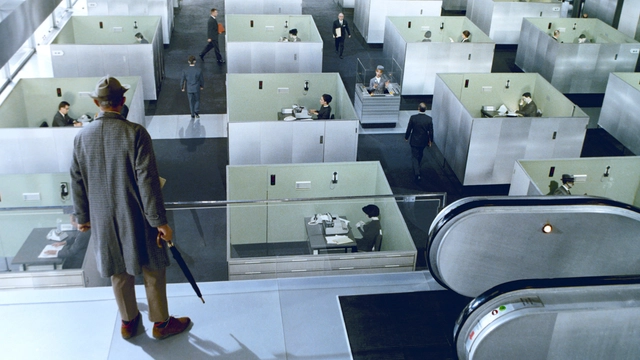
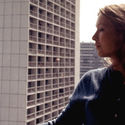
Playtime (Jacques Tati, 1967). Via film screenshot
Of all arts, there is one that is truly capable of embracing architecture, and that is the cinema. The ability to represent spaces, moving in the course of time, brings cinema closer to architecture in a way that goes beyond the limitations of painting, sculpture, music - for a long time considered to be the art closest to ours - and even of dance. Both in cinema and in architecture space is a key subject, and although they deal with it in different ways, they converge by providing a bodily - and not only visual - experience of the built environment.
If you haven't gotten a chance to visit Brasília, Joana França's photographic projects offer a comprehensive interpretation of the capital of South America's most populous country. França has dedicated a significant part of her career as an architecture photographer to the pursuit of amassing an impressive archive of images of the city planned by Lúcio Costa and Oscar Niemeyer.
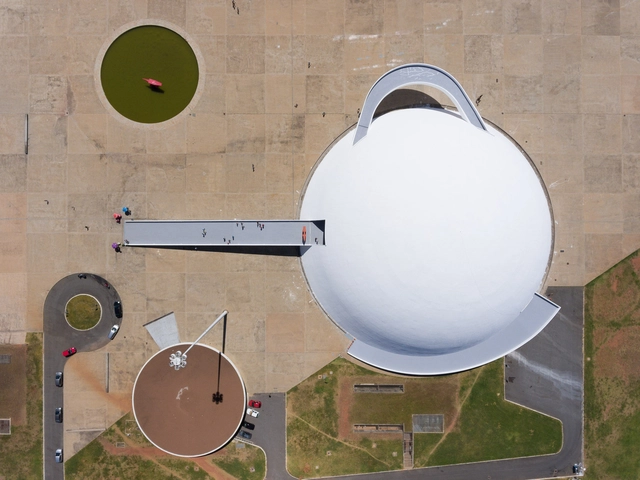
We recently published an exceptional selection França's aerial photographs of Brasília divided by scale - residential, monumental, gregarious and bucolic. These overhead views solidify what, in theory, is already evident: the city lacks human scale, or the human scale of Brasília is just vast and (perhaps) not very human at all.
"What characterizes and gives meaning to Brasilia is a game of three scales... the residential or everyday scale... the so-called monumental scale, in which man acquires a collective dimension; the urbanistic expression of a new concept of nobility... Finally the gregarious scale, in which dimensions and space are deliberately reduced and concentrated in order to create a climate conducive to grouping... We can also add another fourth scale, the bucolic scale of open areas intended for lakeside retreats or weekends in the countryside." - Lucio Costa in an interview with Jornal do Brasil, November 8, 1961.
Photographer Joana França shared with us an impressive series of aerial photographs of the national capital of Brazil, Brasilia. The photoset is divided into four sub-series each presenting a scale: residential, monumental, gregarious and bucolic.
No País dos Arquitectos is a podcast created by Sara Nunes, who also runs the architectural film production company Building Pictures. The podcast aims to profile the professionals, projects, and stories behind leading contemporary Portuguese architecture. With just over 10 million inhabitants, Portugal is a fascinating country when it comes to this professional field, and its architectural output punches far above its population or territorial scale.
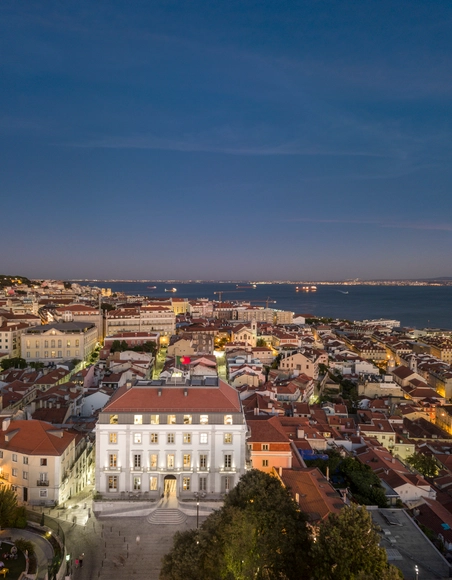
In this episode of the fourth season, Sara talks with Teresa Nunes da Ponte about the restoration of the Palácio de Santa Catarina and the centuries of history in the city of Lisbon. Listen to the conversation and read part of the interview below.
In the Land of Architects is a podcast created by Sara Nunes, who also runs the architectural film production company Building Pictures. The podcast aims to profile the professionals, projects, and stories behind leading contemporary Portuguese architecture. With just over 10 million inhabitants, Portugal is a fascinating country when it comes to this professional field, and its architectural output punches far above its population or territorial scale.
It is a great privilege to amplify the voice of architects and other built environment professionals. It is also an enormous challenge as it requires a lot of investigation and time from our content team. However, the effort is gratifying. It puts us in contact with some of the most prominent talents in our field who have been discussing subjects such as cities, metaverse, community, environment, democracy, sustainability, building technology and interiors, to mention just a few.
No País dos Arquitectos is a podcast created by Sara Nunes, who also runs the architectural film production company Building Pictures. The podcast aims to profile the professionals, projects, and stories behind leading contemporary Portuguese architecture. With just over 10 million inhabitants, Portugal is a highly compelling country in this professional field, and its architectural output far outstrips its population and territorial scale.
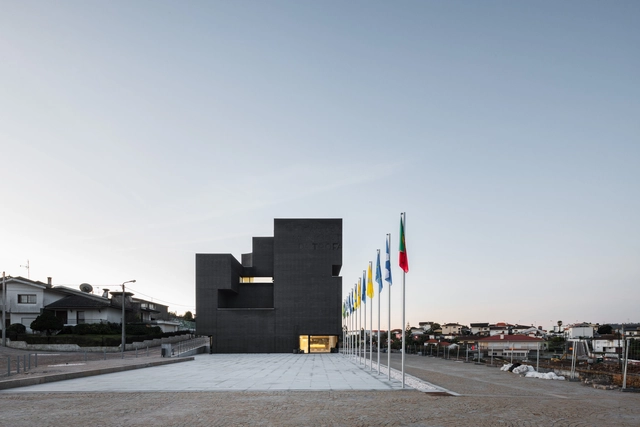
In this episode of the fourth season, Sara talks with José Carlos Nunes de Oliveira about the Trofa Town Hall building (Paços do Concelho da Trofa). Listen to the conversation and read an excerpt of the interview below.
No País dos Arquitectos is a podcast created by Sara Nunes, who is also behind the architectural film production company Building Pictures. The podcast aims to profile the professionals, projects, and stories behind leading contemporary Portuguese architecture. With just over 10 million inhabitants, Portugal is a highly intriguing country in this professional field, and its architectural output far exceeds its demographic and territorial scale.
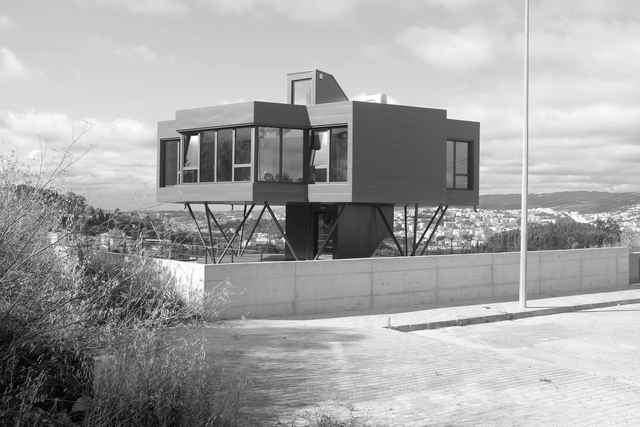
In this episode of the fourth season, Sara talks with architect Pedro Bandeira about the Rotating House (Casa Rotativa) project and the essential synergy between architecture and engineering required to develop this residence, which actually rotates around a vertical axis. Listen to the conversation and read an excerpt of the interview below.
No País dos Arquitectos is a podcast created by Sara Nunes, who also runs the architectural film production company Building Pictures. The podcast aims to profile the professionals, projects, and stories behind leading contemporary Portuguese architecture. With just over 10 million inhabitants, Portugal is a highly compelling country within this professional field, and its architectural output punches far above its weight relative to its population or territorial scale.
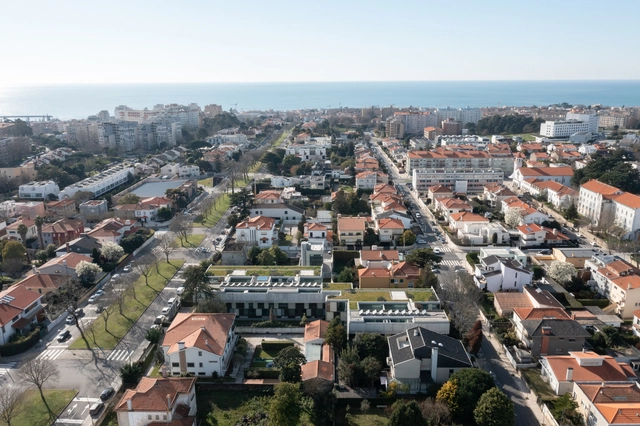
In this episode of the fourth season, Sara talks with Graça Correia and Roberto Ragazzi, from the firm Correia/Ragazzi Arquitectos, about the Marechal 720 project, in which the architects sought to reinterpret "the new bourgeois house of Porto." Listen to the conversation and read part of the interview below.
No País dos Arquitectos is a podcast created by Sara Nunes, who is also responsible for the architectural film production company Building Pictures. The podcast aims to introduce the professionals, projects, and stories behind leading contemporary Portuguese architecture. With just over 10 million inhabitants, Portugal is a fascinating country regarding this professional field, and its architectural output far exceeds what its small population and land area might suggest.
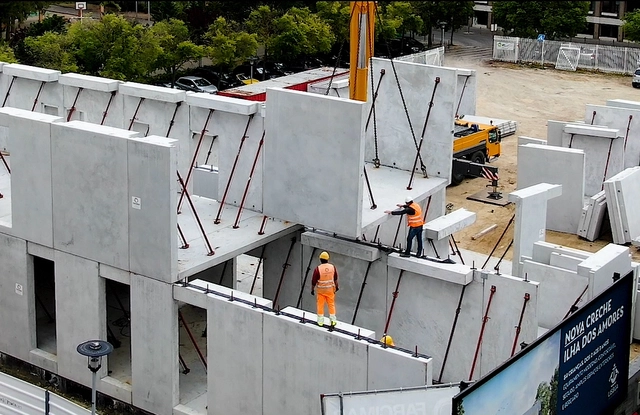
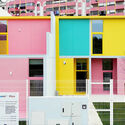
In this episode, Sara talks with architect Samuel Gonçalves, from the office SUMMARY, about their project for four kindergartens in Lisbon, prefabrication, and the challenges cities currently face.
No País dos Arquitectos is a podcast created by Sara Nunes, who also runs the architectural film production company Building Pictures. The podcast aims to introduce the professionals, projects, and stories behind benchmark contemporary Portuguese architecture. With just over 10 million inhabitants, Portugal is a highly intriguing country within this professional field, and its architectural output far outstrips its population and territorial scale.
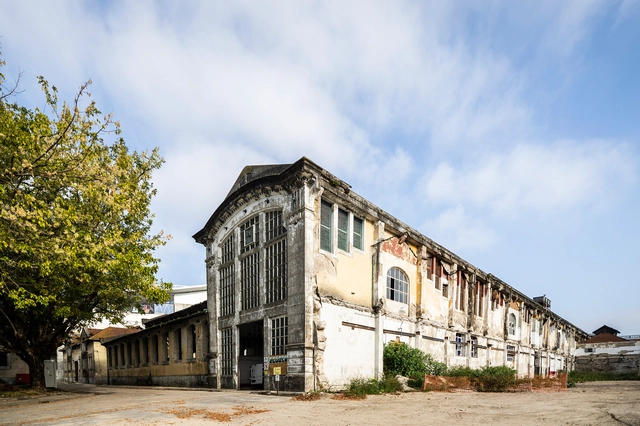
In this episode of the fourth season, Sara talks with architect Diogo Brito from the firm OODA about the conversion project of the former Campanhã Industrial Slaughterhouse in Porto, co-designed with Kengo Kuma.
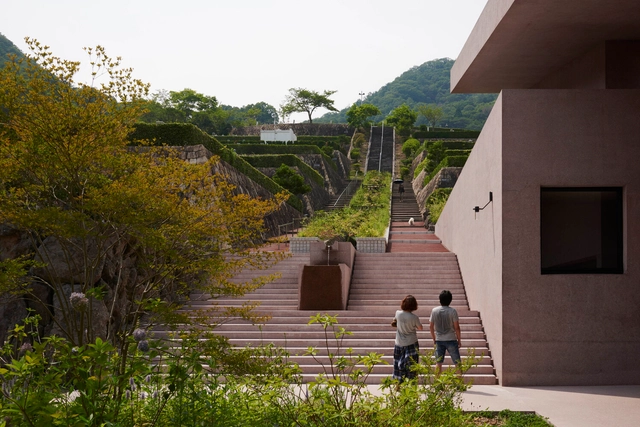


.jpg?1611324153 "Memorial Cemetery Parque das Cerejeiras / Crisa Santos Arquitectos. Photo © Isis de Oliveira")