Romullo Baratto is an architect with a PhD from FAUUSP and Managing Editor of ArchDaily. He previously coordinated the editorial team of the 11th São Paulo Architecture Biennial and served as Managing Editor of ArchDaily Brasil, where he led the platform to win the FNA Award—the first time the honor was granted to a media outlet. He collaborated on the editing of the book "Concrete Jungle", published by gestalten, and has curated architecture exhibitions in Brazil, Chile, Denmark, and Italy, as well as delivered lectures and moderated debates in Spain, the United States, and Portugal. His doctoral thesis investigates the urban landscapes of São Paulo through cinema. His work spans academic research and editorial practice, communicating architecture through texts, interviews, lectures, curatorship, and photography. Follow him on Instagram @romullobf.
Videos
Courtesy of the Lisbon Architecture Triennale
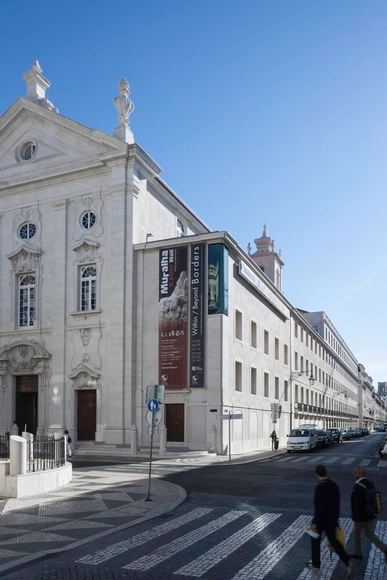
The Lisbon Architecture Triennale published on Vimeo the series of debates Talk, Talk, Talk held during its 5th edition, which was curated by Éric Lapierre. Divided into five major exhibitions, the Triennale addressed in one of them the issue of economy of means, discussed in the debates below.
Hungarian analyst and cartographer Robert Szucs shared with ArchDaily another of his series of maps, this time addressing the population distribution on Earth. A large blackboard, identifying only the geopolitical boundaries of countries and continents, reveals bright constellations, representing human agglomerations and the world's great voids.
Across the world, urban clusters have —to a greater or lesser extent— social and economic differences. Reflected in space, these imbalances of income and access to education, health, sanitation, and infrastructure generate ruptures more or less visible —although drastically felt.
Although a daily reality for some, socio-spatial inequalities can often go unnoticed. Photographer Johnny Miller states, "Discrepancies in how people live are sometimes hard to see from the ground... Oftentimes, communities of extreme wealth and privilege will exist just meters from squalid conditions and shack dwellings." Miller's photo series 'Unequal Scenes' seeks "to portray the most 'Unequal Scenes' in [the world] as objectively as possible."
Representation of the real world is, without any doubt, in the genesis of cinema, an art originated from photography, by creating a sequence to convey the impression of movement to the viewer. In fact, the earliest known film recording is from 1895, picturing the arrival of a train at Ciolat station in France, a trivial event in the daily life of 19th-century European cities.
However, even though tangible reality plays a big role in cinema, one cannot ignore that the fascination caused by this art comes, to a great extent, from its capacity to create imaginary worlds, to activate mental spaces, and to unleash emotions. In this sense, the real world may often provide insufficient fuel, inspiration, or background for the directors' and screenwriters' storytelling, so the art direction and scenic design teams are required to create other intangible realities that serve as a basis for the narrative.
GIS analyst and Hungarian cartographer Robert Szucs has shared an impressive collection of maps that bring together all the drainage basins of the world in vibrant colors. Titled GrasshopperGeography, the maps showcase the rivers and watercourses of the world, featuring the basins of selected regions, countries and continents.
Almost two months have passed since the quarantine regime started in several countries as a strategy to reduce the transmission rate of the coronavirus. Since then, a considerable part of the architecture professionals has started to adopt telework or home office, keeping up with the projects that have already started, supported by a number of new online meeting tools, document storage in the cloud and BIM models.
Following the recommendations of public authorities and the WHO general guidelines towards the COVID-19 pandemic, The International Union of Architects, UIA, the Institute of Architects of Brazil, IAB and the Executive Committee UIA2020RIO have decided to postpone the 27th World Congress of Architects to July 2021. The announcement echoes several other events related to architecture that had to be postponed, including the Venice Biennale and the Salone del Mobile.
A glimpse of hope emerged from the endless loop of COVID-19 news this week when China announced the closure of their last temporary hospital in Wuhan due to their stabilization of the pandemic that has now taken the world by storm. Western countries have been enforcing more restrictive measures aiming to stop the spread of the virus, including mandating shelter-in-place orders and forcing any business deemed non-essential to close. Due to the quarantine and isolation politics imposed by the authorities around the globe, we asked you, our readers, how the coronavirus is affecting your daily life as architects and designers. These answers allowed us to compose an overall picture of the atmosphere established by the pandemic – and the way we are adapting to it.
The recent success of Parasite, the award winning film directed by South Korean director Bong Joon Ho, has created a conversation around the emphasis of architecture and interior spaces in movies. This particular film does an excellent job of blurring the boundaries between the two disciplinary fields, to the point where the architecture is not just the background of the set, but it has been placed at the forefront of the storyline, and takes on the leading role in many scenes.
Mulher, Mujer, Woman, or simply MMW, is an online platform dedicated to architectural representations, whose objective is to spread the women's production within our professional field. Created by the Brazilian architects Carol Vasques and Débora Boniatti as a reaction to the still scarce diffusion of female references, the platform seeks to "highlight the importance and relevance of women in the past, present and future of the profession."
Users now can virtually visit museums all over the world thanks to Google Arts & Culture. The project offers 360 ° views of places that can often be inaccessible due to financial costs or distance.

The growing global coronavirus pandemic will leave profound marks on society. Perhaps not so much due to fatalities, but certainly in the way people relate to each other and to public spaces. In an attempt to reduce the rate of transmission of the disease, governments and authorities around the world have instructed people to stay at home, in the safety and hygiene of their domestic environment, and to avoid any unnecessary contact with other spaces, objects, and people.
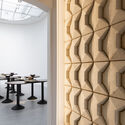
With a vast built heritage, Lisbon's contemporary architectural production is rich in rehabilitation projects. Lacking space for new buildings - unless one is willing to pay for the land's high market price - Lisbon's current architecture prescinds tabula rasa and faces the challenge of working with what already exists - often limiting itself to design only interior spaces.
With more than 40 years of professional experience, Yvonne Farrell and Shelley McNamara, partners and co-founders of Dublin-based Grafton Architects, are the first women to be jointly awarded the architecture’s highest honor, the Pritzker Prize. In addition to a very welcoming breath of hope towards greater female representation in the field, the selection also cast light over an equally urgent theme in the profession: recognizing architecture practice as a collective effort.
Beasts of the Southern Wild. Image: screenshot do filme
Architecture enjoys a close connection with moving picture, perhaps because of the limitless imagination it allows. Our mind can be taken far away to utopian worlds where we live different realities with our eyes and skin; movies can carry us to new and distant places, where we face new unusual realities.
However, besides carrying us to distant places, movies can also be a vehicle of social criticism. This is not news, as it has been done for almost as long as cinema has existed. The evolution of this role is relative to the topic of critique that has developed over time, as have our habits and ways of living. In this sense, one of the most emerging problematic of nowadays is climate change.from architecture to arts and, clearly, the movies.
Route of Emotions, site visited by the group Be-Nômade. Imagem via viagenscinematograficas.com.br
Bjarke Ingels, founding partner of BIG, visited representatives of the Brazilian Federal Government this Tuesday. The meeting brought together a delegation from the Be-Nômade group, which plans to invest in sustainable tourism in Brazil, the Minister of Tourism, Marcelo Álvaro Antônio, and the President of the Republic, Jair Bolsonaro.
Angola, like many African countries, is experiencing a process of rapid urbanization. For the most part, these changes are happening under little to no regulation, filling cities with spaces that lack the infrastructure to provide a basic quality of life for residents. However, in spite of this unregulated development, it's worth noting the quality of contemporary architecture being produced in the second-largest Portuguese-speaking country, where projects draw inspiration from the strong local identity and blend with modern materials and technology.
In this article, we highlight 4 current projects in Angola. While it is a small sample, not only from the capital city of Luanda, but from smaller cities as well, it showcases the richness of Angola's local architecture--an art form that deserves worldwide recognition.