
Considered an intangible cultural heritage by the State Council of Culture (CEC) of Alagoas, the sururu is a mollusk whose harvesting is the main source of income for several communities in the state. Around the Mundaú lagoon alone, in Maceió, five communities living below the poverty line produce approximately 300 tons of sururu shells annually—a massive amount of waste that previously had no use and ended up in the Alagoas capital's landfills.
Recognizing its significant economic and social engagement potential, designers Marcelo Rosenbaum, Adriana Benguela, and Rodrigo Ambrósio developed the Cobogó da Mundaú project, which incorporates sururu harvesting waste into the manufacturing of architectural screen blocks.


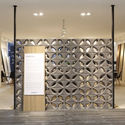

The initiative emerged in 2019 following an invitation from the Maceió Mais Inclusiva Através da Economia Circular (More Inclusive Maceió Through Circular Economy) project—an initiative of the IDB Lab (the Innovation Laboratory of the IDB Group), alongside the IABS, the City of Maceió, and a network of partner organizations. Its goal is to transform the byproduct of harvesting this famous mollusk into a new source of income and an economic model for the social development of communities around the lagoon.
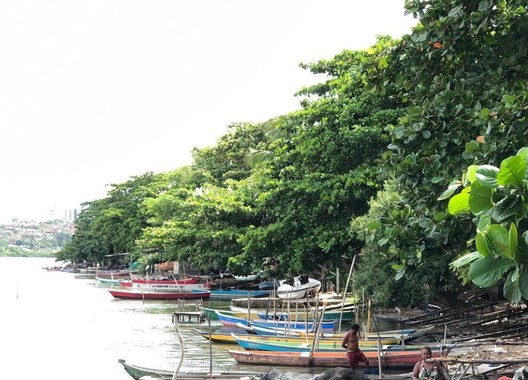
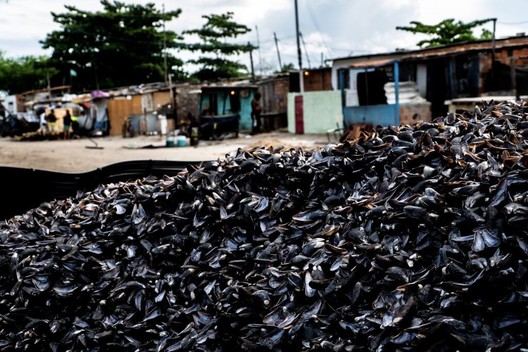
Developed in close collaboration with local residents, the project was facilitated by the NGO Mandaver, which connected Rosenbaum, Benguela, and Ambrósio with local artisan Itamácio Alexandre—known for making caqueiras, the local name for specific cement planters. The technique used to make these planters served as the foundation for the cobogós, simply replacing the sand used in the pots with crushed sururu shells.


Due to their limestone properties, the crushed shells are compatible with cement mixtures, making up 62.5% of the new cobogó. The design of the hollow block was developed to evoke the shape of the mollusk's shell.
The project is among the 10 finalists for the 2020 Human City Design Award, established five years ago by the Seoul Metropolitan Government and the Seoul Design Foundation. This is not the only Brazilian initiative among the finalists; it is joined by the project Design Meets The Corre / Fa.vela by Gustavo Greco Lisita.
This article was written by Romullo Baratto. The translation is powered by AI.


