Nicolás Valencia

Award-winning architect Nicolas Valencia is the former Head of Editorial at ArchDaily, leading a global editorial team ---- @nicolasvalencia.cl | nicolasvalencia.cl | hellonicolasvalencia@gmail.com

BROWSE ALL FROM THIS AUTHOR HERE

María Behety Park, Second Place in the XXXII CAP Chile Competition

Subscriber Access | 

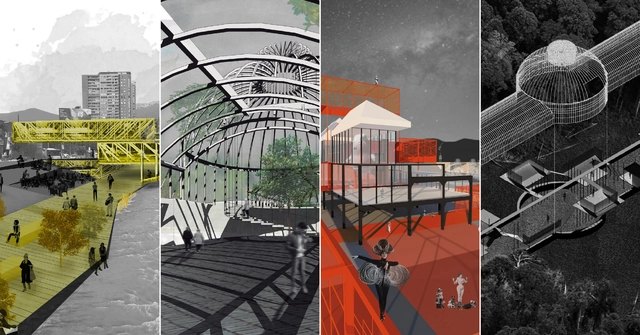
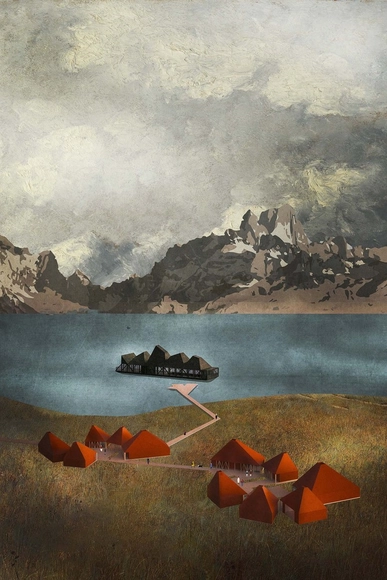
The team consisting of Francisca Méndez, Francisca Campos, and Lucero Arce (Universidad Mayor) has been awarded second place in the XXXII CAP Chile Competition. Designed for Punta Arenas, the project—known as María Behety Park—aims to “bring Chile to Punta Arenas,” an idea that seeks to introduce various plant species from across the country to the city as a tourist attraction, according to the authors.

The competition jury praised the project as one “that takes a bold stance through clear and powerful elements to generate wide spans, where the steel pieces shine to create three volumes that emerge like icebergs along the park. And it is precisely this clarity that demands a high level of structural resolution, which is perfectly adjustable.”

These are the winning projects of the XIV Spanish Biennial of Architecture (BEAU)

Under the title “More Living, More Humanizing,” the 14th Spanish Biennial of Architecture and Urbanism (BEAU) presented the winning projects of its latest edition today, Thursday the 19th, in Santander. This exhibition, housed in a temporary pavilion in Santander's Pereda Gardens, showcases the works selected in the categories of Panorama of Works, 2nd Research Exhibition, and 7th Thesis Projects Exhibition.

The Chilean City in the Press: 4.5 Million Hectares of Wetlands to Be Protected and Metro Line 3 Begins Trial Runs

As Line 3 of the Santiago Metro begins its trial run on its way to becoming the Chilean capital's sixth line, other cities are starting studies to install cable cars and improve train frequencies. Meanwhile, biodiversity is celebrating great news. This and more in this edition of La ciudad chilena en la prensa, the ArchDaily section where we bring you updates on Chile's major cities.

WIO: 21 University Teams Envision Interventions for 7 Obsolete Structures in Santiago

Subscriber Access | 

As part of Semana UTEM 2018 in Chile, the **Infraestructuras en Obsolescencia** (Obsolete Infrastructures - WIO) workshop brought together 21 teams from the Faculty of Architecture at the Universidad Tecnológica Metropolitana (UTEM). These teams developed design proposals to intervene in seven obsolete structures in Santiago, ranging from a currently closed pedestrian bridge to a dilapidated train station.

Featuring international guests Luis Tombé (Colectivo720, Colombia) and Walter Leone (Leone Arquitectura, Venezuela) —who also participated in the CONTRAPOSICIONES lecture series and delivered keynote addresses at the Colegio de Arquitectos de Chile—, each team comprised seven students from different years of the architecture program, guided by two faculty advisors.

WIO: 21 University Teams Envision Interventions for 7 Obsolete Structures in Santiago - Image 1 of 4WIO: 21 University Teams Envision Interventions for 7 Obsolete Structures in Santiago - Image 2 of 4WIO: 21 University Teams Envision Interventions for 7 Obsolete Structures in Santiago - Image 3 of 4WIO: 21 University Teams Envision Interventions for 7 Obsolete Structures in Santiago - Image 4 of 4WIO: 21 University Teams Envision Interventions for 7 Obsolete Structures in Santiago - More Images+ 23

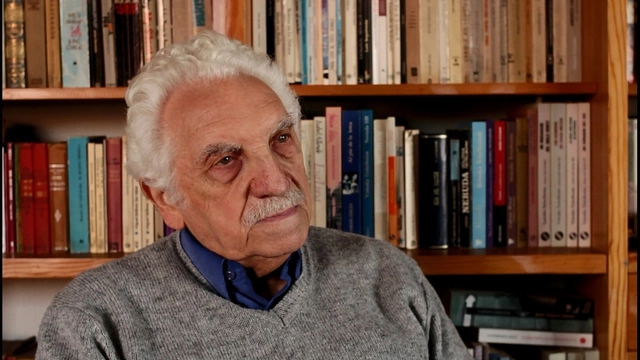
Miguel Lawner on stalled real estate projects: 'Who is the Chilean Association of Architects defending?'

Last November, the Comptroller General of Chile ordered the halt of construction of the so-called vertical ghettos in the municipality of Estación Central (Santiago). In response, on Friday, December 14, a group of real estate developers filed a series of injunctions against the resolution, while the Chilean Chamber of Construction raised concerns regarding the suspension of projects, as reported by the Chilean newspaper El Mercurio.

At the same time, the Colegio de Arquitectos de Chile (Chilean Association of Architects), the Association of Architectural Offices (AOA), the Association of Works Directors and Municipal Works Department Professionals of Chile, the Association of Independent Reviewing Architects of Chile, and the National Association of Independent Reviewers issued a document obtained by El Mercurio. In it, they claim they "have seen [their] right to practice their profession with confidence affected [...] due to the legal uncertainty currently facing our field."

'From the Villa to the Cell' addresses the potential reinvention of the typical block in Santiago's pericenter

Subscriber Access | 

The international workshop and symposium “From the Villa to the Cell,” held at the School of Architecture of the Pontificia Universidad Católica de Chile between April 2 and 20, focused on social and collective housing, understood not only as vital to the city, but as an eminently architectural problem. The workshop featured local tutors Alejandra Celedón, Álvaro Arancibia, Tatiana Carbonell, and José Manuel Monge, alongside international guests Sam Jacoby (AA/RCA, London), Francesco Marullo (UIC, Chicago), and Max Kahlen (AA, London).

As the organizing team explains, "we questioned the definition of the word 'villa,' which has been used to designate very different kinds of architecture: from the 'Palladian villa' to the villa as a housing development, and the villa as a collective project; the workshop will build its own definition. Through the idea of the “cell,” the project sought to challenge the concept of “minimum housing,” viewing it no longer individually or as an isolated architectural object, but through the ideas of Karel Teige, who as early as 1932 proposed understanding this problem not as a scaled-down version of the dominant minimum-housing typology, but as a spatial transition toward a collective mode of habitation."

Bogota Through the Eyes of 10 Photographers

Subscriber Access | 

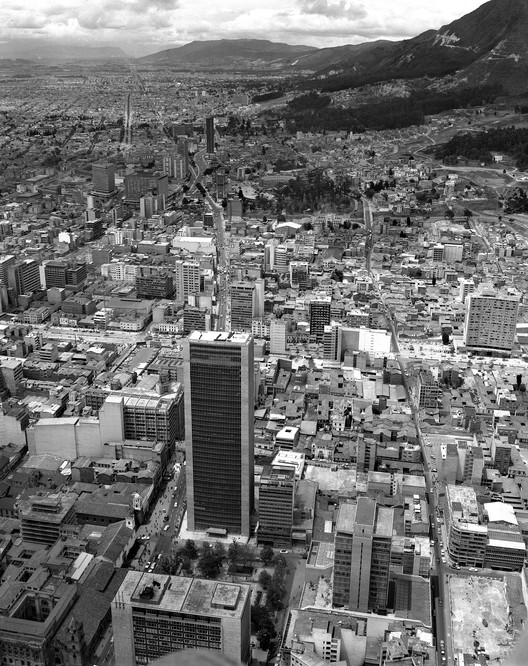
Driven by a shared interest in cities, architecture, and photography, the FORM+ research group at the Universitat Politècnica de Catalunya (UPC) and ArchDaily en Español established an editorial partnership in 2018 to showcase the research of FORM+, following the recent publication and exhibition Bogotá en la mirada de 10 fotógrafos held in the Colombian capital.

Through this collaboration, our Spanish-speaking readers discovered the work of pioneers of urban and architectural photography, drawing on research by curators María Pía Fontana (UdG), Miguel Mayorga (UPC), and Margarita Roa (USB, Cali), all members of the FORM+ group. "Photography is a form of intellectual and sensory mediation with the world, expanding our perceptual experience and renewing our visual sensitivity: an instrument to learn how to look, a resource for the creative imagination, and a means to recognize space and the built environment," the curators explained.

Below, we present the profiles of the 10 photographers featured in this editorial collaboration:

Bogota Through the Eyes of 10 Photographers - Imagem 1 de 4Bogota Through the Eyes of 10 Photographers - Imagem 2 de 4Bogota Through the Eyes of 10 Photographers - Imagem 3 de 4Bogota Through the Eyes of 10 Photographers - Imagem 4 de 4Bogota Through the Eyes of 10 Photographers - More Images+ 6

Chile to launch pilot program to digitize municipal procedures for urban works

With the aim of "reducing response times and streamlining the processing of certificates, permits, and final approvals," Chile will launch a digital platform called DOM en Línea, as reported by the newspaper La Tercera.

Currently, every municipality, regardless of size, has a Municipal Works Department (DOM). This department is responsible for ensuring compliance with local urban planning and construction regulations. Consequently, the DOM is tasked with authorizing new construction projects through an in-person, paper-based process; therefore, the DOM en Línea platform will allow these procedures to be completed online.

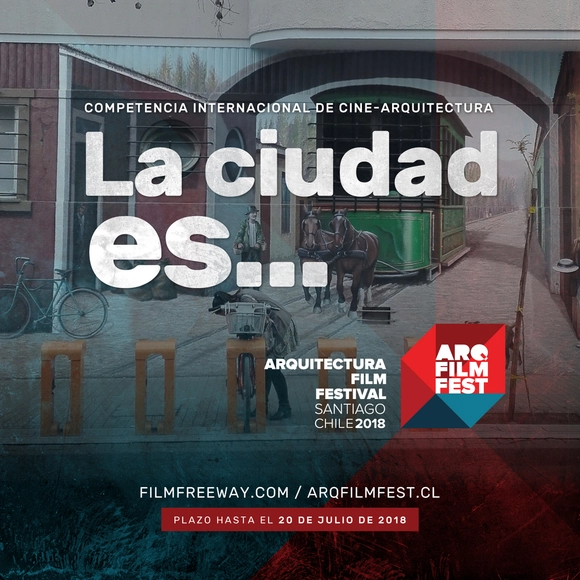
Fourth edition of ArqFilmFest receives over 1,500 films for its international competition

The call for entries for the international film competition on architecture, the city, and urban life—"The city is..."—organized by the Santiago Architecture Film Festival (ArqFilmFest), closed successfully with the submission of 1,518 audiovisual productions from around the world. 

According to the organizers, they received more than 100 films from the United States (183), Iran (166), and India (160), and over 50 from Turkey (79), the United Kingdom (74), Italy (60), Brazil (58), and France (50), among many other countries across all continents.

Paseo Bolívar Cultural Integration Center, a university proposal for downtown Cali

Subscriber Access | 

At the end of last November, we published the winners of the second call for graduation thesis projects in Colombia, which received 70 proposals from 14 cities and 29 universities. Ultimately, nine projects cleared all three evaluation stages, standing out for addressing pressing issues, presenting rigorous research, and proposing challenges for both urban and rural contexts, much like in 2016.

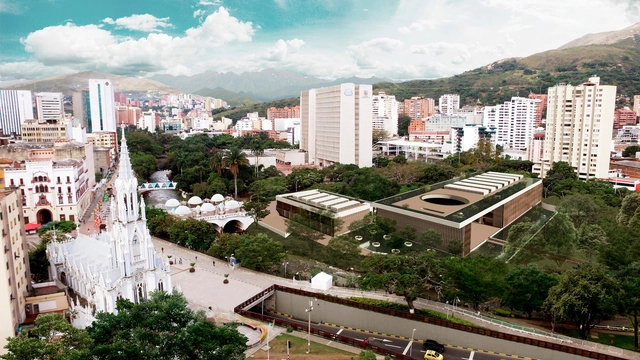
Here, we take an in-depth look at the Paseo Bolívar Cultural Integration Center, a proposal developed by Ángela Puerta Gaviria and Carolina Delgado Quintero, both graduates of the Universidad del Valle in Cali.

The Chilean city in the press: a new zoo in Santiago, arsenic in Quintero, and plans for Copelec in Chillán

Public attention turned to the protests in Puchuncaví and Quintero, municipalities designated as a "sacrifice zone" due to the presence of 15 major energy, chemical, and fuel companies, while Santiago works on the opening of a new green lung in the city center. This week is dedicated to the environment in this edition of La ciudad chilena en la prensa, the ArchDaily section where we cover what is happening in Chilean cities.

Ensamble San Borja, Second Place in the San Borja Footbridges Competition in Chile

Subscriber Access | 

The Ensamble San Borja proposal was awarded second place in the Pasarelas San Borja competition in Chile. The main objective of the competition was to recognize "the best urban design ideas that help define intervention criteria and generate proposals for the San Borja Neighborhood."

According to the authors, the second-place winning proposal aims to create "a living space that mutates according to needs and adapts to demands."

The Best Architecture Graduation Theses in Colombia in 2018

Subscriber Access | 

In September, we launched the third edition of our open call in Colombia, inviting architects to submit their graduation thesis projects (as final degree projects are known there). In this edition, the call received 94 submissions from more than 10 cities and 22 universities across the country, representing a 34% increase in proposals compared to 2017.

Following a thorough evaluation, six graduation theses were selected as winners by our editorial jury (Fabián Dejtiar, Mónica Arellano, José Tomás Franco and Nicolás Valencia). Built works, historical research, and master plans make up our selection: from a rural residential prototype to a comprehensive study of the Edificio de Renta (rental building), a popular residential format in Bogotá between the 1940s and 1970s.

Additionally, for the first time we included a high-level external jury tasked with selecting the Grand Winner 2018. The jury comprised Lina Toro (Madrid), Carlos Cano (OPUS, Medellín), and Jorge Noreña (Ruta 4, Pereira). "While architecture requires rigor, dedication, and communication skills, it also demands strengthening connections with urbanism and landscape, as well as with professions that make transformative ideas viable," Cano commented during the jury's evaluation.

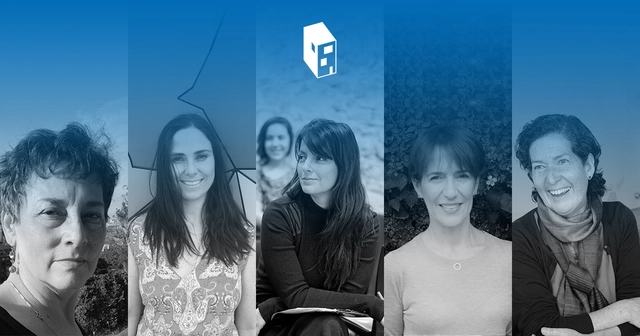
Five Colombian women architects prominent in design, research, and teaching

In recent years, International Women's Day has reclaimed the political significance of its origins, bringing together some of the most recent discussions surrounding women: the gender pay gap, the exposure of sexual abuse through the #MeToo movement, and, in the specific case of our discipline, the visibility of women in architecture. Zaha Hadid went so far as to say that she felt "harshly judged for [the fact of] being a woman," despite winning the Pritzker Prize in 2004.

If that happened to her, imagine the rest.

In this regard, at ArchDaily we have opened up the discussion and are proud to highlight the work of women architects worldwide, in addition to partnering with interesting Latin American initiatives along the same lines, such as Un día, una arquitecta. For this edition of International Women's Day, we have joined forces with the Colombian print publication de-Arq (Universidad de los Andes) to showcase the work of five contemporary Colombian women architects, who represent distinct yet complementary approaches within our discipline: design, research, teaching, and experimentation.

Five Colombian women architects prominent in design, research, and teaching - Imagem 1 de 4Five Colombian women architects prominent in design, research, and teaching - Imagem 2 de 4Five Colombian women architects prominent in design, research, and teaching - Imagem 3 de 4Five Colombian women architects prominent in design, research, and teaching - Imagem 5 de 4Five Colombian women architects prominent in design, research, and teaching - More Images+ 1

These are the winning second-year projects of the 2018 Arquitectura Caliente Competition

Subscriber Access | 

After reviewing 94 undergraduate student projects from 20 architecture schools across 8 regions of Chile, the jury of the Concurso Arquitectura Caliente 2018 has announced the winning projects of its latest edition.

The submissions span the entire country and cover diverse typologies, ranging from urban planning and student housing to landscape designs and structural emergency initiatives.

Below, we present the award-winning second-year projects:

Solano Benítez on Cuatro Cuatros: 'We need to converge on how to safeguard everyone's heritage'

Subscriber Access | 

In conversation with ArchDaily en Español, the founders of the Paraguayan firm Gabinete de Arquitectura, Solano Benítez and Gloria Cabral, spoke about their involvement in Cuatro Cuatros, an ambitious Mexican project led by Mauricio Rocha y Gabriela Carrillo in Ensenada, Baja California.

For a decade, Rocha and Carrillo have worked on the 860 hectares comprising the Cuatro Cuatros project. In this new phase, a group of Mexican and international architects has created a manifesto explaining their collaborative involvement in a 500-home development within the 360 permitted hectares.

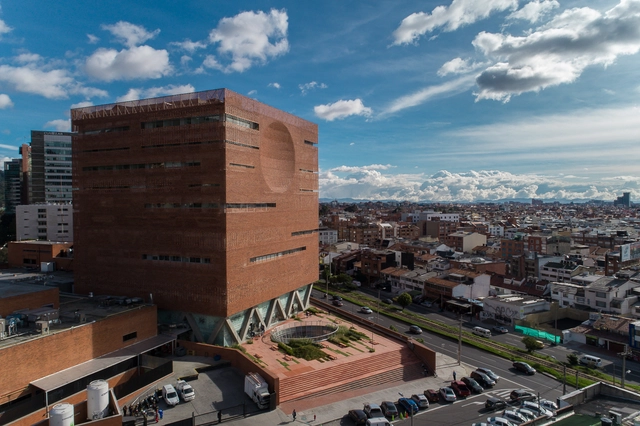
Fundación Santa Fe de Bogotá, the only Colombian project to win at the 2018 Building of the Year Awards

Designed by El Equipo de Mazzanti, the Fundación Santa Fe de Bogotá has been selected as the winner in the 'Healthcare Architecture' category of the 2018 Building of the Year Awards, making it the only Colombian project—and one of only two Latin American representatives—to win in the competition organized by ArchDaily, the network of websites to which ArchDaily Colombia also belongs.

The Building of the Year Awards are presented annually to the best projects published on our English-language edition—the most visited architecture website in the world—with winners chosen by the readers themselves, who can vote across 15 typological categories in two stages. In this edition, the competition reached 100,000 votes from around the world within a two-week period.

Perkins Eastman unveils 240-hectare master plan on the grounds of the Guayaquil airport

José Joaquín de Olmedo Airport—Ecuador's second busiest—will relocate to the outskirts of Guayaquil in 2022, freeing up 240 hectares in the city center. In response to the unprecedented urban opportunity presented by this relocation, the firm Perkins Eastman has revealed the first images of Nueva Ciudad, a 2-million-square-meter master plan in Guayaquil.

Stephen Forneris, head of the Ecuador office, explained that the project "can be a catalyst for economic growth, cultural activities, and entertainment; it will be the spark that begins Guayaquil's journey to becoming the city of the future."