Award-winning architect Nicolas Valencia is the former Head of Editorial at ArchDaily, leading a global editorial team ---- @nicolasvalencia.cl | nicolasvalencia.cl | hellonicolasvalencia@gmail.com
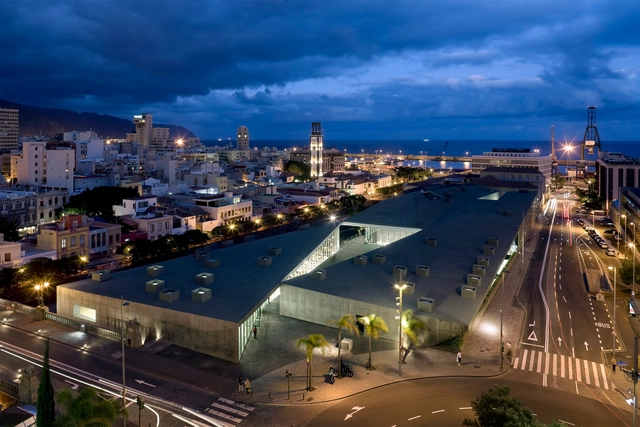
Tenerife Espacio de las Artes / Herzog & de Meuron + Virgilio Gutiérrez Herreros. Image Cortesía de COACTFE
As part of Architecture Week, celebrated by the Official Association of Architects of Tenerife, La Gomera, and El Hierro (Spain), the Oraá Architecture Prizes were awarded, recognizing the best architectural achievements of the last 10 years on the islands of Tenerife, La Gomera, and El Hierro.
The Spanish accolade highlights new construction, restorations, renovations, landscape, public space, and interior design, along with special distinctions for outstanding career achievements, emerging talent, patronage, and the best architectural photography.
Pontificia Universidad Católica de Chile [Flickr]: Lo Contador, CC BY-SA 2.0. ImageFaculty of Architecture, Design and Urban Studies of the Pontificia Universidad Católica de Chile
América Economía magazine has published its most recent ranking of Chilean universities, just a few months ahead of the upcoming 2019 higher education admission process. In addition to the general evaluation—in which the Universidad de Chile remains in first place for the fourth consecutive year—the publication features the specific ranking of the 16 "most in-demand or highly regarded and prestigious" programs in Chile, including Architecture.
With our commitment to providing the most comprehensive information for university applicants, in this article we share the ranking of the best universities to study Architecture in Chile. This list includes technical data on average admission scores, faculty specialization levels, annual tuition costs and variations, and first-year post-graduation employability rates, among other key metrics.
Diseño ganador del Museo de la Memoria y los Derechos Humanos en Concepción, fallado en noviembre de 2016. Image Cortesía de Gobierno Regional Biobío
Construction of Chile's second Museum of Memory will have to wait. As reported by national newspaper La Tercera, the project designed for the city of Concepción "was not included as a priority in the 2019 budget" by the Regional Ministerial Secretariat (Seremi) of the Ministry of Public Works (MOP) of Biobío.
“We are talking about a construction project that we have estimated at nearly 4 billion pesos [USD 6 million]; it is therefore beyond what the MOP has historically built,” Daniel Escobar, regional secretary (Seremi) of Public Works, told the same outlet, adding that the budget is reaching 88 UF per square meter (2.6 million Chilean pesos). Following the shelving of the project, the mayor of Concepción, Álvaro Ortiz, questioned on Radio Cooperativa that “some technical reasons are being argued that, curiously, we did not know about before.”
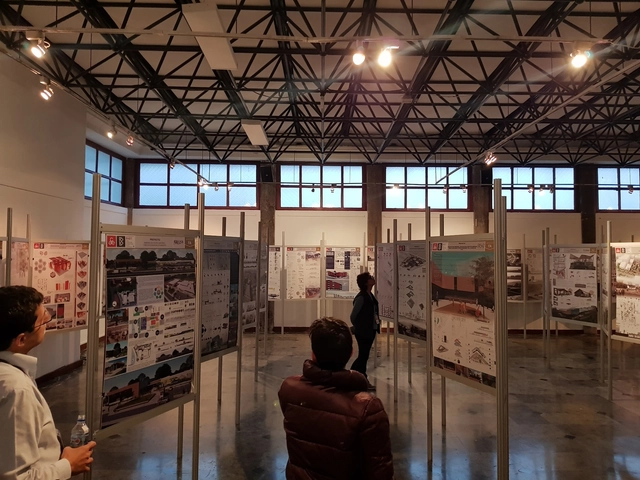
After analyzing 94 projects by undergraduate students from 20 architecture schools across 8 regions in Chile, the jury of the 2018 Arquitectura Caliente Competition has announced the winning projects of its latest edition.
These projects span the entire country and encompass diverse typologies, ranging from urban planning to student housing, as well as landscape designs and structural emergency initiatives.
Below, we present the award-winning third-year projects:
Beatríz García Moreno (left), María Paula González Bozzi, Lina Toro, Ana Elvira Vélez, María Cecilia O'Byrne. Image
In recent years, International Women's Day has reclaimed the political significance of its origins, bringing together some of the most recent discussions surrounding women: the gender pay gap, the exposure of sexual abuse through the #MeToo movement, and, in the specific case of our discipline, the visibility of women in architecture. Zaha Hadid went so far as to say that she felt "harshly judged for [the fact of] being a woman," despite winning the Pritzker Prize in 2004.
If that happened to her, imagine the rest.
In this regard, at ArchDaily we have opened up the discussion and are proud to highlight the work of women architects worldwide, in addition to partnering with interesting Latin American initiatives along the same lines, such as Un día, una arquitecta. For this edition of International Women's Day, we have joined forces with the Colombian print publication de-Arq (Universidad de los Andes) to showcase the work of five contemporary Colombian women architects, who represent distinct yet complementary approaches within our discipline: design, research, teaching, and experimentation.
ARCA / Belén Salvatierra. Image Cortesía de Arquitectura Caliente
After reviewing 94 undergraduate student projects from 20 architecture schools across 8 regions of Chile, the jury of the Concurso Arquitectura Caliente 2018 has announced the winning projects of its latest edition.
The submissions span the entire country and cover diverse typologies, ranging from urban planning and student housing to landscape designs and structural emergency initiatives.
Below, we present the award-winning second-year projects:
Alongside the activities and lectures held over three consecutive days at the Lux Theater in Guatemala City's historic center, the Guatemala Architecture Biennale (BAG) presented the winning works and projects of the Danta Awards on Wednesday, May 30, and Thursday, May 31.
For this edition, the organization proposed that architecture "is approached as a commitment to the public and private spheres and the power to negotiate individual or collective change to build dreams and aspirations, and even to express utopian ideals." Within this context, the jury evaluated more than 100 submitted projects from across Guatemala and the rest of Central America, recognizing parks, collective housing, gymnasiums, and renovations, among other typologies, that address the vision outlined by BAG 2018.
All winning projects in the professional category will be registered and sponsored to participate in the XXI Pan-American Architecture Biennale of Quito 2018, where they will be exhibited alongside projects from across the Americas and evaluated by the Biennale's jury.
Videos
Jardín botánico en distrito central. Image Cortesía de Perkins Eastman
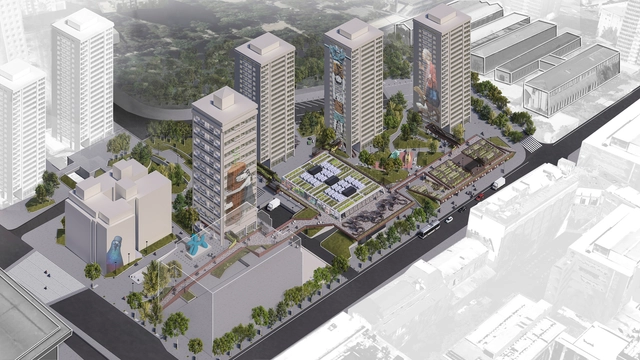
José Joaquín de Olmedo Airport—Ecuador's second busiest—will relocate to the outskirts of Guayaquil in 2022, freeing up 240 hectares in the city center. In response to the unprecedented urban opportunity presented by this relocation, the firm Perkins Eastman has revealed the first images of Nueva Ciudad, a 2-million-square-meter master plan in Guayaquil.
Stephen Forneris, head of the Ecuador office, explained that the project "can be a catalyst for economic growth, cultural activities, and entertainment; it will be the spark that begins Guayaquil's journey to becoming the city of the future."
In conversation with ArchDaily en Español, the founders of the Paraguayan firm Gabinete de Arquitectura, Solano Benítez and Gloria Cabral, spoke about their involvement in Cuatro Cuatros, an ambitious Mexican project led by Mauricio Rocha y Gabriela Carrillo in Ensenada, Baja California.
For a decade, Rocha and Carrillo have worked on the 860 hectares comprising the Cuatro Cuatros project. In this new phase, a group of Mexican and international architects has created a manifesto explaining their collaborative involvement in a 500-home development within the 360 permitted hectares.
Today, Wednesday, November 21, the winners of the 2018 Gold Medal competition were announced as part of the XXI Pan-American Architecture Biennial of Ecuador (BAQ2018) in Quito.
The jury for the 2018 Gold Medal competition, comprising Astrid Petzold (Venezuela/Mexico), Ana Milovan (Uruguay), and Lucas Fehr (Brazil), determined the winning projects of the contest, which honors the best student work produced at Ecuadorian schools and departments of architecture between November 2016 and October 2018.
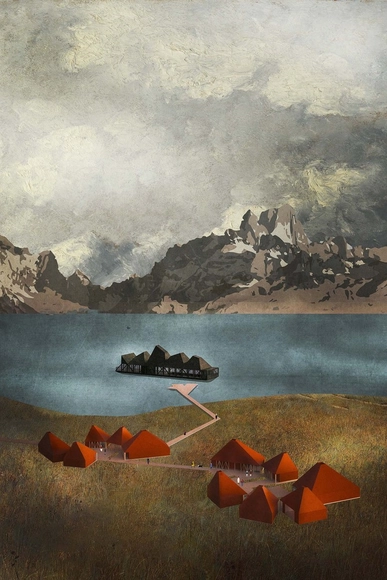
It is another freezing night in Chucuito, and in the restaurant where all the participants of the XV TSL Puno are dining, Jhony Chaves—better known as "El Gato"—tells us stories about impossible places, like Cerro de Pasco, a Peruvian mining settlement even higher, colder, and harsher than Chucuito. He then recalls a village lost in the Peruvian jungle that can only be reached by boat, where the mosquitoes seem as large as birds. Next, he jumps to describing Andean villages that flood and freeze almost year-round, until the weather finally gives a few months of respite to the families who live there simply in houses made of mud.
As El Gato goes through his inventory of Peruvian towns, it is impossible not to think of the magical realism of Macondo. Is all of this real? Indeed, it fits perfectly that this is also a concept coined decades ago, before García Márquez, by a European, for whom his own continent's nature had been entirely domesticated. Of course, Latin America remains a landscape, and our great victory is that we manage to live within it, despite nature and its disasters. Thus, the villages El Gato evokes bring a certain comfort to our shared table, even as the cold and altitude threaten to take their toll on us. "It could be worse," we think before spooning the steaming soup in front of us.
How, then, can we intervene and propose public space in rural, predominantly Aymara settlements like Chucuito, where nature constantly reminds us that it is the main protagonist?
Public attention turned to the protests in Puchuncaví and Quintero, municipalities designated as a "sacrifice zone" due to the presence of 15 major energy, chemical, and fuel companies, while Santiago works on the opening of a new green lung in the city center. This week is dedicated to the environment in this edition of La ciudad chilena en la prensa, the ArchDaily section where we cover what is happening in Chilean cities.
The Ensamble San Borja proposal was awarded second place in the Pasarelas San Borja competition in Chile. The main objective of the competition was to recognize "the best urban design ideas that help define intervention criteria and generate proposals for the San Borja Neighborhood."
According to the authors, the second-place winning proposal aims to create "a living space that mutates according to needs and adapts to demands."
In late November, we published the winners of the second call for Colombian graduation projects—also known as undergraduate theses—for which we received 70 submissions from 14 cities and 29 universities. Ultimately, nine projects advanced through three rounds of evaluation, standing out for addressing pressing issues, conducting in-depth research, and raising challenges in both urban and rural contexts, just as in 2016.
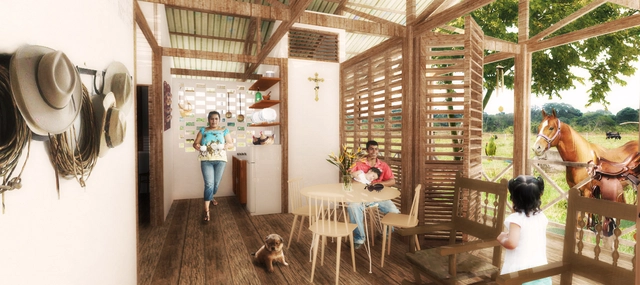
Here, we take an in-depth look at Sustainable Rural Settlement Model in Yopal, Casanare, a proposal selected for the 2017 edition of Archiprix International and developed by Daniel Vanegas and Tatiana Cantor, both graduates of the Universidad Piloto de Colombia.
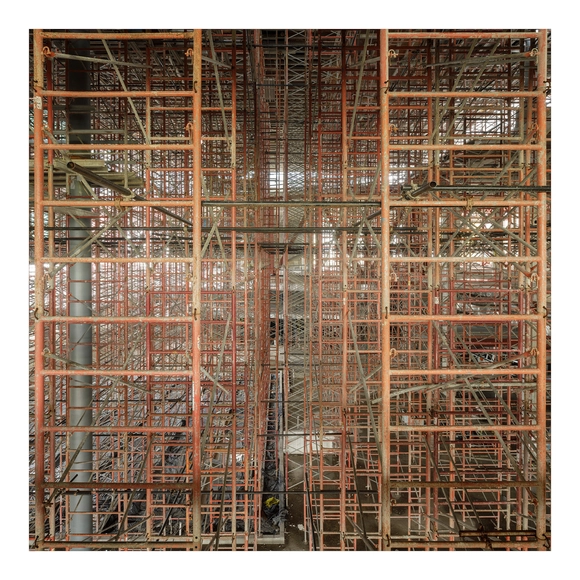
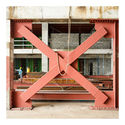
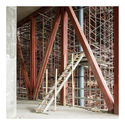
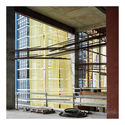
Spanish photographer Fernando Alda explores the construction of the Pacific Center building in Panama, designed by local firm Ventura Arquitectos, in his most recent photo essay. Titled "An Aesthetics of Disappearance," Alda's work was exhibited in the Panamanian firm's pavilion during the inaugural Expo Modii 2018 in Panama City.
Scaffolding, energy dissipators, shoring, electrical installations, and safety netting define the temporary spaces that make up this photo essay. These compositions center on spaces rendered invisible while awaiting the real spaces. "In Pacific Center," writes architect Silvia Escamilla, "he freezes this temporal lapse and the ephemeral elements that inhabit it, those that go unnoticed by us, granting them a new aesthetic value."
In this edition of International Women's Day, we have joined forces with the Colombian print publication de-Arq (Universidad de Los Andes) to explore the work of five contemporary Colombian architects. These practitioners represent distinct, complementary approaches within our discipline: design, research, teaching, and experimentation.
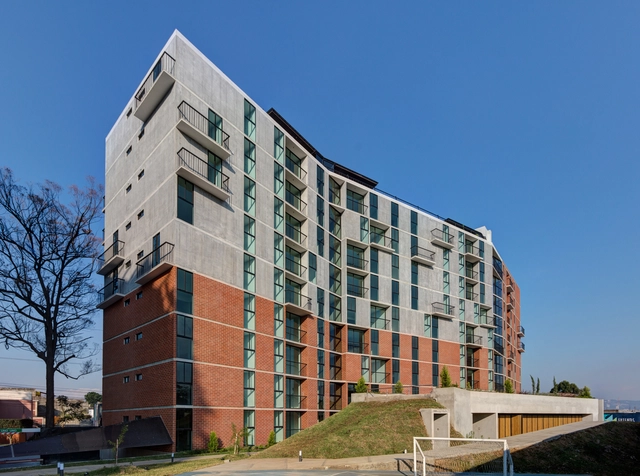
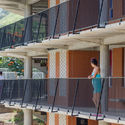
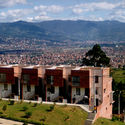
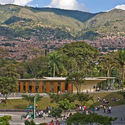
Today, we feature Ana Elvira Vélez, an architect from the Architectural Association School of Architecture, who has distinguished herself through her extensive career in social housing in Colombia. "I have designed and built more than 2,000 low-rise collective housing units in Medellín and the Antioquia region, both privately and publicly," Vélez says. "Each project defines a new neighborhood through a sequence of spaces that reinterpret our region's ways of living," she adds.
On this occasion, the project team —Claudia Torres, Sandro Maino, Ricardo Labra, Valentina Soto, and Laura Gallardo— share the story of the mechanized pier of Caldera, a symbol of the iron ore mining boom in Chile.
In the 1950s, small- and medium-scale copper mining went through a period of depression, giving rise to iron mining, which grew exponentially in the Atacama and Coquimbo regions. Many of the copper and saltpeter miners left unemployed by the crisis were absorbed by the flourishing iron mining industry.
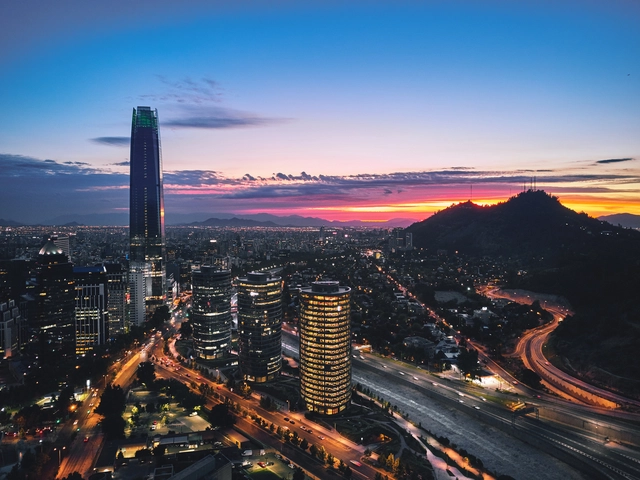
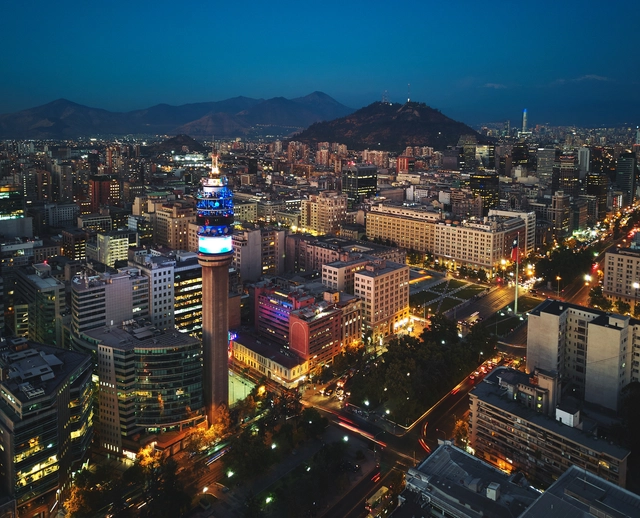
Offering a perspective unusual for locals, Instagram user Deensel photographed Santiago by drone during a visit to Chile. The results feature bucolic sunsets over Santa Lucía Hill, cool summer nights in the city's dense downtown, and unprecedented views of the so-called Sanhattan district, crowned by the Costanera Center —the tallest skyscraper in Latin America— and the Titanium Tower.
_(1).jpg?1539273048&format=webp&width=640&height=580)









.jpg?1527695634&format=webp&width=640&height=580)


.jpg?1521121825 "Hispania Educational Park / Ana Elvira Vélez. Image © Isaac Ramírez")