Award-winning architect Nicolas Valencia is the former Head of Editorial at ArchDaily, leading a global editorial team ---- @nicolasvalencia.cl | nicolasvalencia.cl | hellonicolasvalencia@gmail.com
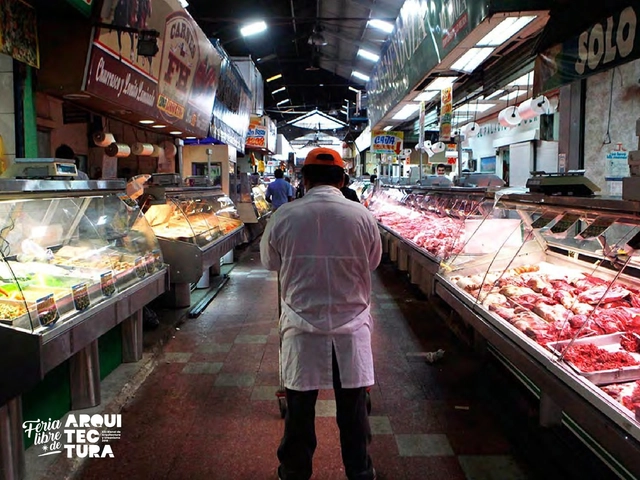
After two editions at the Parque Cultural de Valparaíso, the Chilean Biennial of Architecture and Urbanism will return to Santiago in 2019. On Wednesday, June 6, the Mayor of Santiago, Felipe Alessandri, and the President of the Chilean Association of Architects, Humberto Eliash, signed the official agreement during a ceremony at the Mercado Matadero Franklin, which was attended by city council members, Minister of Housing and Urban Development Cristián Monckeberg, undersecretaries, regional authorities, and other officials.
During the ceremony, organizers confirmed that the 21st Biennial will take place in October 2019, with both the Mercado Matadero Franklin and the Teatro Huemul serving as the main venues for the country's premier architectural event.
Our team is proud to introduce a new editorial partner for ArchDaily en Español: Paisaje Transversal, a Spanish urban innovation firm. Operating with its own proprietary methodologies, the firm specializes in urban regeneration through initiatives like Sustainable Urban Development (DUS) and currently serves as the National URBACT Point in Spain.
Through this partnership, ArchDaily's Spanish-language network will publish articles authored by the Spanish firm, bringing the ongoing dialogue around urban challenges directly to our readers. Citizen participation, turistification, smart cities, public space, mobility, urban negotiation, and urban planning tools are among the topics we will cover weekly across our Spanish-language sites.
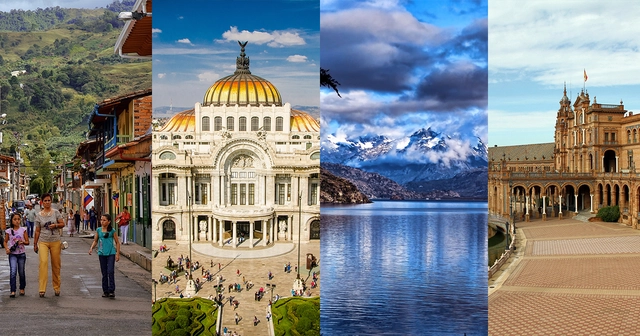
Now in its thirteenth edition, The New York Times has released its selection of 52 places to visit in 2018. The influential list by the American newspaper—which previously awarded the top spot to Mexico City (2016), Rio de Janeiro (2013), and Santiago (2011)—now highlights New Orleans.
The New York Times team highlights the ethnic diversity of the American city, influenced by "Europe, the Caribbean, Latin America, Africa, and indigenous peoples who have turned it into a melting pot," with a clear nod to global outbreaks of racism, xenophobia, and aporophobia (fear of poverty).
Additionally, new destinations and Spanish-speaking countries in Latin America and Spain have been included in this year's list:
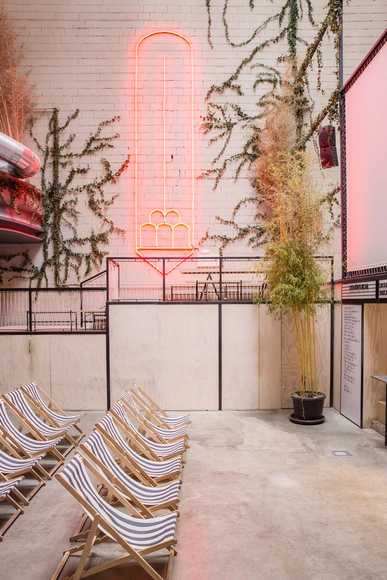
The Official Association of Architects of Madrid has awarded the 2018 COAM First Prize ‘ex aequo’ to the renovation of Sala Equis, designed by architects Lorenzo and Luis Gil (Plantea Estudio), to Espacio SOLO by Juan Herreros and Jens Richter, and to the book Oiza by Javier Vellés.
Regarding Sala Equis, the jury highlighted that the renovation of the former Duque de Alba cinema “equips the available space with contemporary uses, materials, and furniture, balanced with the memory of the existing structure,” and emphasized that it “encompasses the traditional movie theater alongside other activities surrounding this main function.”
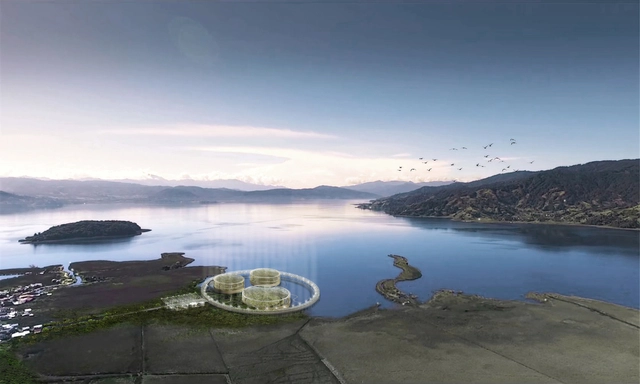
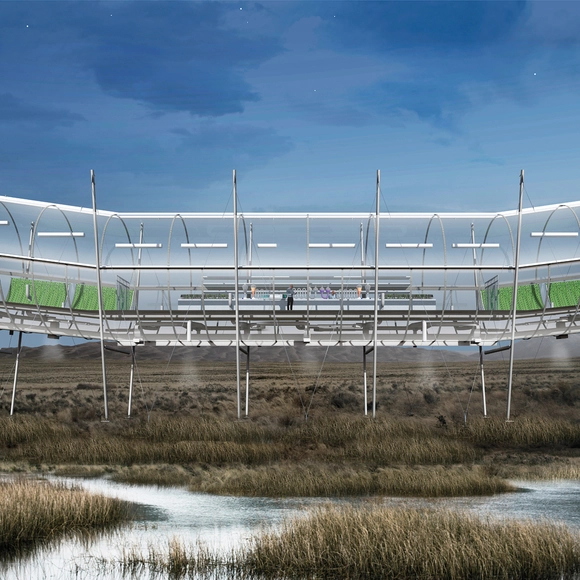
The team comprising Francesca Fuentes, Juan Andrés Hoffmann, and Kevin Gómez has been awarded an honorable mention in the XXXII CAP Chile Competition. Designed for the Tres Puentes Wetland in Punta Arenas, the project, known as "Flores del Humedal" (Wetland Flowers), seeks to generate "a physical link between the isolated territory and society, in order to facilitate interaction, knowledge, research, and conservation," according to the authors.
The competition jury explained that it is a "project that took steel structure to a highly creative level and challenged the program, proposing a new way of observing nature. At the same time, it generates a profound relationship with the territory for wetland observation."
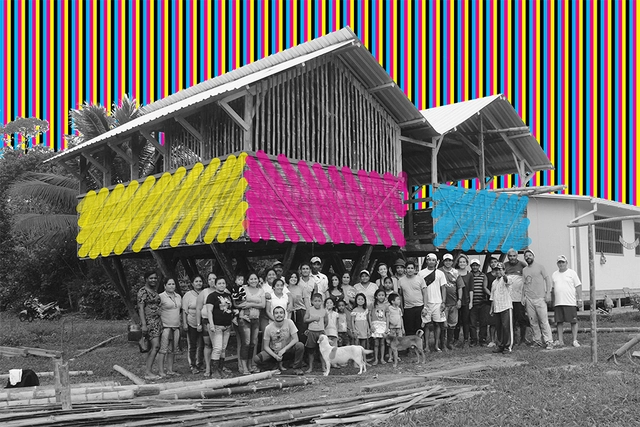
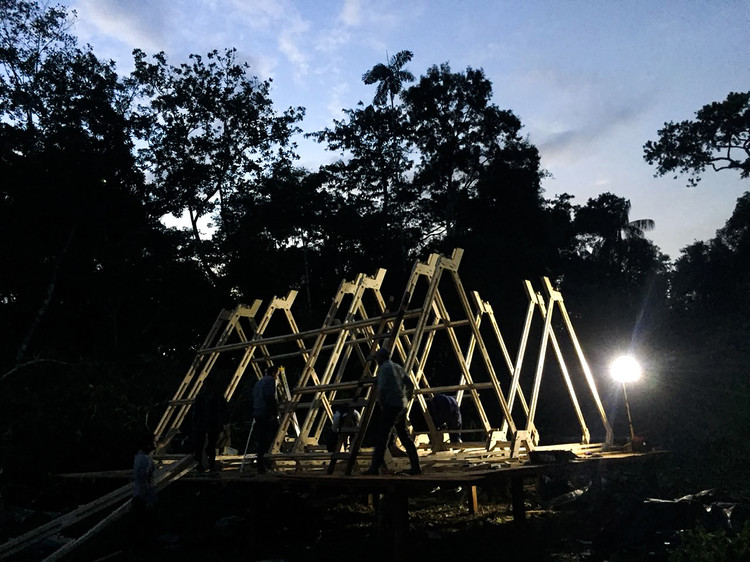
In 2016, Ecuadorian firm Al Borde designed Germany's pavilion at Habitat III, the UN's global conference on housing and sustainable urban development. The project was designed so that, once the event concluded, the materials could be reused for a social initiative. This concept caught the attention of the Mexican housing institution Infonavit, which invited Al Borde to repeat the exercise with its own pavilion.
This led to the creation of the Comedor de Guadurnal (Ecuador), a social project for one of the coastal communities severely affected by the 7.8-magnitude earthquake in 2016. "We asked our network who was working with an organized community that could benefit from a community facility project," the designers explain regarding the origin of their partnership with Taller General, a firm that had been working with the Guadurnal community and the Escuela 6 de Mayo on their reconstruction process.
Happy New Year! Champagne, hugs, phone calls, and new goals. A few days pass, and it feels like this year you really will achieve everything you want. It's a great attitude, but not everyone is so clear on what those goals are or where to direct their career. In this day and age, anything seems possible. If a friend is traveling the world, you want to do it too. If another joined the gym, you want to do it too. If former classmates are pursuing a master's degree, you want that too—but we know we can't do everything at the same time.
Since the installation of Speculator in 2008 —the year the Spanish real estate bubble burst— the Spanish multidisciplinary collective has been characterized by its collaborative practices, co-production processes, and civic management models. Over ten years, the numbers speak for themselves: 15 countries, 18 agreements, 29 institutions, 43 grassroots organizations, and 96 projects, including Campo de Cebada in Madrid and the La Y Cultural Hub in Caracas (Venezuela), as part of the government project Espacios de Paz.
TXP explains their methodology: "We start with a preliminary diagnosis that allows us to understand the keys, codes, and particularities of each process. We then define a context for collaborative design where the proposal is prototyped based on collective interests."
"In our practice, we propose a dynamic combination of scopes that tailors the project based on available parameters, allowing us to define a consensus-driven model that responds resiliently. We establish frameworks for collective construction that foster learning environments, serving as tools for civic appropriation and empowerment. Finally, we design management models that address the specific needs of each case, establishing protocols for use and maintenance," they add.
As is tradition, digital travel platform TripAdvisor has released the results of the 2018 Travelers' Choice awards. These accolades are determined by millions of reviews posted on the website, measuring "the year-over-year increase in positive traveler review ratings," the company explains. Additionally, these cities "have also experienced an increase in search traffic and booking interest" for accommodations.
According to Brooke Ferencsik, communications director at TripAdvisor, the selected cities share the fact that "they all have excellent accommodations, wonderful restaurants, and exceptional attractions for every travel budget."
In South America, six countries are represented on this year's list. Below, discover the ten cities chosen by TripAdvisor users:
via MAMBO - Museo de Arte Moderno de Bogotá / Facebook
Designed by Rogelio Salmona, the Bogota Museum of Modern Art (MAMBO) appeared on Monday morning with a "For Rent" sign on its facade, drawing the attention of local media outlets like Dinero and La W.
The latter contacted the phone number listed on the sign and spoke with a Carlos Muñoz, an alleged real estate agent who confirmed that "the museum's spaces, totaling 4,200 square meters, have been put up for rent for 120,000,000 pesos a month" (equivalent to approximately 43,200 USD). The alleged agent provided details about the building's program as if marketing any other real estate listing. Furthermore, as the newspaper Dineroconfirmed, calls to the MAMBO communications office went to a recorded message confirming that Salmona's building was indeed for rent.
Cortesía de Servicio de Vivienda y Urbanismo de la Región Metropolitana (Serviu RM)
Earlier this week, the mayor of the municipality of Recoleta (Chile), Daniel Jadue, announced the creation of a municipal real estate agency. The initiative, unprecedented in the South American country, consists of the construction of two 5-story buildings with a total of 38 apartments of 55 square meters, available for rent to vulnerable families in the municipality.
According to a report by 24 Horas, the newscast of Chile's state-owned television channel, one out of four families in the municipality shares a home with another household, a common phenomenon in Chile known as allegamiento (cohabitation). At the same time, Recoleta is experiencing rapid residential densification due to saturation and rising costs in neighboring municipalities such as Santiago Centro and Providencia.
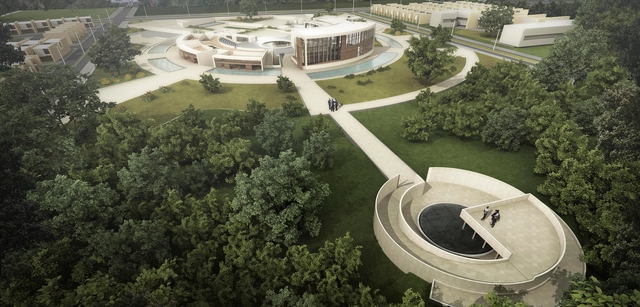
Designed by Fabián Leiva, the Floating Cemetery project was selected as one of the 10 winners in the Thesis Project category of the 2018 Arquitectura Caliente Competition (CAC 2018), a Chilean contest organized by Grupo Arquitectura Caliente and funded by the Ministry of Cultures, Arts, and Heritage.
In 2004, the Ralco reservoir in the Biobío Region was unexpectedly and irreversibly flooded, burying the local Pehuenche community's cemetery beneath its waters. Following years of trying to recover the bodies, studies demonstrated that salvage was unfeasible, leaving the inhabitants helpless in the face of the millions of cubic meters of water separating them from the cemetery. This situation sparked the idea to create a space in memory of a sacred, violated, and unrecoverable site—one that would bring the community closer to their deceased and eternally condemn the event.
Yesterday, Monday (September 10), the 3rd Latin American Landscape Architecture Biennial announced the finalists for the competition, which will take place in Mexico City on September 26 and 27. Organized since 2014 by the Mexican Society of Landscape Architects (SAPM), the biennial seeks to highlight the role of landscape architecture in shaping the habitat in Latin America, with a particular emphasis on the environmental and social challenges facing the region.
"We seek to encourage participation in landscape construction to showcase the broad and diverse panorama of local interventions that ultimately help define a region sharing common challenges and solutions," the organizers state in the biennial's guidelines.
The 19 built works, unbuilt projects, and research papers meet the biennial's criteria, focusing on projects that respect the landscape and its values, demonstrate a commitment to sustainability, and integrate and address social issues, among other criteria.
Francisco Javier Sáenz de Oiza. Image Cortesía de COAM
Architect Francisco Javier Sáenz de Oiza is undoubtedly a pivotal figure in 20th-century Spanish architecture. Designer of iconic works like Torres Blancas and the current Castellana 81, Sáenz de Oiza was twice awarded the National Architecture Award (1946 and 1954), served as Director of the Madrid School of Architecture (1981–1983), and was a figure whose work and theoretical reflections shaped the course of the Modern Movement in Spain.
This year marks the centenary of his birth in the town of Cáseda (Navarra). To celebrate this milestone, the 15th Architecture Week will pay tribute to him with a major exhibition charting his entire career. Titled Centenario Sáenz de Oiza. 1918-2018 (Sáenz de Oiza Centenary. 1918-2018), the exhibition is organized by the COAM Architecture Foundation in partnership with the Directorate-General for Architecture of the Ministry of Development, and curated by his children, architects Vicente, Javier, and Marisa Sáenz Guerra.
In this edition of International Women's Day, we have joined forces with the Colombian print publication de-Arq (Universidad de Los Andes) to showcase the work of five contemporary Colombian women architects, who represent different complementary approaches within our discipline: design, research, teaching, and experimentation.
Today we talk with Lina Toro, a Colombian architect, co-founder of dosmasunoarquitectos, current director of linatoro.arch, and professor at IE University in Spain. "I believe the problem lies in the system's inability to recognize excellence," says Toro.
Alongside an archaeologist and a visual artist, the team led by architect and University of Chile academic Claudia Torres has documented a series of industrial ruins in rural areas throughout Chile. These are structures where geography and nature have played a fundamental role, both as a productive resource and as witnesses to their progressive deterioration after being abandoned decades ago.
Titled “From Noise to Silence: Valuing Industrial Ruins in Rural Areas,” this research, funded by Fondart 2017, selected nine cases across Chile: from the historic use of the coastline associated with mining in the northern desert (Caldera) to logging in the Patagonian forests of the far south (Contao). Each site features unprecedented photographic and audiovisual documentation that showcases the rich natural environment where they were built to spark or secure productive processes that have shaped the socioeconomic and cultural history of each region.
Together with an archaeologist and a visual artist, the team led by architect and University of Chile academic Claudia Torres has documented a series of industrial ruins in rural areas throughout Chile for the project “From Noise to Silence: Valuing Industrial Ruins in Rural Areas,” a research project funded by Fondart 2017.
With a diameter of 100 meters and the capacity to service 36 steam locomotives simultaneously, the authors of this article—Claudia Torres, Sandro Maino, Ricardo Labra, Valentina Soto, and Laura Gallardo—argue that the San Rosendo railway workshops must be declared a Historical Monument in Chile.
From the viewpoints of the town of San Rosendo (Chile), the railway workshop complex can be appreciated in all its splendor, situated at the foot of the town, on the banks of the Biobío River, and connected to the imposing railway bridge that crosses the Laja River.