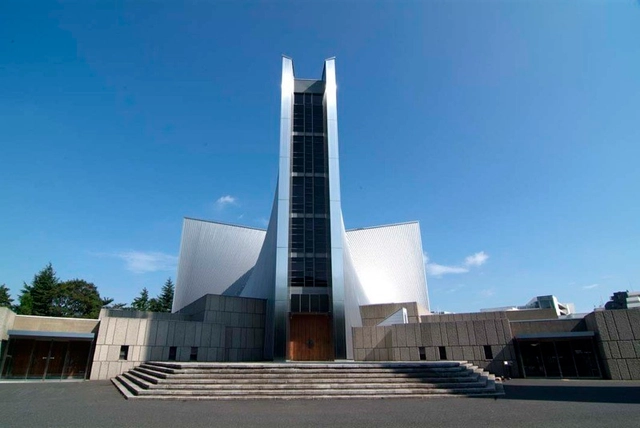
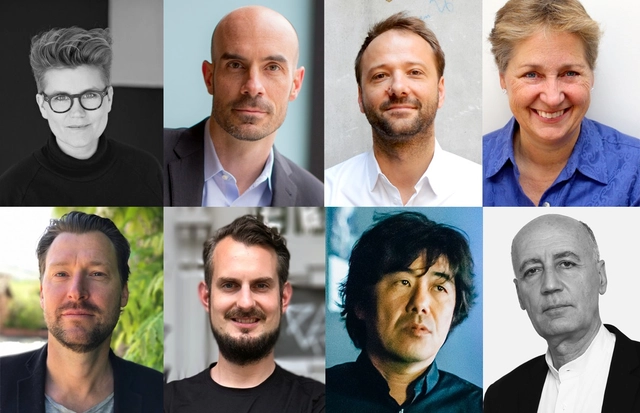
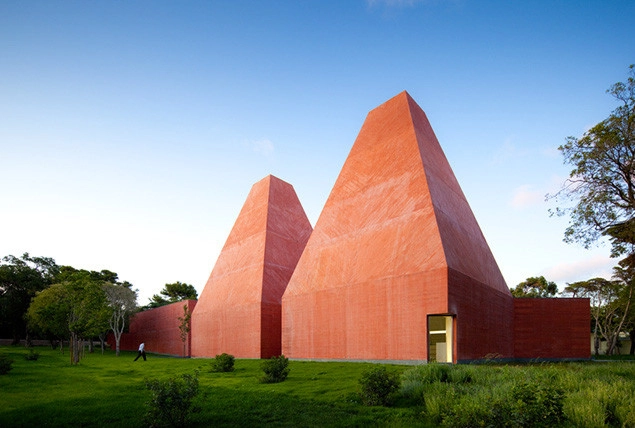
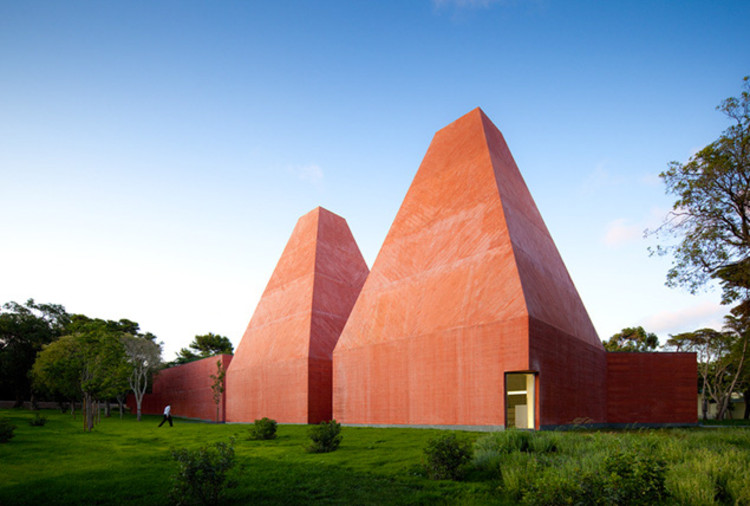
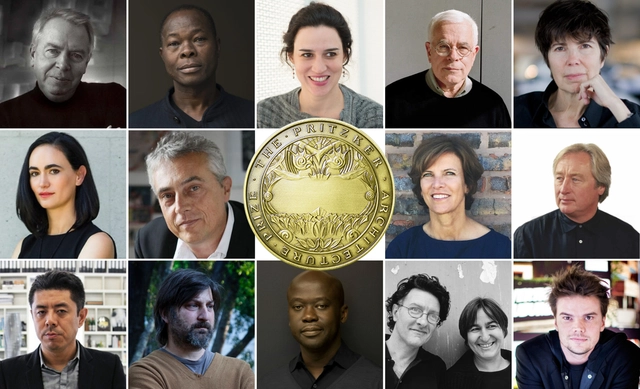
Some of the potential winners of Pritzker Prize 2020, according to our readers in 2019 poll. Image
Once The Hyatt Foundation has revealed the announcement date of the Pritzker Prize 2020 Winner, the speculation has begun to swirl around which architect will be named next laureate of the trophy. What used to be a somewhat predictable award has become less so in recent years, and if you look at the list of people who have won before, you will realize that anything is possible.
https://www.archdaily.com/934351/who-should-win-the-2020-pritzker-prizeAD Editorial Team
IE School of Architecture and Design and ArchDaily, would like to invite you to join this outstanding face to face masterclass by Elvira Muñoz, Director of the Master in Strategic Design of Spaces at IE School of Architecture & Design and Principal of Interior Design for Europe, the Middle East, and Africa at AECOM.
Join us at COSENTINO´s offices in New York or Miami to discover how to implement innovative design changes that impact behavior and align with an organization’s goals — whatever they may be. Elvira will explain how investing in physical and digital spaces has a myriad of benefits for a company allowing them to enhance functionality, brand strengthening and boosting productivity and satisfaction, while also providing sustainable solutions.
IE School of Architecture and Designand ArchDaily would like to invite you to join this outstanding online masterclass by Vivien Chong, currently Associate Partner in the Total Workplace team in Cushman & Wakefield, where she will address how a designer or design firm balance being true to oneself while running a commercially successful firm.
Architectural thinking has a rich tradition of being bound to writing. Be it the vāstu śāstra, the Seven Lamps by Ruskin, or the writings of Thoreau—writing and craft have not only gone hand in hand but are synonymous. Imagination is the moment of architecture and it finds expression in writing as much, if not more, as it does in drawing. Unfortunately, the power of the pen, especially when it comes to architecture-design, remains largely underrated.
Being up to date with new technologies, understanding the best solutions for each project, and knowing the products present in the market and those that will be used in the future. We have observed that these themes arouse great interest in the architects, students, and architecture lovers who visit our site every day. In 2019, ArchDaily began to focus more on materials, covering products, construction techniques, and raw materials in general. The year is coming to an end, so we have compiled the most viewed articles on these topics, trying to understand what they imply for the present and where they will take us in the coming years.
The World Architecture Festival invites shortlisted architects from around the world to present their projects in a range of categories, the winners of which are invited to present in front of a Super Jury for final selection.
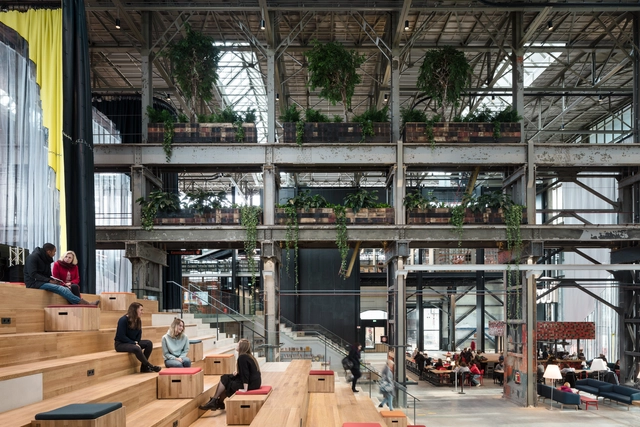
In the 2019 version of the festival, LocHal Public Library by Civic Architects has been named the World Building of the Year concluding this year's three-day event in Amsterdam. This year's winner was selected from a strikingly broad shortlist that included works from offices such as Heatherwick Studio, CEBRA, Nikken Sekkei, and Roger Stirk Harbour + Partners.
As the first day of the World Architecture Festival 2019 is coming to an end, we are happy to announce the winners of the sections already reviewed by the jury. Read on for the winning projects of the INSIDE, FUTURE PROJECTS and COMPLETED categories, among which are works by Heathewick Studio, Büro Happold, Nextoffice and many others.
https://www.archdaily.com/929658/waf-2019-day-1-winners-announcedAD Editorial Team
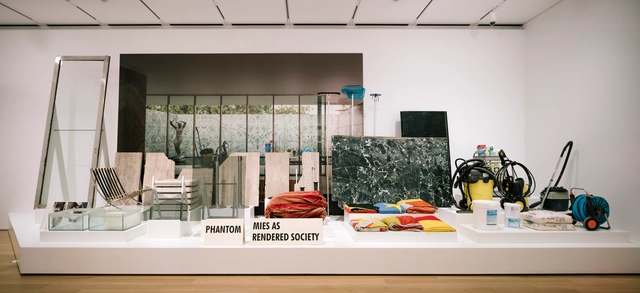
PHANTOM. Mies as Rendered Society is a provocative site-specific intervention developed by Andrés Jaque for the Ludwig Mies van der Rohe–designed Barcelona Pavilion in 2012 and recently reconceived and acquired by the Art Institute of Chicago.
This installation aims to unravel the myth of Mies van der Rohe as a solitary genius. Fundació Mies commissioned Andrés Jaque in 2012 to create a site-specific intervention in Mies’s most famous building, the Barcelona Pavilion. The original Pavilion of 1929 was reconstructed in 1986 with the fundamental addition of a basement. Jaque’s installation focused on this lower level, which was an overlooked yet significant part of the building, introducing new questions for contemporary scholarship about Mies.
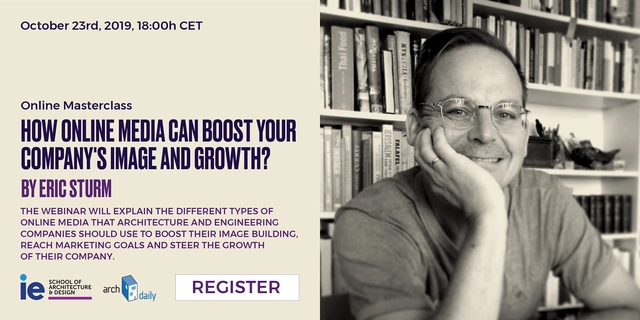
IE School of Architecture and Design and ArchDaily would like to invite you to join this outstanding online masterclass by Eric Sturm where he will explain the different types of online media that architecture and engineering companies should use to boost their image building, reach marketing goals and steer the growth of their company.
The winner was announced by ArchDaily Editor-in-Chief David Basulto at the Future Architect conference at Strelka Institute. The grand prize went to the Coffee Production Plant in Tbilisi, designed by Georgian architecture firm Khmaladze Architects.
Tallinn Architecture Biennale (TAB) is the regions biggest architecture and urban planning festival engaging the public and the profession in the conversation around architecture and our city. The 5th installment of TAB is titled “Beauty Matters: The Resurgence of Beauty” and is curated by Dr. Yael Reisner. TAB 2019 Opening Week takes place in 11.–15.09.2019.
As one of the eldest in a long line of architects that have made Japan one of the most revered countries in architecture, Pritzker-Prize winning architect Kenzō Tange (4 September 1913 – 22 March 2005) helped define Japan’s post-WWII emergence into Modernism. Though he was trained as an architect, Tange was equally as influential as an urban planner giving him significant influence in Japan and around the world at both large and small scales.
Aiming at bringing science, architecture practice and the building industry closer together, VELUX two knowledge-sharing and best-practice platforms will for the first time be held back to back. More than 500 scientists, architects, developers, urban planners, building owners, professional housebuilders, government representatives, and building professionals from North America, China and Europe will convene in the historic site Le Carreau du Temple of Paris, 9 and 10 October, to introduce and exchange their latest research and building practice but also discuss how healthy buildings can be a cornerstone in everyday living today.
https://www.archdaily.com/923496/8th-velux-daylight-symposium-designing-with-nature-in-mind-shaping-buildings-that-make-people-thriveAD Editorial Team
CINCUENTA is an architecture exhibition celebrating the 50th anniversary of the School of Architecture at the University of Bío-Bío, following its founding under the institutional umbrella of the State Technical University (UTE) in 1969.
CINCUENTA is a retrospective exhibition that features 35 projects built over the last 50 years, selected through three different modalities. The exhibition aims to provide an overview that allows the viewer to explore the architectural production of the first school of architecture in southern Chile, emphasizing the collective body of work produced under the same educational framework, regardless of differences in scale, location, or era.
In the spirit of many great architects of the past, from Palladio and John Soane to Le Corbusier and Cedric Price, The Architecture Drawing Prize is an ideal platform for reflecting on and exploring how drawing continues to advance the art of architecture today. It embraces the creative use of digital tools and digitally produced renderings, while recognizing the enduring importance of hand drawing. The organizers invite entries of all types and forms: from technical or construction drawings to cutaway or perspective views – and anything in between.
ArchDaily, Strelka Institute, and Strelka KB have selected a long list of 50 architectural projects from Armenia, Belarus, Estonia, Georgia, Lithuania, Moldova, Russia, Ukraine, and Uzbekistan. The open call invited emerging architects to submit their built projects that emphasize sustainability, research-based and participatory design, and the innovative use of materials. Architects and architecture and design firms that started their practice no more than 10 years ago could apply with projects that were built in the past five years.
Until July 31, the readers of ArchDaily and Strelka Mag can vote for the projects that will make the shortlist.
Eduardo Souto de Moura (born 25 July 1952), the Portuguese architect that won the 2011 Pritzker Prize, is known for designs that are formally simple yet serious and at times, dramatic, created through his thoughtful use of colors and materials. His architecture is both versatile and consistent, contextual yet universal, and rarely affected by current trends or styles.






_by_Studio_Link-Arc_%C2%A9_Su_Chen__Chun_Fang.jpg?1575711195 "© Su Chen, Chun Fang")





.jpg?1568207918&format=webp&width=640&height=580)