Inspiring women architects, planners, and urban policymakers have always existed, yet worldwide, the built environment professions—particularly their upper echelons—remain heavily male-dominated, far more so than other fields like education or healthcare.
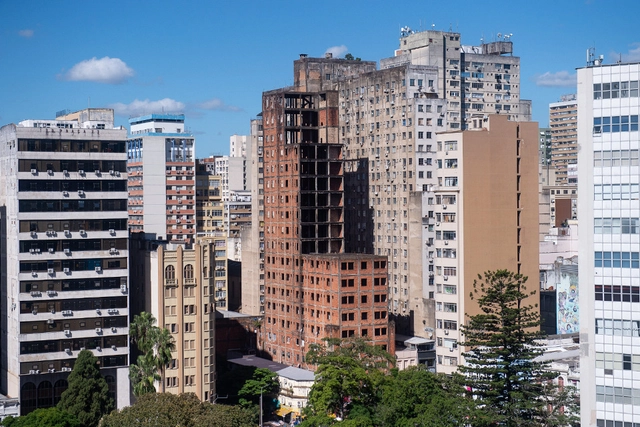
In the film Aquarius, directed by Kleber Mendonça Filho, the character Clara, played by Sônia Braga, refuses to sell her apartment—located in a condominium building—to a real estate developer. Her neighbors, on the other hand, accept the deal. In an article for Estadão, economist Pedro Fernando Nery views the case through a lens opposite to the cinematic narrative: instead of a hero resisting unscrupulous real estate capital with no respect for Recife's coastal landscape, Clara is actually the villain.
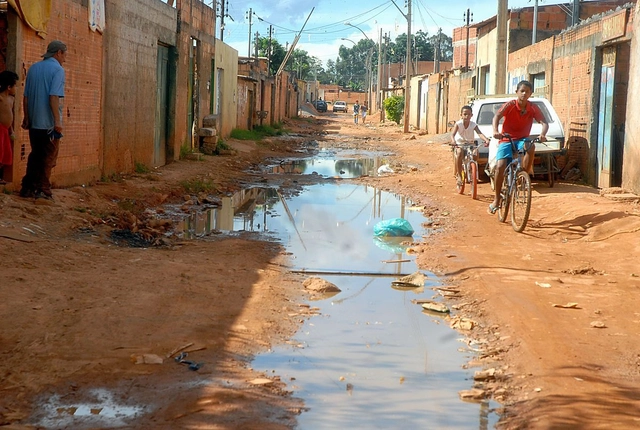
Photo: Valter Campanato | Agência Brasil, via CicloVivo
Even as 5G technology is about to launch in major cities, placing Brazil among a select group of countries with advanced technology installed, 35 million people still lack access to quality drinking water and 100 million do not even have sewage collected from their homes. Furthermore, a volume of sewage equivalent to 5,300 Olympic swimming pools is discharged into nature every day without any treatment in the country.
We are still far from the goal of limiting global warming to 1.5°C above pre-industrial levels and avoiding the worst risks of climate change. However, this target remains within reach, according to the latest report by the Intergovernmental Panel on Climate Change (IPCC)—and this hope must guide the political and economic decisions of this decade, according to WWF-Brazil.
Walking through the city. A territory in constant motion. It is complex, shaped by an infinite tangle of yearnings. These may drive the construction of a new place—whether physical or otherwise—but also the deconstruction of others that, despite being well-established, remain burdened with past conceptions. Amidst all this, there is an inevitable need for individuals to seek spaces where they can connect with others, so that their diverse identities may find expression.
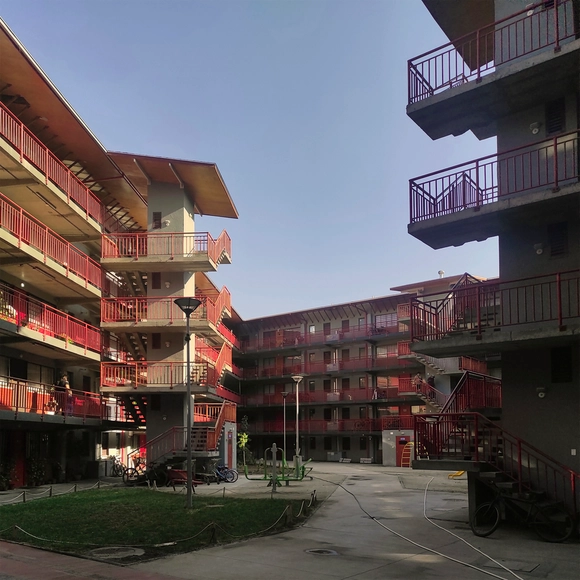
"The city is conflict, just as society is conflict, but the types of conflict that take shape and express themselves in each city reveal what each is like," says urban anthropology specialist María Cristina Cravino regarding the right to the city in Latin America. In a growing context of cities undergoing gentrification, where high land and housing prices displace working-class residents, the new Barrio Maestranza Ukamau offers a compelling example that has much to say about potential pathways to public-interest housing in Santiago, Chile.
Located on the grounds of the former San Eugenio railway workshops in central Santiago, between Santiago Watt and Exposición streets in the Estación Central district, the project was not only designed by architect Fernando Castillo Velasco in his final years and continued by his son Cristián Castillo alongside Elías Becerra and Pamela González, but also by the community of families organized through the assemblies of the Ukamau Social and Popular Movement, where they deliberated and discussed their future homes step by step. The project spans nearly 3 hectares and comprises 424 apartments.
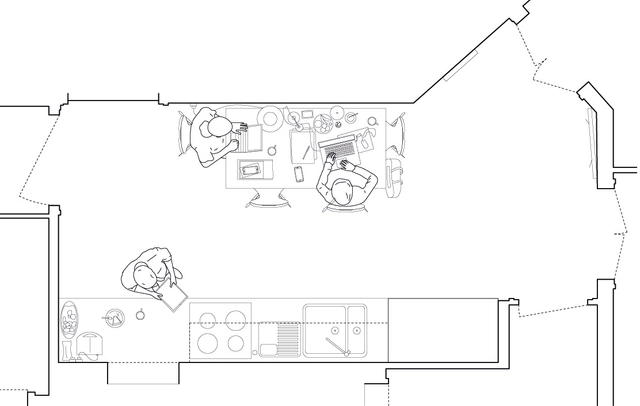
“The House Through the Dining Room: Architecture Around the Table” is a research project conducted by architect Francisco Javier Fernández García as part of the Master’s Degree in Advanced Studies in Architecture at the Barcelona School of Architecture (ETSAB). Advised by Xavier Monteys and written in the style of an “editorial essay,” the work aims to bring to the table—quite literally—the role of the dining room as a domestic space capable of reshaping our understanding of the home. Rather than simply compiling a collection of dining rooms, it features a diverse range of images in a comparative exercise, juxtaposing them to reveal shared characteristics. Discussing the dining room serves as a pretext to illuminate many other issues related to the home and the act of dwelling.
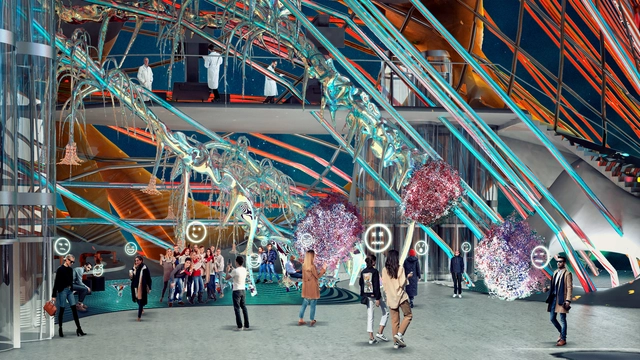
El poder de la Data - Render interior conceptual. . Image Cortesia de Online Lab of Architecture (OLA)
From NFTs to the metaverse and the benefits of real-time rendering, this is an opportune moment to discuss the latest trends in architectural visualization.
With this in mind, we want to open the debate and hear your thoughts on the subject. What can we learn from other related industries, such as cinema, video games, and industrial design? How can architecture contribute to and advance the world of visualization?
Pingado, carioca, espresso, drip, americano, cappuccino. Unlike in architecture, in this case, form is the least important factor when it comes to declaring a passion for coffee. A loyal companion since the college days of pulling all-nighters, and one that continues to accompany the daily creative process throughout the careers of many architects, this traditional beverage holds a special place in the profession and deserves to be celebrated. Today, March 14, is World Coffee Day. To celebrate, we feature a selection of projects where this sensory-awakening ingredient takes center stage.
Who do you design a city for? Your answer is unlikely to focus on a baby or a child under the age of six—the age bracket that defines early childhood. Yet, a wide range of guidelines and actions can be taken to integrate this demographic into urban planning. After all, this is when a citizen's first interactions with urban life begin, making it essential to provide the most welcoming environment possible.
https://www.archdaily.com/1131869/how-to-develop-early-childhood-friendly-neighborhoodsArchDaily Team
With every fraction of a degree of global warming, the impacts of climate change become more intense. In the Sixth Assessment Report of the Intergovernmental Panel on Climate Change (IPCC), 278 scientists from 65 countries demonstrate that to keep the 1.5°C limit established by the Paris Agreement within reach, global greenhouse gas (GHG) emissions must peak within the next three years.
https://www.archdaily.com/1132298/6-key-takeaways-from-the-2022-ipcc-report-on-climate-change-mitigationClea Schumer, Sophie Boehm, Taryn Fransen, Karl Hausker e Carrie Dellesky
Municipalities, much like people, are dynamic entities, constantly evolving to keep pace with and adapt to the social, economic, and environmental shifts of their time. By the same token, the vision of how the ideal city should be planned has continually been shaped by the reality and prevailing thought of each era.
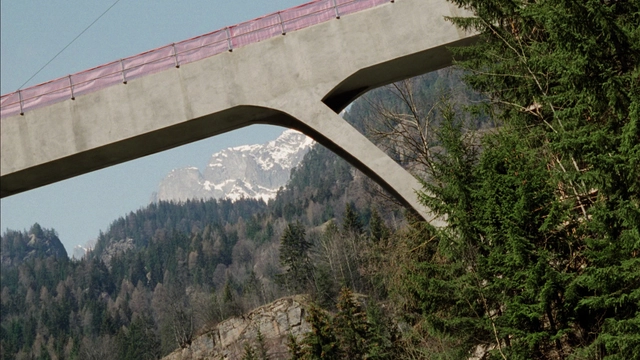
Still from Maillarts Brücken (2001), by Heinz Emigholz.
Photography has historically been used to document architecture. Indeed, in the very first photograph, the subject captured was the estate of its inventor, Joseph Nicéphore Niépce. While commonly viewed as a mere recording of the actual work of art (the captured building), architectural photography is more than just a tool at the service of these structures; it is an art form in its own right, possessing its own language and aesthetic concerns.
Cities play a fundamental role in the search for solutions and policies to mitigate the problems driving global climate change. Today, urban areas account for more than 70% of carbon dioxide (CO₂) emissions—one of the main causes of the greenhouse effect and its consequences for the environment and human life.
In his most recent book, Survival of the City, economist Edward Glaeser diagnoses the conflicts of interest that permeate the urban debate. According to him, there is a fundamental opposition between insiders—longtime residents interested in maintaining the status quo and increasing their property values—and outsiders—new residents looking for affordable housing and new opportunities for work, consumption, and urban space.
https://www.archdaily.com/1132011/nimby-and-yimby-two-visions-of-the-cityAndrey Barbosa, Gabriel Nunes, Guilherme Pereira e Pedro Portes
Just like much of popular culture, for most of the twentieth century, architectural media relied on magazines sold at newsstands and supermarkets. Through them, readers discovered what was being built, tracked technological innovations, and, to some extent, popularized architectural discourse, taking it beyond the academic and elitist confines of universities and conferences. With the rise of the internet, the format of this information shifted, finding new ways to reach the public. Social media and specialized websites became crucial channels for sharing information and services, expanding public access to architectural issues. Today, every major social network hosts profiles dedicated exclusively to architecture, tailoring their content to each specific platform.
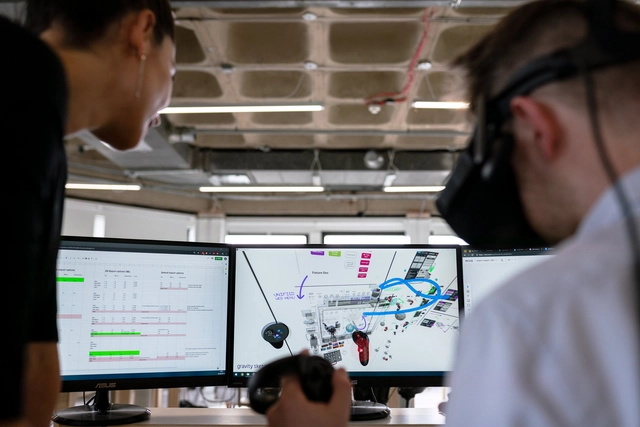
Two thousand five hundred reais is the average price of a good virtual reality headset. If you opt for the full experience, shell out another four thousand reais to add sensors and controllers. These models must be connected to a high-performance computer to process information and transform spaces into 3D models, costing at least five thousand reais. In addition to the headset, sensors, and computer, software is also required, with annual licenses that likewise run into the thousands. In short, keeping up with technology nowadays is quite a costly endeavor.
The world's population is aging, and one of the major questions raised by this demographic shift—with more older adults than young children—is whether municipalities are equipped for these citizens to use urban spaces safely and accessibly, and to feel included in the social and civic life of their communities.
A United Nations (UN) report estimates that the number of individuals aged 65 or older is expected to double by 2050, growing from 727 million in 2020 to approximately 1.5 billion—representing 16% of the global population.
https://www.archdaily.com/1132240/how-to-make-a-city-age-friendlySomos Cidade