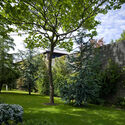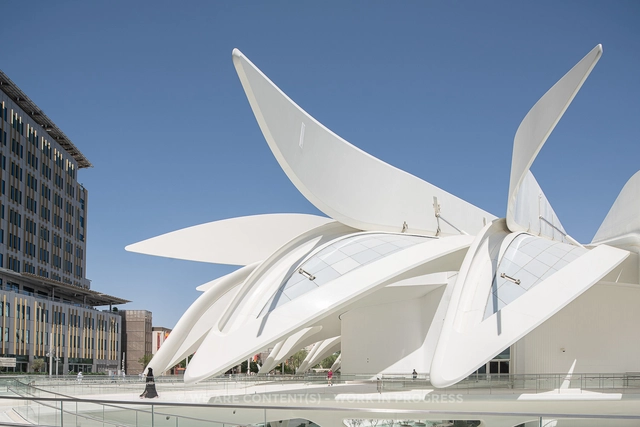
Provincia Festival aims to create an open space for dialogue and the exhibition of civic interest topics, emphasizing responsible participation in provincial architectural development.

Provincia Festival aims to create an open space for dialogue and the exhibition of civic interest topics, emphasizing responsible participation in provincial architectural development.

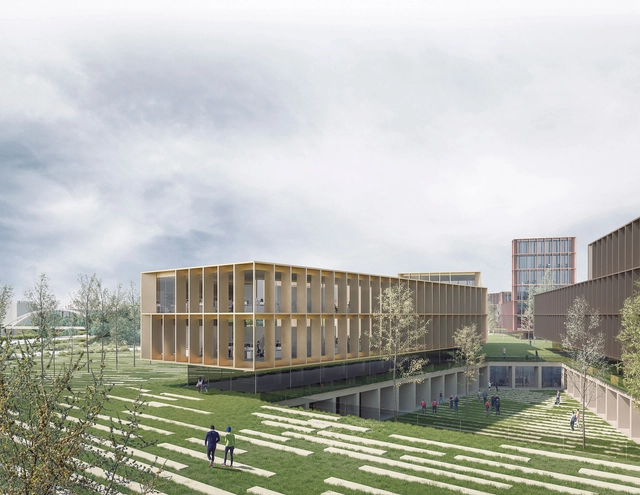
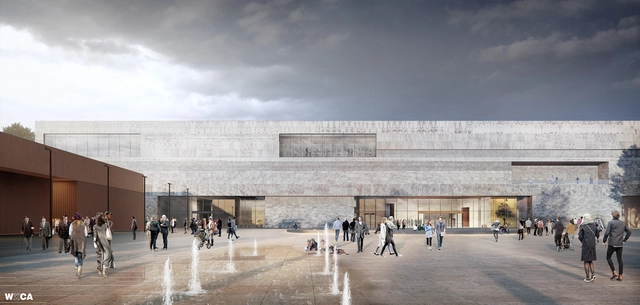
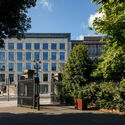
A new renovation project is underway at the University of Guadalajara's Health Sciences Campus, led by Nr24arquitectura. Located at Sierra Mojada 950, Independencia Oriente, 44340 Guadalajara, Jalisco, Mexico, the project covers a total area of 10,000 m² and is expected to be completed by 2019.

The website Mobilize, Brazil's first platform dedicated exclusively to sustainable urban mobility, has published a list of 30 must-see documentaries on the subject. Divided into feature and medium-length films, the selected titles address urban mobility from various perspectives, ranging from mass transit and non-motorized personal transport to urban culture and the June 2013 protests in Brazil.

As part of the commemorations marking the 30th anniversary of the passing of architect Luis Barragán, Cosentino and Arquiphilia invited 20 Mexican architecture firms to participate in a group exhibition titled "Inspiración, magia y embrujo 2018" (Inspiration, Magic, and Spell 2018). The initiative proposed an exercise to demonstrate how collaboration and creativity are key to design, challenging participants to create a sculpture using Dekton® by Cosentino to pay tribute to the work of the 1980 Pritzker Prize laureate. The resulting models were subsequently exhibited at the Instituto Cabañas in Guadalajara.
Operational coordination was led by Arquiphilia, represented by architects Bertha Elia Gutiérrez Gómez and Carlos Lassala Mozo, who previously organized the Do It Yourself exhibition in Guadalajara in September 2015. Mónica Urbán, from Cosentino's corporate team, was also part of the coordination team, serving as the liaison between the brand and the architecture firms. Before fabrication, the participants selected their materials from a catalog, evaluating different characteristics to find the ideal match for what they wished to express in their pieces.

I recently learned that the word "testa" means "head" in Italian. It made me think of Clorindo Testa and how fitting his last name was.
Yesterday marked the 95th anniversary of his birth. Possessing infinite creativity and charisma, he was one of those personalities that appear once every century. In him, the intelligence of the architect coexisted with the sensitivity of the artist, the precision of the professional with the joy of a child, and greatness with humility. His hand did not tremble when curving a line or adding color to a plan.
To mark this anniversary, we look back at some of his quotes and anecdotes.

From September 28 to October 7, Madrid will host the 15th Architecture Week, organized by the Official Association of Architects of Madrid (COAM) and the COAM Architecture Foundation, in collaboration with the Madrid City Council and the Embassy of Italy, with ArchDaily as a media partner. This year's edition will feature Milan as the guest city, following in the footsteps of Paris, New York, and Berlin in previous years.
With this new edition of Architecture Week, COAM's primary goal is to continue bringing architecture and urban development closer to society as a whole, while showcasing the valuable architectural heritage that makes Madrid one of the world's leading capitals for the discipline.

The 16th International Architecture Biennale China Pavilion will be on display in Venice, Italy, from May 26 to November 25, 2018. On April 27, a press conference for the China Pavilion was successfully held in Beijing, officially announcing this year's theme: "Building a Future Countryside." The curator, Professor Li Xiangning, outlined the curatorial concept and structural framework of the exhibition. He noted that the Chinese countryside has become an open field brimming with diverse possibilities and opportunities, making the theme "Building a Future Countryside" a direct response to this year's Biennale theme, "Freespace." The exhibition features six sections—"Production," "Tourism," "Community," "Culture," "Dwelling," and "Future"—showcasing recent rural projects by Chinese architects. It aims to return to the birthplace of Chinese culture to recover forgotten values and overlooked possibilities, offering a vision for the future of our countryside.

The Municipality of Cascais, with technical support from the OASRS, launched the "Sommer Pavilion International Ideas Competition" in May of this year for the construction of a temporary intervention in Jardim da Parada, next to Casa Sommer, in downtown Cascais, Portugal. The project "Gravidade em Suspenso," by architect Inês Abreu Ribeiro and engineer Fernando Coutinho de Vasconcelos Pereira da Silva, was named the winner. Out of the 49 proposals evaluated, the jury considered that the winning entry stood out for its “stimulating approach to the competition theme, exploring different states of water in the form of a 'rain pavilion' and a 'fog pavilion' that relate to each other.”

The History Channel has released its first entirely Brazilian production. Titled Mil Dias - A Saga da Construção de Brasília, the series tells the story of the construction of the new capital from the perspective of four characters who built the city in the cerrado: a surveyor, an engineer, an architect, and a construction worker.

The site of a fire that left part of Luz Station in ruins in 2015, the Museum of the Portuguese Language, located inside the iconic station, had its new roof completed this week. Built with nearly ninety tons of certified timber from the Amazon, the new roof structure is another completed element of this project, which will ultimately cost around R$ 60 million.

In 2010, humanity marked a new milestone: more than half of the world's population lives in cities. And by all accounts, this process only seems to be intensifying, alongside rising consumption, resource depletion, increased pollution, traffic congestion, water scarcity, and a lack of planning. Is urbanization spiraling out of control?
Drawing on a published study by Daniel Hoornweg and Kevin Pope, British newspaper The Guardian reflects on an extreme scenario: if countries are unable to manage fertility rates and urbanization continues unabated, over the next 35 years, more than 100 cities will each have a population exceeding 5.5 million.

Lima has a strong tradition of courtyard houses, which is why we will always find this typology familiar and captivating. We recognize these courtyards as well-contained and distanced from one another, with each having its own time-space within the home.

The Competition for Urban Space Intervention was created to establish a tradition of developing innovative ideas on contemporary themes through temporary installations in Tuxtla Gutiérrez, Mexico. Organized by the Festival Provincia, the event will take place in April 2018, offering locals, national visitors, and international tourists new experiences to reflect on their environment.

Designed by the firm of Ramos de Azevedo and built in the famous Praça Clovis in downtown São Paulo between the 1920s and 1940s, the Palácio da Justiça de São Paulo occupies an area of 25,000 square meters. The building features a symmetrical layout with four corner towers whose wings house the interior spaces.
Between 2004 and 2009, the building's facades and the copper roof of the Jury Hall were restored by the firm APBA – Arquiteto Paulo Bastos e Associados. Later, between 2014 and 2016, another section of the building was restored by Kruchin Arquitetura.

One of the most highly anticipated collateral events of the 16th Venice Architecture Biennale was the *Young Architects in Latin America* (YALA) exhibition, an open call organized by Architecture-Studio through its CA’ASI cultural center to mark its tenth anniversary.
Following editions focused on Chinese, Arab, and African architecture, CA'ASI's fourth open call invited young architects from across Latin America to showcase their built work on a global stage. Out of more than 200 submissions, 60 Latin American practices were selected for the digital catalog and the exhibition presented in Venice. In the digital catalog, the organizers note that "in a region so vast, diverse, and in constant flux, we find common characteristics among the submitted works that bear witness to the efforts of young architects to improve habitat conditions in Latin America."
At the exhibition's opening ceremony on May 25, the organizers announced 15 honorable mentions and 3 winners, including practices from Mexico, Argentina, Chile, Ecuador, and Brazil, among others. Discover them below:

An advocate for architecture closer to the natural environment and focused on people, Toyo Ito is currently one of the world's most influential and award-winning Japanese architects. During a visit to Brazil, Ito spoke to Haus magazine about the verticalization of cities—especially Tokyo—the ethereal qualities of architecture, and the lessons of contemporary Japanese architecture for the world.

The NGO Soluções Urbanas launched a crowdfunding platform earlier this month to enable technical assistance, the purchase of materials, and renovation work in precarious housing. Named Arquiteto de Família, the tool was developed with sponsorship from CAU/RJ.
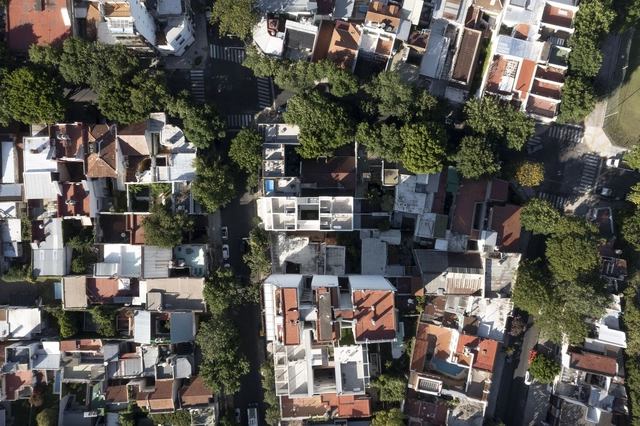
The platform's goal is to facilitate access to better housing conditions, and the funds raised through the tool can be combined with resources from other sources, such as microcredit and barter fairs.