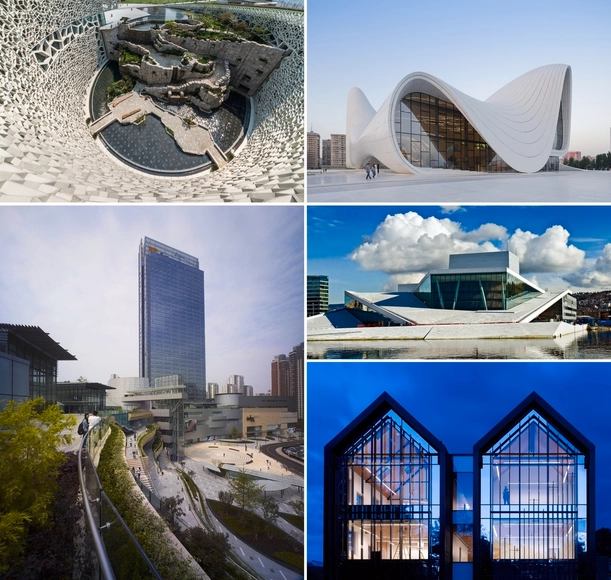
The Royal Institute of British Architects (RIBA) have revealed that Dame Zaha Hadid will receive the 2016 Royal Gold Medal — the first sole woman to be awarded the UK's highest honour for architects in her own right. Previous female winners (Sheila O’Donnell in 2015, Patty Hopkins in 1994, and Ray Eames in 1979) were each recognised alongside their husbands and practice partners.
Given in recognition of a lifetime’s work, the RIBA Royal Gold Medal is approved personally by Her Majesty The Queen and is awarded to those who have had a significant influence "either directly or indirectly on the advancement of architecture." Other notable Royal Gold Medallists include Frank Gehry (2000), Lord Norman Foster, Baron of Thames Bank (1983), Ludwig Mies van der Rohe (1959), Le Corbusier (1953), and Frank Lloyd Wright (1941). The medallists' names are engraved into the marble wall at the RIBA's headquarters in London.
In 2000 Bart Lootsma released Superdutch, a bestselling opus on the mythology of Dutch architecture and its thought leaders, which provided a glimpse into the enduring humanist approach to design that has earned global praise for the country's architects. In the book, Lootsma profiled a handful of Dutch firms including UNStudio, West 8 and MVRDV. Fifteen years later, students from Canada's Simon Fraser University formed a collective called Groep Drie to continue the conversation. From Herman Hertzberger to Ben van Berkel, Groep Drie sat down with The Netherlands' most innovative designers to talk urbanism, spiritualism, color, and more.
Read on to find out what The Netherlands' leading architects had to say.
It is surprising then to find the man or his eponymous firm Foster + Partners absent from a list like Fast Company’s “The World's Top 10 Most Innovative Companies in Architecture,” organized into superlatives: MMA Architects, “for thinking outside the big box,” Heatherwick Studio, “for reimagining green space,” or C.F. Møller Architects, “for rethinking high-rise living.” This is not to say that Foster or his firm should be substituted for any of these deserved accolades, but rather that for five decades Foster and his firm have ceaselessly worked to enhance and expand on the human experience with architectural solutions that are both inventive and practical - a fact that is perhaps lost as a result of his position within the architectural establishment.
With that in mind, we thought it was worth highlighting the many occasions over the decades where Foster + Partners has shown themselves to be among the world's most innovative practices. Read on for more.
It's no secret that the unique specificities of the architectural profession can lead to a lot of jargon. In fact for many non-experts, the opaque nature of architectural language can be one of the most significant barriers to taking part in a discussion about their local environment. But why this juxtaposition between regular and professional speech? If we wish to make the architecture profession less homogenous, shouldn't we conceptualize a new way of talking about architecture? That's why we want to hear from our readers: which words do architects use too much? And what are the wider effects of this language, both inside and outside of the architecture profession?
In It’s A Wonderful Life the film’s protagonist George Bailey, facing a crisis of faith, is visited by his guardian angel, and shown an alternate reality where he doesn’t exist. The experience gives meaning to George’s life, showing him his own importance to others. With the increasing scale of design competitions these days, architectural “could-have-beens” are piling up in record numbers, and just as George Bailey's sense of self was restored by seeing his alternate reality, hypothesizing about alternative outcomes in architecture is a chance to reflect on our current architectural moment.
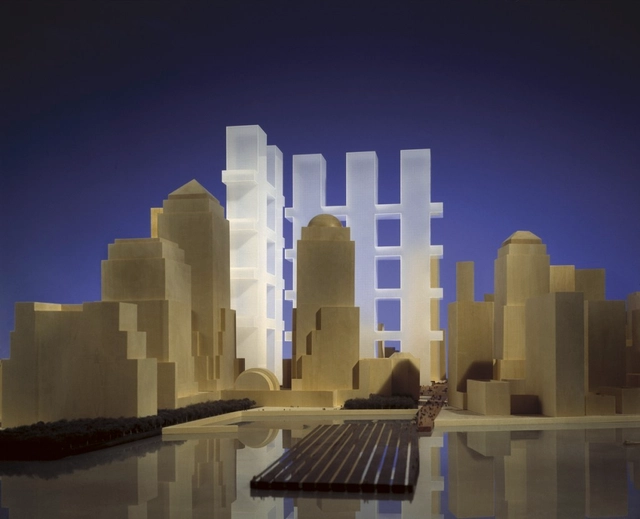
Today marks the one-year-anniversary of the opening of Phase 3 of the High Line. While New Yorkers and urbanists the world over have lauded the success of this industrial-utility-turned-urban-oasis, the park and the slew of other urban improvements it has inspired almost happened very differently. Although we have come to know and love the High Line of Diller Scofidio + Renfro and James Corner Field Operations, in the original ideas competition four finalists were chosen and the alternatives show stark contrasts in how things might have shaped up.
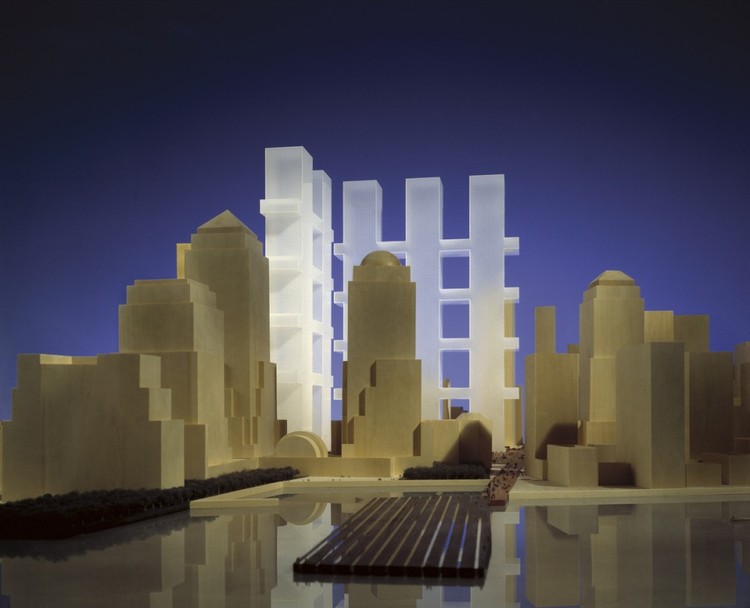
On this key date for one of the most crucial designs of this generation, we decided to look back at some of the most important competitions of the last century to see how things might have been different.
This article is part of ArchDaily Essentials, a series of articles which give you an overview of architecture's most important topics by connecting together some of our best articles from the past. To find out more about ArchDaily Essentials, click here; or discover all of our articles in the series here.
https://www.archdaily.com/773836/ad-essentials-renderingAD Editorial Team
Conceptual artist Wilfredo Prieto's kitchen. He designed the kitchen himself and had it made by local craftspeople. Image Courtesy of Hannah Berkeley Cohen via Curbed
For decades, Cuba's communist economic system has essentially outlawed all forms of private architectural work. In 2011 though, wide-ranging economic reforms brought a challenge to this status quo. In this article, originally published on Curbed as "In Cuba, Architecture and Design Blossom Under New Laws," Julia Cooke explores how these laws to bring about a more flexible economic system are allowing a different kind of architecture to emerge.
This May, visitors were allowed into Havana's long-defunct Tallapiedra electric plant for the first time since it was shuttered in the 1960s. They could climb the grated stairs to the plant's nave, see how the light glinted off unchipped white and green tiles set in place in 1915, how tiny, stalky trees had grown out of clumps of dirt where machinery once sat, how the high, church-like central space and the split-level, open workspaces on one side might be adapted to any number of uses. The opening—for locals and some of the thousands of tourists in Cuba for the Twelfth Havana Biennial—was the work of Claudia Castillo and Orlando Inclán, and their eight-year-old think tank, Habana Re-Generación.
In the latest video on architecture and urbanism from 32BNY, Steven Holl and his associate Dimitra Tsachrelia sit down with Elia Zenghelis, a founding partner at OMA and former lecturer at the Architectural Association in London. After forty-five years in architecture, Zenghelis has come to a series of conclusions, including a long-standing belief that men obstruct the design potential of their female colleagues, creating an imbalance in the professional landscape. "Women are much better architects than men," proclaims Zenghelis, former professor to Steven Holl, Rem Koolhaas and Zaha Hadid (as well as a former collaborator of the latter two). Sitting in Holl's New York office, Zenghelis argues that women have a certain intuition that proves essential to the creation of great design. "It's men that dominate the scene - something has to happen," he says.
The Barcelona Pavilion was officially only used once, and that was on the 27th of May, 1929, when King Alfonso XIII of Spain participated in a ceremony for its opening. Its role, according to an official statement by President Paul von Hindenburg, was to “present the Spirit of the New Germany: simplicity and clarity of means and intentions—everything is open, nothing is concealed.” As the first official participation of Germany in an international event since the catastrophic end of the First World War, it was a day of enormous symbolic importance, attended by diplomats, aristocrats and dignitaries. Within a few years the peace would collapse, in Barcelona as much as in Berlin, but for a moment, in May, modernity was met with optimism.
The Barcelona Pavilion was intended to embody this moment. Free of external ornament, the building was made of the most luxurious materials. Walls were fashioned of thin plates of luminous semi-precious stone, from green polished marble to golden onyx. According to Philip Johnson’s influential account, they didn’t physically limit space, but rather suggested flowing movement, and didn’t divide so much as bind; bringing the inside to the outside by continuing beyond the roofline into the garden. While the columns provided a kind of cartesian grid of points tethering the roof, the walls were positioned freely. In the courtyard was a bronze nude, arms aloft in a gesture that might be dance, might be grief, reflected in a still pool. With the asymmetrical walls, the luxurious stone, the bright light, the podium on which it sat; the pavilion was at the same time both a hyper-modernist building, and a classical ruin.
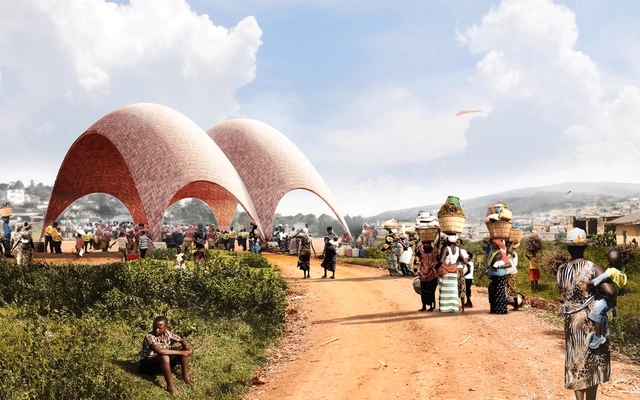
Foster + Partners has unveiled designs for a droneport in Rwanda, proposed in an attempt to bring more efficient medical care and commercial delivery services to communities in Africa where there is a lack of infrastructure required to meet the population's needs.
"Just a third of Africans live within two kilometres of an all-season road," explains the press release. "It would require unprecedented levels of investment in roads and railways to catch up with the exponential growth in Africa’s population, which is set to double to 2.2 billion by 2050." Foster + Partners instead proposes to leap that development hurdle by making use of 21st century technology - namely drones.
Prefabrication is not a new idea for architects. It was a staple of the post-war modernist ideal, a great dream that precise modern structures would be created in clean factories and then shipped to site. However, the realities of post-war prefab were far from this ideal; buildings were often poorly designed or poorly constructed, and by the end of the century prefabrication was merely a footnote in the catalog of construction methods. In the 21st century though, prefabrication is experiencing a resurgence. In this article originally published on Autodesk’s Redshift publication as "Future of Construction: Your Next Building Won’t Be Built—It Will Be Manufactured," Autodesk's Phil Bernstein looks at the current wave of prefabrication, and answers the question: why now?
And BSB isn’t the only one with this type of ambitious plan for the future of construction. The industry is entering the age of the mass-manufactured building. Prefabrication is growing up, reaching a new level of maturity that is now going to change the industry and define new categories of building. Check the trailer-park stereotype at the door.
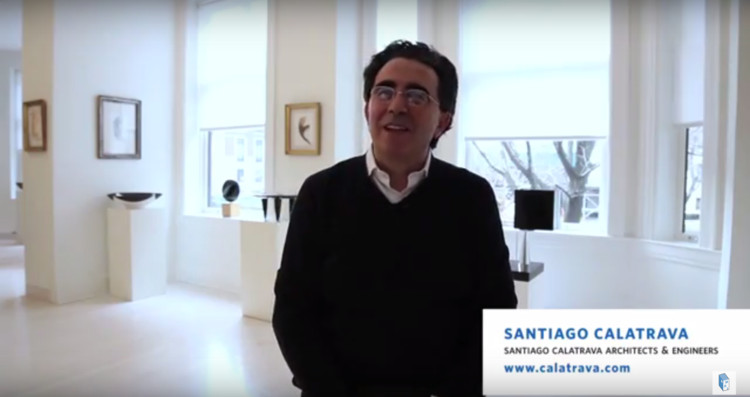
Earlier this year we had the chance to interview Spanish-born architect Santiago Calatrava in his New York apartment. Trained first as a structural engineer, he has designed and completed over 50 projects, which include bridges, transportation hubs, theaters and even a skyscraper. Calatrava has built a career through public architecture, and thanks to open competitions he has received commissions for mostly large-scale, cultural and transport projects. Many cities around the world—from Europe to the US and Asia and beyond—can proudly lay claim to the structurally dramatic projects that Calatrava has dreamed up.
His architectural explorations fuse engineering and art, and result in impressive structures that are honest in revealing the forces at play. In this respect, he is a pioneer; when working on his earliest projects, he didn’t have access to software and tools that are ubiquitous today.
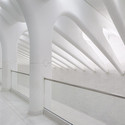
We asked him about his definition of architecture, his high-profile commission for the World Trade Center Transportation Hub, and the challenges he has faced while running his practice. The WTC hub is one of Calatrava's most-anticipated projects in New York; though its inherent complexity has resulted in a long construction period, he has created a project rich in not only form, but also in spatial quality.
Some of Calatrava's projects use an almost modern-day gothic vocabulary—where big spans, vaults and thin lines define large spaces. Other works, such the St. Nicholas Cathedral in New York, mobilize larger masses and big, stacked walls.
Watch the interview above to learn how Calatrava sees the intersection of art and architecture.
There is perhaps no better display of modern architecture’s historical victory than Jacque Tati’s film Playtime. In it, a futuristic Paris has left-for-dead the grand boulevards of Haussmann, in favor of endless grids of International Style offices. The old city is reduced to longing reflections of Sacré-Cœur and the Eiffel Tower in the glass of these shiny new monoliths. But the irony central to the film is that this construction is created through mere surface treatments, and as the narrative unfolds, cheap mass-production withers in a world where the veneer has triumphed over craftsmanship and polish. In short, Modernism hasn’t always been all it's cracked up to be.
In the Museum of Modern Art’s new exhibition, "Endless House: Intersections of Art and Architecture," the simplicities of mass-market modern homes are abolished by artists and architects who, in examples from the 1940s to the present, have chosen to use the dwelling as a platform for universal messages and as an arena for architectural experimentation. In the same way that photography freed painting from the terrestrial concerns of realism, the simplicity of modernism liberated artists and architects to subvert extant conventions of buildings.
Often, all that is needed for that big break in your career is getting experience at the right firm. But getting your foot in the door is daunting, especially if your ideal firm is one where thousands of other architects are applying constantly, regardless of whether a vacancy has been advertised. In this article originally posted on The Architect's Guide, Brandon Hubbard reaches out to some of the world's top architecture firms (Zaha Hadid Architects, Snøhetta, Perkins+Will, BDP and Callison) to find out how you can maximize your chances in the application process.
I recently reached out to several of the world’s top architecture firms and asked them a series of questions on what they look for in potential architecture job applicants.
After my discussions with these firms I discovered a common theme in how they acquire many new hires. As I covered in a previous article, Want a Great Architecture Job? Don't Send a Resume, many new employees are found through personal references and word of mouth. Developing these relationships within the architecture community is essential for a successful career.
The questions are structured to cover the various steps of the architecture job application process, from the first point of contact to the interview.
For the latest episode of The Urbanist, Monocle 24's weekly "guide to making better cities," the team explore the role of bilateral inspiration between metropolises across the world. Examples of cities relying on one another to draw lessons from and progress can be seen across the world: from the ways in which London and New York City tackle similar urban problems, to how a bike-sharing scheme in Paris has proven to be contagious. The show also visits Vienna, where its Imperial heritage is being imitated the world over, and the show ponders whether the fact that every continent "claiming to have its own Venice" is actually a good thing?
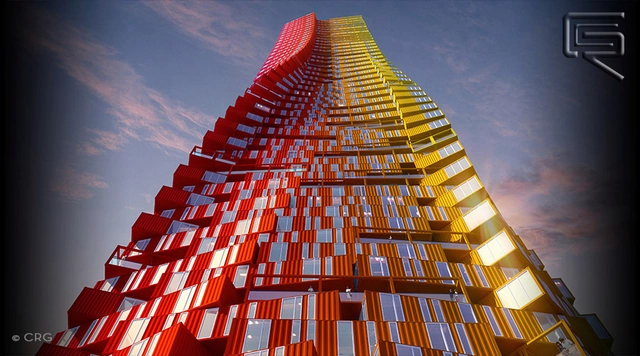
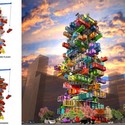
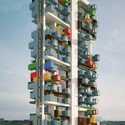
At ArchDaily, we believe it's important to keep our readers up to date on all the most interesting developments in architecture. Sometimes, we will present ideas and projects with a critical eye; however, in many cases we simply present ideas neutrally in the hope that it will spark some discussion or critical response within the profession. Recently, a series of connected news articles about proposals for high-rise shipping-container housing provoked just such a response from Mark Hogan, principle at San Francisco-based firm OpenScope. Originally posted on his blog Markasaurus here's his reasoning for why, contrary to the hype, "shipping containers are not a 'solution' for mass housing."
What’s wrong with shipping container buildings? Nothing, if they’re used for the right purpose. For a temporary facility, where an owner desires the shipping container aesthetic, they can be a good fit (look, I’ve even done a container project!). For sites where on-site construction is not feasible or desirable, fitting a container out in the factory can be a sensible option, even though you’ll still have to do things like pour foundations on site. It probably won’t save you any money over conventional construction (and very well might cost more), but it can solve some other problems.
The place where containers really don’t make any sense is housing. I know you’ve seen all the proposals, often done with an humanitarian angle (building slum housing, housing for refugees etc) that promise a factory-built "solution" to the housing "problem" but often positioned as a luxury product as well.
While the term “ecosystem services” may sound like a corporate antithesis to the course of natural order, it is actually an umbrella term for the ways in which the human experience is favorably altered and enhanced by the environment. Ecosystem services are therefore an important factor in creating cities which provide the maximum benefit to their residents with the minimal harm to their environment.
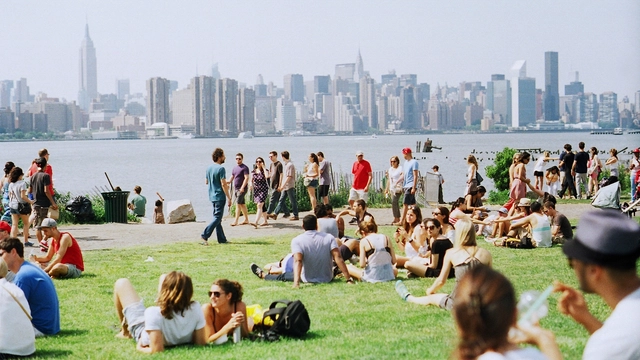
Aiming to find out how city planning can affect the provision of these ecosystem services, a new study published in Frontiers in Ecology and Environment by researchers at the University of Exeter's Environment and Sustainability Institute and Hokkaido University's Division of Environmental Resources evaluates the repercussions of rapid and fragmented urbanization and the possible detriment to ecosystem services and human well-being. In particular, the study is concerned with approaches to land-use and the outcomes they yield on the environment. Studied are two opposing tactics: a “land-sharing,” sprawl model (think Atlanta or Houston), or “land-sparing,” tight-knit urbanism (think New York or Tokyo).
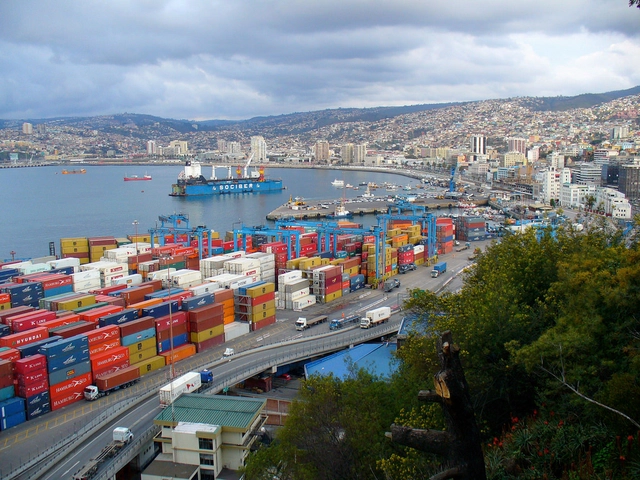
Restricted. Vast. Harsh. The image of a port calls to mind many words, but pedestrian-friendly and aesthetically-pleasing are rarely among them. With their precarious stacks of shipping containers and large pieces of machinery, ports are places that people tend to want to avoid. Yet for logistic and historical reasons, ports are often located near the heart of cities, taking away valuable urban space and desirable waterfront land from residents. This does not need to be the case.
A new report released by The Worldwide Network of Port Cities titled “Plan the City with the Port: Guide of Good Practices” offers strategies for cities to optimize the effectiveness of their harbors while reclaiming as much of the land as possible for the people. The guide uses case studies from urban designs in various stages of completeness to illustrate different techniques available to improve the environment of a port within its city. Although these approaches are designed with a specific program in mind, many architectural and urbanistic ideals can be derived from them to be used in variety of circumstances. Read on for our summary of the report’s recommendations.









.jpg?1442491726)




.jpg?1441986671 "Margaret Hunt Hill Bridge / Santiago Calatrava © Alan Karchmer")
.jpg?1441986639 "AD Classics: Bac de Roda Bridge / Santiago Calatrava © Flickr littleeve / www.flickr.com/littleeve. Used under <a href='https://creativecommons.org/licenses/by-sa/2.0/'>Creative Commons</a>")