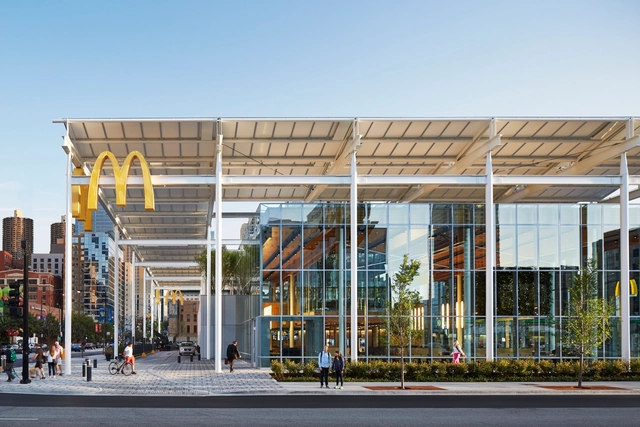
The Chicagoland megaregion consists of interconnected cities, highways, and municipalities, all of which grapple with challenges related to housing, water quality, transportation, sustainability, and more. Legat Architects invites you to consider how designers can address these issues.
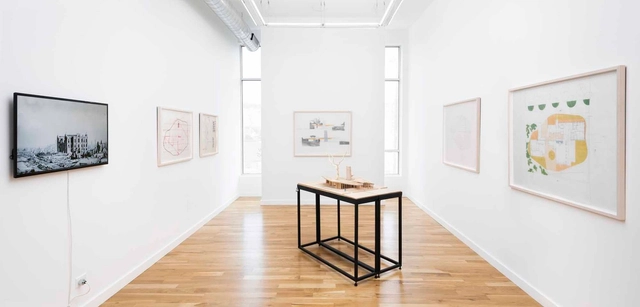
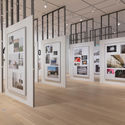
Installation view of Marshall Brown "Je est un autre" at Western Exhibitions, Chicago. Photo by James Prinz
Western Exhibitions is thrilled to present its third solo show with Marshall Brown, Je est un autre, in Galleries 1 and 2. Featuring two new projects, Brown uses the historically disruptive properties of collage and montage to create new spaces, forms, and narratives that embody new relationships between the one and the many. Je est un autre translates roughly to “I is another,” a phrase borrowed from French poet Arthur Rimbaud, and speaks to Brown’s rejection of purist or reductionist worldviews through his hybrid works. The exhibition opens on June 7th with a free and public reception from 5 to 8pm and runs through July 27th.
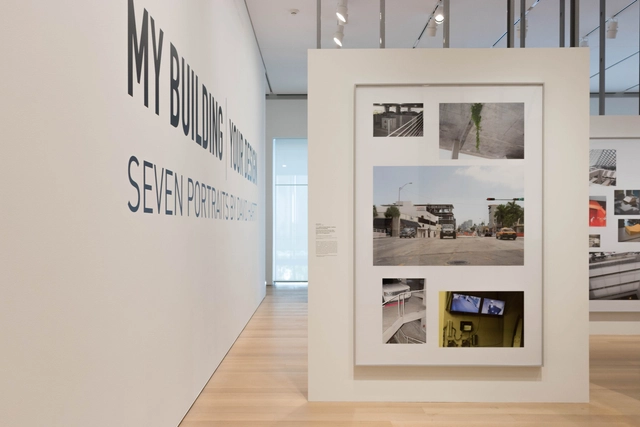
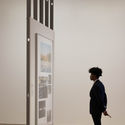
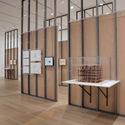
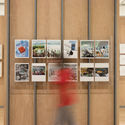
Installation view of My Building, Your Design: Seven Portraits by David Hartt, The Art Institute of Chicago, September 29, 2018 - February 3, 2019. Photo: Miguel Herreras.
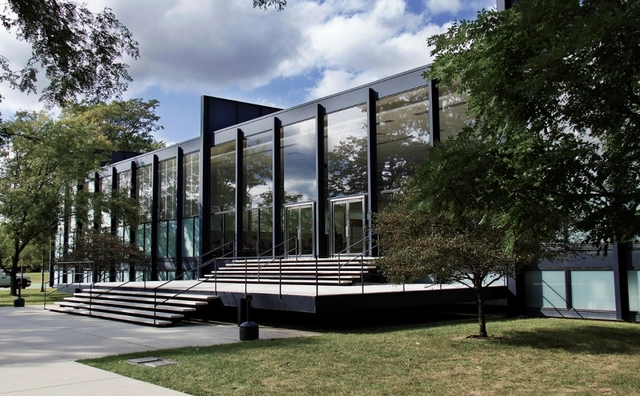
Illinois Institute of Technology (IIT) invites applications for the position, Dean of the College of Architecture (www.iit.edu/arch).
Located on the historic IIT campus in Chicago, the College of Architecture (IITCoA) is one of the world's most renowned architecture schools. Building upon its unique legacy as a center of rigorous thinking and making, IITCoA is focused on the future of practice and scholarship in an increasingly interconnected and urbanized world. With more than 500 students and 80 faculty members from around the world, IITCoA directly embodies the potentials of the contemporary metropolis. Basing its pedagogy on the synthesis of practice and research, IITCoA offers a full range of academic programs, including B.Arch., M.Arch., M.L.A., Dual M.Arch./M.L.A., M.S., and Ph.D. degrees.
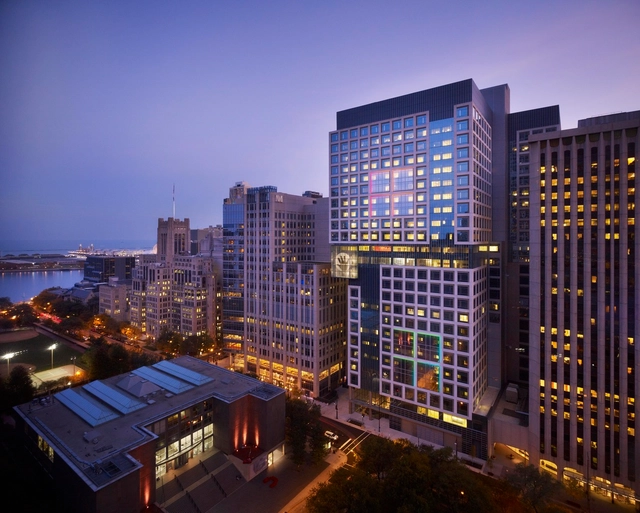
https://www.archdaily.com/909319/ann-and-robert-h-lurie-childrens-hospital-of-chicago-zgf-architects-plus-scb-architects-plus-anderson-mikos-architectsMartita Vial della Maggiora
Viewed from the far end of the Great Basin, the Administration Building looms over the court of honor and the surrounding great buildings of the fair. ImageCourtesy of Wikimedia user RillkeBot (Public Domain)
The United States had made an admirable showing for itself at the very first World’s Fair, the Crystal Palace Exhibition, held in the United Kingdom in 1851. British newspapers were unreserved in their praise, declaring America’s displayed inventions to be more ingenious and useful than any others at the Fair; the Liverpool Times asserted “no longer to be ridiculed, much less despised.” Unlike various European governments, which spent lavishly on their national displays in the exhibitions that followed, the US Congress was hesitant to contribute funds, forcing exhibitors to rely on individuals for support. Interest in international exhibitions fell during the nation’s bloody Civil War; things recovered quickly enough in the wake of the conflict, however, that the country could host the Philadelphia Centennial Exhibition in 1876. Celebrating both American patriotism and technological progress, the Centennial Exhibition was a resounding success which set the stage for another great American fair: the World’s Columbian Exposition of 1893.[1]
This article was originally published on September 28, 2013. To read the stories behind other celebrated architecture projects, visit our AD Classics section.
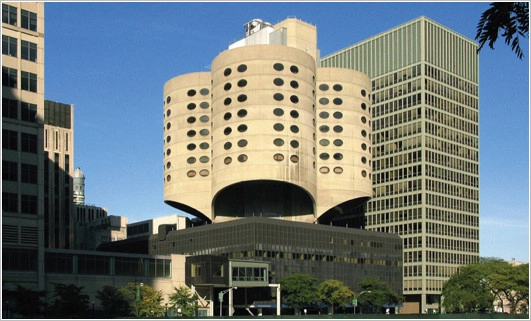
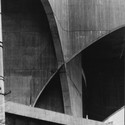
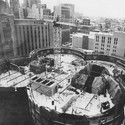
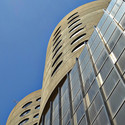
Hospital buildings, with their high standards of hygiene and efficiency, are a restrictive brief for architects, who all too often end up designing uninspiring corridors of patient rooms constructed from a limited palette of materials. However, this was not the case in Bertrand Goldberg's 1975 Prentice Women's Hospital. The hospital is the best example of a series of Goldberg-designed medical facilities, which all adhere to a similar form: a tower containing rooms for patient care, placed atop a rectilinear plinth containing the hospital's other functions.


































_-_Administration_and_Cour_d'Honneur.jpg?1497053167&format=webp&width=640&height=580)
_-_Midway_2.jpg?1497053349 "Courtesy of Wikimedia user RillkeBot (Public Domain)")
_-_USG_Building_and_Ho_O_den.jpg?1497053430 "Although the building itself was handsome, the exhibits of the United States Government Building failed to entice many of the fair’s visitors. In the foreground stands the Ho-O-Den, a replica medieval Japanese palace. ImageCourtesy of Wikimedia user RillkeBot (Public Domain)")
_-_Birds_Eye.jpg?1497053224 "Courtesy of Wikimedia user scewing (Public Domain")
_-_Map.jpg?1497053293 "A map of the 1893 Exposition shows how much of the fair’s buildings were laid out on axis with the court of honor. ImageCourtesy of Wikimedia user scewing (Public Domain)")
_-_Administration_and_Cour_d'Honneur.jpg?1497053167)