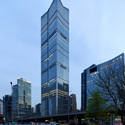
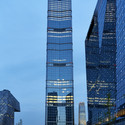
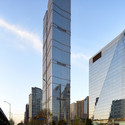

-
Architects: P&T Group
- Year: 2014
-
Professionals: Ove Arup & Partners, Parsons Brinckerhoff



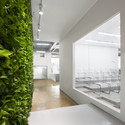
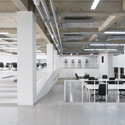
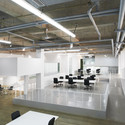
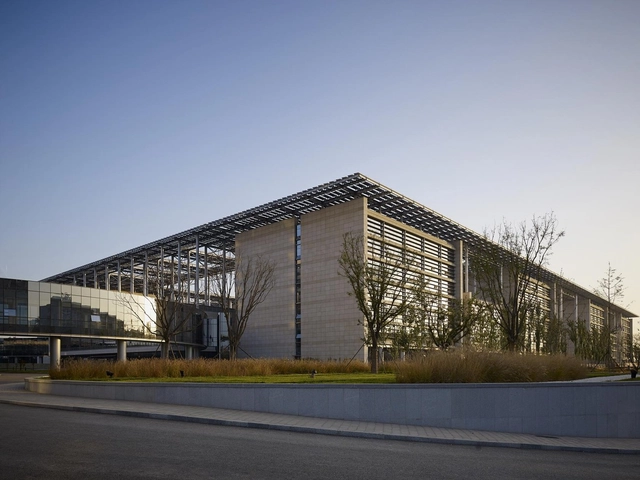
The Beijing city district of Wanjing has traditionally been a gateway for people entering the city. Its name literally translates as “Looking Towards Beijing.” J. J. Pan and Partners seek to renew that title with the design of Beijing Automotive Group’s new Research and Development Center. Taking inspiration from the character 北 (bei), which signifies openness, as well as Beijing itself, this mixed use building is meant to become a symbolic landmark both for Wanjing and for the company it houses.
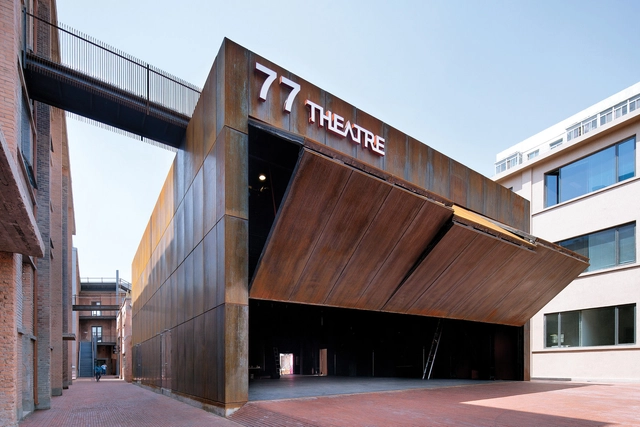
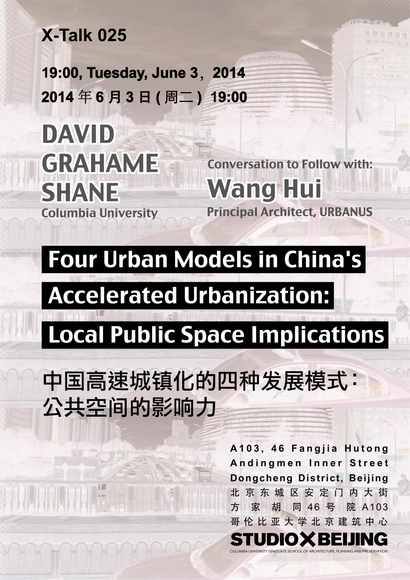
China's accelerated urbanization juxtaposes many local and global urban models in the contemporary urban space of the mega-city/metacity region. Since 1945 the global and local discourse on urban design and development has been dominated by four conceptual models. These four models, the metropolis, the megalopolis, the fragmented metropolis and the megacity/metacity have appeared in Asia with local characteristics and with special, hybrid characteristics. China's rapid urbanization has been based on an equally rapid industrialization that has telescoped the historical development pattern of western nations into 60 years.
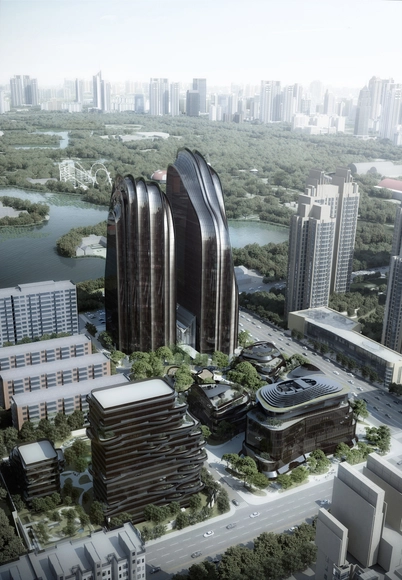
Construction has commenced on MAD’s Chaoyang Park Plaza within one of Beijing’s largest public parks and central business district. A continuation of Ma Yansong’s “Shan-Shui City” concept, which aims reintroduce nature into the urban realm, the mixed-use complex reinterprets natural formations illustrated in traditional Chinese paintings as contemporary “city landscapes.”
“Like the tall mountain cliffs and river landscapes of China, a pair of asymmetrical towers creates a dramatic skyline in front of the park,” described MAD. “Ridges and valleys define the shape of the exterior glass facade, as if the natural forces of erosion wore down the tower into a few thin lines.”


Text description provided by the architects. The Cube, a sixteen meter tall painted steel and rope installation designed for the 2013 Beijing Biennale by the Oyler Wu Collaborative, challenges the volumetric perception of its own archetypal geometry. The aspiration of the installation is to achieve the transcendence of the first dimension - the line - by simulating warping two-dimensional planes, which penetrate and populate the object framework, to create the perception of inhabitable three-dimensional space.

Latitude Studio, based in Barcelona and Beijing, have unveiled designs for a showroom exhibition centre in China's capital city. Integral to the design is how visitors circulate and interact with the spaces centred around the "future shopping mall". Including an auditorium, model spaces and views onto an area which is expected to see enormous retail development, the building's central atrium and "thematic sightseeing walk" offer a unique journey for the visitor.

.jpg?1389137893&format=webp&width=640&height=580)
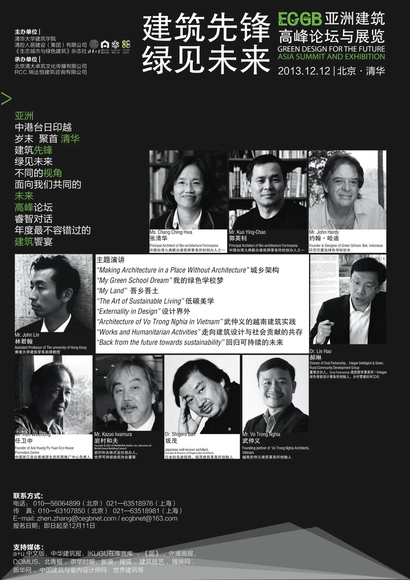
Tsinghua-ECGB Asia Architecture Summit & Exhibition will be held December 12-13, 2013 at Tsinghua University in Beijing City. Jointly sponsored by School of Architecture, Tsinghua University, Tsinghua Holdings Human Settlements Construction (Group) Co., Ltd, Editorial Office of Eco-city and Green Building (ECGB) magazine, the Summit will bring together eight award winning Asian architects to share their design thinking and key projects on creative sustainability. Keynote speakers include Vo Trong Nghia, Principal Architect of Vo Trong Nghia Architects and Shigeru Ban, Founder of Shigeru Ban Architects.

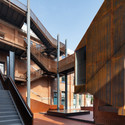


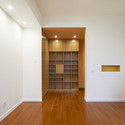
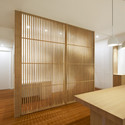
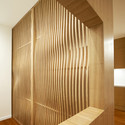
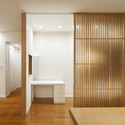

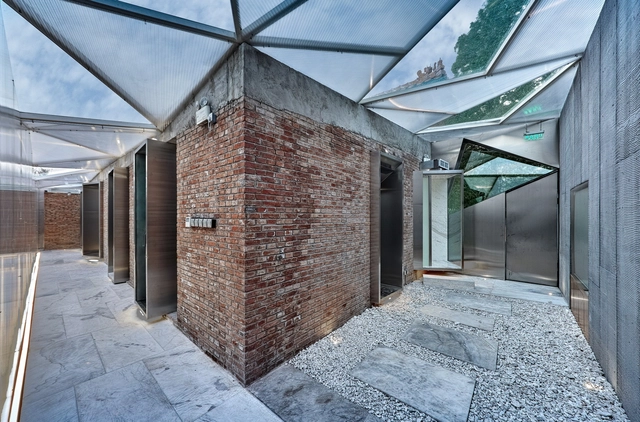











.jpg?1389137745 "© GU Yunduan")
.jpg?1389137647 "© GU Yunduan")
.jpg?1389137490 "© GU Yunduan")
.jpg?1389137256 "© GU Yunduan")
.jpg?1389137893)