Architect, urbanist, and Content Editor at ArchDaily, covering news and developments in architecture and the built environment. Editorial work focuses on the Gulf region and the Middle East, exploring contemporary regional architectural languages and their relationship to local contexts.
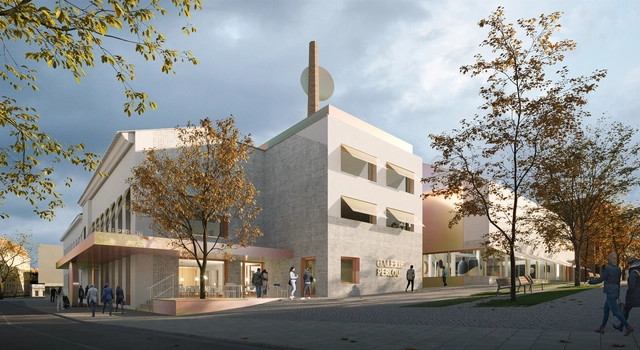
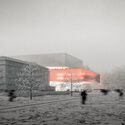
Pearl Gallery Renders. Image Courtesy of CHYBIK + KRISTOF
CHYBIK + KRISTOF architecture studio has been announced as the competition winners for a new cultural landmark that will transform and re-activate public space in Ústí nad Orlicí, Czech Republic. This former textile factory will be converted into a multifunctional cultural hub available to the public. The newly revitalized building will contribute to the existing cultural infrastructure, located near the main square of the city.
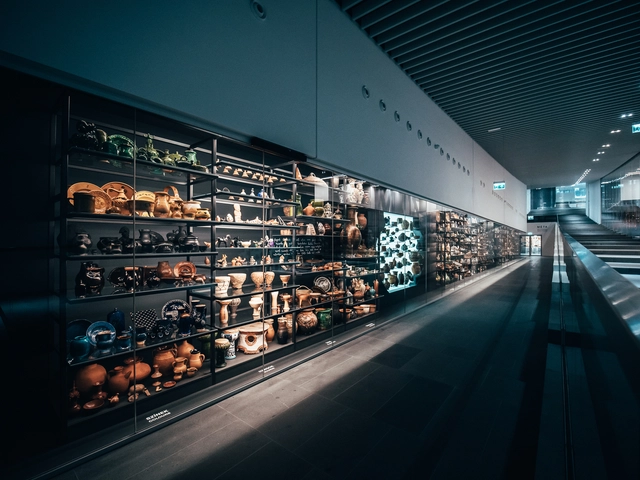
At this year’s Venice Architecture Biennale 2023, the Hungarian Pavilion focuses on a new museum building in Budapest, the Museum of Ethnography. The Museum was designed by Marcel Ferencz (Napur Architect) and completed in 2022 as one of Europe’s most notable cultural and urban development programs, the Liget Budapest Project. The exhibition in Venice, titled "Reziduum – The Frequency of Architecture" and curated by Mária Kondor-Szilágyi, will present the museum's collection through the digital medium. A short animated film titled Ethnozoom and an interactive computer program, the MotifCreator, will allow visitors to become familiar with Hungarian traditions and create their own motif compositions, thus contributing to worldwide community creation. The Hungarian Pavilion will showcase works by architect Marcel Ferencz, architect and composer Péter Mátrai, architect Judit Z. Halmágyi and light designer Ferenc Haász.
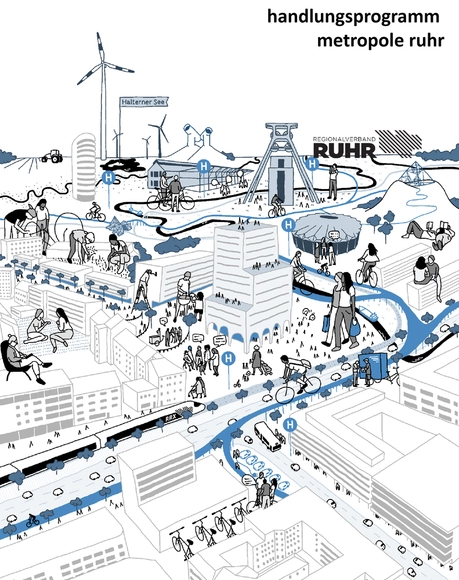
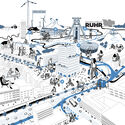
Action program Metropolis Ruhr. Image Courtesy of berchtoldkrass
The Republic of Kosovo will present Transcendent Locality at the 2023 Venice Architecture Biennale, exploring the significant role migration plays in the social development of Kosovo. The pavilion also dives into the migratory process and its different phases, including returning home after migration: temporary, seasonal, or permanent. However, at its core, it celebrates the connections to the Homeland and its relationship to the Host Land. The Pavilion poses that trans locality, connected to more than one place simultaneously, has become a prevalent model of life. In fact, maintaining the connections between the Host land and Homeland should become a form of communication, transfer of knowledge, information, and material and immaterial goods.
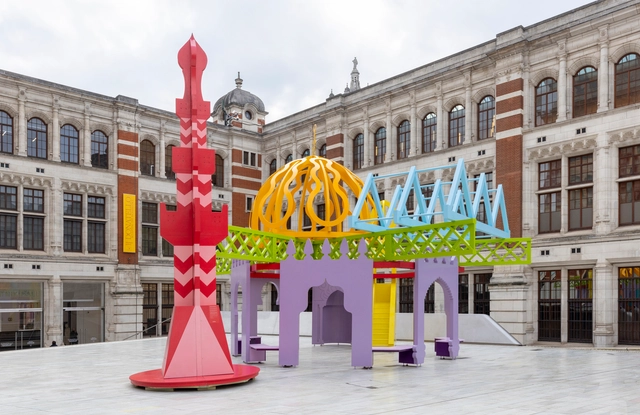
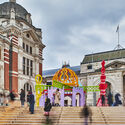
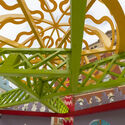
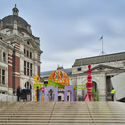
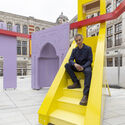
Ramadan Pavilion. Image Courtesy of Victoria & Albert Museum
Ramadan Tent Project and V&A present the Ramadan Pavilion 2023, an architectural installation inspired by the holy month of Ramadan, which starts today. The Ramadan Pavilion 2023 is designed by architect Shahed Saleem and will be open to the public at the Exhibition Road Courtyard of the V&A South Kensington until May 1, 2023. As part of the annual festival, the pavilion is accompanied by a series of events, performances, and workshops curated by the Ramadan Tent Project.
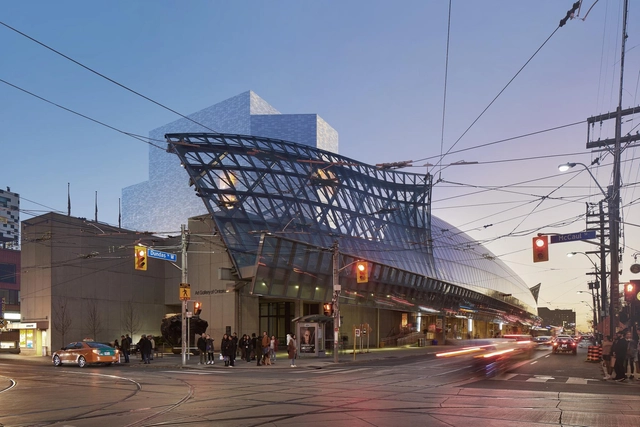
Courtesy of Play-Time, Art Gallery of Ontario, Diamond Schmitt, Selldorf Architects and Two Row Architect.
The Art Gallery of Ontario (AGO) has announced an expansion project designed by Diamond Schmitt, Selldorf Architects and Two Row Architect. The Dani Reiss Modern and Contemporary Gallery design will increase the museum’s gallery space by 40,000 square feet, with 13 new galleries across five floors.
The exterior façade of the extension will quietly complement the AGO’s existing built environment, respecting the scale of the surrounding neighborhood. Sitting one story above AGO’s existing loading dock, the Dani Reiss Modern and Contemporary Gallery will be nestled between the AGO and OCAD University. It will connect the existing galleries from four locations, substantially improving visitor circulation in and around the museum.
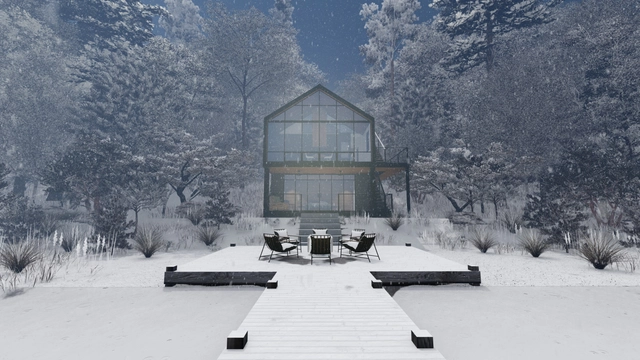
Lake House, Hudson Valley, New York. Image Courtesy of RS Mannino
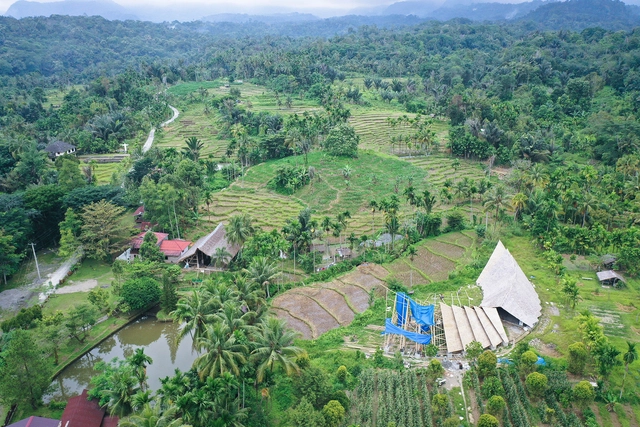
This week’s curated selection of Best Unbuilt Architecture highlights visionary villas submitted by the ArchDaily community. From a modern lake house weekend retreat in New York, a Mediterranean Villa in Portugal that blends outdoor and indoor, and a rammed earth residential complex of five villas that fold into the Balinese landscape, this round-up of unbuilt projects showcases how architects are moving forward from conventional residential architecture, pushing the boundary of luxury.
Each project has a different vision, generated by unique site conditions, and has been designed specifically for the future users of the villa. Moreover, firms like Bittoni Architects, Lipman Architects, RS Mannino Architects have all presented work that plays with materiality, giving the houses unique characteristics.
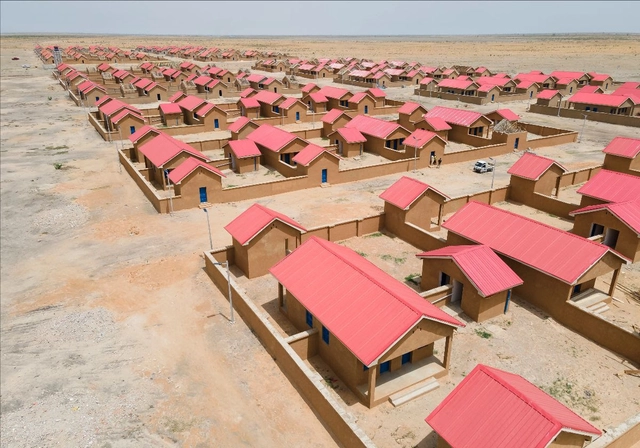
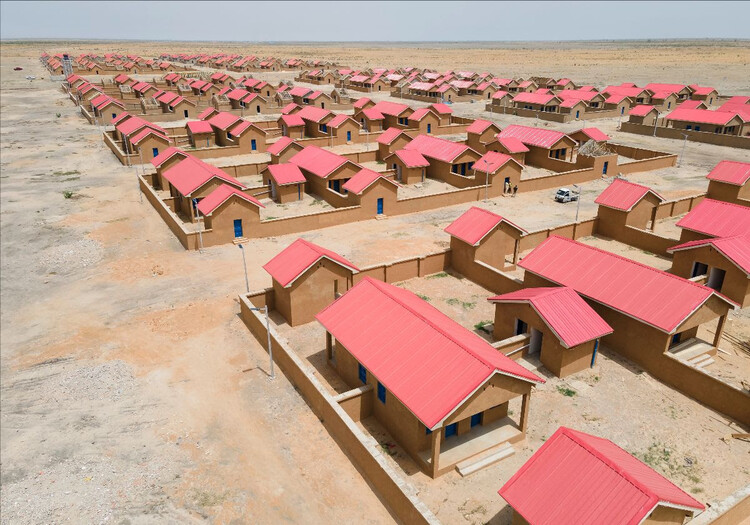
The Architecture in Development Global Challenge has just announced the finalists for the 2022 edition of the competition. Highlighting and celebrating the ongoing efforts of self-built community-led initiatives worldwide, the Global Challenge offers a platform for those initiatives while connecting partners and collaborators globally.
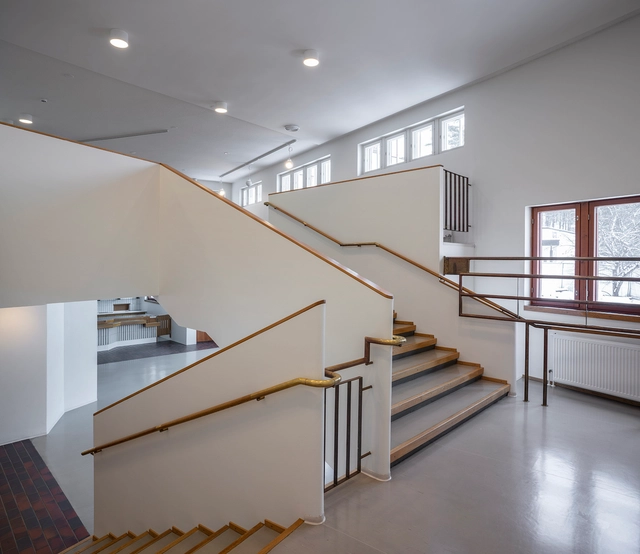
The new Aalto2 Museum, designed by A-Konsultit Architects, will showcase the cultural legacy of the architecture and design of renowned architect Alvar Aalto. The Museum will open to the public on 27 May 2023, fulfilling the architect's desire to establish a venue for the fusion of various mediums and art forms at the Ruusupuisto park in Jyväskylä, in Central Finland.
The Alto2 Museum Centre comprises three buildings: the renovated Alvar Aalto Museum, the Museum of Central Finland, and the new addition of the Aalto2 center which will join them this year. The original Alvar Aalto Museum will open its doors after having undergone structural repairs, and changes in facilities to serve the new Aalto2 concept. The Aalto2 design connects both museums and is based on an international competition held in 2015, which attracted nearly 700 entries worldwide, demonstrating the international appeal of Aalto’s architectural style.
Newport School. Image Courtesy of The Norman Foster Foundation
In May this year, The Centre Pompidou in Paris will debut the largest retrospective of Norman Foster's work from the past six decades. The exhibition spans nearly 2,200 square meters, exploring the various phases of the renowned architect’s career. Essential works including the Hong Kong and Shanghai Baking Corporation's headquarters (Hong Kong, 1979–1986), the Carré d'Art (Nîmes, 1984–1993), the Hong Kong International Airport (1992–1998), and the Apple Park (Cupertino, United States, 2009-2017) will be on display.
Foster + Partners, the Norman Foster Foundation, and Norman Foster are working to develop and execute the full retrospective. Through the lenses of the seven chosen themes: Nature and Urbanity, Skin and Bones, Vertical City, History and Tradition, Planning and Location, Networks and Mobility, and Future, the exhibition is set to become a full compilation of the architect’s work.
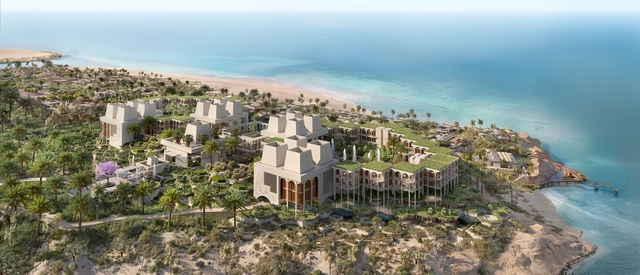
The Developer Red Sea Global has partnered with the wellness brand Clinique La Prairie to develop a high-end health resort in Amaala, located on the northwest coastline of Saudi Arabia. The resort will host 13 villas and 52 houses and suites. It will also feature a diagnostics lab, a museum, a beach club, workshops, training rooms, private dining spaces, and a cooking school, activities that ensure that the visitors embark on a journey of rejuvenation and self-discovery.
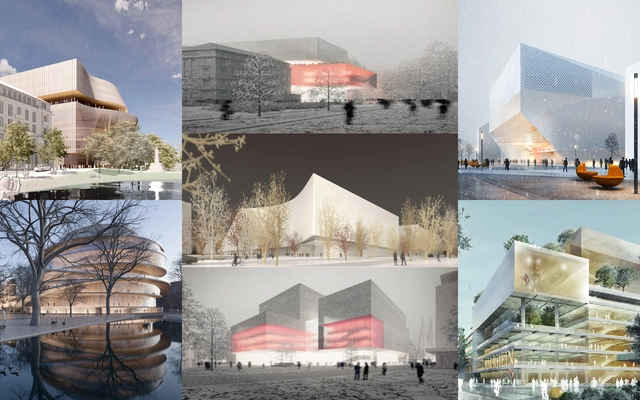
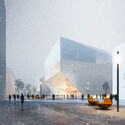
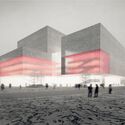
The finalists for the Opera of the Future competition have been announced. This urban planning competition, commissioned by the state capital of Düseldorf, was created to select a location for the new cultural institution. After an extensive examination of potential site locations, the two options for the competition proposals were: Heinrich-Heiene-Allee, where the current opera house is, and Am Wehrhahn.
Throughout the brief, firms were encouraged to figure out how this future project could become a lively and public space open to the entire city, offering a wide range of services. As a result, submissions were received for both prospective buildings, and the finalists for each location were announced.
The Korean Pavilion, 2013. Image Courtesy of Arts Council Korea
In this edition of the 2023 Venice Biennale, the Korean Pavilion, curated by artistic Directors Soik Jung and Kyong Park, presents “2086: Together How?” bringing together architects, community leaders, and artists to explore how people can cooperate in withstanding the current and future environmental crisis until 2086 when the global population is said to the peak. The exhibition invites visitors to imagine an eco-cultural revolution by critically reassessing the world's capitalist, globalist, and colonial history. The viewers will be encouraged to reconsider current conditions through a participatory video game and a series of multidisciplinary installations that include photographs, drawings, models, videos, and architectural installations.
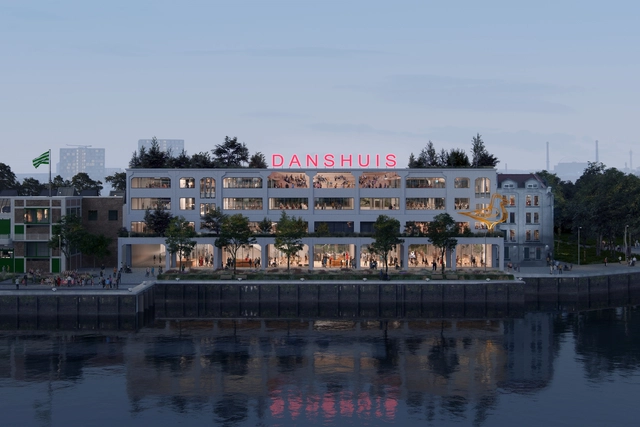
MAD Architects, Led by Ma Yansong, has just revealed its design for the Danshuis, dutch for The Dance House. The project will transform the riverfront Provimi warehouse into a cultural destination in Rotterdam. The Danshuis initiative seeks to convert the old warehouse into a vibrant multi-use studio based on movement and performing arts, a vibrant place to exchange world dance culture. The Droom en Daad Foundation, the primary client of the project, hopes to place Rotterdam on the map as a world leader in arts and culture.
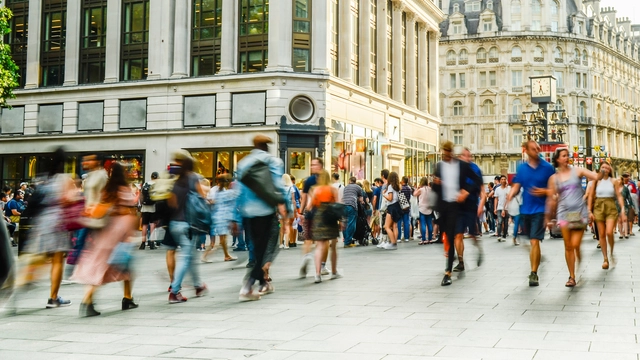
With many high streets hollowing out and the National Health Services Association pushed to its limits, Heatherwick Studio is calling for a new kind of health space in metropolitan cities. The Health Street initiative is placed right at the heart of urban communities, reimagining the way we look at well-being and the holistic health of complete localities. Moreover, this radical approach to health creation is based on integrating community-led facilities into the local high streets.
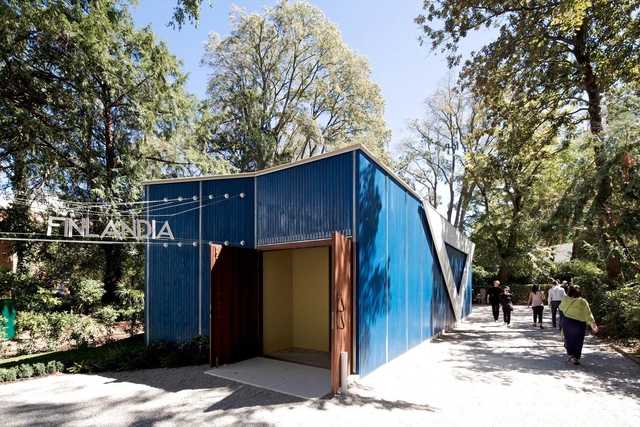
At the 2023 Biennale Architettura, Finland's Pavilion will present its exhibition Huussi, Imagining the Future History of Sanitation, which deals with the architecture of water and nutrient circulation, questioning the water toilet and Its implications for the future. "Huussi" is the Finnish word for an outhouse, a small compost toilet commonly used by Finns in rural settings and holiday homes. The exhibition, curated by Arja Renell and The Dry Collective, a group of Finnish architects, presents this typology as a starting point to finding alternative solutions to managing wastewater, inspiring professionals to start envisioning new sanitation solutions. At the core of the presentation, the exhibition questions the consequences of waste in the context of the current climate crisis the world is going through.
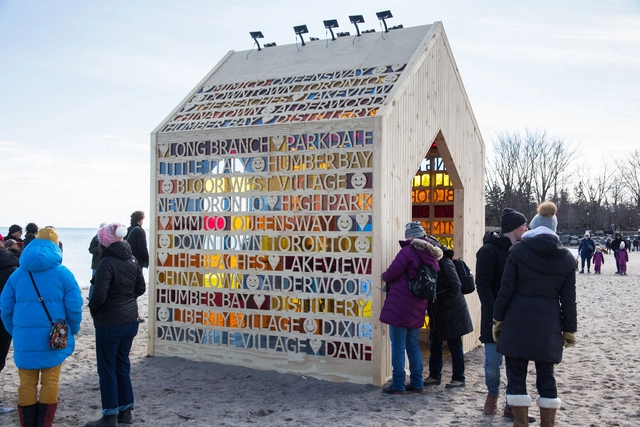
The 2023 Winter Stations has just announced eight winning projects for their 9th annual international competition. The winners were chosen from hundreds of entries from around the world, along with three student designs from Toronto Metropolitan University, Waterloo Department of Architecture, and Guelph University. The competition was first launched at Woodbine beach by RAW design,Ferris + Associates, and Curio, to capture the imagination of designers and architects to create bold designs that spark conversation, transforming lifeguard stations at Toronto’s Woodbine beach. Furthermore, since these lifeguard stations are usually dormant throughout the winter, the exhibition inspires artists to bring the public back outdoors with their unique designs.