1. ArchDaily
  2. Articles

Articles

Upward, inward, or outward: how do cities grow?

Subscriber Access | 

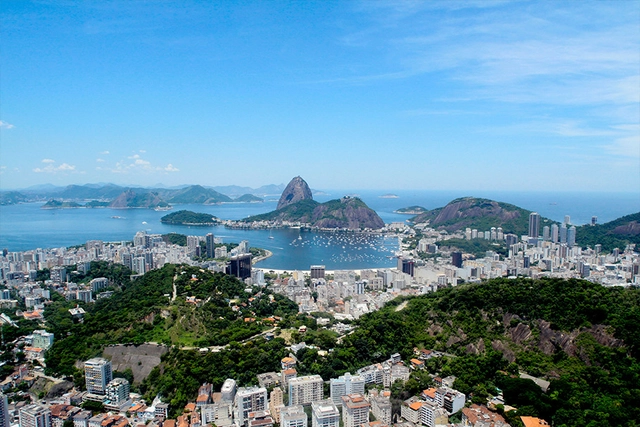
Nothing represents this change better than the habitat humanity has created for itself. The generation before Toffler knew an eminently rural world, of humans bound to the land, born and dying within their communities. The generation yet to be born will inherit an already urbanized, hyper-connected world, characterized by extreme mobility between cities and countries. We, who live today, have both the privilege and the responsibility of watching this urban phenomenon reshape the face of the planet.

Half a century ago, when Future Shock was published, just over a third of the world's population lived in cities. Today that figure stands at 55%, a share projected to rise to 70% by 2050. Nearly 90% of this growth will occur in Africa and Asia. The number of people living in informal settlements has already reached one billion worldwide, and the UN estimates that, by 2030, about three billion people will need adequate housing.
Vacant Properties and Occupations: Reversing Urban Voids

Subscriber Access | 

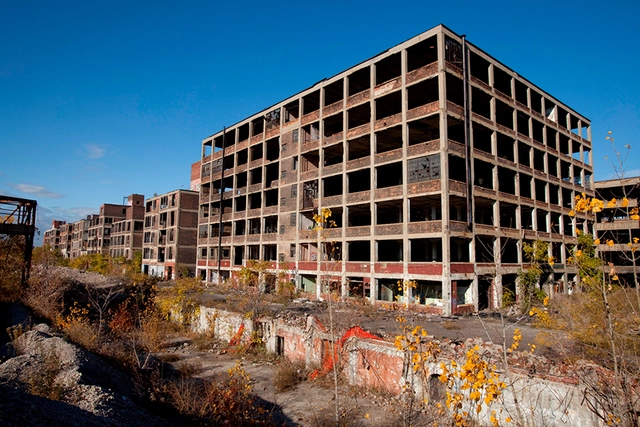
Ruins of once-elegant buildings eloquently illustrate the worst that can happen to a city after the end of an economic cycle. Wealthy families no longer have the resources to maintain their estates, and even middle-class buildings are partially abandoned when their owners, unemployed or struggling, relocate in search of opportunities elsewhere.

Left vacant and unused, physical heritage slowly degrades. Urban history is filled with examples across all eras and continents: Rome at the end of classical antiquity, Venice at the dawn of the modern era, Paraty after the shift in the Gold Route, and Detroit today.

A Virtual Tour of Luis Barragan's Unbuilt House in Houston Texas

Subscriber Access | 

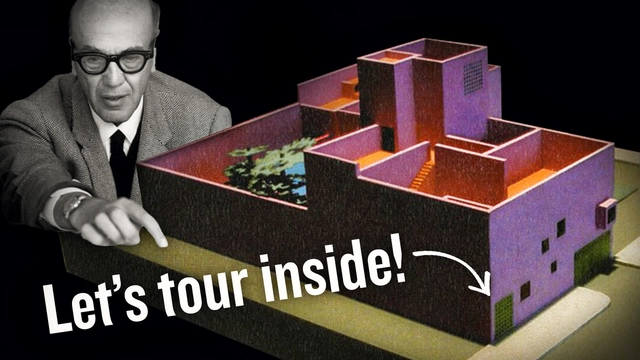
In 1984, the Menil Museum in Houston, Texas, commissioned the Mexican architect Luis Barragan to build a 3,000-square feet guest house to be located across the street from the famous Rothko Chapel. The architect came back with a design for a dazzling purple, pink, and orange 8,000-square feet mansion that looked to be more at home in Mexico City than a Houston residential suburban lot. So, due to the ensuing conflict between client and architect, the house would never get built, only displayed as an exhibition within the Menil’s galleries.

How Do Major Metropolises Define "Local"?

Subscriber Access | 

“Local” is a word that is broadly used to describe something particular about a place that makes it different from somewhere else. Across the globe, the “local-ness” of our cities is what makes them unique- in the way that people live, work, socialize, and especially in the way that they plan and construct cities and infrastructure. To someone living in a suburb, the way that they move from place to place might be through a car, while someone who lives in a dense metropolis might use a subway or bus system as part of their everyday lives.

Towards a Sustainable Future: Local Materials and Methods in Contemporary Chinese Architecture

Subscriber Access | 

Over the course of the last decade there has been a growing interest in the handcrafted buildings, as well as in the application of local and renewable materials in building construction. Under the concerns about the heavy environmental and economic expenses caused by construction, nowadays urban planners are embracing the concept of sustainability, which refers to “meeting our own needs without compromising the ability of future generations to meet their own needs”.

Reinventing spaces for post-pandemic well-being

Subscriber Access | 

Designers and architects are looking to the future, challenged to think about how to create safe, functional, and comfortable environments. From more open floor plans to materials that help mitigate the spread of disease, professionals are looking ahead, considering what gives us room to breathe and live together. 

Environment and Health

Reinventing spaces for post-pandemic well-being - Image 1 of 4Reinventing spaces for post-pandemic well-being - Image 2 of 4Reinventing spaces for post-pandemic well-being - Image 3 of 4Reinventing spaces for post-pandemic well-being - Image 4 of 4Reinventing spaces for post-pandemic well-being - More Images

A series of renderings visualizes five finalist proposals from the 1791 US White House competition

Subscriber Access | 
A series of renderings visualizes five finalist proposals from the 1791 US White House competition - Featured Image
Built proposal. Image © HouseFresh

A series of renderings visualizes five finalist proposals from the 1791 US White House competition - Image 1 of 4A series of renderings visualizes five finalist proposals from the 1791 US White House competition - Image 2 of 4A series of renderings visualizes five finalist proposals from the 1791 US White House competition - Image 3 of 4A series of renderings visualizes five finalist proposals from the 1791 US White House competition - Image 4 of 4A series of renderings visualizes five finalist proposals from the 1791 US White House competition - More Images+ 7

In 1792, sitting United States President George Washington organized a competition to design the presidential residence. The winning proposal, submitted by architect James Hoban, shaped the neoclassical mansion we know today as the White House, cementing its place in the American collective imagination.

Outside the Box Office Design: Discover Istanbul’s New Workplaces

Subscriber Access | 

Office buildings are known for being utilitarian, efficient, and rigid. While this typology has earned a reputation for adopting rectilinear grids and open layouts, modern designs have begun exploring new alternatives for the contemporary workplace. Moving beyond standard work rooms, meeting spaces, and support zones, these projects are reimagining the relationships between envelope and program. This is a larger movement towards rethinking the formal and spatial characteristics of where we work. While this trend is being explored globally, cities have begun embracing new office designs at a larger scale.

Outside the Box Office Design: Discover Istanbul’s New Workplaces - Image 1 of 4Outside the Box Office Design: Discover Istanbul’s New Workplaces - Image 2 of 4Outside the Box Office Design: Discover Istanbul’s New Workplaces - Image 3 of 4Outside the Box Office Design: Discover Istanbul’s New Workplaces - Image 4 of 4Outside the Box Office Design: Discover Istanbul’s New Workplaces - More Images+ 5

Embodied Energy in Building Materials: What it is and How to Calculate It

All human activities affect the environment. Some are less impactful, some much, much more. According to the United Nations Environment Program (UNEP), the construction sector is responsible for up to 30% of all greenhouse gas emissions. Activities such as mining, processing, transportation, industrial operations, and the combination of chemical products result in the release of gases such as CO2, CH4, N2O, O3, halocarbons, and water vapor. When these gases are released into the atmosphere, they absorb a portion of the sun's rays and redistribute them in the form of radiation in the atmosphere, warming our planet. With a rampant amount of gas released daily, this layer thickens, which causes solar radiation to enter and and stay in the planet. Today, this 'layer' has become so thick that mankind is beginning to experience severe consequence, such as desertification, ice melting, water scarcity, and the intensification of storms, hurricanes, and floods, which has modified ecosystems and reduced biodiversity.

As architects, one of our biggest concerns should be the reduction of carbon emissions from the buildings we construct. Being able to measure, quantify, and rate this quality is a good way to start.

Is It Possible to Mix Local Materials and 3D Printing?

Subscriber Access | 

The art of building a shelter made from blocks of ice is passed on from father to son among the Inuit, native peoples who inhabit the northernmost regions of the planet. The circular plan, the entrance tunnel, the air outlet and the ice blocks form a structure where the heat generated inside melts a superficial layer of snow and seals the gaps, improving the thermal insulation of ice. In a storm, an igloo can be the difference between life and death and perhaps this is the most iconic and radical example of what it means to build with local materials, few tools and lots of knowledge. In this case, ice is all you have.

Taking advantage of abundant resources and local labor are key concepts for sustainable architecture, which are often overlooked at the expense of solutions replicated from other contexts. With new demands and technologies, the globalization of building materials and construction techniques, is there still room for local materials? More specifically in relation to 3D printed constructions, are we destined to erect them only in concrete?

Mies van der Rohe’s Neue Nationalgalerie Reopens with an Alexander Calder Exhibition

Subscriber Access | 

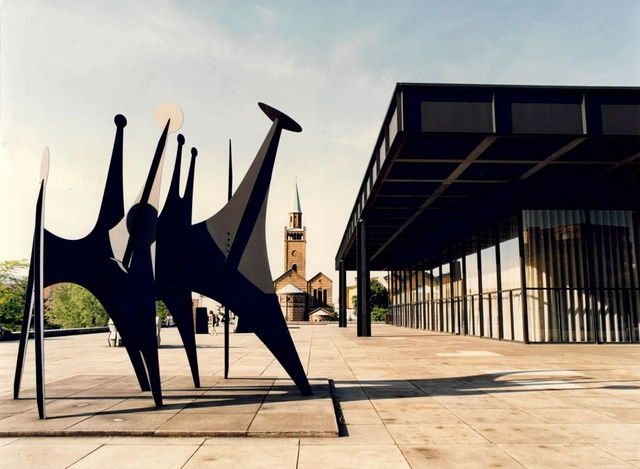
After being closed for six and a half years for a renovation by David Chipperfield Architects, the Berlin museum reopened Sunday, August 22.

"Cultural Identity is Central to Architecture": In Conversation with Lesley Lokko

Subscriber Access | 

Questioning the new now, especially with the new challenges of Covid-19, around the world, cities are advocating for structural change and collective action. Berlin questions, an annual, multi-day conference and a platform for transdisciplinary dialogue, in its 2021 edition “Metropolis: The New Now”, tackled the immediate present, creating a place for debate. Dedicated to local solutions to global challenges, the event took on a hybrid format, at various locations in Berlin and online, resembling the world we live in.

ArchDaily had the chance to meet up with Lesley Lokko, architect, academic, and novelist at Berlin Questions, to discuss her talk “Africa as the lab for the future”, her visions for the future of architecture education and the future of big cities on a social, cultural and urban level.

Using Wood Outdoors Without Worrying About Fire Hazards

 | Sponsored Content

Wood is an extremely versatile material. It allows for the construction of robust and strong structures, while it can also be used as the raw material for delicate objects such as musical instruments. Understanding all its particularities, properties, and behavior is a journey of knowledge that could take a lifetime. Basically, wood is made up of cellulose, hemicellulose, lignin, and mineral elements, and each species has its own unique characteristics. The history of Stradivarius violins, for example, is interesting to mention: they are still worth fortunes and experts argue that luthiers have never been able to replicate their timbre on newer instruments. Researchers point out that the differentiated sound is due to the wood in the body and arm, which went through a submersion process with a mineral solution that increased the decomposition of hemicellulose. The treatment made the wood absorb less moisture, making the sound brighter and more pleasant.

This shows how complex it is to work with a living material like wood. It can swell or shrink depending on weather conditions, how the tree grew or was cut down, etc. And, varying between wet and dry states, it can end up rotting. Such factors must be understood when we work with a natural material, but it can also be a nuisance when we look for the aesthetic appearance of wood while lacking technical precision and maintenance capabilities.

Bathroom & Kitchen Fixtures: 12 Projects to Get You Inspired

Subscriber Access | 

As an architectural project comes to its last phases, it is time to put together the smaller details in bathrooms and kitchens, which means choosing finishes for the walls and floors, as well as the countertops, and picking the right fittings and fixtures. These elements are essential for a well-designed space, regardless of the style.

Graham Foundation Announces Names of 2021 Organizations Grant Recipients

Subscriber Access | 

The Graham Foundation has announced the award of 69 new scholarships to individuals around the world who support architectural projects. The funded projects represent diverse lines of research with original ideas that advance our understanding of the designed environment.

Selected from more than 500 proposals, the funded projects include exhibitions, publications, films, and performances that promote rigorous academic study, stimulate experimentation, and foster critical discourse in architecture. Innovative projects are led by established and emerging architects, artists, curators, filmmakers, historians, and photographers, among other professionals.

Reconciling the Environment as Housing: The Case of the Chinamperos of Tlacoapa

Subscriber Access | 

Reconciling the Environment as Housing: The Case of the Chinamperos of Tlacoapa - Image 1 of 4Reconciling the Environment as Housing: The Case of the Chinamperos of Tlacoapa - Image 2 of 4Reconciling the Environment as Housing: The Case of the Chinamperos of Tlacoapa - Image 3 of 4Reconciling the Environment as Housing: The Case of the Chinamperos of Tlacoapa - Image 4 of 4Reconciling the Environment as Housing: The Case of the Chinamperos of Tlacoapa - More Images

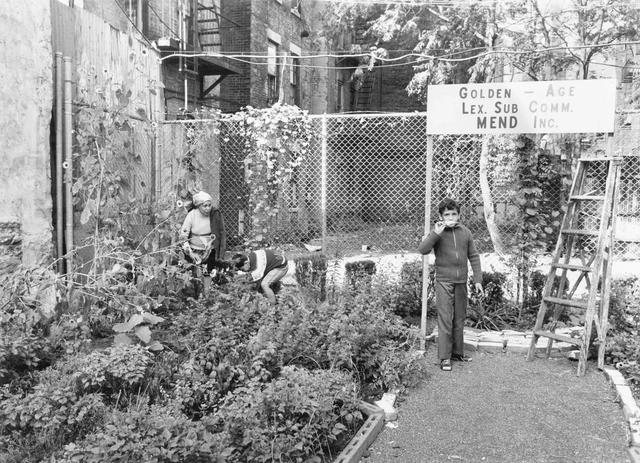
One of the greatest challenges facing our cities today is reconciling two priority objectives that, at times, seem irreconcilable: reducing inequality and addressing the effects of climate change. On one hand, our planet is at a critical juncture where no action should be underestimated. Urban growth always comes at the expense of green spaces, which is why we must control our settlements. Yet, it is also a fact that certain environmental regulations, besides being ineffective at achieving their intended goals, have discriminatory effects on the most marginalized sectors. It is often these very groups that face the most rigorous enforcement of environmental administrative requirements, as well as penalties for non-compliance. Is there a way out of this apparent dichotomy?

Green Walls, Trellises, Flower Displays and Plant Pots: Integrating Vegetation Indoors

Subscriber Access | 

Green Walls, Trellises, Flower Displays and Plant Pots: Integrating Vegetation Indoors - Image 1 of 4Green Walls, Trellises, Flower Displays and Plant Pots: Integrating Vegetation Indoors - Image 2 of 4Green Walls, Trellises, Flower Displays and Plant Pots: Integrating Vegetation Indoors - Image 3 of 4Green Walls, Trellises, Flower Displays and Plant Pots: Integrating Vegetation Indoors - Image 4 of 4Green Walls, Trellises, Flower Displays and Plant Pots: Integrating Vegetation Indoors - More Images+ 14

Not every architectural project can incorporate a landscaping project, consider a garden or access to ample green space. Smaller spaces need more creative strategies to incorporate vegetation. Regardless of the context, plants offer benefits in all types of spaces, such as indoor temperature regulation, an option for sustainable production on a smaller scale than a greenhouse, in addition to their aesthetic qualities. In this article, we present 4 simple strategies and a selection of examples for incorporating plants in small-scale spaces, all of which can be found in Architonic's Planting section.

6 Steps for Designing Healthy Cities

Subscriber Access | 

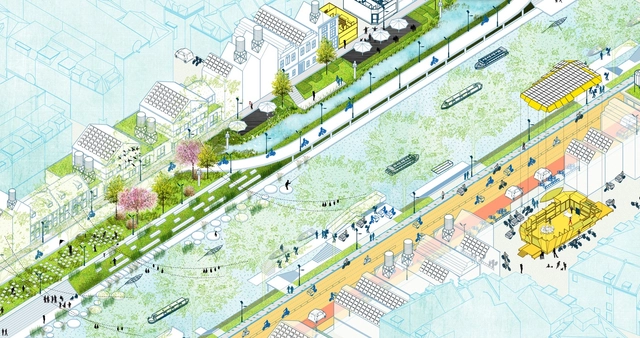
By some estimates, cities consume over two-thirds of the world’s energy, and account for more than 70% of global CO2 emissions: a figure sure to increase as the global migration from rural to urban areas continues. In the pursuit of exploring new models for how healthy cities could more effectively sustain these demands, Dutch design and research studio FABRICations has investigated how cities of the Netherlands can reduce carbon emissions through new design-led approaches.

Building Toronto: New Housing on the Rise in Canada’s Queen City

Subscriber Access | 

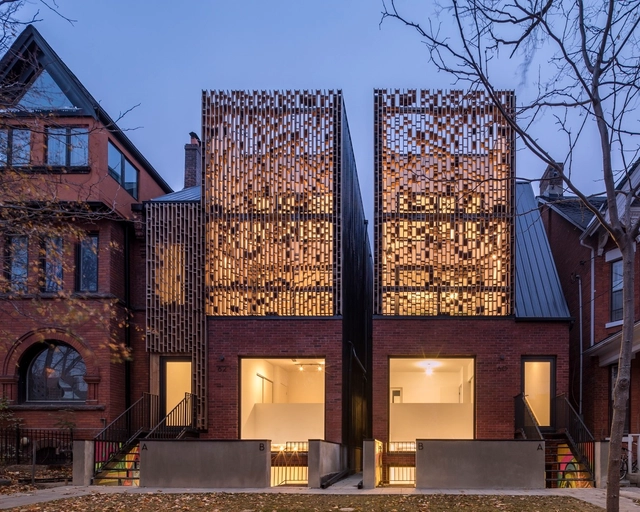
Canada’s Queen City has become renowned for its housing boom. As the most populous location in the country, Toronto is also one of the world’s hottest luxury real estate markets. An hub for arts, business, and media, the city is sited on a sloping plateau with a unique ravine system. While it boasts incredible architecture and high-end designs, Toronto risks a housing correction. Rapid increases in home prices, overvaluation, and overbuilding have all attributed to the city’s mounting situation. Amidst these unstable conditions and uncertainty, new residential projects continue to be built.

Building Toronto: New Housing on the Rise in Canada’s Queen City - Imagen 1 de 4Building Toronto: New Housing on the Rise in Canada’s Queen City - Imagen 2 de 4Building Toronto: New Housing on the Rise in Canada’s Queen City - Imagen 3 de 4Building Toronto: New Housing on the Rise in Canada’s Queen City - Imagen 4 de 4Building Toronto: New Housing on the Rise in Canada’s Queen City - More Images+ 5

Airports: Examples in Plan & Section

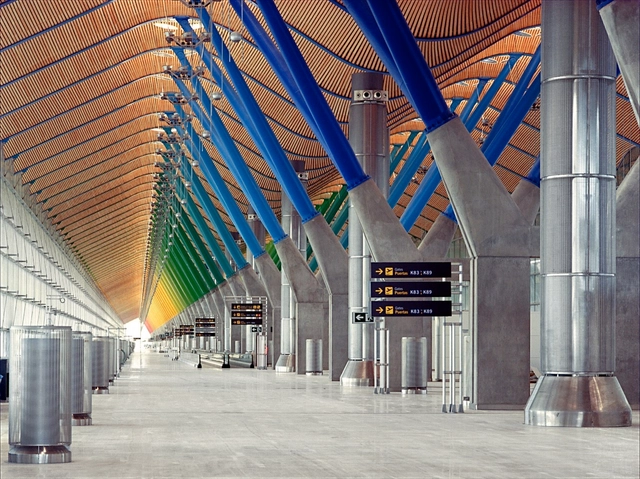
Airports require architectural solutions that not only respond to the efficiency of their spaces and circulations - both operational and passenger - but also to their connection with other transport systems and terminals.

Take a look at 10 airports/terminals and their plans and section below.

Airports: Examples in Plan & Section - Image 1 of 4Airports: Examples in Plan & Section - Image 2 of 4Airports: Examples in Plan & Section - Image 3 of 4Airports: Examples in Plan & Section - Image 4 of 4Airports: Examples in Plan & Section - More Images+ 27

The Refurbishment and Adaptive Reuse of Brutalist Architecture

Subscriber Access | 

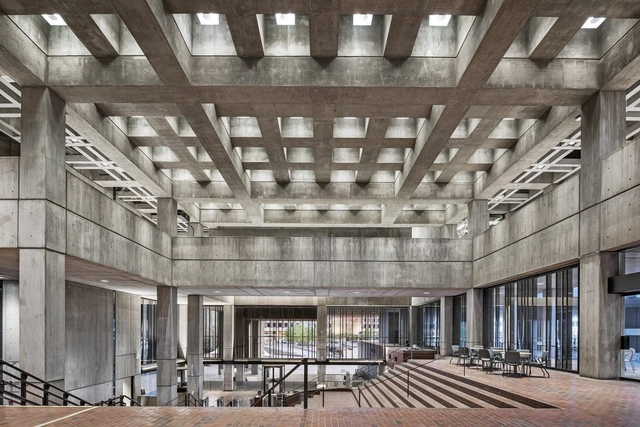
"Demolition is a waste of many things – a waste of energy, a waste of material, and a waste of history," says Pritzker-winning architect Anne Lacaton. In recent years, refurbishment and adaptive reuse have become ubiquitous within the architectural discourse, as the profession is becoming more aware of issues such as waste, use of resources and embedded carbon emissions. However, the practice of updating the existing building stock lacks consistency, especially when it comes to Brutalist heritage. The following explores the challenges and opportunities of refurbishment and adaptive reuse of post-war architecture, highlighting how these strategies can play a significant role in addressing the climate crisis and translating the net-zero emissions goal into reality while also giving new life to existing spaces.

The Refurbishment and Adaptive Reuse of Brutalist Architecture - Image 1 of 4The Refurbishment and Adaptive Reuse of Brutalist Architecture - Image 2 of 4The Refurbishment and Adaptive Reuse of Brutalist Architecture - Image 3 of 4The Refurbishment and Adaptive Reuse of Brutalist Architecture - Image 4 of 4The Refurbishment and Adaptive Reuse of Brutalist Architecture - More Images+ 1

The Invention of Public Space Shows the City as a Product of Negotiation

In this week's reprint from the Architect's Newspaper, author Karen Kubey, an urbanist specializing in housing and health questions if the invention of Public Space is "Invented Or Agreed Upon?" Basing her ideas on a book by Mariana Mogilevich, The Invention of Public Space, the article asks if public spaces are a product of negotiation in the city.

Urban mobility and early childhood: the transformation of cities

Subscriber Access | 

Cities that are good for children are good for everyone. They are more humane cities, building stronger and more sustainable communities. Therefore, urban mobility and early childhood are deeply interconnected. They are intrinsic, inherent to one another. Children and their caregivers—whether parents, grandparents, aunts, uncles, cousins, or nannies—experience the city more deeply than many adults caught in a daily home-to-work routine. And they need the city to grow well, both physically and socially. Cities must foster this necessary, holistic development. Without active participation in urban life, this development cannot occur as it should, resulting in the confinement of childhood—an outcome that benefits neither people nor cities.

Paris City Guide: 23 Places Every Architect Must Visit

Paris, the city that was born on the banks of the Seine, grew from a small island – Île de la Cité – to the vast metropolis that nowadays extends beyond Ménilmontant, the vingtième arrondissement.

The French capital has so much to offer. Centuries of history have left behind meaningful structures which also have been the background of love stories, wars and revolutions. Whether you are seeking to admire hidden spots, the well-known landmarks and jewels soon to be opened, or filling your personal story with them, you'll find everything you want in this city.

This list, in no particular order, aims to provide some guidance and inspiration for your next trip to Paris. If you love architecture, dear friend, look no further.

Want to discover Paris' architecture? Continue reading!

You've started following your first account!

Did you know?

You'll now receive updates based on what you follow! Personalize your stream and start following your favorite authors, offices and users.