As our world evolves at an unprecedented pace, the challenges that come with it are becoming more and more complex. The questions faced by the cities and networks of our global world, the physical and virtual environments where our evolution takes place, are making architecture more relevant than ever.
The issues of the built environment are no longer exclusive to the incumbents who build and design it and have become transversal questions in our society. From the citizens who question the quality of their public spaces to the self-trained builder erecting a tiny house in the woods, to the homeowners using an app to codesign their interiors during lockdown, we want to have a saying and we want to take action. Why does architecture have to be so uncertain, so distant?
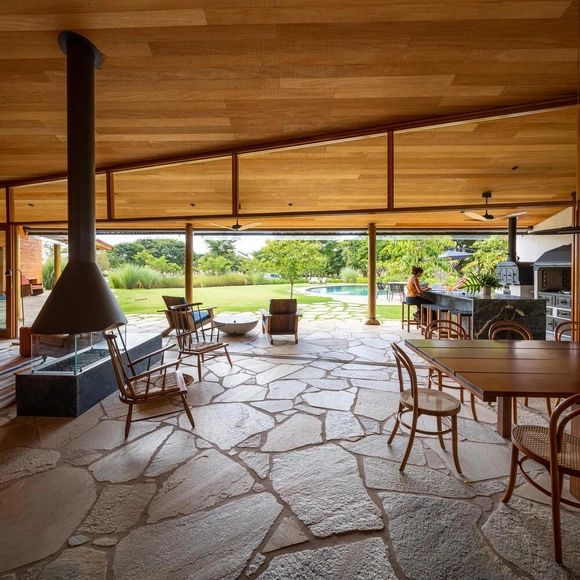
Nowadays, many architects have been looking for inspiration in traditional techniques, adapting them to more contemporary designs. In this sense, floors with rustic stone such as quartzite and sandstone are becoming more and more popular in residential architecture. Although this material was usually used for external areas, to build traditional stepping stone garden paths, for example, today it is also used in interiors, as an element that disrupts the hardness of rectilinear layouts and, in some cases, creates a connection between interior and exterior, which is something many professionals seek to achieve.
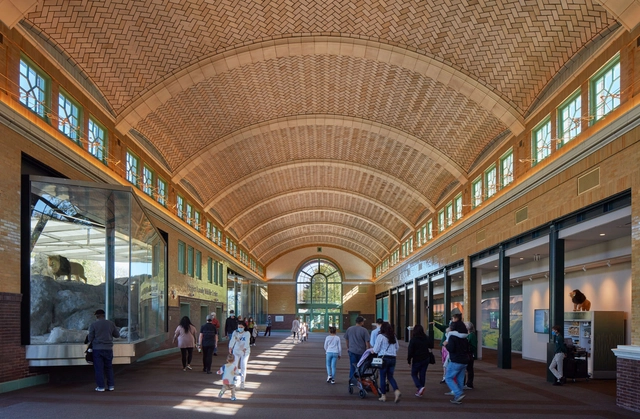
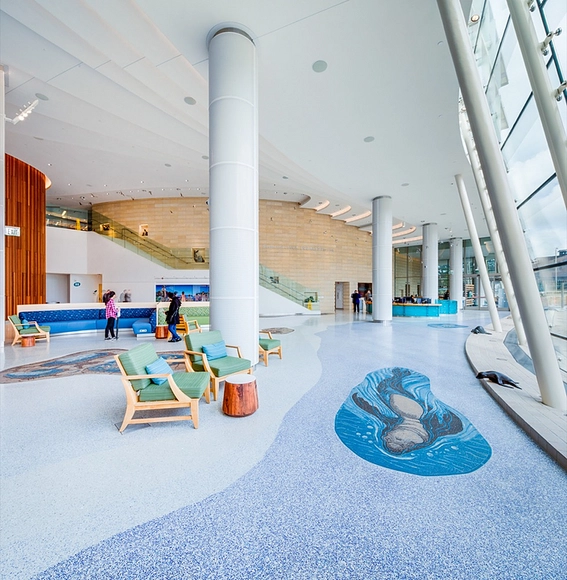
The historic lion house has long been a central element of Chicago’s Lincoln Park Zoo. When global architecture firm Goettsch Partners (GP) set out to renovate and expand the structure, the aim was to preserve the original building while increasing the usable area and creating a new spatial experience. The facility is home to a pride of four African lions, as well as Canada lynx, red pandas and snow leopards.
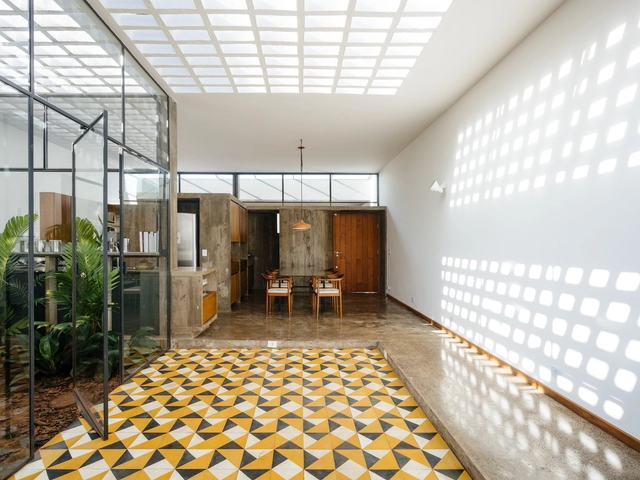
Extremamente versáteis, não só por sua variedade de cores e padrões, mas também por suas possibilidades de aplicação, os ladrilhos hidráulicos podem ser encontrados, nos projetos residenciais, em ambientes que vão desde áreas molhadas a salas e quartos. A orientação das peças e a área em que são aplicadas também são fatores que contribuem para a diversidade de conformações possíveis no uso do ladrilho hidráulico: quando são restritos a determinada área de um ambiente, por exemplo, podem funcionar como “tapetes” fixos.
As part of the 10th anniversary celebration of the award, Interceramic announced the winners of the Tenth Edition across its various categories and the "2021 Architecture Lifetime Achievement Award." The initiative aims to recognize and promote projects that best reflect contemporary design and express the current state of architecture and interior design, as well as reward creativity in the use of Interceramic ceramic materials.
People spend hours at work every day. Offices still fail to recognise the difference lighting can make to their workspaces. Lighting is an important matter when talking about visual comfort and productivity. Optimized lighting can help to improve performance and there are determined practice guidelines on which lighting systems work best for your work environment.
The building construction industry currently accounts for 40% of annual greenhouse gas emissions, due to its high carbon embodiment and carbonated energy demands. Building-integrated photovoltaics (BIPV) is a sustainable solution to address these concerns and to contribute to a net-positive world. This advanced technology can be utilized in solar building envelopes, skylights, windows, and balcony railings to produce green energy.
Renovation projects are often perceived as being more limited and therefore less exciting. In this article, we present renovation projects with unexpected solutions that show that it is possible to be creative when adapting and reusing an existing space.
Since its inauguration in the 1960s, every year more than 10 million tourists visit the Hollywood Walk of Fame in hopes of experiencing the glitz and glamour of Los Angeles’ most famous attraction. To this day, its 18 blocks of terrazzo floors remain in a good state, revealing the longevity and durability of a material able to withstand heavy foot traffic over the course of the century.
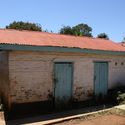
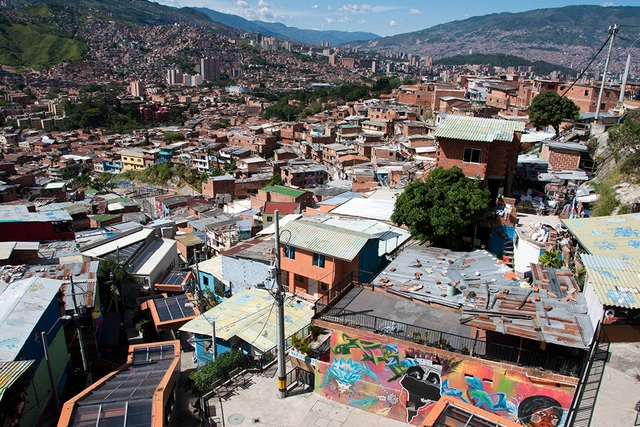
An estimated one billion urban residents live in informal settlements. These settlements have grown in response to rapid population growth and a lack of affordable, higher-quality alternatives. They are "informal" because they do not comply with government regulations. Historically, the official response was typically intimidation or, if they were not highly visible, neglect.
Through immense Greek columns, the door centered under the pediment invites one to enter either a temple or a home. The sense of smallness is undeniable. From north to south, this is a recurring scene: no upper-middle-class neighborhood escapes a neoclassical building.
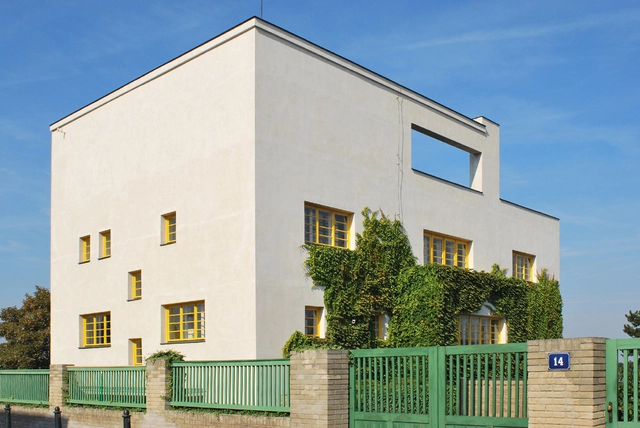
Throughout history, architectural styles, have experienced numerous movements throughout time, giving us various expressions of interior and exterior spaces. These movements are often created out of dissatisfaction with the status quo, shifts in religious ideologies, or the emergence of new building technology. Perhaps one of the most famous instances in history was the precedent set by Adolf Loos and his desire to break away from Viennese tradition with his strong dissent of ornament in architecture in favor of simplicity, and his literary discourse that lay the cornerstone for the modernist movement in architecture.
The Second Studio (formerly The Midnight Charette) is an explicit podcast about design, architecture, and the everyday. Hosted by Architects David Lee and Marina Bourderonnet, it features different creative professionals in unscripted conversations that allow for thoughtful takes and personal discussions.
A variety of subjects are covered with honesty and humor: some episodes are interviews, while others are tips for fellow designers, reviews of buildings and other projects, or casual explorations of everyday life and design. The Second Studio is also available on iTunes, Spotify, and YouTube.
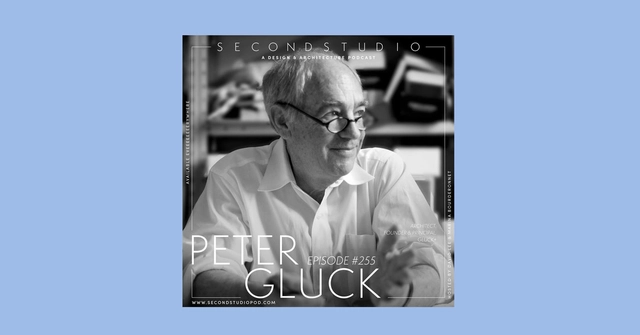
This week David and Marina are joined by Peter Gluck—Founder & Principal of GLUCK+, an architect-led design-build office—to discuss the decline of the profession of architecture, architects having less responsibility and knowledge in construction, contractors having more design authority, the negative impacts of the AIA (American Institute of Architects) contracts, young architects working for contractors, the gap between academia and practice, the low pay level of architects, and why a design-build operation can be the solution to all of these issues.
An active city is one that encourages its inhabitants to be physically active in their daily lives. This does not mean aiming to turn citizens into Olympic athletes, but rather providing safe spaces for cyclists and pedestrians to move around, as well as adequate infrastructure so that people of all ages can play sports, have fun, and relax outdoors. Consequently, physical activity, at varying levels of intensity, becomes a natural part of the population's daily routine.
In Accra, the capital of Ghana, Owusu, his wife, and their four children share a house with five other tenants and their families in the Tantra Hills neighborhood. The house has one bathroom and electricity, but the costs of both are excessively high. Because it is not connected to the municipal water grid, Owusu must buy water from vendors who charge high prices. The electricity bill, around $50 per month, is higher than his rent of $33. With a monthly income of $175, Owusu lives in constant fear of eviction if rent, water, or electricity prices rise.
In addition, Owusu's neighborhood lacks easy access to public transit. The nearest bus stop is about a kilometer away, and he typically waits up to 30 minutes for a bus. His commute to work at a gas station takes around two hours, even without traffic. From Monday to Saturday, he leaves home at 4:30 AM to beat the rush hour.
https://www.archdaily.com/1128305/7-major-transformations-to-solve-urban-inequalityMaeve Weston e Robin King
"Domingos Libro" is presented by Carmelo from Enorme Studio, where every two weeks, he delves into forgotten architectural publications, books, and architecture magazines from the 60s, 70s, and 80s that have the most interesting stories behind them.
In this new episode, he discusses the catalog of the exhibition "Houses For Sale," published by Rizzoli and B.J. Archer in 1980. Through the Leo Castelli Gallery, one could purchase the designs for eight houses by renowned architects (Emilio Ambasz, Peter Eisenman, Vittorio Gregotti, Arata Isozaki, Charles Moore, Cesar Pelli, Cedric Price, and Oswald M. Ungers), upending the traditional "client commissions architect for their dream home" relationship.
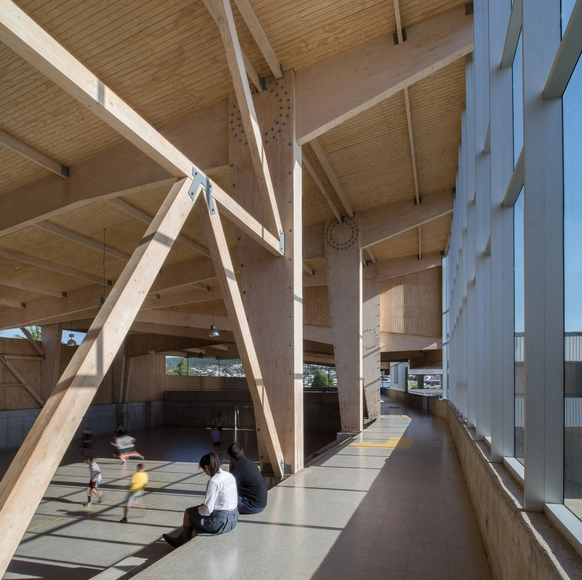
Responsibly sourced, wood is a renewable, low-emission resource that, in addition to storing carbon within its composition, features low thermal conductivity and high acoustic absorption, creating comfortable, well-insulated spaces year-round. A well-designed timber building will not only enhance these properties but will also be aesthetically pleasing for its occupants and highly energy-efficient.
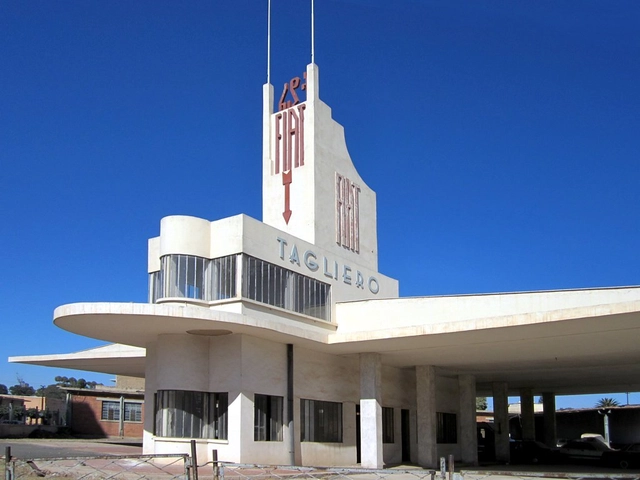
The built environment we all inhabit is part and parcel of global, interconnected processes and systems. When we appraise the historically significant architecture of our cities, the structural integrity and aesthetics of a building merits equal consideration with factors such as the labour conditions of its builders to the existing power structures of its time. Examples of ItalianModernism in Eritrea, for instance, might be worthy of aesthetic praise – but intertwined with the legacy of these buildings hailed as Modernist icons is the sobering fact that they were built to further an imperial project. In the complex fields of architectural conservation, preservation and cultural heritage, democratisation should always remain a key priority.
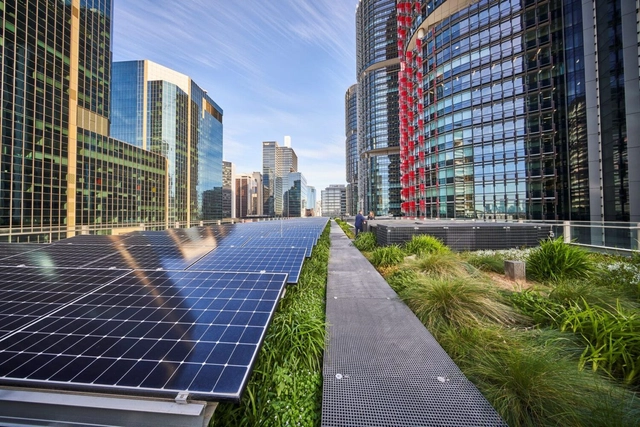
A study conducted in Australia has proven that green roofs help increase the efficiency of solar panels. Essentially, the panels perform better when they do not get too hot.
The study analyzed two identical office buildings located side-by-side in Sydney. One was equipped with a conventional photovoltaic solar system, while the other featured solar panels surrounded by vegetation. Both systems were monitored over an eight-month period spanning both summer and winter.
Today, a new generation of architects is trying to tackle the challenges of contemporary society while navigating different hurdles within the profession. Emerging architects are redefining the values and focus of design in response to the various issues facing the contemporary built environment, such as sustainability, affordability and equity. At the same time, new practices are operating a within rapidly changing field in which the architect's role is increasingly more ambiguous. The following explores the issues faced by young architects in their practice, as well as what they see as being architecture's most significant challenges, that inherently shape their work in a contrasting way to that of their older peers.
# Number of architectural projects completed annually: 3,000 # Total length of fabric sold annually: 3,999,220 meters #Retail price of the most expensive textile: ¥ 4,000 / meter # Textile Brand Kvadrat
Founded in Denmark in 1968, Kvadrat is a renowned textile brand deeply rooted in Scandinavia's world-famous design tradition. The name Kvadrat means “square” in Danish, inspired by the grid paper commonly used by designers and engineers for sketching in the 1960s. Refusing to be homogenized by global trends, the company maintains its distinct Scandinavian identity. As a leader in design innovation, Kvadrat continuously explores new ideas in material and technological applications within design and manufacturing, producing high-quality contemporary textiles and textile-related products for architects, designers, and private consumers worldwide.
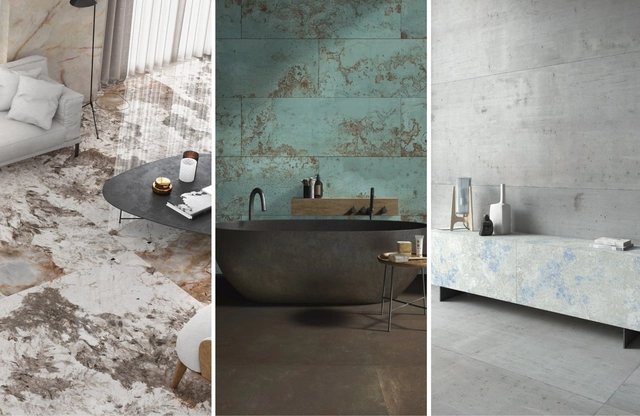
A rock like marble is usually light in color when formed through a process involving the heat and pressure of limestone. Carrara marble, for example, became famous for having good workability for sculptures, but also for its extremely uniform appearance. Under skillful hands, rough stone could become works of art such as Michelangelo's Pietá or David, among many others. But if during the rock formation process there are impurities such as clay minerals and iron oxides, the resulting stone may acquire bluish, gray, pink and black hues. Something that would make its use in a sculpture unfeasible can be seen as the real beauty of the piece, and how the passage of time was printed on it. Likewise, it is very difficult to predict exactly how zinc or copper will oxidize over time, and its patina effect takes on beautiful greenish, reddish or grayish tones, depending on the conditions to which they were exposed.
Admiring the unpredictability of materials and observing the beauty of the unexpected can bring surprising results to architectural projects. Through constant research, Apavisa has been able to develop modular ceramic pieces that combine strength and versatility, reproducing in detail the materials that our environment gives us. The strength of stone and metal with their oxidative processes, the roughness and timelessness of cement or the beauty of marble with its different veins, shades and patterns.
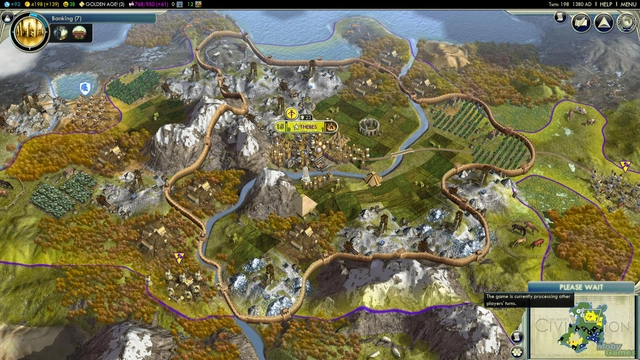
In this new collaboration, originally titled Cartografías del Metaverso (Cartography in the Metaverse), Spanish architects and founders of the blog MetaSpace, Enrique Parra and Manuel Saga, explore the potential of mapping in video games. Mapping can sometimes go beyond the mere role of orientation, as in the Diablo sequel, and become a very important element of the game, as in Civilization and World of Warcraft.
The cartographic and planimetric language of architecture is also common to the world of video games. Many video games base much of their experience on interaction with one or more maps, through which users orient themselves to find out where they are and where they are supposed to be.
One example is the Civilization saga, a series of empire management games created from 1991 to date. All versions are played on a map, a geographical view of the world that represents different areas, available resources, geopolitical balance, and other factors. These variants are the rules of the game, the situation the player faces; the map becomes a dynamic fabric, ie, the interface that makes up the game.
https://www.archdaily.com/782818/cartography-in-the-metaverse-the-power-of-mapping-in-video-gamesEnrique Parra y Manuel Saga
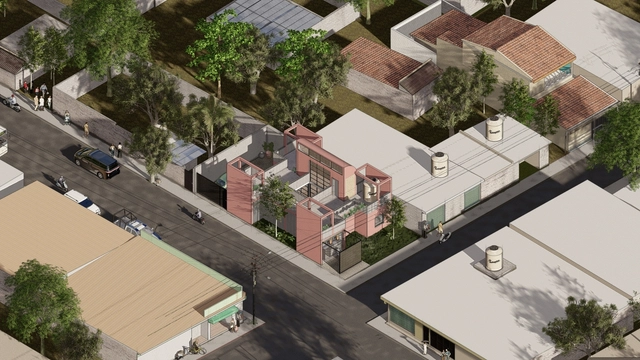
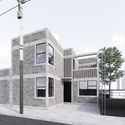
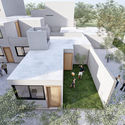
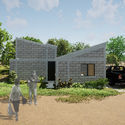
As part of an initiative by KeObra—a platform providing reliable, free information through content, infographics, videos, and social media to support those building their own homes while fostering a network that empowers self-builders, master masons, material suppliers, and architects—the First KeObra University Competition was launched. The competition called for progressive housing proposals to be integrated into the KeObra Calculator, a tool that provides cost estimates, material lists, projected timelines, and the necessary construction blueprints.













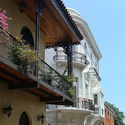
.jpg?1637861666 "Casco Viejo - Panama City, Panama. Image © Wikimedia User David Broad under the Creative Commons Attribution 3.0 Unported license.")